REVIEW · BUENOS AIRES
Buenos Aires: Historic District Private Guided Walking Tour
Book on GetYourGuide →Operated by BUENOS AIRES PASS · Bookable on GetYourGuide
Plaza de Mayo packs a punch. This Historic District private walking tour strings together the city’s political heart and colonial-era landmarks, plus a few smart orientation stops that help Buenos Aires click fast. I like that you’ll get a guide who ties what you see to Argentina’s independence, history, and traditions, not just dates and façades. One drawback to keep in mind: meeting point changes can happen, so you’ll want working internet and to check messages before you head out.
I really like two things here. First, you get to stand right where Buenos Aires was founded in 1580 and then walk a tight route that hits the big institutions without feeling rushed. Second, the tour includes entrance into the Metropolitan Cathedral and Cabildo, so you’re not wasting time hunting tickets or lines when your morning (or afternoon) is limited.
The main consideration is practical, not cultural: it’s a 2-hour walk with a set starting point outside Café Tortoni, and there’s no hotel pickup. If you’re late, you’ll miss the clean flow of the itinerary.
In This Review
- Key highlights worth your time
- Starting Outside Café Tortoni and Getting Oriented Fast
- Plaza de Mayo: Buenos Aires Founded in 1580
- Casa Rosada Surroundings and the Stories Behind Public Space
- Cabildo: Colonial Town Council Life, Made Clear
- Metropolitan Cathedral: Neoclassical Architecture You’ll Remember
- Plaza de Mayo Subway Station: Where Buenos Aires Started
- Price and Value: Is $52 Worth It for 2 Hours?
- What You’ll Learn From the Guides (And Why It Matters)
- Small Logistics That Can Make or Break the Day
- Who Should Book This Walking Tour (And Who Might Skip It)
- Should you book? My practical call
- FAQ
- How long is the Buenos Aires Historic District private guided walking tour?
- Where does the tour meet?
- Is hotel pickup included?
- What major places do you visit?
- Are entrance fees included?
- Is there a skip-the-line option?
- What languages are available for the live guide?
- Is the tour wheelchair accessible?
- What should I bring?
- What’s the cancellation and payment flexibility?
Key highlights worth your time
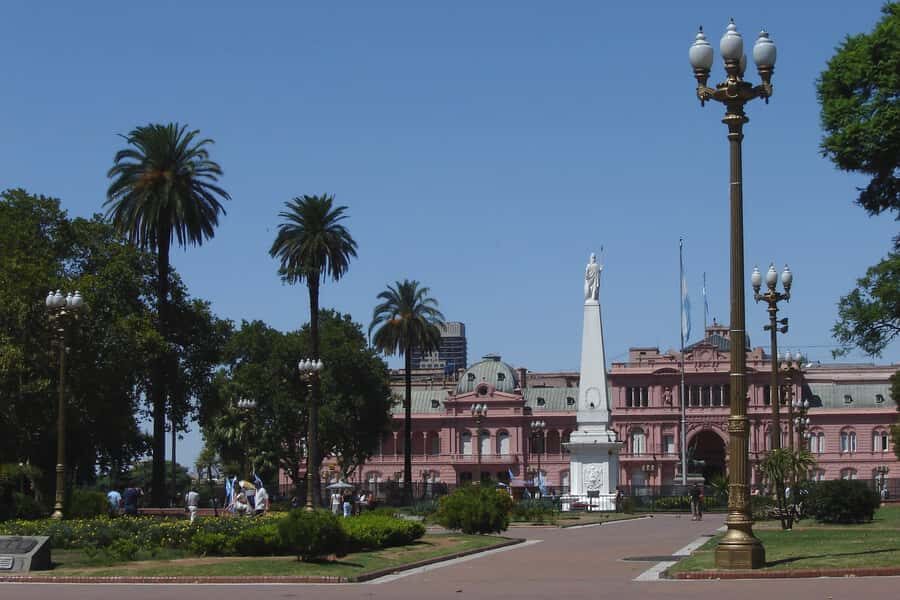
- Plaza de Mayo, founded in 1580, with Casa Rosada and the surrounding power centers explained
- Cabildo and colonial town council life, with context that makes the building feel real
- Metropolitan Cathedral’s unusual neoclassical design plus included entry
- Skip-the-line access for cathedral and Cabildo, built into a short 2-hour route
- A quick peek at the Plaza de Mayo subway station, where Buenos Aires’ subway system began
Starting Outside Café Tortoni and Getting Oriented Fast
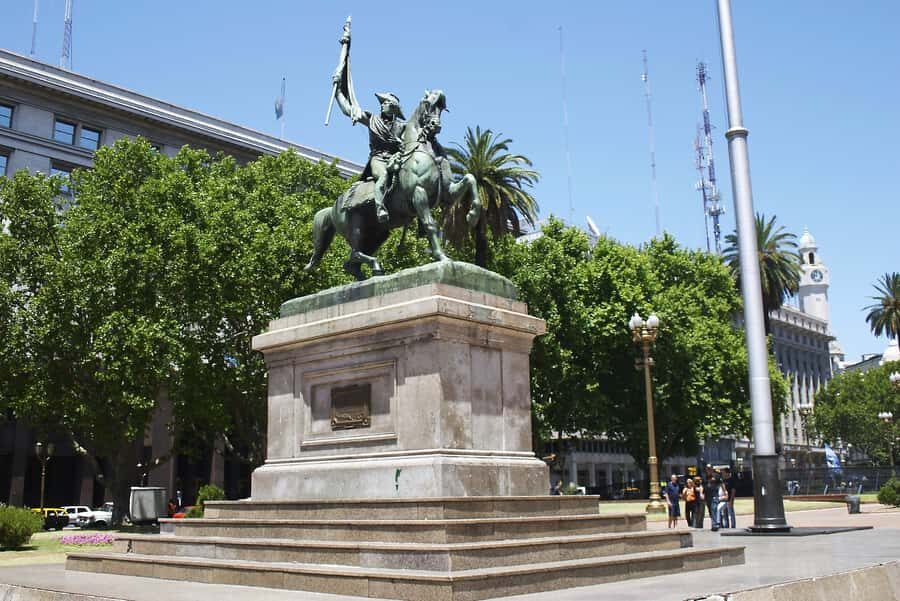
The tour kicks off outside Café Tortoni, one of those Buenos Aires landmarks you’ll keep hearing about if you hang around the center of town. The nice part is that the meeting point is easy to spot, and it sets a tone: this isn’t just an architecture parade. Your guide uses the café area as a launchpad, including stories about famous Argentine personalities who used it as a meeting place. Even if you don’t know their names yet, you’ll start seeing the city as a set of social networks and power centers, not just streets.
From there, the walk is designed to help you get your bearings fast. You’ll pass through the Historic District’s classic streets and pick up panoramic views from one of the standout neighborhoods on the route—exact neighborhood name isn’t the point; what matters is that you get a sense of the city’s scale and layout. In two hours, that kind of orientation can be the difference between feeling lost later and feeling confident to wander on your own.
One practical tip: wear comfortable shoes. This is a walking tour, and the route includes multiple stops in the central area, where sidewalks and crowds can slow your pace. I’d also plan on having a way to check messages on your phone. The tour info specifically calls for internet access, and a past situation went wrong when a guide communicated a meeting-point adjustment via messaging that depended on access.
You can also read our reviews of more walking tours in Buenos Aires

Plaza de Mayo: Buenos Aires Founded in 1580
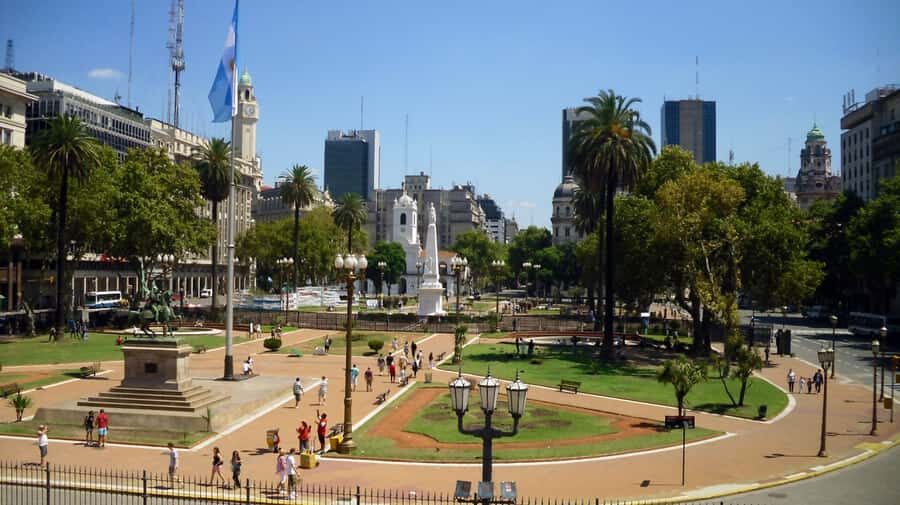
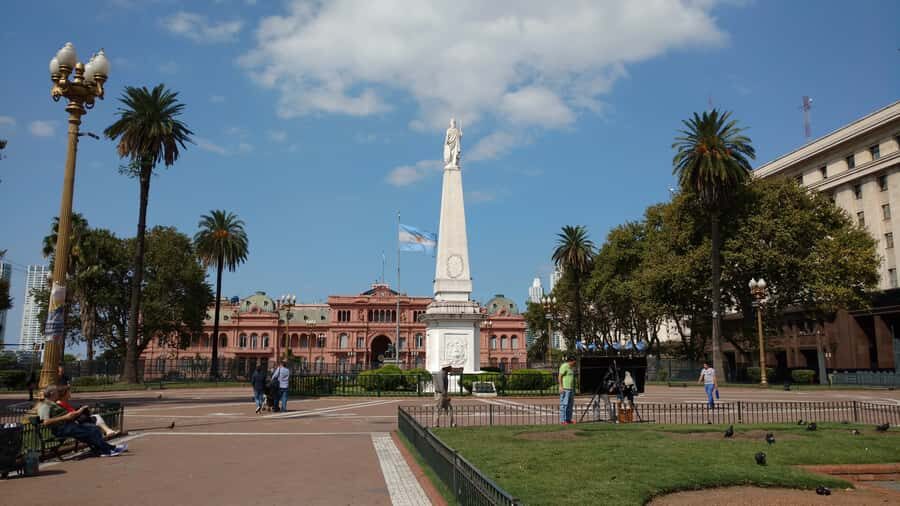
Plaza de Mayo is the anchor of this tour, and it’s where you start understanding why Buenos Aires became what it is. You’ll stand in the square where the city was founded in 1580—that alone is a big mental reset. Instead of seeing a famous plaza, you’re standing on the original reference point for the city’s story.
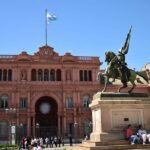
Your guide then connects the plaza to the institutions around it. The key one is Casa Rosada, the presidential office. Even if you’ve only seen it from photos, it lands differently in person. What your guide helps you do is read the building and the setting like a map of politics: who came here, why they came, and how public space shaped power.
Here’s what I like about making Plaza de Mayo a stop early: it gives you a framework. After you’ve seen the square and the government buildings, the rest of the architecture doesn’t feel random. You can start noticing patterns—how authority sits in stone, how public life gathers around civic landmarks, and how the city’s layers show up in different styles.
Casa Rosada Surroundings and the Stories Behind Public Space
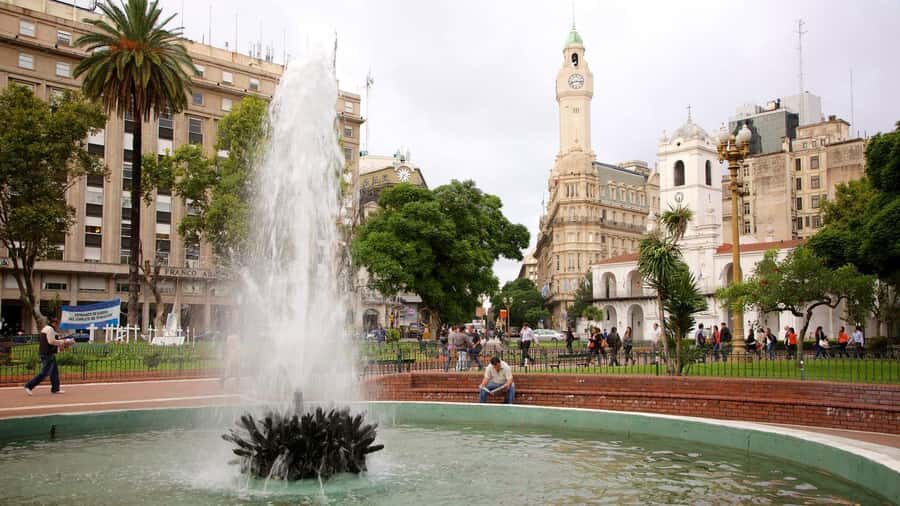
Casa Rosada is included as a viewing stop, and that matters because it’s more than a “look but don’t touch” photo spot. The tour’s history focus—especially independence-era context—helps you understand why this area kept functioning as the public stage of Argentina.
You’ll also learn about traditions and famous people linked to the broader district. The guide’s goal is to make the square feel inhabited by real lives, not just official buildings. When the guide explains Argentina’s independence and historical development as you walk, the plaza stops being a static destination and starts behaving like a timeline you can physically follow.
One small note for your expectations: this is a walking tour, not a long museum day. So if you’re hoping for deep interior access to every single building around the plaza, you’ll need to treat this as a smart orientation and context-builder. The value here is the way the guide ties stops together inside a short 2-hour window.
Cabildo: Colonial Town Council Life, Made Clear
Next up is the Cabildo, a historic building that served as the seat of the town council during colonial times. This is exactly the kind of stop that turns “old buildings” into something useful. Without context, the Cabildo can just look like another classic façade. With the guide’s explanation, you start seeing it as a governance machine—where decisions got made, where civic life organized itself, and where colonial-era power operated at street level.
The tour also includes entrance to the Cabildo, which is a big practical win. You’re not waiting around for entry procedures, and you’re more likely to get straight into the parts you’ll care about. In a central city where lines and crowds can pop up quickly, “skip the ticket line” isn’t a luxury—it’s time saved.
What to watch for: the contrast between the building’s colonial role and the later national importance of the Plaza de Mayo area. You’ll start noticing how Buenos Aires shifted from colonial administration to modern identity, while still using the same civic stage.
Metropolitan Cathedral: Neoclassical Architecture You’ll Remember
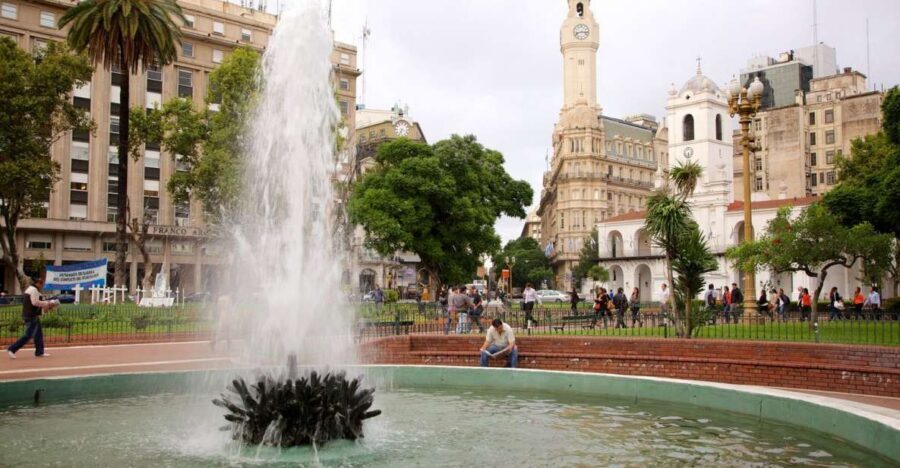
Then comes one of the most interesting architectural surprises on the route: the Metropolitan Cathedral. You’ll admire its unusual neoclassical design, and that phrase is key. Neoclassical architecture often aims for order, symmetry, and seriousness, but your guide will help you see what makes this one feel distinctive in the Buenos Aires context.
Cathedral stops can be either rushed photo breaks or meaningful pauses. Here, entrance is included, and the tour is built to treat the cathedral as more than a background monument. You’ll get enough time to look around and orient yourself, and you’ll hear the kind of explanation that makes the style make sense—how it relates to civic identity, how it fits into the plaza ecosystem, and why the architecture is memorable even after you leave.
You also get skip-the-line access again, which keeps the flow smooth. That matters in Buenos Aires’ center, where one delay can snowball into a cramped final hour.
You can also read our reviews of more guided tours in Buenos Aires

Plaza de Mayo Subway Station: Where Buenos Aires Started
Near the cathedral, you’ll see the Plaza de Mayo subway station—where Buenos Aires’ subway system began. This stop is short, but it’s a clever add-on. The tour isn’t only about the colonial past and government buildings. It also shows you how the city modernized itself and how infrastructure became part of the story.
For me, this is where the tour earns its “private guide” format. A guide can take a quick glance at a station entrance and turn it into context: why that location mattered, and how the city’s core connects old and new. Even if you’re not a transit-history person, you’ll probably walk away with a clearer mental map of where you are in the city’s layers.
Price and Value: Is $52 Worth It for 2 Hours?
At $52 per person for a 2-hour private guided walking tour, the value depends on how you like to travel. If you enjoy a structured route with a guide who supplies context as you go, this price is pretty reasonable. You’re paying for four things bundled together:
- Guided interpretation (history, independence-era context, traditions)
- A walk that hits the main civic landmarks without a big detour
- Entrance to the Metropolitan Cathedral and Cabildo
- Skip-the-ticket-line convenience
If you’re the type who loves to wander without a plan, you might not get full value. In that case, you could cover Plaza de Mayo and the surrounding streets on your own. But if you want the buildings to make sense quickly—and you want the route stitched together in a way that feels coherent—this is the kind of guided format that often pays off.
Also, it’s a private group, which can be ideal if you’re traveling as a couple, with a small group, or if you just hate feeling like you’re being herded. You’ll still move at a walking pace, but you’re not competing for the guide’s attention.
What You’ll Learn From the Guides (And Why It Matters)
The standout theme from the guide experience is clarity and engagement. People specifically praised guides like Juan Manuel Sanchez for clear, understandable English and impressive historical knowledge, and also highlighted other guides such as Juan Manoel and Juan Miguel for professionalism and the ability to answer questions.
That matters because, on a tour like this, you’re not just collecting sights. You’re building context on the fly. A good guide makes you look at familiar landmarks differently: you start connecting Plaza de Mayo to independence themes, you understand why the Cabildo mattered, and you can actually describe what feels unusual about the cathedral’s neoclassical approach.
If you’re worried about language, there’s a helpful detail: live tour guidance is offered in English, Portuguese, and Samoan. You’ll also get a private-group setting, which usually makes it easier to ask questions without feeling rushed.
Small Logistics That Can Make or Break the Day
No hotel pickup means you’re starting on your own. The meeting point is outside Café Tortoni, so plan to arrive early and give yourself time to orient. In the center, you can lose time fast if you’re stopping for snacks or trying to find the right street corner at the last minute.
Bring comfortable shoes. The tour is short, but it still involves enough walking that uncomfortable footwear turns the experience into a chore.
Also bring internet access. This isn’t a “nice to have” note—it’s explicitly listed. There’s a real-world reason: one reported issue involved a guide who sent a message about a meeting-point adjustment by WhatsApp/email about an hour before the tour start, and the booking couldn’t locate the message because of app and internet access problems. You can’t control whether a message gets sent, but you can make sure you can check your phone when you need to.
Finally, this tour includes entrance to the Metropolitan Cathedral and Cabildo, but it does not include hotel pickup or drop-off. So think of it as a “go meet your guide” experience, not a door-to-door service.
Who Should Book This Walking Tour (And Who Might Skip It)
You’ll probably love this tour if:
- You want a fast, guided intro to Buenos Aires’ civic core
- You like history that’s attached to the places you’re standing in
- You want included entry to the cathedral and Cabildo without line hassle
- You prefer a private format where you can ask questions
You might be less thrilled if:
- You hate walking and would rather do fewer stops at a slower pace
- You already know the city deeply and want longer museum time instead of quick context stops
- You expect lots of interior time beyond the included entries
Should you book? My practical call
Book it if you want a clean, efficient way to understand central Buenos Aires in just 2 hours. The route is built around high-impact landmarks—Plaza de Mayo, Casa Rosada, the Cabildo, and the Metropolitan Cathedral—with meaningful context delivered as you walk. For $52, the included entrances and skip-the-line setup make it feel like more than a basic stroll.
Don’t book it only if you’re likely to have trouble finding Café Tortoni on time or you won’t have working internet access. With that covered, this tour is a solid choice for first-time visitors and anyone who wants Buenos Aires to start making sense quickly, street by street.
FAQ
How long is the Buenos Aires Historic District private guided walking tour?
It lasts 2 hours.
Where does the tour meet?
The meeting point is outside Café Tortoni.
Is hotel pickup included?
No, hotel pickup and drop-off are not included.
What major places do you visit?
You’ll see Plaza de Mayo (where Buenos Aires was founded in 1580), Casa Rosada, the Cabildo, the Metropolitan Cathedral, and the Plaza de Mayo subway station.
Are entrance fees included?
Yes. Entrance to the Metropolitan Cathedral and the Cabildo is included.
Is there a skip-the-line option?
Yes, you skip the ticket line.
What languages are available for the live guide?
The live tour guide is available in English, Portuguese, and Samoan.
Is the tour wheelchair accessible?
Yes, the tour is wheelchair accessible.
What should I bring?
Bring comfortable shoes and have internet access.
What’s the cancellation and payment flexibility?
There is free cancellation up to 24 hours in advance for a full refund, and you can reserve now and pay later.