REVIEW · BUENOS AIRES
Buenos Aires Hop-On Hop-Off Bus and Exclusive Benefits
Book on GetYourGuide →Operated by Buenos Aires Bus (Hop-On Hop-Off) · Bookable on GetYourGuide
Buenos Aires feels huge at first. This hop-on hop-off bus turns that challenge into an easy game: pick a stop, get off, wander, then climb back on when you’re ready. I like that the route targets the big-name areas like Plaza de Mayo, La Boca (Caminito), Recoleta, Puerto Madero, and the Teatro Colón zone, so you can build a real sense of the city fast.
Two things I especially like are the 9-language audio guide with headphones (including commentary at stops) and the practical flexibility—buses run often enough that you don’t feel trapped on a schedule. The main drawback to plan around is that Buenos Aires traffic can slow the loop, so the ride may take longer than the stated run time, and you’ll walk some distance between stops and landmarks.
In This Review
- Key Points at a Glance
- Price and Value: What You’re Really Paying For
- Where to Start: The Córdoba Avenue Exchange Moment
- How the Bus Works: Frequency, Loop Time, and Realistic Expectations
- The Audio Guide in 9 Languages: Helpful When You Adjust
- Planning Your Day: Use the Pass Like a Strategy, Not a Ticket
- Plaza de Mayo and the Obelisk: Buenos Aires City-Core Views
- La Boca and Caminito: Colorful Streets, Best Done With Breathing Room
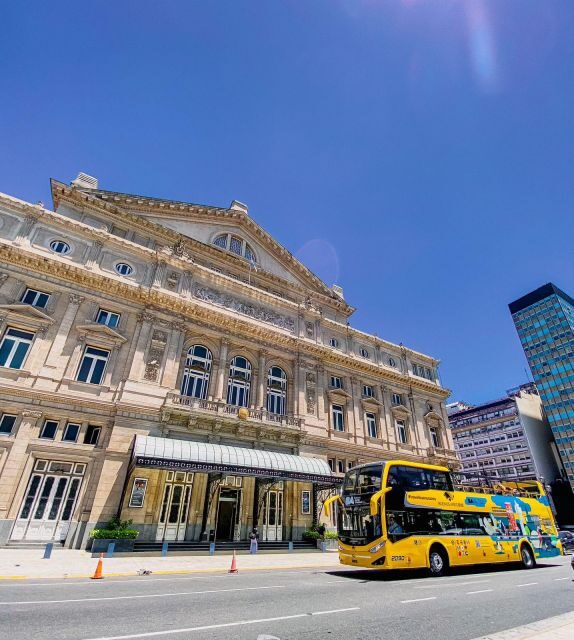
- Recoleta and the Teatro Colón Zone: Classic Grandeur From a Panoramic Ride
- Puerto Madero and the Waterfront Feel: Modern Buenos Aires in Motion
- Discounts Included: Use Them, Even If You Don’t Plan to
- Getting the Most From the Hop-On System
- Comfort and Practical Notes: Top Deck, Headphones, and Crowds
- Who This Is For (and Who Might Prefer Something Else)
- Should You Book Buenos Aires Bus Hop-On Hop-Off?
- FAQ
- Where is the meeting point, and do I need to exchange a voucher?
- How long is the bus route, and how often do buses run?
- What ticket durations are available?
- Is the audio guide included, and what languages are offered?
- What does the ticket include versus exclude?
- Are discounts included with the ticket?
- Can I cancel, and can I pay later?
- What do I need to bring, and what’s not allowed on the bus?
Key Points at a Glance
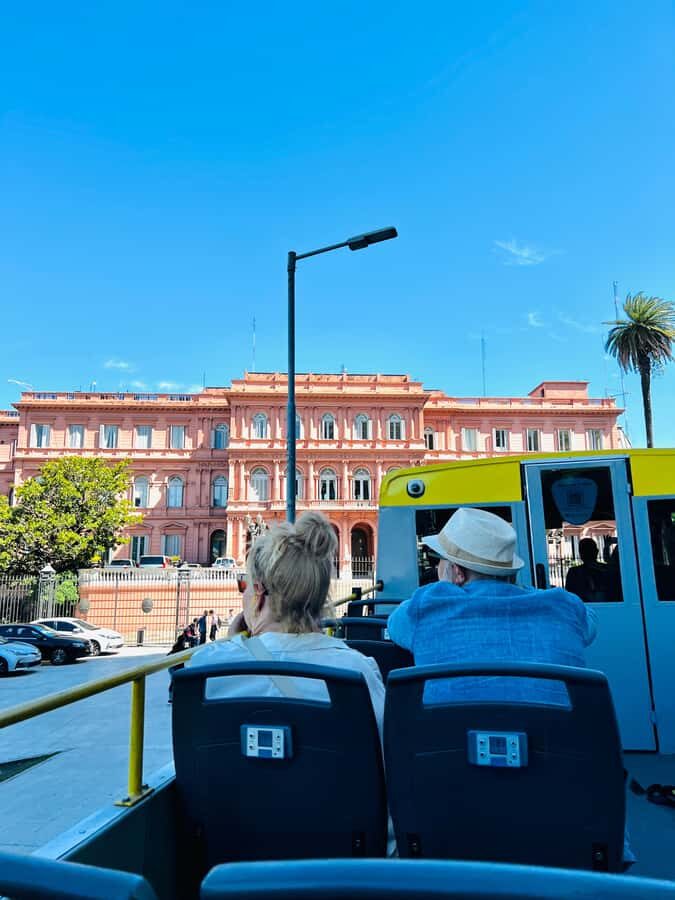
- Hop on and off freely: You control your pace instead of squeezing the day into a fixed group plan.
- Audio guide in 9 languages: Headphones included, with commentary synced to the ride and stops.
- Frequent departures (every ~15 minutes): Easier connections, even if you get distracted by a photo spot.
- Designed for orientation: You get a strong first pass through core neighborhoods and major landmarks.
- Included extras beyond the bus: Exclusive discounts at selected restaurants, shops, and attractions.
Price and Value: What You’re Really Paying For
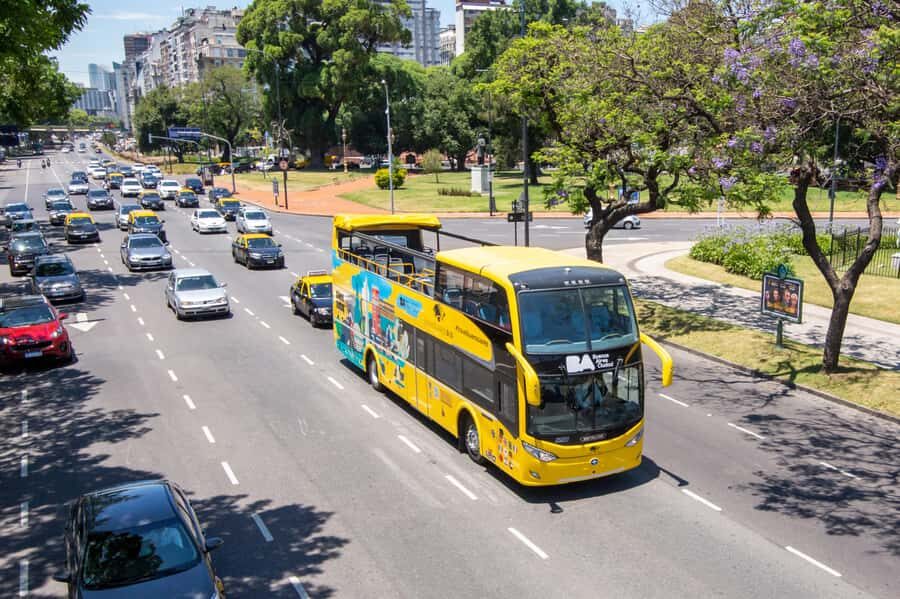
At $35 per person, this pass is priced like a “do the city efficiently” tool. The value comes from two practical perks: you’re buying the ability to move around without constant taxis or ride-hailing, and you’re getting interpretation that helps you decide where you want to spend real time.
The route is about 3 hours 20 minutes without stops, but your pass lets you stretch that into a full day (or more). If you’re the type who wants to see the highlights first, then come back later for details, a multi-day option (24, 48, or 72 hours) often makes more sense than one quick ride.
Also note what you’re not paying for: food, drinks, and entrance fees. So your ticket is for transport + guidance + discounts—not for turning every stop into a paid museum visit.
You can also read our reviews of more tours and experiences in Buenos Aires.



Where to Start: The Córdoba Avenue Exchange Moment
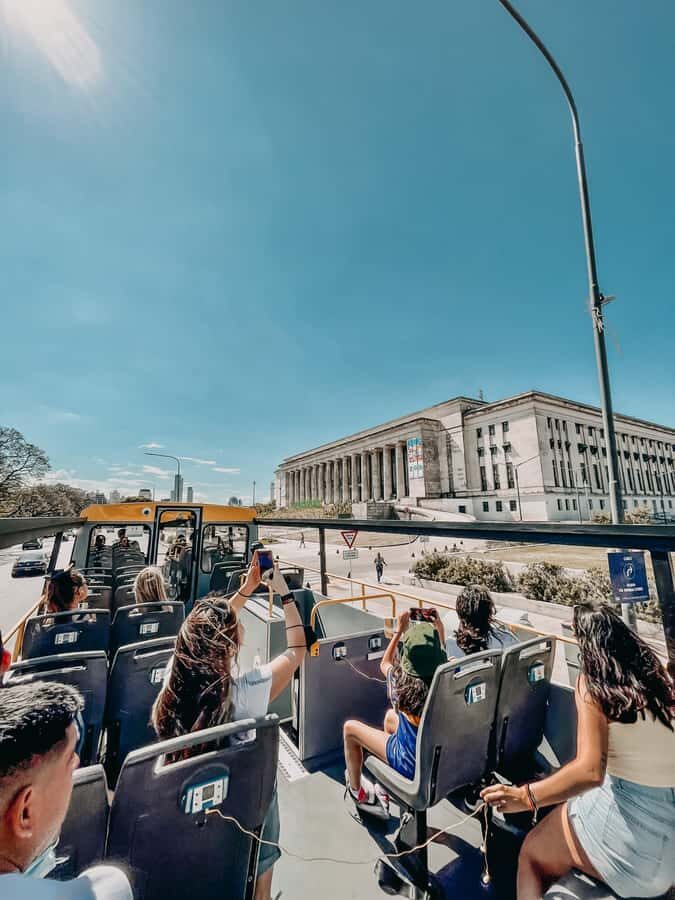
This is a classic “exchange before you board” setup. You’ll want to arrive about 15 minutes early and exchange your voucher at the ticket counter on 466, Córdoba Avenue before the tour begins.
After you get your new ticket, you can board at the bus stops along the route. The best mindset is simple: don’t stress about choosing the perfect first stop. Your goal is to get on and start building your mental map of Buenos Aires. From there, hopping off at the right places is straightforward.
Bring a passport or ID card. Onboard, the rules are also clear: no smoking, no pets (assistance dogs allowed), and no alcoholic drinks in the vehicle.
How the Bus Works: Frequency, Loop Time, and Realistic Expectations

The big comfort factor here is how often buses run: about every 15 minutes throughout the day. That frequency matters in Buenos Aires because traffic can change the flow of everything, including how quickly you’ll get to your next stop.
The full route is roughly 3 hours 20 minutes without stops, but plan on longer with traffic, special events, or demonstrations. On bus days when the schedule slips, I’d treat it like this: use the headset for orientation and photos, then hop off with a flexible plan. You’ll still see plenty, but you should stop expecting the clock to be perfect.
Online tracking is included. That helps a lot when you’re waiting and trying to decide if the next bus will arrive soon or if you should cross the street and grab a coffee.
The Audio Guide in 9 Languages: Helpful When You Adjust
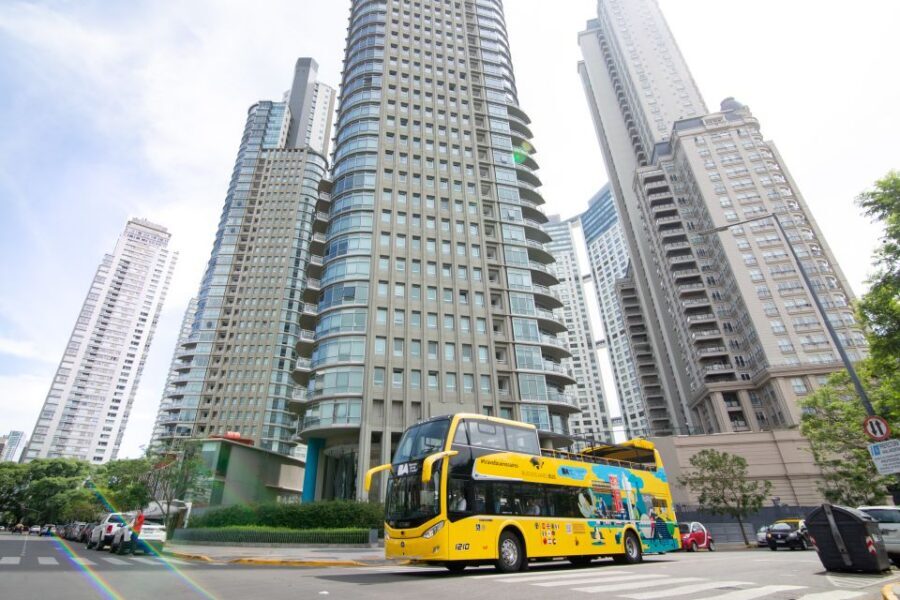
This bus gives you a guided experience through your headphones with audio available in 9 languages, including English, Spanish, Portuguese, French, German, Italian, Russian, Japanese, and Chinese.
In practice, the headset does two jobs:
- It gives context as you pass major neighborhoods and landmarks.
- It helps you understand what you’re looking at when you hop off.
The only consistent “watch out” is sound mixing. Some rides include music between information segments, and in certain cases it can be louder than the commentary. If you’re hard of hearing or sensitive to background noise, you’ll want to keep your volume attentive and be ready to adjust.
Also, if you sit on an open-air upper level (when available on your bus), wind and traffic noise can make it harder to hear clearly. Sitting where you can focus on the speaker audio is part of the game.
Planning Your Day: Use the Pass Like a Strategy, Not a Ticket
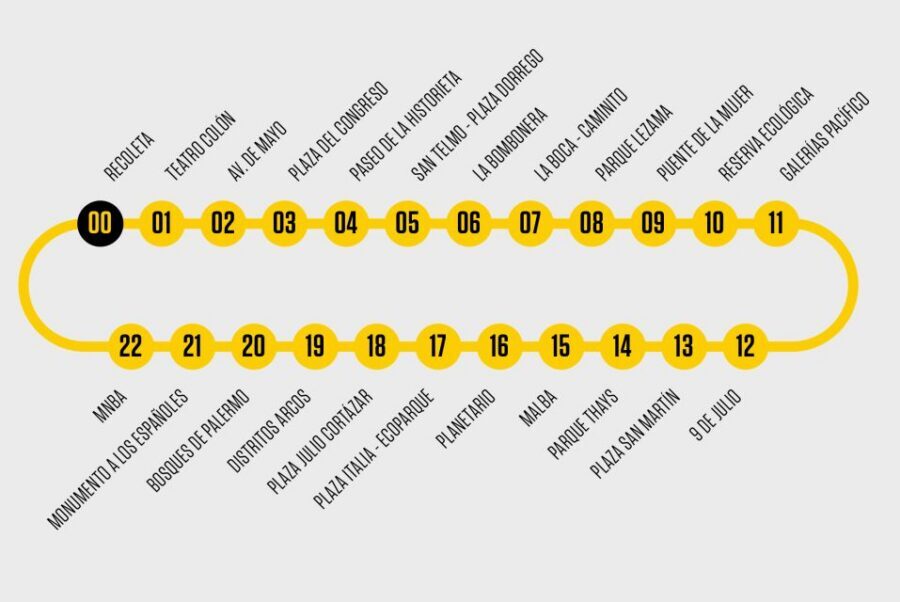
I like using a hop-on hop-off bus as a two-step plan:
Step 1: Do a full run through once. Stay on longer than you think you should. This helps you understand how neighborhoods connect and which areas feel worth returning to.
Step 2: Pick your replays. After you’ve oriented yourself, hop off where you want to spend time. That can mean walking around on your own, stopping for coffee, or doing a museum visit when it makes sense.
A multi-day pass makes this easier because you’re not rushing to fit everything into one “bus day.” The goal is to avoid the common mistake: spending the whole day hopping off once and never getting comfortable anywhere.



Plaza de Mayo and the Obelisk: Buenos Aires City-Core Views

If Buenos Aires feels like a mix of history and big civic spaces, this is where you see the backbone of the city. The route covers the Obelisk and Plaza de Mayo, which are the kind of landmarks you can recognize even before you fully understand them.
From the bus, you get a big-picture perspective. That matters because Plaza de Mayo isn’t one small sight—it’s a whole urban scene. Even a quick stop can help you learn where the important streets and avenues run, so you don’t end up wandering in circles later.
A practical tip: spend your time here wisely. If you hop off, give yourself enough time to walk the surrounding blocks on foot. Some of the most useful information from the audio guide becomes clearer when you’re actually looking at the buildings up close.
La Boca and Caminito: Colorful Streets, Best Done With Breathing Room
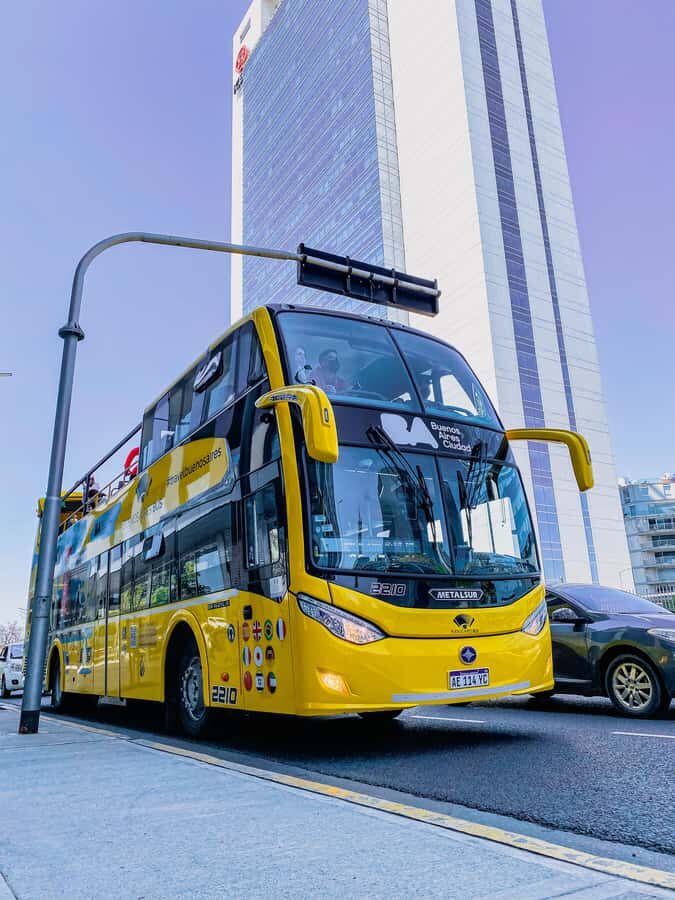
La Boca is famous for a reason: the streets feel like theatre, even when you’re just passing by. This route includes the area around Caminito, one of the best-known spots in the neighborhood.
The bus works well for La Boca because it helps you manage expectations. You can get the mood from the ride, then hop off when you want to focus on photos, street life, and the smaller lanes that make the neighborhood feel like it has its own personality.
One consideration: some stops are a walk from the exact landmark you care about. That’s normal in Buenos Aires, but La Boca can include longer walks than you expect if you’re chasing a specific entry point or venue. If you’re arriving with tight timing, give yourself buffer time.
Recoleta and the Teatro Colón Zone: Classic Grandeur From a Panoramic Ride
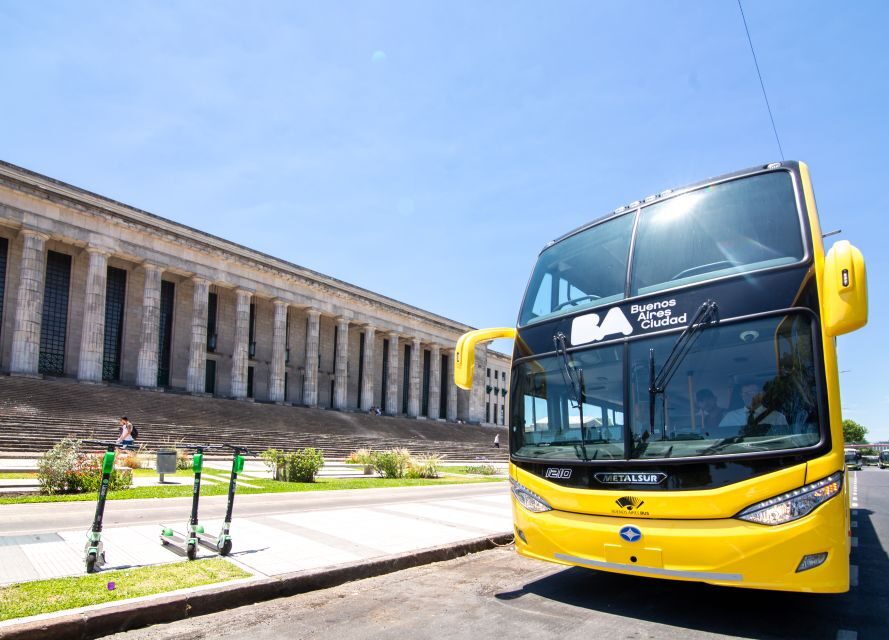
Recoleta is where Buenos Aires shows a more formal side. This route takes you through the Recoleta area and also includes the Teatro Colón zone.
From the bus, you can appreciate scale and architecture without committing to an entrance ticket immediately. That’s handy if you’re deciding on the fly whether the inside of a venue is worth your time today.
If you’re the type who enjoys photography, this is a good region to slow down and look. The upper-deck views can make getting good angles easier, especially when you’re moving along major streets instead of fighting for position at a single point.
Drawback? Like many big city sights, the experience can be split into two parts: what you notice from the bus, and what you notice when you walk. If you only ride through without hopping off at least once, you may miss some of what you came for.
Puerto Madero and the Waterfront Feel: Modern Buenos Aires in Motion
The route also covers Puerto Madero, Buenos Aires’ modern waterfront area. This is a great contrast to the older neighborhoods like Plaza de Mayo and La Boca.
On the bus, Puerto Madero works as a “reset.” You can see the sleek layout, bridges, and open views without the stress of figuring out where to walk next. If you hop off for a short stroll, it’s a nice way to break the day into something less intense than classic museum hopping.
I also like using Puerto Madero as a timing checkpoint. If the loop has already run a bit longer due to traffic, this area gives you an easy win: you can enjoy the atmosphere without needing a long plan or multiple bookings.
Discounts Included: Use Them, Even If You Don’t Plan to
Your ticket comes with exclusive discounts at selected restaurants, shops, and attractions. This isn’t guaranteed to cover everything you want, but it can reduce friction when you’re hungry, shopping for small gifts, or choosing between two nearby options.
Here’s how I’d use it: wait until you actually see what’s around you. If you spot a restaurant that matches your budget and vibe, check whether a discount applies. The bus ticket is best thought of as a wallet-friendly add-on, not a magic coupon for every stop.
Getting the Most From the Hop-On System
The hop-on approach shines when you treat the bus stops as “starting points,” not “end points.” Since you can get off and back on multiple times, you’re allowed to be picky.
A smart routine:
- Ride first to get your bearings.
- Choose one or two anchor neighborhoods to explore on foot.
- Return to the bus if the day starts to feel chaotic.
One small but useful reality check: even with frequent buses, you can run into crowded moments. If you get to a stop and the first buses are full, don’t panic. Wait, use online tracking, and plan a nearby diversion. Buenos Aires foot traffic can be part of the adventure, and that’s when your flexibility pays off.
Comfort and Practical Notes: Top Deck, Headphones, and Crowds
You have headphones included, and the ride is designed to be comfortable. Still, comfort depends on where you sit. Upper-deck views can be great for photos, but noise and wind can make the audio harder to hear.
On very busy days, buses can fill up and you might wait longer than the ideal schedule. When that happens, focus on the positives: you’re not stuck on a single predetermined itinerary, and you can shift your next stop based on which buses actually arrive.
There can also be occasional audio glitches—some segments may sound off or limited, and in a few cases commentary doesn’t fully match what you see. If that happens, I’d switch to “observational mode” and use the bus ride for visuals. The main job here is orientation and access.
Who This Is For (and Who Might Prefer Something Else)
This bus is a strong fit for:
- First-time visitors who need an efficient overview
- Independent travelers who don’t want to be marched around
- People who want flexibility for coffee stops and photo breaks
- Anyone trying to reduce ride-hailing costs across multiple neighborhoods
It may be less ideal if:
- You want a deeply guided walking tour with lots of time inside museums
- You’re expecting perfectly synced, crystal-clear audio in every situation
- You have very tight accessibility needs that depend on short walks between stops (because some landmarks require extra walking from bus stops)
If you’re a solo traveler, I’d consider this especially worthwhile. It’s one of the easiest ways to make Buenos Aires feel navigable fast.
Should You Book Buenos Aires Bus Hop-On Hop-Off?
Yes—if your goal is to get oriented and move around at your pace. For the money, the combination of frequent departures, 9-language audio, and coverage of core sights like Plaza de Mayo, Caminito, Recoleta, Puerto Madero, and Teatro Colón-area streets is a practical match for a short visit.
Book a 48-hour or 72-hour pass if you want time to actually explore neighborhoods instead of just viewing them from the window. Choose the shorter option if you’re confident you can spot your priorities quickly on your first loop.
Just go in with the right expectations: traffic can stretch the route, audio clarity can vary, and some walks from stops to attractions can take longer than you picture. If that sounds manageable, this is a smart, budget-friendly way to see a lot of Buenos Aires without stress.
FAQ
Where is the meeting point, and do I need to exchange a voucher?
You should arrive 15 minutes early and exchange your voucher at the ticket counter at 466, Córdoba Avenue before the tour begins.
How long is the bus route, and how often do buses run?
The full route takes about 3 hours 20 minutes without stops. Buses operate throughout the day about every 15 minutes, though traffic or events can cause delays.
What ticket durations are available?
You can choose 24, 48, or 72 hours options (based on availability), valid for sightseeing over that time.
Is the audio guide included, and what languages are offered?
Yes. The audio guide is included with headphones, with commentary available in 9 languages: Chinese, English, French, German, Italian, Japanese, Portuguese, Russian, and Spanish.
What does the ticket include versus exclude?
Included: the hop-on hop-off bus ticket (24/48/72 hours), headphones, online tracking, and the audio guide. Not included: food, drinks, and attraction entrance fees.
Are discounts included with the ticket?
Yes. Your ticket includes exclusive discounts at selected restaurants, shops, and attractions.
Can I cancel, and can I pay later?
Yes. There is free cancellation up to 24 hours in advance for a full refund, and you can reserve now & pay later.
What do I need to bring, and what’s not allowed on the bus?
Bring a passport or ID card. Smoking is not allowed, pets are not allowed (assistance dogs allowed), and alcoholic drinks are not allowed in the vehicle.