REVIEW · PUERTO IGUAZU
From Argentina: Iguazu Falls Brazil Side & Itaipu Dam
Book on GetYourGuide →Operated by Gray Line Argentina · Bookable on GetYourGuide
Two giants, one packed day. This outing is interesting because it links the Iguaçu Falls from the Brazilian side with a visit to Itaipu Hydroelectric Power Plant, so you get nature scale and human engineering in the same morning. You also get a small-group setup and a guide speaking English and Spanish, which helps you make sense of what you’re seeing without turning it into a rushed checklist.
I like that the plan includes hotel pickup from Puerto Iguazu and a focused run through the national park, rather than scattering you across the region. The possible drawback to plan around: the day moves fast—there’s only a set block of time at the falls—so you’ll want to manage your expectations and keep your pace.
In This Review
- Key things I’d pay attention to before you go
- From Puerto Iguazu to Iguaçu: the timing that makes or breaks the day
- The Brazilian Falls experience: 1,200 meters of views and the 275-waterfall sweep
- Devil’s Throat on the Brazilian side: why this angle is worth the trip
- Panoramic lift and leaving the falls: how the tour keeps you moving
- Lunch on your own: what to plan so you don’t lose steam
- Itaipu Dam: the visit built around scale, output, and a binational story
- Price and value: what $90 covers (and what can add up)
- Border, visas, and ID: the part you must get right for Brazil
- Who should book this tour (and who should skip it)
- Should you book the Iguazu Falls Brazil side & Itaipu Dam day trip?
- FAQ
- Where does pickup happen?
- What’s included in the tour price?
- What is not included?
- How long is the tour?
- How long do you spend at Iguaçu National Park and Itaipu?
- How big is the group?
- What languages are offered?
- Do I need a visa for Brazil?
Key things I’d pay attention to before you go
- Brazilian Falls views + Devil’s Throat perspective: You’ll see the long Brazilian gateway over the cataracts, including Salto União, often called the Devil’s Throat from this side.
- A short, timed visit at Iguaçu National Park: Expect about 3 hours in the park, which can feel tight if you stop often for photos.
- Panoramic lift back to the bus: After the walk and viewpoints, you transfer via a lift that takes you back toward the transportation point.
- Itaipu is the real star after lunch: The dam visit gets specific about scale and output—big numbers, easy to visualize.
- Small group (up to 10): It’s intimate enough for questions, but the schedule still runs on a timetable.
- Extra fees may apply: Park and dam admission fees are not included, so budget for that.
From Puerto Iguazu to Iguaçu: the timing that makes or breaks the day

This is an early-start tour, with pickup generally falling between 7:20 a.m. and 8:00 a.m. depending on where you’re staying. That matters because Iguaçu is one of those places where lighting and crowd levels can change how much you enjoy the viewpoints. A morning start also gives you a better chance to see the falls before the day gets fully loud.
The ride begins with transportation from Puerto Iguazu hotels, and the group stays small—up to 10 people. For many visitors, that’s the sweet spot: you’re not stuck watching the same slow steps behind a huge crowd, but you still have the structure of a guided day.
Your main time block is the Brazilian side of the falls inside Iguaçu National Park (about 3 hours). After that, you shift to a transfer segment before the Itaipu Dam visit (about 2 hours). This layout is great if you want maximum variety in one day, but it does mean you’re trading “slow and soak it all in” for “see the big hits fast.”
You can also read our reviews of more tours and experiences in Puerto Iguazu.



The Brazilian Falls experience: 1,200 meters of views and the 275-waterfall sweep

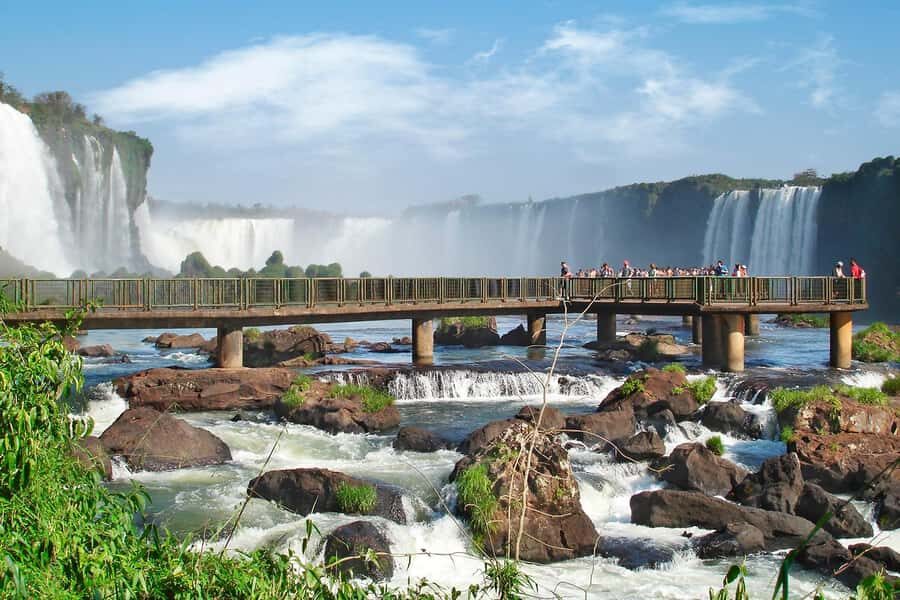
Once you reach the park, you’re guided through the Brazilian side viewpoints, with the heart of it being a traditional 1,200-meter-long gateway. That walkway is long enough to give you a real sense of how the falls spread out, but short enough that you still have time to move to different angles.
Here’s what the route is designed around: the Brazilian side includes four named falls—Floriano, Deodoro, Benjamin Constant, and Salto União. On this side, Salto União is the one that people connect with the Devil’s Throat idea, because it delivers that dramatic, thunderous feeling from the Brazilian viewing area.
The falls themselves are part of a larger system—275 waterfalls make up Iguaçu. Even if you don’t count them (nobody does), the layout helps you understand that you’re not looking at one waterfall; you’re looking at a whole broken rim of water. From the gateway, you get that panoramic effect in a way that feels more like “map reading” than “one viewpoint and done.”
One practical note: your time inside the park is fixed. If you’re the type who likes to linger at each stop, you might feel a little pushed. I’d treat this as a “see a lot, move smart” day rather than a “hang out for hours at one spot” day.
Devil’s Throat on the Brazilian side: why this angle is worth the trip

People often come expecting a single iconic waterfall moment. What’s worth your attention here is how the Brazilian side changes the feeling of the Devil’s Throat concept. The highlight isn’t only the scale; it’s the approach. From this side, you’re moving along the gateway and building the sightline step by step.
When you hit the most dramatic section, the water sound and spray (even from a distance) can make everything feel more immediate than a photo can capture. The effect is that you don’t just look at the falls—you experience them through noise and motion as you walk along.
This is also why the tour’s structure works: it gives you a guided route through the best sections without making you figure it out while you’re already dealing with crowds, mist, and competing viewpoints. You’ll come away with a strong sense of where the falls fit into the whole Iguaçu system.
Panoramic lift and leaving the falls: how the tour keeps you moving
After the Brazilian falls walk and viewpoints, the plan includes access to the panoramic lift. The key point is that it helps with the logistics of getting you back efficiently, so you’re not stuck searching for the easiest route out while you’re tired from walking.
Then your group boards a bus that brings you back toward the gateway area. This flow matters when you only have a few hours in the park. A smooth exit helps you preserve energy for lunch and your second major stop.
If you’re worried about timing, this is one piece that’s worth knowing: the day keeps moving. The lift is part of that system—built to reduce friction so the tour can still deliver the Itaipu segment.
Lunch on your own: what to plan so you don’t lose steam
Lunch is included only as a stop, not as a meal. The tour includes a break for lunch where food and drinks are not included, so you’ll need to budget separately.
Because you still have Itaipu Dam to visit right after, you’ll want to eat in a way that doesn’t slow you down. If you’re carrying cash, double-check payment options on the spot; the tour doesn’t include food logistics beyond the break.
Also, remember you’re going from a humid, misty environment to a structured dam visit. If you need a quick reset—water, something light, and a change of socks if you got wet—use the lunch window. It’s small, but it can protect the rest of your day from feeling like a slog.






Itaipu Dam: the visit built around scale, output, and a binational story
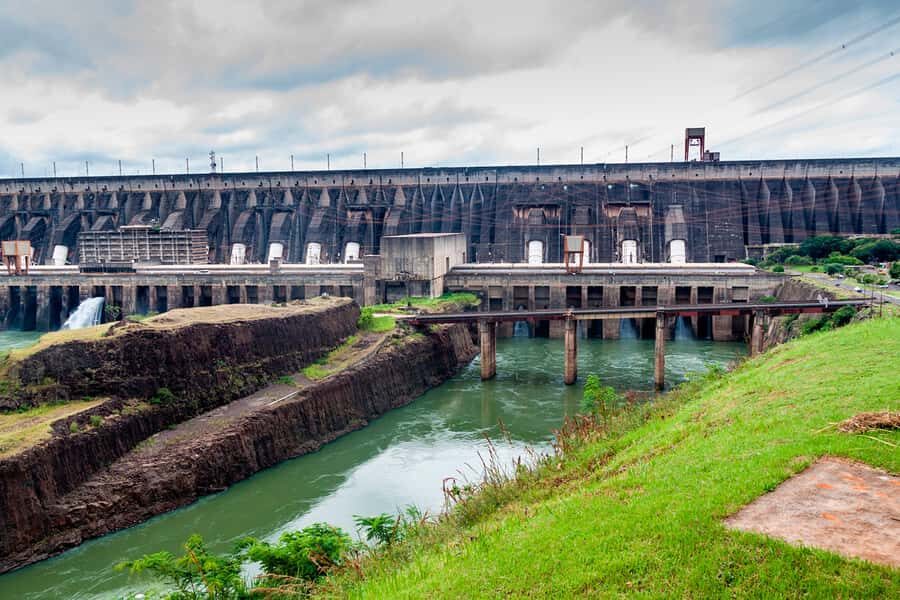
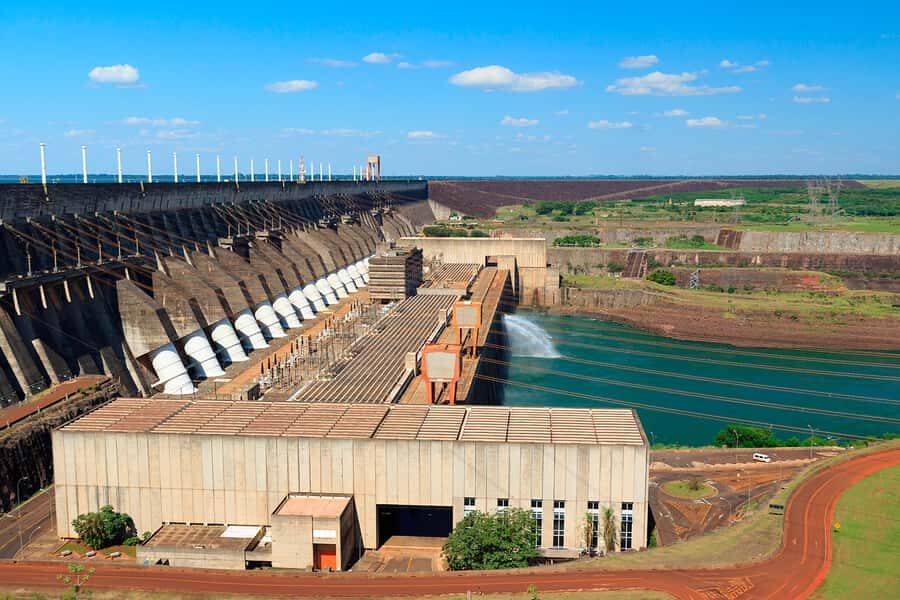
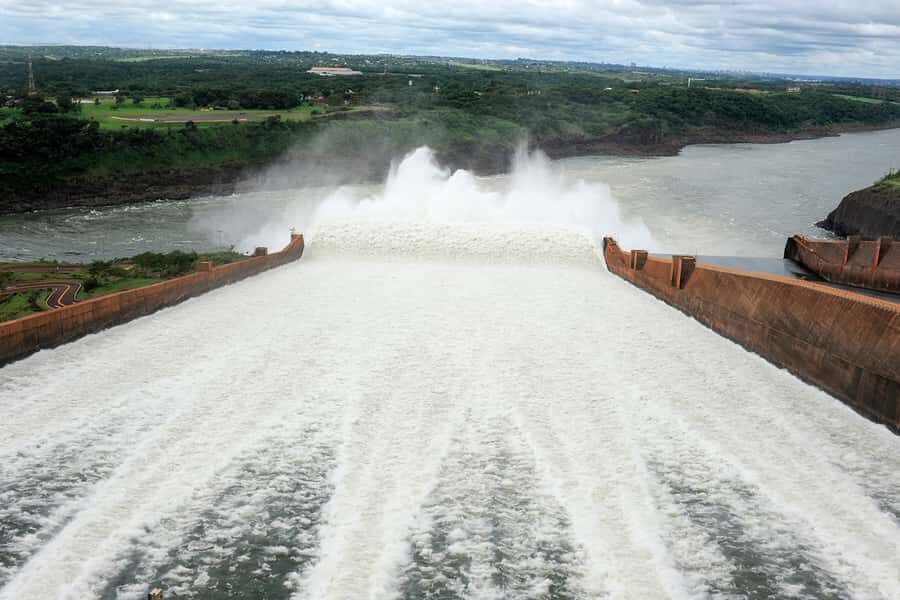
Then comes the reason many people book this tour even if they’re not into hydroelectric power: Itaipu Hydroelectric Power Plant. The visit is described as a panoramic visit, which is exactly what that sounds like—an overview style experience rather than a deep technical training session.
Still, the numbers are so large they become part of the attraction. Itaipu is described as the largest in operation in the world and a binational development by Brazil and Paraguay on the Paraná River. The installed capacity is given as 12 million 600 thousand kW, with 18 generating units of 700,000 kW each.
The tour also frames why Itaipu matters to everyday life, not just engineering charts. It’s said to supply 90% of the electricity consumed in Paraguay and 25% of the electricity demand for Brazil. When you connect those percentages to the dam’s scale, it’s easier to understand why this site earned major engineering recognition.
The visit includes a reference to being chosen by the American Society of Civil Engineering as one of the Seven Wonders of the Modern Technological World. Even if you don’t know the organization, it signals that the project is historically significant—not just locally impressive.
For many visitors, the value is that you get a visual sense of a monumental infrastructure project without needing a full day dedicated only to Itaipu. In a tight itinerary like this, that’s smart.
Price and value: what $90 covers (and what can add up)

At $90 per person for an 8-hour day, this tour can feel like good value if you compare it to the cost of piecing everything together: transport from Puerto Iguazu, a live bilingual guide, a Brazilian falls visit, and a panoramic Itaipu Dam stop.
But here’s the key budgeting truth: major access fees are listed as not included. That includes:
- Iguaçu National Park entrance fee
- Itaipu Dam admission fee
You may also see additional charges like municipal tourism tax, and the tour includes transfers from Puerto Iguazu hotels (with limited exceptions outside specific areas).
So I’d look at the $90 as the cost of “the guided day plus transportation,” then treat entrance/admission fees as the extra layer you’ll pay on top. If your goal is to keep the whole trip cost-predictable, you’ll want to estimate those fees before you book.
The inclusion that boosts value is the hotel pickup and round-trip transfers plus the guide. If you’ve ever tried to do Iguaçu and Itaipu as two separate logistics problems in one day, you’ll appreciate why bundling them helps.
Border, visas, and ID: the part you must get right for Brazil
Because this tour visits Brazil, you should treat documentation seriously before you go. The guidance provided is specific:
- Citizens traveling with passports from Australia, Canada, and the United States and visiting Brazil may be subject to visa requirements starting April 10, 2025. The instructions say you can apply for an electronic visa through: https://brazil.vfsevisa.com/
- Passengers from MERCOSUR countries must present ID.
- Passengers from other countries must present a passport.
- If minors join, the documentation must include a photograph.
This matters because your tour day depends on crossing without delays. If you’re in the Australia/Canada/US group, don’t leave this to the last week. Plan it early and confirm what your nationality requires.
Also, if your itinerary includes multiple border days, make sure the tour date matches your travel flow. A wrong day can turn into a missed pickup situation very quickly.
Who should book this tour (and who should skip it)
I think this tour makes the most sense for:
- First-time visitors who want one-day coverage of Iguazu Falls (Brazil side) and Itaipu Dam
- People who prefer a small group with bilingual interpretation (English/Spanish)
- Travelers staying in Puerto Iguazu who want easy pickup and a clear plan
You might want to skip it or look for a different format if:
- You hate feeling on a clock. With only 3 hours in the park, you’ll have to choose priorities.
- You’re expecting a long, lecture-style guide experience at every stop. This is built around seeing the highlights, not slow pacing.
- You’re very sensitive to pickup timing. If something goes off-script on your day, it can compress your falls experience even more.
For most people who want a high-impact day, it’s a solid choice—especially if you like combining different types of wow: spray-and-sound nature, then concrete-and-math power.
Should you book the Iguazu Falls Brazil side & Itaipu Dam day trip?
Book it if you want a structured way to hit the Brazilian gateway route at Iguaçu and still have time to see Itaipu in the same day—without building your own logistics puzzle from Puerto Iguazu. The small-group size and bilingual guide make it easier to understand what you’re looking at as you move along the falls.
Don’t book it if you’re planning to spend your best hours lingering slowly in the park, or if you’re still sorting out Brazil entry requirements. This is a “get up early, see a lot” tour. When that matches your travel style, it pays off.
If you do book, do two things up front: confirm your pickup location details for your hotel area, and double-check your Brazil documentation based on your passport.
FAQ
Where does pickup happen?
Pickup is included from Puerto Iguazu hotels, with pickup times generally between 7:20 a.m. and 8:00 a.m.
What’s included in the tour price?
The tour includes round-trip transfers from Puerto Iguazu hotels, a Spanish- and English-speaking guide, a tour of the Brazilian side of the Iguazu Falls, and a panoramic visit of Itaipu Dam.
What is not included?
Not included are food and beverages, Itaipu Dam admission fee, Iguaçu National Park entrance fee, transfers from/to hotels within Selva Iriapu (except Aldea Lodge), municipal tourism tax, and transfers from airport to hotels (and hotels to airport).
How long is the tour?
The total duration is 8 hours.
How long do you spend at Iguaçu National Park and Itaipu?
You have about 3 hours at Iguaçu National Park and about 2 hours at Itaipu Dam.
How big is the group?
The group is limited to 10 participants.
What languages are offered?
The live tour guide offers English and Spanish.
Do I need a visa for Brazil?
The information says citizens with passports from Australia, Canada, and the United States may be subject to visa requirements starting April 10, 2025, with an electronic visa application available at https://brazil.vfsevisa.com/. MERCOSUR passengers need ID, and other passengers need a passport. Minors’ documentation must include a photograph.