REVIEW · BUENOS AIRES
Buenos Aires: North or South Buenos Aires Bike Tour
Book on GetYourGuide →Operated by Rental Bike Argentina · Bookable on GetYourGuide
Buenos Aires on two wheels makes the city feel faster and friendlier. I love how this bike tour gives you big visual coverage in just 4 hours, and I especially like the way guides turn landmarks into stories you can actually remember (I’ve seen guides like Ana and Pili highlighted for their clear English/Spanish and steady pacing). One heads-up: the Reserva Ecológica stop can be affected, since it’s closed on Mondays and may be skipped if weather turns rough.
Between the North Circuit and South Circuit, you’ll get two different sides of Buenos Aires: the old-port and tango/football swagger on the south, and the Belle Epoque parks-and-architecture mood on the north. You ride a cruiser bike with a helmet and basket, in a small group capped at 8, so you’re not getting swallowed by a crowd. The main drawback to consider is simple—this is still a cycling tour—so you’ll want comfortable shoes, solid balance, and the patience to move with the group.
In This Review
- Key Highlights Worth Targeting
- North or South Buenos Aires: pick the mood, not just the map
- Cruiser bikes, helmets, and how safe the ride feels
- Quick practical notes before you go
- South Buenos Aires: San Telmo, La Boca, Puerto Madero, and Plaza de Mayo
- Start around Parque Lezama and early Buenos Aires foundations
- A quick stop that changes the rhythm: Russian Orthodox Church area
- La Boca and La Bombonera: football energy, up close
- Caminito: enough time to look, not just pass
- Fuente de las Nereidas and the coastal-leaning scenic shift
- Puerto Madero: modern skyline contrast
- Ecological Reserve (Reserva Ecológica): nature between city and river
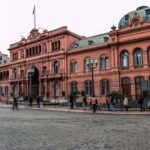
- The finish at Plaza de Mayo: Cabildo, Cathedral, and Casa Rosada
- North Buenos Aires: Downtown, Recoleta style, and Palermo parks
- Downtown energy and business-center views
- Retiro and Plaza San Martín: Belle Epoque landmarks
- Recoleta, without the cemetery entry
- Floralis Genérica and the park-meets-city mood
- Palermo open space: Planetario and El Rosedal garden time
- Congress Square at the end: a natural sunset moment
- What you’ll learn (and why the guide approach matters)
- Price and value: why $38 can make sense here
- Weather, timing, and what to pack for a smooth ride
- Should you book the North or South Buenos Aires bike tour?
- FAQ
- How long is the Buenos Aires North or South Bike Tour?
- How much does the tour cost?
- What’s included with the ticket?
- Is the group size small?
- Do I get any time to stop and walk around?
- What are the age and height requirements?
- What if it’s Monday or the weather is bad?
Key Highlights Worth Targeting
- North vs South Circuits: pick the vibe you want, then see the icons tied to it
- Tight-group, bilingual guiding: Spanish/English, with guides adjusting to the group’s comfort
- Caminito time on the ground: enough free minutes to browse, not just pose
- San Telmo + La Boca focus (South): Tango history, then the pulse of football at La Bombonera
- Major center landmarks (both areas): you reach Plaza de Mayo, Cabildo, Cathedral, and Casa Rosada
- Recreation and parks (North): Belle Epoque buildings, Recoleta area stroll stops, and Palermo open space
North or South Buenos Aires: pick the mood, not just the map
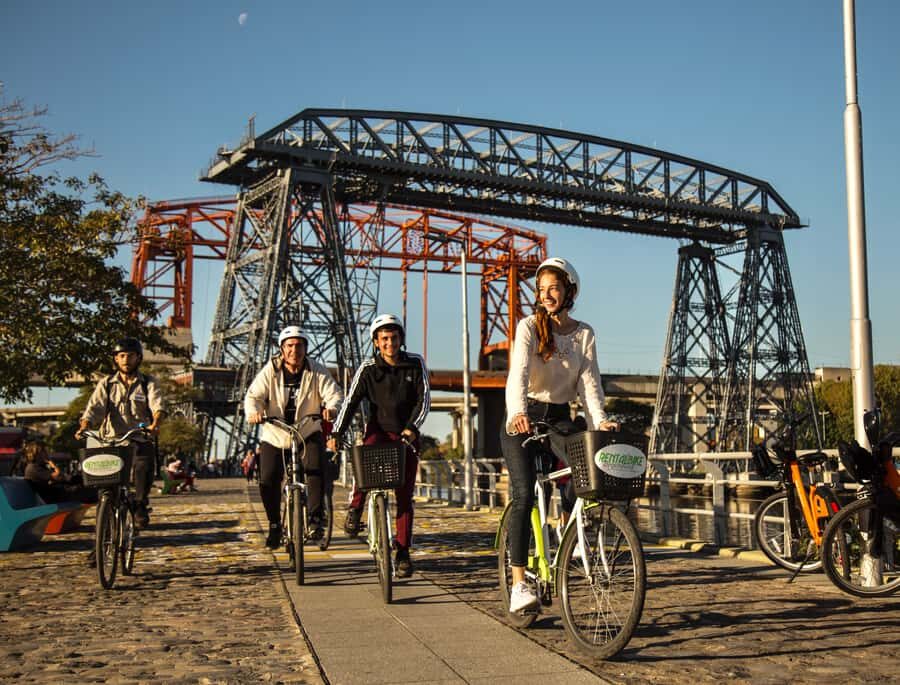
The best part of this tour is that it’s not one-size-fits-all. You choose North Buenos Aires or South Buenos Aires, and the route follows that decision all the way through.
On the South Circuit, the day leans into Buenos Aires origins and identity. You start near San Telmo, head through La Boca (including La Bombonera), and stop at Caminito, where the neighborhood’s artistic edge shows up in full color. Then you swing toward the city center and finish at Plaza de Mayo—the founding-era heartbeat—so the south route feels like a story arc.
On the North Circuit, you get the cleaner lines of late-1800s/early-1900s Buenos Aires: grand architecture, formal squares, and the park culture in Recoleta and Palermo. You also hit big skyline landmarks along the way, then round things out with Congress Square (with sunset vibes built in).
If you’re new to Buenos Aires and want a quick “starter pack,” I’d match your choice to your interests:
- Football and tango-era neighborhoods → South
- Parks, classic architecture, and strolling neighborhoods → North
You can also read our reviews of more cycling tours in Buenos Aires
Cruiser bikes, helmets, and how safe the ride feels
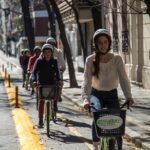
This is built around comfort and control. You’re on a cruiser bike, not a skinny-gear road bike, and you’ll have a helmet plus a basket for carrying small essentials. There’s also a water refilling machine, which helps when the day is warm or you’re just thirsty after cycling.
From the on-the-ground perspective, the ride style matters. The route typically uses bike-friendly roads where possible, and you’ll spend most of the time riding in areas that feel organized rather than chaotic. That said, you should assume there will be moments where you mix with regular traffic—just for short stretches—especially on the North Circuit where the route can include busier roads.
The other safety factor is the guide’s role. The group is capped at 8, which makes it easier for the leader to keep everyone together. Guides like Santiago, Florencia, and Flor are mentioned for staying attentive to pacing and adjusting when someone needs a slower rhythm. In plain terms: you’re not just following a route on your phone; you’re riding with someone watching the group.
Quick practical notes before you go
- Start on time. You’re expected to be at the shop early, because departures don’t wait long.
- Wear comfortable shoes and dress for the weather.
- Bring your own reusable water bottle even though refilling is available.
South Buenos Aires: San Telmo, La Boca, Puerto Madero, and Plaza de Mayo
If you choose the South Circuit, the route feels like Buenos Aires with its sleeves rolled up: older streets, louder color, and big cultural symbols.
Start around Parque Lezama and early Buenos Aires foundations
You begin near Parque Lezama, then roll through the area with time for photos and guided context. This is where the guide sets the tone with the city’s early chapters—foundation stories, immigration waves, and how Buenos Aires became Buenos Aires. It’s a good warm-up. You get to see the city up close before it gets fast and flashy.
A quick stop that changes the rhythm: Russian Orthodox Church area
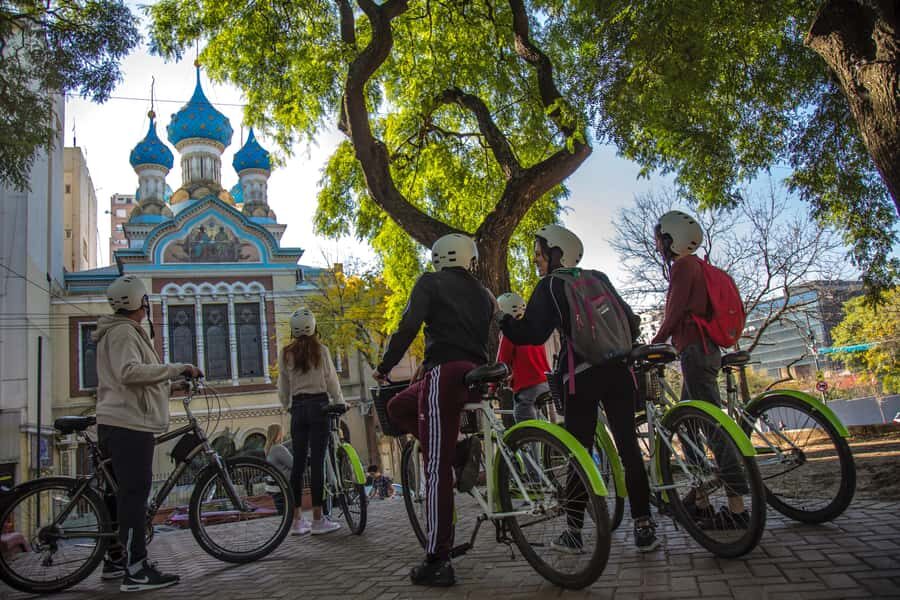
One of the short photo stops is at the Russian Orthodox Church of the Holy Trinity. Even if you only grab a few minutes, it helps break up the day’s neighborhoods so you don’t experience Buenos Aires like a checklist.
La Boca and La Bombonera: football energy, up close
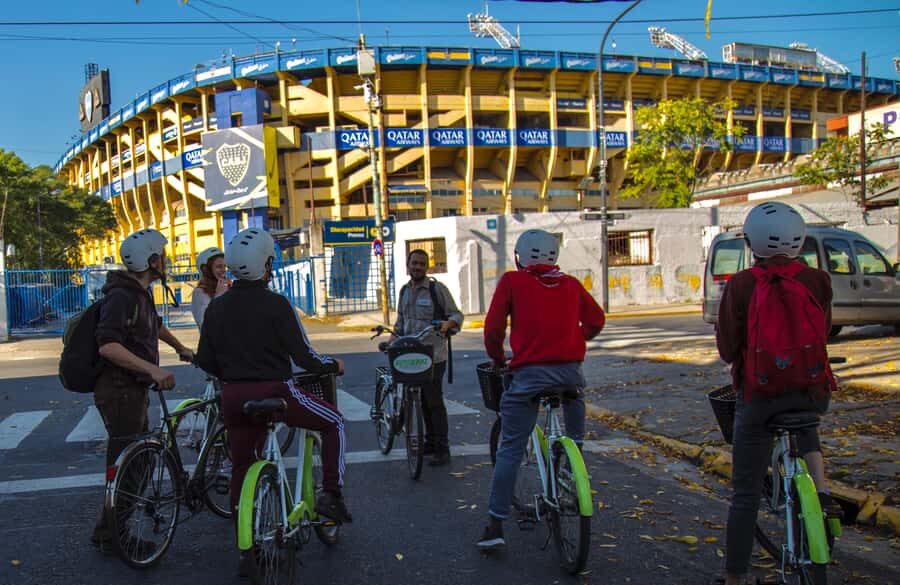
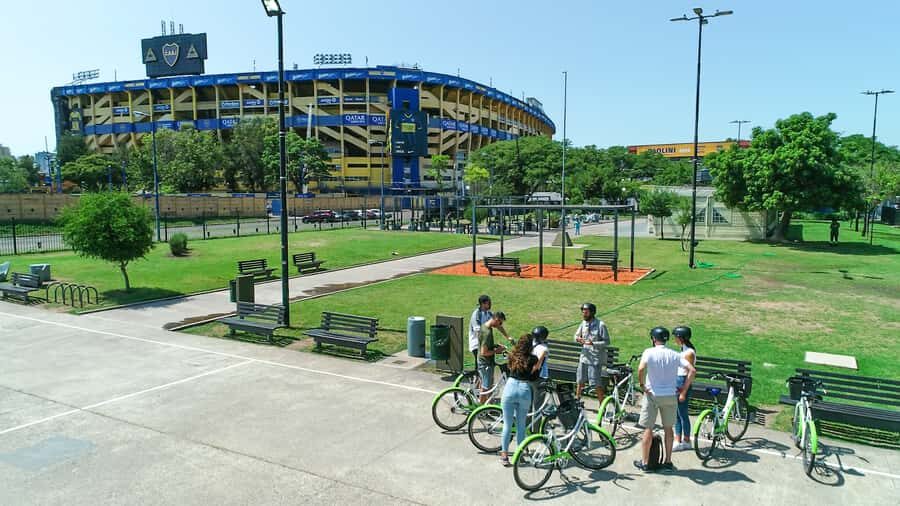
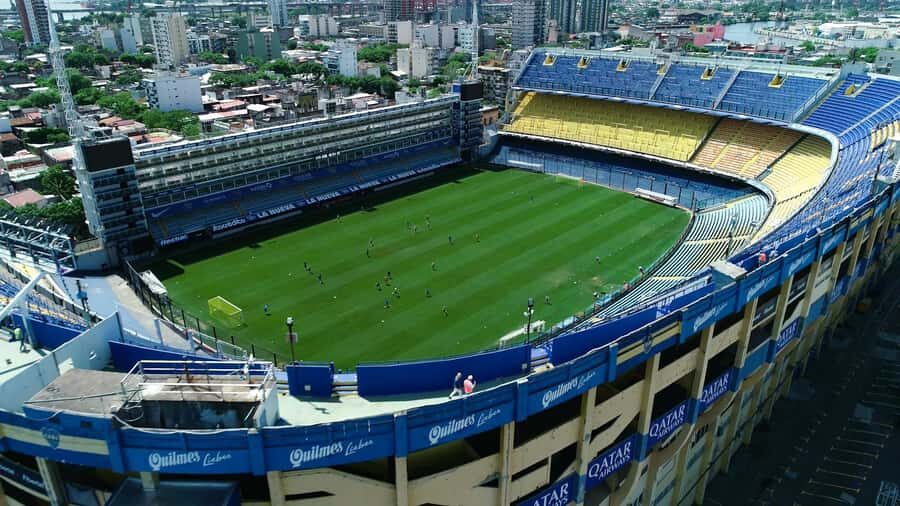
Then comes La Boca. You’re stopping for guided sights and plenty of photo opportunity. The big moment is La Bombonera, where you’ll pause to stare at one of the area’s hearts and a symbol of local football passion.
This is also where the tour’s storytelling pays off. You’re not just seeing a stadium—you’re hearing why places like this matter to identity, pride, and daily life in the neighborhood.
Caminito: enough time to look, not just pass
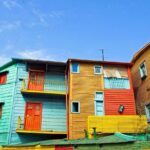
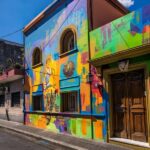
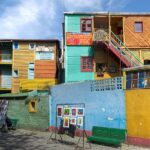
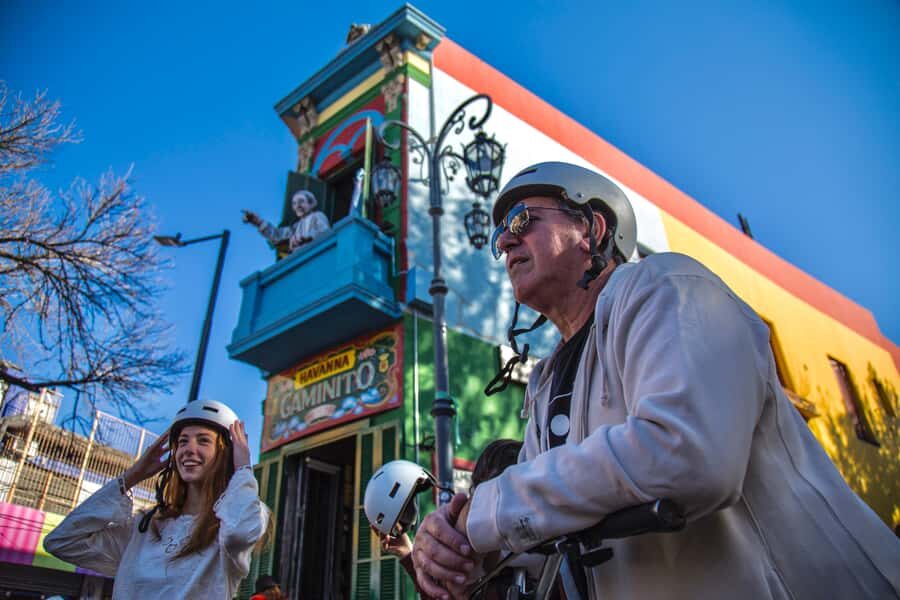
Next you hit Caminito, an area that started as part of the port story and has become a district for local artists. You’ll get time to wander with no cycling pressure, so you can actually browse rather than rush. If you like street art, souvenirs, or just the texture of working neighborhoods, this is one of the best stops on the south route.
Practical tip: if you want to buy small art or crafts, keep some spending money ready. The walking time is short enough that it can disappear if you spend it all just looking up at buildings.
Fuente de las Nereidas and the coastal-leaning scenic shift
You also pass by Fuente de las Nereidas (Lola Mora) for photos and quick guided facts. After that, the route transitions toward newer city shoreline areas, which changes the feel of the streets.
Puerto Madero: modern skyline contrast
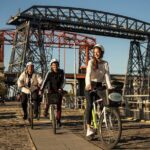
You ride into Puerto Madero, the second harbor and one of the city’s most modern neighborhoods. The contrast is the point. The south tour doesn’t only show “old Buenos Aires.” It shows how the city rebrands itself, including the way the skyline looks in newer zones.
Ecological Reserve (Reserva Ecológica): nature between city and river
Then you head to the Reserva Ecologica, a large nature reserve between the city and the Rio de la Plata. It’s a refreshing break from architecture and crowds. Wildlife viewing can be part of the experience, but keep expectations flexible.
Important note: it’s closed on Mondays, and it may also be affected by bad weather conditions.
The finish at Plaza de Mayo: Cabildo, Cathedral, and Casa Rosada
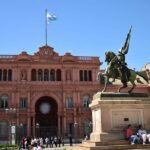
The final stretch lands at Plaza de Mayo, where Buenos Aires is tied to its definitive founding-era story (1580). Here you’ll see the Old Cabildo, the Metropolitan Cathedral, and the Casa Rosada. The best part is that you’re approaching these landmarks on a bike—so it feels less like museum time and more like real city time.
If you want to end the tour feeling oriented—like you can picture where things sit on the map—this ending helps.
North Buenos Aires: Downtown, Recoleta style, and Palermo parks
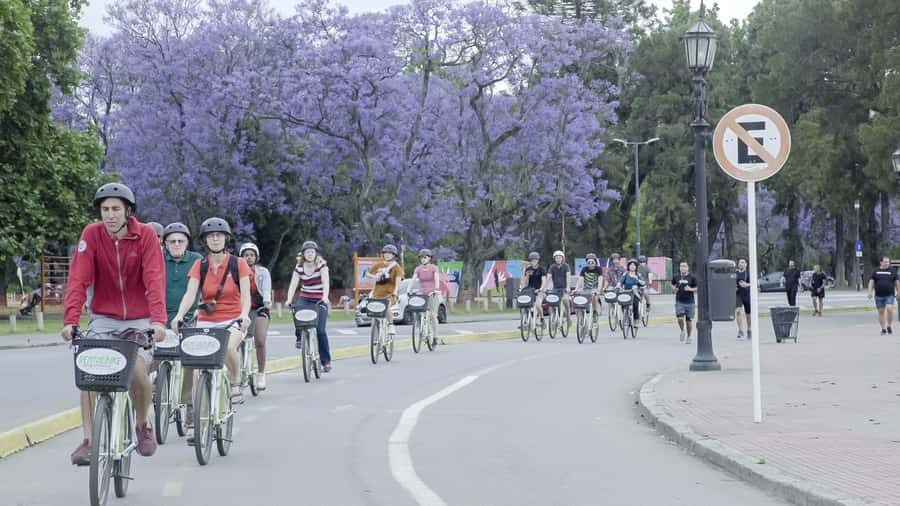
The North Circuit is for you if you want more architecture, parks, and the late-19th-century “grand city” look.
Downtown energy and business-center views
You start by rolling through downtown Buenos Aires, including the business district feel. Early on, it’s about orientation. You’re learning where the major axes are and how the city’s different zones connect.
Retiro and Plaza San Martín: Belle Epoque landmarks
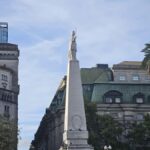
Next comes Retiro and Plaza San Martín, where you get palaces and architectural icons—classic Belle Epoque style. This is a great section for photos, but also for listening. The guide can connect the buildings to the era’s ambition and how Buenos Aires grew.
Recoleta, without the cemetery entry
Later the pace slows into Recoleta, known for cafes, museums, and its famous cemetery area. You’ll see the district and photo stops, but the tour does not enter the Recoleta Cemetery. That still works well: you get the Recoleta vibe and can decide later if you want cemetery time on your own.
Floralis Genérica and the park-meets-city mood
Moving onward, you pass by Floralis Genérica, the giant metal flower. Reviews mention this as a standout photo stop, and it makes sense: it’s unusual enough that it turns into a mental bookmark for your north route.
You’ll then head toward Palermo, one of the city’s biggest “fresh air” zones.
Palermo open space: Planetario and El Rosedal garden time
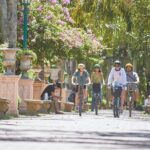
You ride past the Planetario Galileo Galilei and into the Paseo El Rosedal Garden area. This is where the north route feels most like a calm reset. Even if you don’t spend long, the parks and open spaces help balance out the heavier landmark stops.
Congress Square at the end: a natural sunset moment
On the way back, you stop near Plaza del Congreso by the Legislative Power building, with sunset built into the timing. This is a smart closing move: it’s a big-sky Buenos Aires moment, and it gives your eyes a final “anchor” before you return.
One caution if you’re not a confident rider: the North Circuit can include busier road sections more often than the south, so pick north only if you’re comfortable cycling through normal city traffic.
What you’ll learn (and why the guide approach matters)
The reason these bike tours feel worth it in Buenos Aires is that the guide isn’t just naming places. They connect the dots: how Buenos Aires formed, what shaped its neighborhoods, and why the culture shows up the way it does today.
On the South Circuit, the storytelling is tied to:
- Immigration and early foundations around San Telmo/Lezama area
- Tango history connected to the neighborhood’s roots
- Football identity around La Boca and the significance of La Bombonera
- The founding-era politics and institutions at Plaza de Mayo (Cabildo, Cathedral, Casa Rosada)
On the North Circuit, you’ll get stories that lean into:
- The late 19th-century growth of downtown architecture
- How Retiro/Plaza San Martín became tied to grand buildings
- Why Recoleta turned into an iconic district for food, museums, and stroll culture
- The way Palermo became a park-and-leisure zone
Also, the bilingual format matters. With Spanish/English guidance, you can follow details without playing catch-up. Guides like Ana, Pili, Santiago, Flo, Pilar, Dilson, and Martina are specifically mentioned as strong communicators, and it shows in how smoothly the tour flows even when the weather gets annoying.
Price and value: why $38 can make sense here
At $38 per person for a 4-hour guided bike tour, the value comes from what’s included and what you’re able to see.
You’re getting:
- A bilingual guide
- Cruiser bike plus helmet
- A basket (small but actually useful)
- Water refilling machine access
- Enough stops to cover multiple major neighborhoods and landmarks in one go
What you’re buying isn’t speed. It’s efficiency plus context. If you tried to cobble together this same arc by taxi and walking, you’d spend more time and more money—then still miss the neighborhood stories that make the city click.
The best value angle is this: you leave with a mental map. You can return later to the places that pulled you in on the tour day, without wasting your first hours trying to figure out where everything is.
Weather, timing, and what to pack for a smooth ride
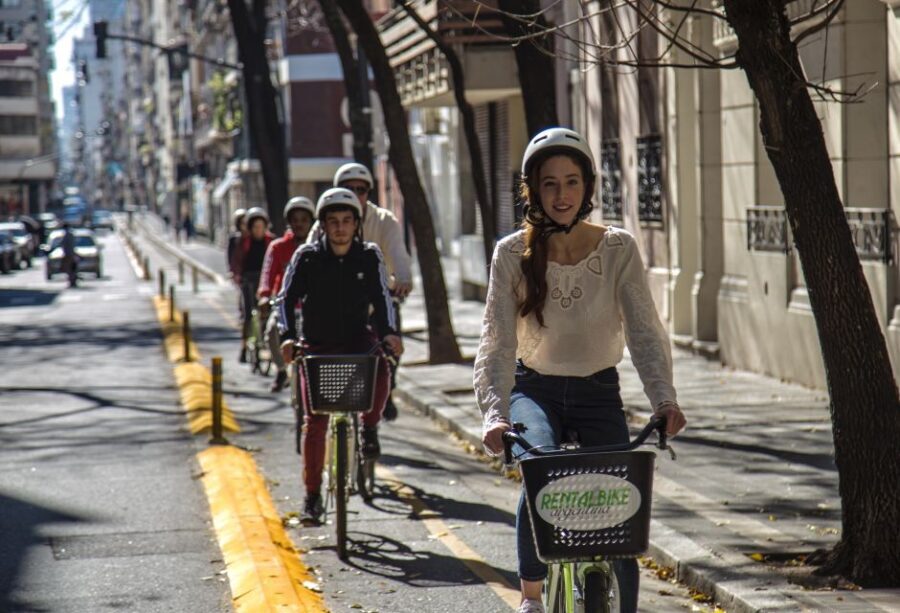
Buenos Aires weather is unpredictable, and this tour is designed to keep moving when possible. The ride runs in light to moderate rain, but it can be suspended if conditions are unsafe, and it may be rescheduled depending on availability.
So pack like you mean it:
- A weather layer you can move in
- Comfortable shoes that don’t hate wet sidewalks
- Your reusable bottle (even though refilling exists)
- Light clothing you can layer up if it cools down
Rain handling can be part of the experience. Some guides are noted for bringing practical solutions like ponchos when the sky changes, which can turn a soggy ride from miserable to just inconvenient.
Should you book the North or South Buenos Aires bike tour?
Book it if you want:
- A fast, guided orientation to Buenos Aires
- A way to see San Telmo, La Boca, Plaza de Mayo (South) or Recoleta, Palermo, Congress Square (North)
- A comfortable, helmeted ride with a small group
Skip it (or choose another style of sightseeing) if:
- You have difficulty riding or you’re dealing with medical limits. This tour isn’t positioned for people with back problems, mobility impairments, heart or respiratory issues, epilepsy, recent surgeries, or visual impairment.
- You’re expecting a super relaxed walk-only pace. This is cycling, just at an easier city pace.
If you’re choosing between north and south as a first visit, here’s the simplest decision rule: go South for tango/football energy and the historic city center ending, or go North for parks, grand buildings, and a more leisurely feel in Recoleta/Palermo.
FAQ
How long is the Buenos Aires North or South Bike Tour?
It lasts 4 hours.
How much does the tour cost?
The price is $38 per person.
What’s included with the ticket?
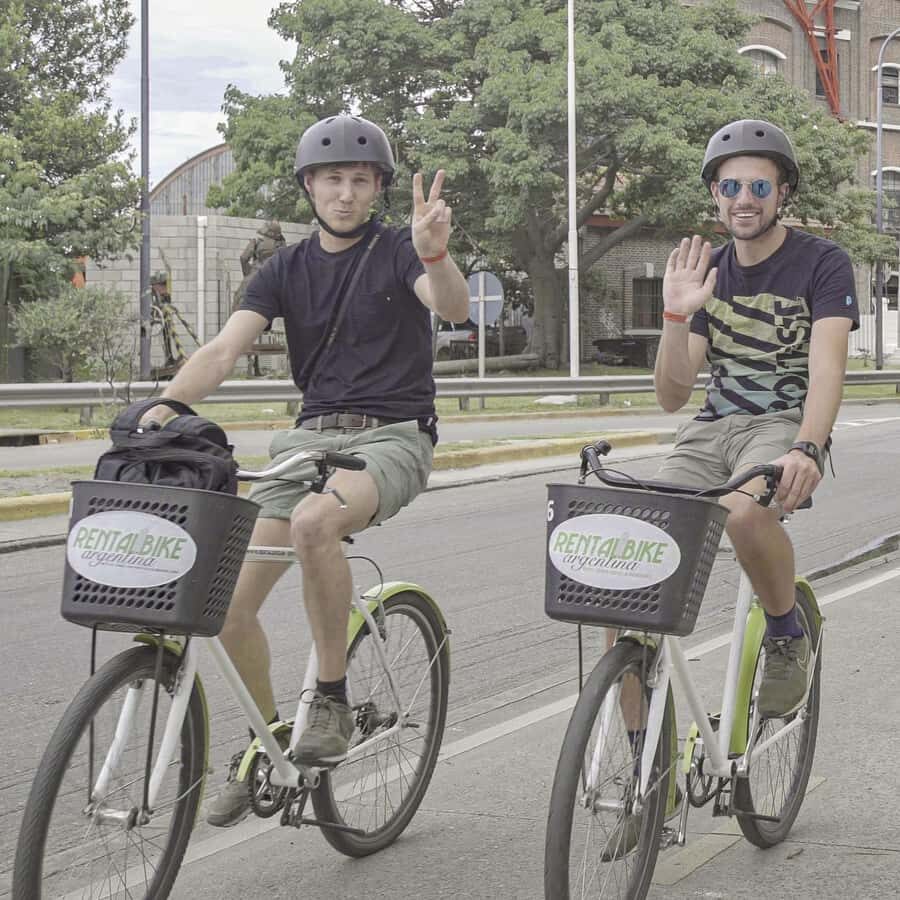
You get a bilingual guide (Spanish/English), a cruiser bike, a helmet, a bell and basket, and access to a water refilling machine.
Is the group size small?
Yes. It’s limited to 8 participants.
Do I get any time to stop and walk around?
Yes. For example, Caminito includes free time, and other parks and photo stops include time for sightseeing.
What are the age and height requirements?
Minimum height is 1.50 mts, and the minimum age is 12 years old.
What if it’s Monday or the weather is bad?
The Reserva Ecológica is closed on Mondays. The tour may also be suspended or rescheduled if weather becomes unsafe (heavy rain or winds). It runs in light to moderate rain when conditions allow.
If you tell me when you’re going (day of week) and whether you prefer tango/La Boca or parks/Recoleta, I’ll help you choose the best circuit.