REVIEW · BUENOS AIRES
Nazis in Buenos Aires: a historical walking tour
Book on GetYourGuide →Operated by Klio Tours · Bookable on GetYourGuide
Nazis in Buenos Aires is the kind of history walk that makes you slow down and look twice. You’ll move through Recoleta, Retiro, and Microcentro with Max, a university history teacher, and connect World War II, Nazi fugitives, and Buenos Aires politics to places you can still see today. I loved how the tour stays grounded in evidence and sources, and I also liked the way Max teaches without turning it into a shouting match. One possible drawback: it’s heavy subject matter, and it involves a fair amount of walking and discussion (so it’s not a great fit if you want something light).
What makes this stand out is the mix of famous Buenos Aires landmarks with specific, uncomfortable “how did this happen here?” questions. You start near the Monument to Juana Azurduy, then work your way through major city stops, ending at the Memorial at the former Israeli embassy site. If you’ve got at least a basic sense of WWII and the Holocaust, you’ll get more out of it—but Max is also ready to answer questions along the way.
You’re not just getting facts. You’re getting context—Argentina’s political debates after 1945, how people talk about Perón, and how migration and government decisions can sit in the same sentence as atrocity. That’s powerful, and it’s why the tour earns a near-perfect rating.
In This Review
- Key things to notice on this walk
- Why this Buenos Aires walk is harder—and better—than most history tours
- The best way to understand the theme: Nazis, politics, and Argentina after 1945
- Stop-by-stop: how each location builds the story
- Start at the Monument to Juana Azurduy (Palacio Libertad area)
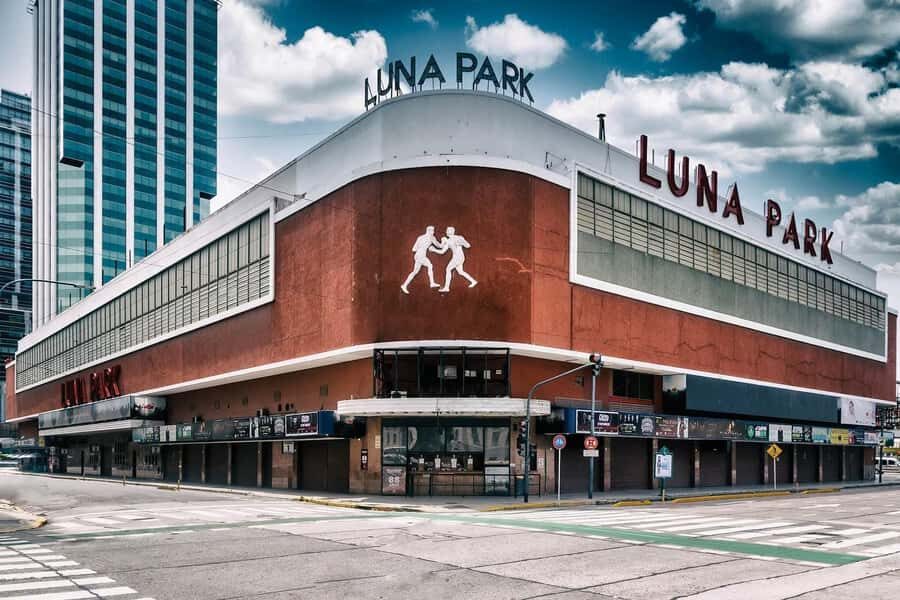
- Luna Park Stadium area: Nazi-era spectacle in a still-standing venue
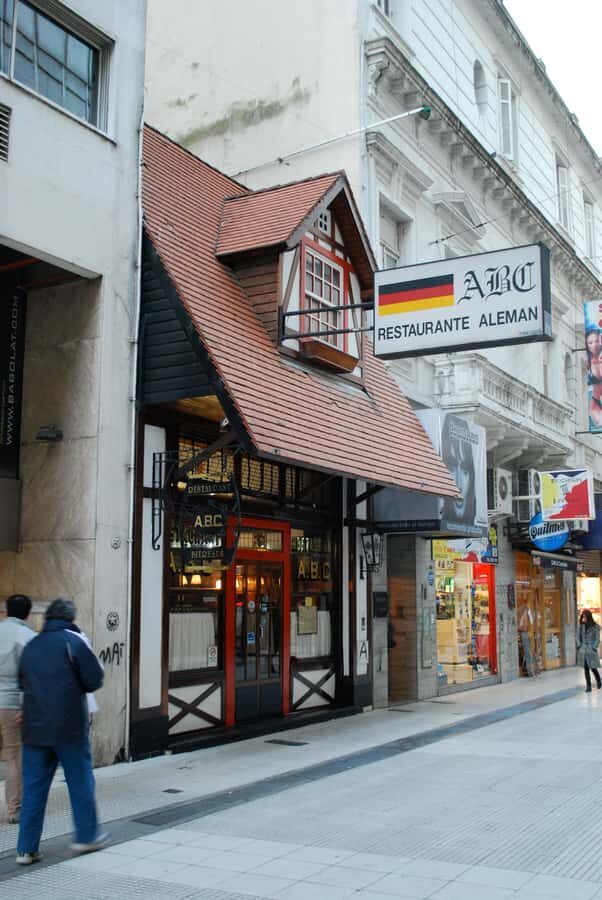
- ABC Restaurant: Eichmann’s coffee moment and the attack site connection
- Museo de Armas de La Nación Tte. Gral. Pablo Riccheri: institutions and the machinery of power
- Palacio San Martín: Perón-era debates and why context isn’t optional
- Italian Circle of Buenos Aires: a neo-Nazi attack in the 1960s
- How the route works across Recoleta, Retiro, and Microcentro
- What you’ll learn, in plain terms
- Price and value: why $25 can be a smart use of your Buenos Aires time
- Who should book this tour
- Should you book Nazis in Buenos Aires?
- FAQ
- How long is the tour?
- What language is the guide?
- Where does the tour start and end?
- What’s included in the price?
- Is entry included to Luna Park Stadium or other buildings?
- Is the tour suitable for children or wheelchair users?
Key things to notice on this walk
- Max teaches like a classroom in motion: clear, structured explanations with visual support at stops.
- You’ll see the links between Nazi fugitives and real Buenos Aires addresses, not vague generalities.
- Nazi-era propaganda and meetings appear in ordinary urban spaces, including a major still-operational theater.
- You’ll visit sites tied to major attacks targeting Jewish communities, including one connected to the worst terrorist attack in Latin America.
- The Adolf Eichmann coffee connection is part of the story, told in the context of identification and capture.
- You also cover 1960s neo-Nazi violence, so the timeline doesn’t stop after 1945.
Why this Buenos Aires walk is harder—and better—than most history tours
Buenos Aires is gorgeous, photogenic, and full of grand architecture. This tour uses that same city energy for something darker: tracing how Nazi ideology, war criminals, and antisemitic violence intersected with Argentina’s modern history.
I like tours where the guide has a point of view, but I trust the ones where the guide also shows how they know what they claim. Max’s approach (as you’ll feel it in the pacing and in how questions are handled) is firm but not combative. He is careful about sources, and he’s willing to say when something is uncertain—one of the reasons people keep praising him for balancing sharp facts with humility.
The walk itself is also the right length. At around 2.5 hours, it’s long enough to connect the dots across districts, but short enough that you’re not stuck for a half-day of “and then…” history. You’ll also get a built-in restroom pause of about 10 minutes.
You can also read our reviews of more walking tours in Buenos Aires
The best way to understand the theme: Nazis, politics, and Argentina after 1945
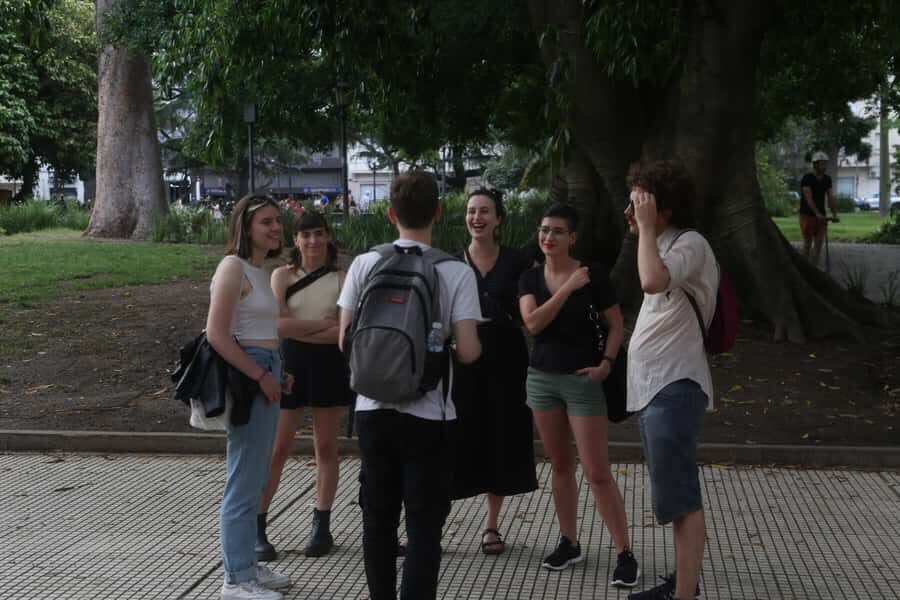
This isn’t just a sightseeing circuit. The tour is built around a disputed debate: whether Argentina truly became a refuge for Nazi war criminals after 1945, and how widely that was known—or even encouraged—by Argentine authorities.
That framing matters because it pushes you beyond simple villain-versus-hero stories. You’ll hear about how Nazi war criminals arrived and lived, and you’ll also get the political background that Argentinian history is famous for: Perón era debates, shifting alliances, and the way real-world decisions get argued over decades later.
I’d also call out that the tour isn’t only about Germany and WWII. It’s about Buenos Aires—the Jewish community there is described as the second largest in all of the continent—and how antisemitic violence and international extremism reverberated locally.
If you want a single sentence to carry through the whole walk, it might be this: the city’s history isn’t safely “over there.” It’s in streets, buildings, and institutions you can still point to today.
Stop-by-stop: how each location builds the story
Start at the Monument to Juana Azurduy (Palacio Libertad area)
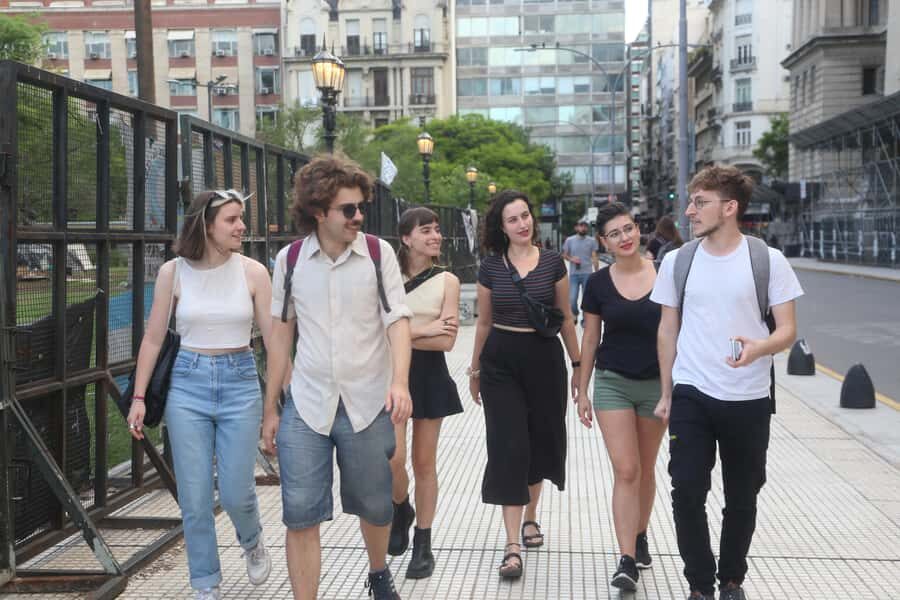
The tour begins near the Monument to Juana Azurduy, right by the Palacio Libertad area (a building locals know as the former CCK). This opening matters because it gives you a Buenos Aires anchor before the tour shifts into postwar controversy.
You’ll start by setting the scene—what the debate is, what the stakes are, and why this subject is so emotionally charged. Max typically gets the group thinking early, and it makes the later stops land harder.
Practical tip: wear comfortable shoes. This is a walking tour across multiple districts, and the theme encourages you to slow down rather than rush to the next photo spot.
Luna Park Stadium area: Nazi-era spectacle in a still-standing venue
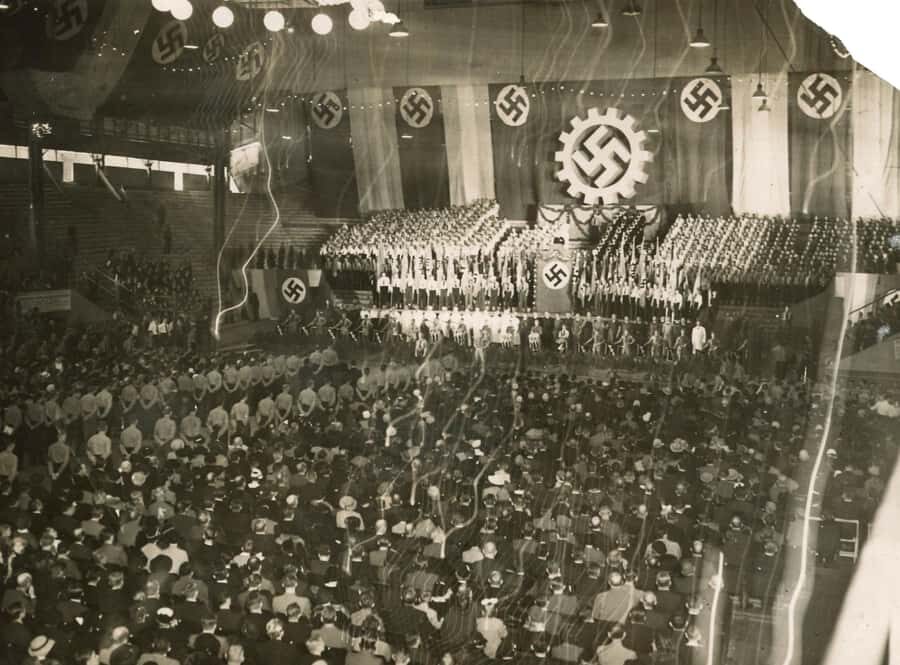
One of the highlights is seeing evidence of a Nazi meeting held in a theater that holds about 15,000 seats—and the theater is still operational. You’ll visit Luna Park Stadium for about 20 minutes, and the point isn’t just size. It’s the uncomfortable contrast: how ideology meant for mass destruction and genocide could show up in mainstream-looking public venues.
This stop is valuable because it forces you to confront scale. When you hear about a large Nazi gathering, you don’t need a history textbook version of it. You can stand in the city and picture what it would have been like.
Also note: entry to the stadium is not included, so plan on seeing it as part of the street-level experience rather than a sit-down visit inside.
You can also read our reviews of more historical tours in Buenos Aires
ABC Restaurant: Eichmann’s coffee moment and the attack site connection
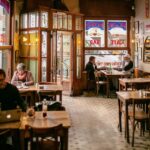
Next up is ABC Restaurant (about 20 minutes). This is one of the tour’s most memorable—and most disturbing—links: the place war criminal Adolf Eichmann sat for a cup of coffee.
The tour also ties this area to the worst terrorist attack in the history of Latin America. Rather than treating these as separate trivia points, Max connects them to the broader story: how antisemitic violence is not only a past event, and how the targeting of Jewish life continued long after WWII.
This is the stop where your background knowledge helps. If you already know the basic Eichmann identification and capture storyline, the tour becomes easier to follow. If not, Max explains the “spy-like” process of identification and capture as part of the running narrative, and he answers questions as they come up.
Museo de Armas de La Nación Tte. Gral. Pablo Riccheri: institutions and the machinery of power
At Museo de Armas de La Nación Tte. Gral. Pablo Riccheri, you’ll get a 20-minute stop that’s less about one single sensational moment and more about how power operates.
Weapons and official institutions tend to pull history into focus. Here, Max uses the setting to talk about the political reality of Argentina across key moments—especially the postwar years when the international community was sorting out what to do with war criminals, and countries like Argentina were making their own choices.
This isn’t the kind of stop where you should expect a full museum visit. It’s a guided context stop, and you’ll be there long enough to connect the building to the tour’s theme, then move on.
Palacio San Martín: Perón-era debates and why context isn’t optional
Palacio San Martín is another 20-minute stop. This is where the tour’s political layer shows up most clearly, including debates about Juan Domingo Perón, described as arguably the most important political figure of Argentina’s 20th century.
Even if you don’t already know Perón’s history, you can follow the tour because Max doesn’t treat politics as background noise. He uses it to explain why arguments about Nazi fugitives in Argentina get messy: governments change, narratives compete, and the same facts can be interpreted very differently depending on the political lens.
I like this part because it trains you to separate “what happened” from “what people say happened” and “what people wanted to happen.”
Italian Circle of Buenos Aires: a neo-Nazi attack in the 1960s
The final neighborhood stop is the Italian Circle of Buenos Aires (again, about 20 minutes). This is tied to the tour highlight about a neo-nazi attack in the sixties.
That detail matters a lot. Many WWII-focused tours stop at 1945 like a book closing. This one keeps going, showing that extremist ideology didn’t evaporate just because the war ended. It also reinforces why the Jewish community’s story in Buenos Aires remains central to understanding these events.
If you want your takeaway to be something more than dates and names, this stop helps. It links ideology across time, and it keeps the focus on consequences on the ground.
How the route works across Recoleta, Retiro, and Microcentro
The tour is built to connect key central districts. Recoleta, Retiro, and Microcentro show up as you go, and the idea is that Buenos Aires’s “center” isn’t just shopping and statues. It’s where major political and cultural institutions sit, where public venues hosted big events, and where international history collided with local life.
You’ll also get a strong sense of geography. The stops are spaced so you can absorb one chapter at a time: Nazi fugitives and postwar migration, the debate over what Argentina did and didn’t know, then Jewish community vulnerability, then later antisemitic violence.
That pacing is part of why the tour doesn’t drag. Several people highlight the fact that Max doesn’t just talk at you—he sets it up, builds it step-by-step, and keeps the timeline moving.
What you’ll learn, in plain terms
Here’s what the tour is trying to do for you, beyond the headlines:
- Understand the disputed claim that Argentina offered refuge to Nazi war criminals after 1945.
- See how the story connects to the Jewish community of Buenos Aires, described as the continent’s second largest.
- Learn the identification and capture storyline connected to Adolf Eichmann, including the coffee detail.
- Hear debates around Perón and how Argentina’s political history affects how these events are discussed even today.
- Understand that antisemitic extremism didn’t only live in the WWII era—it reappeared in later decades, including the 1960s neo-Nazi attack connection.
If you prefer history that has moral weight and real-world anchors, this tour will likely feel worthwhile. If you want a purely neutral, academic timeline with no emphasis on controversy, you might find the subject matter emotionally challenging. Max’s job is to teach; it comes with discomfort.
Price and value: why $25 can be a smart use of your Buenos Aires time
At $25 per person, this is priced like a solid city tour, not like a specialized niche seminar. For the price, you get:
- A live English guide with a background described as university history teaching.
- A structured walk across major central districts.
- A guided approach to multiple high-stakes topics: Nazis, antisemitism, Eichmann, Perón debates, and later neo-Nazi violence.
- Time per stop that is long enough to form connections rather than just snapping a photo and moving on.
In other words, you’re paying for interpretation—Max’s ability to connect locations to complicated debates. In Buenos Aires, you can find tours that are cheaper but also more superficial. Here, the value is in the careful teaching and the way the walk turns into an honest question-asking session.
Who should book this tour
This is a good fit if you:
- Want a serious history walk tied to actual sites in Buenos Aires.
- Enjoy guided discussion and want context, not just bullet points.
- Like learning from a teacher-style guide—someone who answers questions and uses sources.
It might not be for you if:
- You’re bringing very young kids (it’s not suitable for children under 10).
- You need wheelchair accessibility (it’s not suitable for wheelchair users).
- You’re seeking a light, carefree afternoon. This walk deals with terrorism and genocide-linked topics.
Should you book Nazis in Buenos Aires?
Yes—if you’re the type of traveler who wants more than a postcard city tour. I think this is one of the best ways to use a few hours in Buenos Aires when you care about how history actually leaves fingerprints on streets.
Book it particularly if you’re curious about the disputed debate around Nazi fugitives in Argentina and you want a guide like Max who presents the subject in a balanced, evidence-minded way. It’s also a strong pick if you only have time for one history tour and you want it to feel like a real learning experience, not a quick circuit of photos.
If you’re okay with difficult material and you’re ready to ask questions, you’ll likely leave with something that stays with you: the sense that the past isn’t abstract, and Buenos Aires has real places where the world’s darkest chapters intersected with local life.
FAQ
How long is the tour?
The tour lasts about 2.5 hours. It includes a short restroom pause (about 10 minutes).
What language is the guide?
The tour is guided in English.
Where does the tour start and end?
It starts near the Monument to Juana Azurduy, by the benches facing the Palacio Libertad. It finishes at Plaza Embajada de Israel, the memorial site of the former embassy of Israel.
What’s included in the price?
You get a two-hour walking tour and a live guide.
Is entry included to Luna Park Stadium or other buildings?
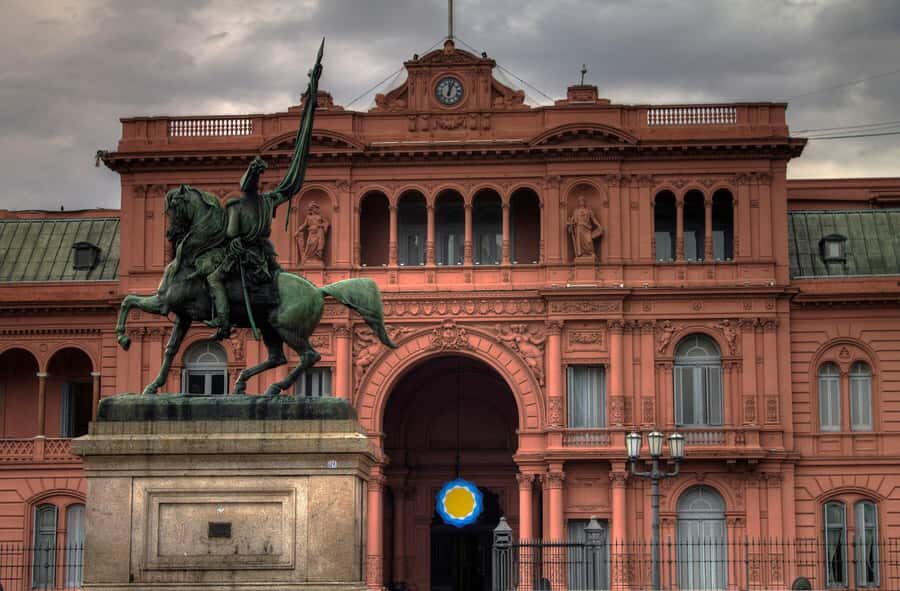
Entry is not included for Luna Park Stadium. Entry to the Casa Rosada and the Libertad Synagogue is also not included.
Is the tour suitable for children or wheelchair users?
It is not suitable for children under 10 years old, and it is not suitable for wheelchair users.
If you want, tell me your travel dates and whether you know much about WWII and Eichmann already. I can help you decide if this is the right “difficulty level” for your trip.