REVIEW · BUENOS AIRES
Buenos Aires Private City Tour with Local Guide
Book on Viator →Bookable on Viator
Four hours, and you see a lot. This private Buenos Aires city tour works because it strings together iconic places with actual context—from La Boca and Mafalda to Recoleta and the rose gardens—while the guide keeps things moving and makes your photo stops easy (photo-friendly guide help and air-conditioned comfort). The one catch: with so many highlights packed in, you only get short time at each stop, so it is not the best choice if you want to linger for an hour+ per neighborhood.
You will likely be guided by locals such as Diego, Ezequiel, Massimiliano, Lautaro, Nicolas, Andreas (Andy), or Carlos, and the common theme in how they run the day is clear English, smooth pacing, and flexibility when real-world stuff happens like rain or slow traffic. The tour also builds in time for questions, plus a mate and alfajor break, so you get more than just a checklist.
In This Review
- Quick Take: What Makes This Private Buenos Aires Tour Worth It
- Hitting Buenos Aires Highlights Without Losing Your Day in Traffic
- La Boca, Caminito, and La Bombonera: Color and Football in the Same Breath
- Mafalda and San Telmo Markets: The Funny Monument and the Grown-Up Street Market
- Avenida de Mayo, Casa Rosada, and the Catedral: Power Lines and Architectural Clues
- Puerto Madero’s Puente de la Mujer and Palermo’s Rosedal: Architecture With a Side of Calm
- Recoleta in Real Life: Cemetery Ticket Choice, El Ateneo’s Old Theater Magic, and Floralis Generica
- The Mate and Alfajores Break, Plus the Leather Factory Stop
- Price, Comfort, and Who This 4-Hour Tour Fits Best
- Should You Book This Buenos Aires Private City Tour?
- FAQ
- How long is the Buenos Aires private city tour?
- What is the price and group size?
- Is the tour private?
- What’s included during the tour?
- What’s not included?
- Will I have time to take photos?
- Which areas of Buenos Aires does the tour cover?
- Is free cancellation available?
Quick Take: What Makes This Private Buenos Aires Tour Worth It
- Private for up to 4: less waiting, more control of the pace.
- Photo help at every stop: the guide stays with you and assists with shots.
- Real Buenos Aires flavor: mate and alfajores during the tour.
- Neighborhood-hopping in 4 hours: La Boca → San Telmo → Centro → Puerto Madero/Palermo → Recoleta.
- Mostly ticket-light sightseeing: just plan for the Cemetery of Recoleta and the Boca stadium museum if you want them.
- Comfort matters: an air-conditioned vehicle helps when the city slows down.
Hitting Buenos Aires Highlights Without Losing Your Day in Traffic
Buenos Aires sprawls, and the neighborhoods you see on postcards are often far apart. That is why this tour’s format works: you use a private vehicle for transit, then step out in the best spots for photos and short walks. With a 4-hour window, you get enough time to orient yourself fast, and you also learn what is worth returning to later.
The pacing is designed around small bursts. At each main sight, you get time to take photos and ask questions while the guide explains how the city grew—politics, culture, architecture, and even the street-level stories behind famous landmarks. If this is your first visit (or you only have a few days), that overview is the difference between guessing later and knowing where to go.
You can also read our reviews of more guided tours in Buenos Aires
La Boca, Caminito, and La Bombonera: Color and Football in the Same Breath
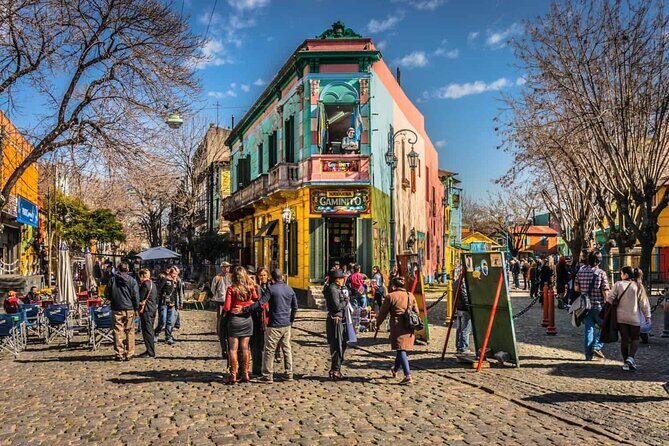
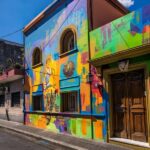
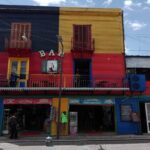
La Boca is the Buenos Aires neighborhood most people picture first, and this tour starts you right there at Caminito. It’s a 150-meter curved pedestrian walkway packed with colorful buildings and public art. The big win with a short, guided stop here is getting the historical and cultural meaning beyond the photos—why the neighborhood became a stage for art and identity, and how it sits by the Riachuelo river.
Then it rolls into the world of Boca Juniors at Estadio Alberto J. Armando, better known as La Bombonera. This stadium is one of the most emblematic football venues around the globe, inaugurated on May 25, 1940. You also get the scale in concrete terms: capacity for 40,000 seated spectators and 57,000 seated and standing. Even without going deep into ticketed museum time, the stadium stop gives you that “this is why people care” feeling.
One practical note: the stadium time is short, so if you want museum-style details inside, you will need the museum ticket (not included). If your goal is a quick, powerful introduction, the exterior stop works well. If your goal is full stadium depth, you’ll want to budget extra time for a second visit.
Mafalda and San Telmo Markets: The Funny Monument and the Grown-Up Street Market

If Caminito is the loud start, Mafalda is the clever pause. The Mafalda Monument is a sculpture of Quino’s most famous character, shown resting on a bench. It sits near where the artist lived, and there’s a plaque that helps connect the artwork to the person and the neighborhood. This is a great stop for snapping a playful photo while the guide gives you context about Argentina’s pop culture and the kind of humor that sticks around for generations.
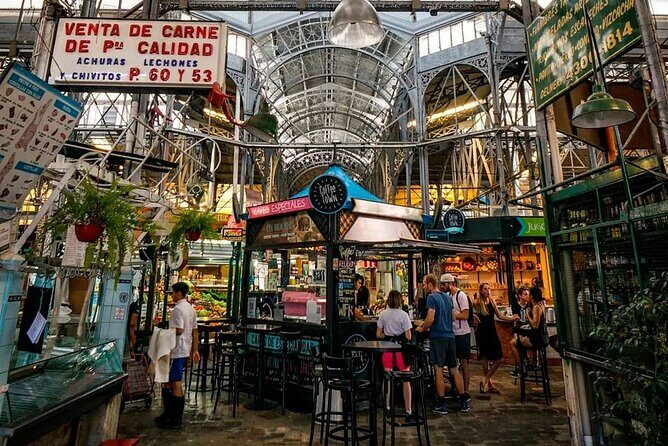
Next comes Mercado San Telmo, an indoor market where old and new share the same roof. You will see preserved long-running stalls selling things like vegetables and meat, but you’ll also find the tourist-facing side of San Telmo: antiques dealers and newer shops feeding into the neighborhood’s popularity. The building itself has plenty of texture—street-entry shops, bars, and a mix of local and visitor-friendly places.
This is also where the tour feels like a city, not a museum. You get to walk in a space that still serves daily life, even if the customer mix has changed. If you’re hungry, this is a smart place to orient on where you might eat later—just remember this is a short visit, so treat it as a look and a taste, not a full meal plan unless your guide points you to a nearby option.
Avenida de Mayo, Casa Rosada, and the Catedral: Power Lines and Architectural Clues
From San Telmo, you swing toward the Centro area and the big political center around Plaza de Mayo. Avenida de Mayo is a key artery, designed with the feel of Madrid’s Gran Vía in mind. Walking this corridor from Plaza de Mayo toward the National Congress building gives you a sense of how Buenos Aires planned its grandeur—and how the city’s “main street” tells a story of ambition.
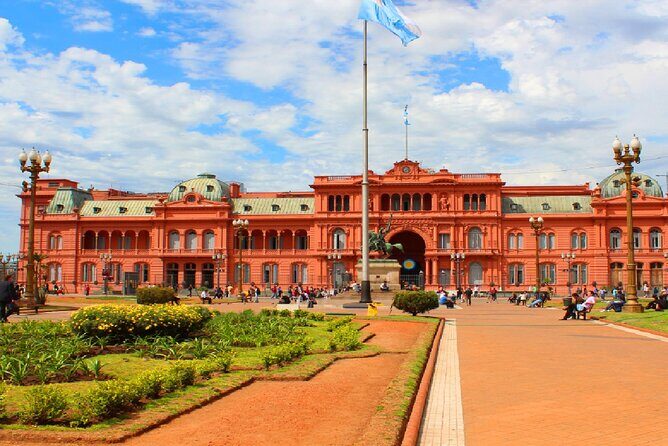
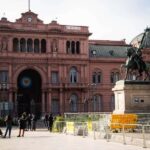
Then you hit Casa Rosada, the pink presidential headquarters in front of Plaza de Mayo. The building sits on the site where a fort was established in 1580, and it has gone through layers of Spanish viceroy residence and later presidential use. The tour frames it as the result of merging two earlier structures: the presidential headquarters and the Palacio de Correos at the corner of Hipólito Yrigoyen and Balcarce. That kind of explanation matters because it turns a photo stop into an understanding of why the building looks the way it does.
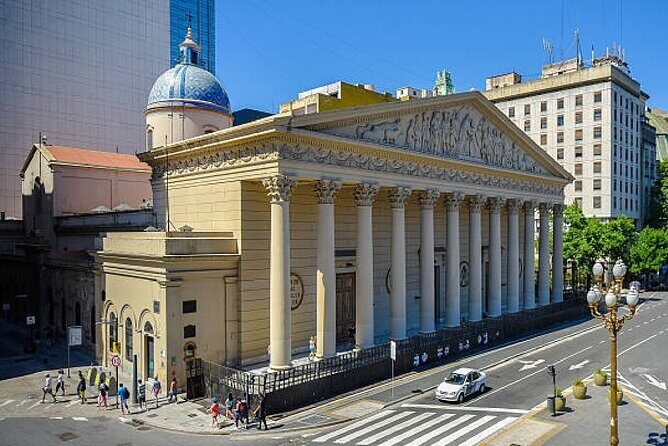
Right nearby is the Catedral, the main Catholic church in Argentina. The current building is the sixth construction on this spot since the city’s early foundations, and the final structure has a neoclassical profile that can feel more like a Greek temple than a typical cathedral silhouette. It’s a quick stop, but it’s one of those places where a 10–15 minute walk can give you a lot if the guide keeps the explanations focused.
Puerto Madero’s Puente de la Mujer and Palermo’s Rosedal: Architecture With a Side of Calm
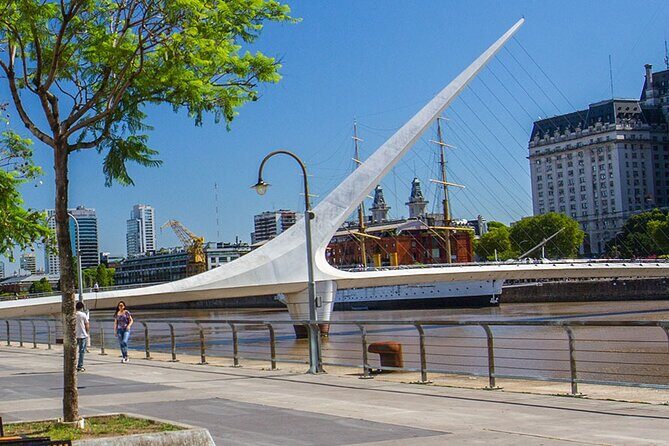
Puerto Madero often gets treated as the “new, pretty” side of Buenos Aires, and this tour gives you one of the signature sights: Puente de la Mujer. It is a revolving pedestrian bridge and the first work in Latin America by architect Santiago Calatrava. The details are fun and technical—the turning mechanism is among the largest in the world, built to let sailing vessels pass in the docks. The design is also symbolic: a couple dancing tango, where one pole represents the man and the curved bridge represents the woman.
Then you move to Palermo and the Parque 3 de Febrero for the Rosedal (rose garden). This is not just a pretty park. It includes a lake around the garden and a collection of more than 18,000 roses. The tour frames it as a transformation of older land tied to Juan Manuel de Rosas, then later shaped by landscaper Carlos Thays and finished by Benito Carrasco in 1914. Even if you are not a “rose person,” it’s a good reset after the city’s political center.
If you’re traveling in warmer months, this section can be a lifesaver. You get shade potential, a slower rhythm, and a real chance to breathe—still within the tour’s short-stop format.
You can also read our reviews of more city tours in Buenos Aires

Recoleta in Real Life: Cemetery Ticket Choice, El Ateneo’s Old Theater Magic, and Floralis Generica
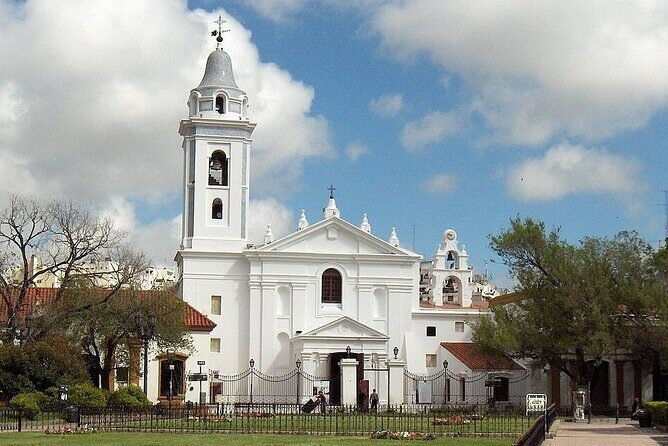
Recoleta is the neighborhood where the city shows its wealthiest side through architecture and mausoleums. The tour’s Recoleta time includes the Recoleta Cemetery area, but you’ll need to plan for tickets separately if you want to go in. The cemetery is famous for its many imposing mausoleums and vaults tied to Argentine history, including the well-known Eva Perón (Evita) tomb. It’s also an architectural statement: more than 90 vaults are declared a National Historic Monument.
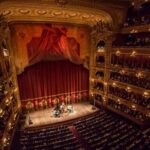
After that, you get one of Buenos Aires’ most famous indoor surprises: El Ateneo Grand Splendid. This is widely regarded as the second largest bookstore in the world, built in a former movie theater. The space keeps the frescoed cupola, original railings, and elegant historic decor. There’s even a bar on the old stage area, and the upper floor and basement areas support different categories, including children’s books and exhibitions. The key value here is that the tour shows you how to appreciate the place beyond its fame—how the theater’s bones are still there under the books.
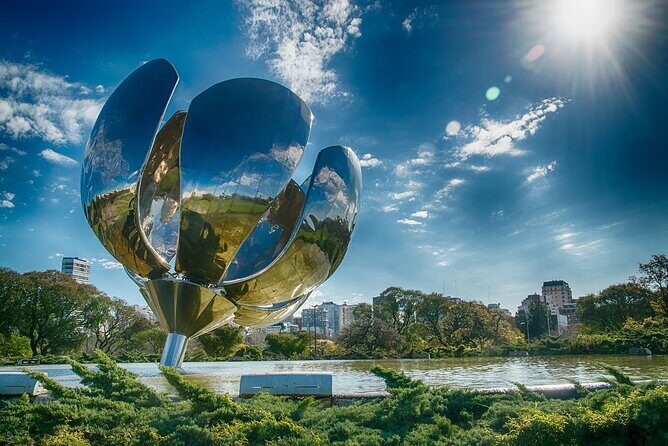
Finish with Floralis Generica in front of the United Nations square. This 20-meter-tall stainless steel and aluminum sculpture was donated to the city and uses a hydraulic system with photoelectric cells. It’s designed to move like a giant flower reaching out, and it was inaugurated on April 13, 2002. The name pays tribute to flowers, and the concept is tied to a dream of reflecting modern dynamism through movement. Even if you only have a short look, it’s one of the most photogenic “science meets art” moments in Buenos Aires.
The Mate and Alfajores Break, Plus the Leather Factory Stop
This tour includes a tasting of mate and alfajores. That matters because it turns a city tour into a small cultural moment. Mate is part of daily rhythm for many Argentines, and alfajores are one of the easiest ways to taste the country’s sweet side without needing a separate snack stop.
You also get a stop at the biggest leather factory in Buenos Aires. The tour does not frame this as a long shopping spree; it’s more of a structured detour tied to a major local industry. If you’re the type who likes to look at craft and materials—rather than only buy souvenirs—this can feel like a useful add-on. If you prefer zero shopping stops, you may want to treat this as quick browsing and keep your budget in check.
Price, Comfort, and Who This 4-Hour Tour Fits Best
At $119 per group (up to 4), this is priced like a private tour where your vehicle and guide time matter. The value comes from the mix: you get transit coverage across widely spread neighborhoods, you avoid the headache of coordinating multiple taxis or rides, and you receive guide-led context that makes the famous sites feel connected instead of random.
You also get practical comfort: private transportation in an air-conditioned vehicle. That matters in Buenos Aires because weather and traffic can change your day fast. And the format builds in enough photo time to actually use your camera or phone without rushing every ten seconds.
Who it fits best:
- First-timers who want a strong “what goes where” orientation.
- Couples or small groups who want a private day without spending more on a full-day tour.
- Anyone who likes architecture, street culture, and quick context over deep museum time.
One consideration: because it is packed into 4 hours, you cannot expect long indoor visits unless you add extra time or choose ticket options wisely. Also, the route can be affected by real-world disruptions. On the day, you might see traffic slowdowns from events like protests, and in rain, the guide may adjust to keep the plan workable.
Should You Book This Buenos Aires Private City Tour?
Yes—if you want the cleanest start to your Buenos Aires trip. Book it early in your schedule so the locations and stories help you plan your next days. If you are short on time, it is a strong way to see the city’s big characters: La Boca’s art scene, San Telmo’s market vibe, the Plaza de Mayo power core, Puerto Madero’s architectural flair, and Recoleta’s refined museum-meets-cemetery mood.
Skip it (or add expectations carefully) if you want slow travel. This is a short-stop overview. If your ideal day is lingering in one neighborhood for hours, you might prefer a slower walking-focused plan—or plan a second day focused just on Recoleta or just on La Boca and the stadium area.
FAQ
How long is the Buenos Aires private city tour?
It’s about 4 hours.
What is the price and group size?
The price is $119 per group, for up to 4 people.
Is the tour private?
Yes. It’s a private tour/activity, so only your group participates.
What’s included during the tour?
Private transportation, an air-conditioned vehicle, a bilingual guide throughout, mate and alfajores, and a stop at the biggest leather factory in Buenos Aires.
What’s not included?
Soda/pop food and drinks are not included. Also, tickets to the Cemetery of Recoleta and the Museum of Boca Juniors Stadium are not included.
Will I have time to take photos?
Yes. At each tourist point, you have 15 to 20 minutes to take photos, and the guide will help you in each photo.
Which areas of Buenos Aires does the tour cover?
You’ll visit highlights across La Boca, San Telmo, the Plaza de Mayo/Centro area, Puerto Madero, Palermo, and Recoleta.
Is free cancellation available?
Yes. You can cancel up to 24 hours in advance for a full refund.