REVIEW · BUENOS AIRES
Buenos Aires: Hop-On Hop-Off City Bus Tour
Book on GetYourGuide →Operated by Gray Line Argentina · Bookable on GetYourGuide
Buenos Aires gives you whiplash in the best way. This hop-on hop-off bus helps you slow down, ride the loops, and learn the city through a multilingual audio guide. You can hop at key sights, stay on for the full circuit, and use the bus like a moving map.
What I like most is the combination of comfort and convenience: open-top double-decker buses with air conditioning and a sunroof, plus frequent service about every 25 minutes. I also really appreciate the onboard free WiFi at the bus and stops, which helps when you’re checking opening times or picking a lunch spot.
One thing to consider: the WiFi can be spotty. Even with the free connection advertised, some days it doesn’t cooperate, so don’t plan your entire day around it.
In This Review
- Key Points Worth Knowing Before You Ride
- Choose Your Time Window: 24, 48, or 72 Hours
- Getting On: Start From Diagonal Norte or Plaza San Martín
- What the Ride Feels Like: Frequency, Open-Top Comfort, and Practical Timing
- Audio Guide and Live Commentary: Learn the City Without Needing a Plan
- Stop-by-Stop: From Congress and La Boca to Recoleta and Teatro Colón
- Stops 1–4: Congress Area, Plazas, and Old-School Buenos Aires
- Stops 5–8: Bombonera, Caminito, and the Color That’s Hard to Miss
- Stops 9–11: Puerto Madero and the Waterfront Contrast
- Stops 12–15: Green Spaces, Floralis, and Latin American Art
- Stops 16–18: Fishing-Club Vibes and Memory Stops
- Stops 19–22: Monumental Area, ChinaTown, and Stadium Energy
- Stops 23–24: Recoleta and the Classic Big Finale
- Two notes from rider experience (so you can plan smarter)
- How to Use This Tour for Best Value (Not Just Motion)
- Logistics and Real-World Comfort: What Can Go Wrong (and What Doesn’t)
- Who This Hop-On Hop-Off Bus Is Best For
- Should You Book the Buenos Aires Hop-On Hop-Off City Bus?
- FAQ
- How long is the Buenos Aires hop-on hop-off tour ticket valid?
- How often does the bus run?
- Where can I start the tour?
- What languages are available on the audio guide and live guide?
- Does the ticket include admission to attractions?
- What time does the bus operate?
Key Points Worth Knowing Before You Ride
- Choose 24 vs 48 vs 72 hours: more time usually means fewer rushed “just getting off for a photo” stops
- Hop at major landmarks: Congress, La Boca (including Caminito), Puerto Madero, Recoleta, and Teatro Colón are all on the circuit
- Plan around the end time: the last buses leave at 5:30 p.m., and the route doesn’t complete its full return
- Comfort beats heat: air conditioning plus an open-top view makes the ride easier (especially midday)
- Get ready for a long loop: one full circuit can take a few hours, so decide early whether you’ll stay on or hop often
Choose Your Time Window: 24, 48, or 72 Hours
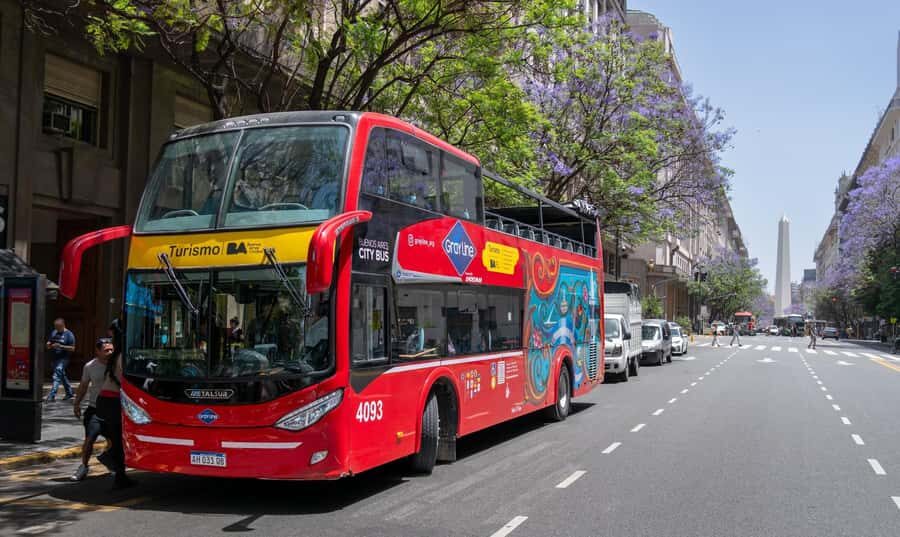
This tour comes in three time options—24, 48, or 72 hours—and that matters more than people think. In Buenos Aires, distances and neighborhood vibes can trick you. The longer ticket gives you a second chance to get off where you want, especially if one day ends up rain-soaked, football-schedule-chaotic, or simply too good for lingering.
Your ticket also has a “start window” rule. You have 6 months to begin using it, but the clock for 24/48/72 hours starts the first time you board. So if you arrive in town and need a buffer day, you’re not locked in right away—you can wait and start when it fits your plan.
Value-wise, the big win is that you’re paying for mobility plus interpretation. At $35 per person, you’re not buying admission to anything inside the museums or attractions. But you are buying a cheap way to cover a lot of the city without wrestling with transit transfers, time lost, or route uncertainty.
You can also read our reviews of more city tours in Buenos Aires

Getting On: Start From Diagonal Norte or Plaza San Martín
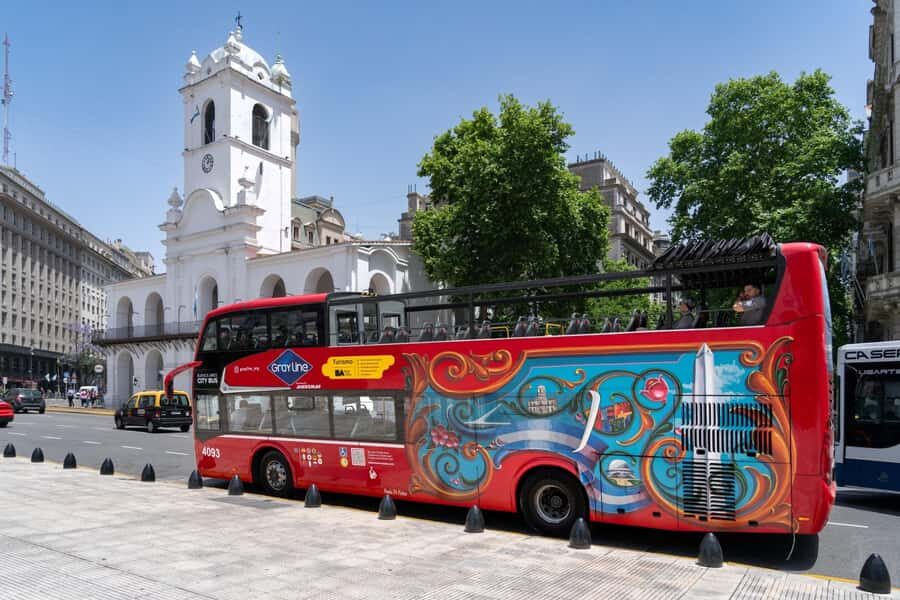
You can start from either of the main boarding points. One is Diagonal Norte at Av. Pres. Roque Sáenz Peña 728. The other is near the office at Plaza San Martín, Av. Santa Fe 808.
You don’t need to be micromanaged to enjoy this tour. The structure is hop-on, hop-off, and you can start at any stop on the route once you’ve got your ticket active. That flexibility is especially handy if you’re staying outside the city center or if your day begins with breakfast and ends with a late lunch.
There are a couple of practical “match your plan” tips, too. The route gives you access to the River Museum via the stop near Monumental (Jorge Newbery Airfield area/Monumental stop), and it gives access to the Boca Museum from the Bombonera area stop. If you’re planning both stadium-side museums, this circuit is built for that.
What the Ride Feels Like: Frequency, Open-Top Comfort, and Practical Timing
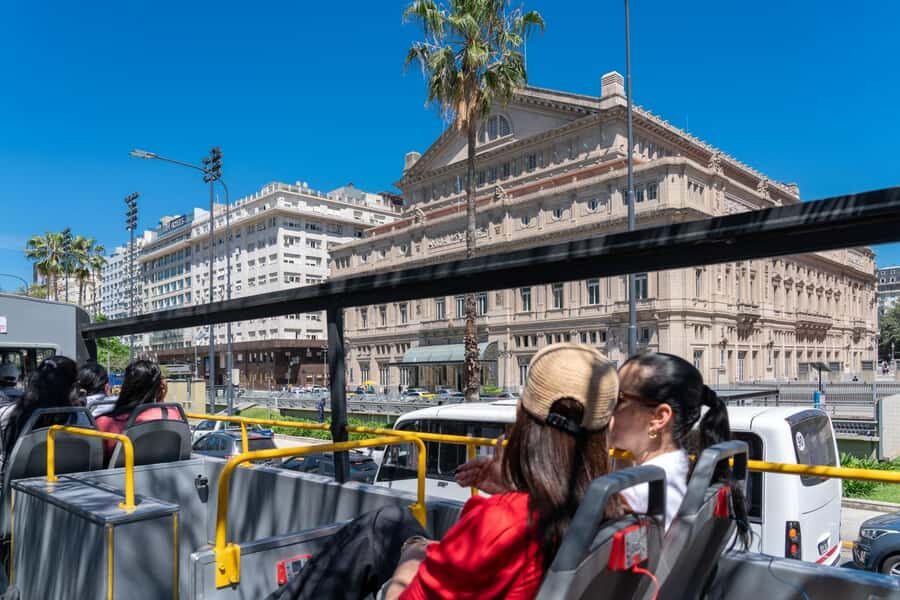
The bus runs Monday to Sunday from 9:30 a.m. to 6:00 p.m. Buses begin circulating at 9:20 a.m. from the two main start areas. During the day, the service is about every 25 minutes, which is good enough to make hop-offs realistic without turning your day into a spreadsheet.
One scheduling thing to keep in mind: the last buses leave at 5:30 p.m. and they make only half the return along the route. Translation: if you wait too long to hop off, you might end up with a longer walk or a partial ride rather than the full loop experience.
Comfort is a real plus here. The buses are open-top double-deckers, but they also have air conditioning and a sunroof. That’s a great Buenos Aires combo: you get skyline views without melting. If you’re sensitive to heat, you’ll feel better than you would on a basic open-air bus.
Audio Guide and Live Commentary: Learn the City Without Needing a Plan
This tour uses an audio guide system with multiple languages. The audio guide is offered in Spanish, English, Portuguese, Japanese, Chinese, Russian, Italian, French, German, Ukrainian, and Korean. In addition, there’s a live tour guide spoken in Spanish, English, and Portuguese.
That setup is exactly what you want for Buenos Aires, where street history and modern life overlap constantly. The narration helps you understand what you’re seeing—why a neighborhood looks the way it does, what a landmark represents, and how areas connect. You don’t have to “know stuff” before you ride.
There’s one small catch. The commentary can sometimes play when you’re already at the sight you’re seeing, which can make you miss a piece of the explanation. If you care about facts (and you should, because the stories are part of the fun), hop off slightly earlier than you think, or pause your photo-taking for the key moments.
Stop-by-Stop: From Congress and La Boca to Recoleta and Teatro Colón
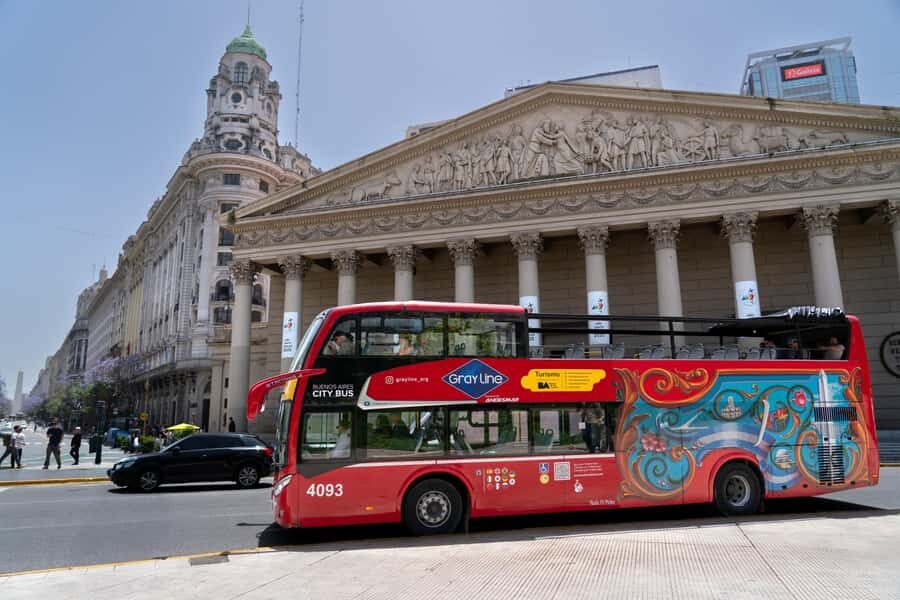
Below is a practical way to use the hop-offs. Not every stop is equal for everyone, so think of this as a “decide where you’ll spend real time” map.




Stops 1–4: Congress Area, Plazas, and Old-School Buenos Aires
Stop 1 (Congreso area / start point zone): This is where many people get their bearings. It’s a central jump-off and a useful first hop if you want the tour to start right with major landmarks.
Stop 2: Palace of the Argentine National Congress (pass by): Even from the bus, you get a sense of the civic scale. If you like architecture, consider hopping off only if you’re planning a longer photo-and-stroll moment.
Stop 3: El Loco Chávez – Paseo de la Historieta (pass by): This is a more specific cultural stop. If you’re into comics and local pop culture history, it’s worth your attention compared to a generic landmark stop.
Stop 4: Plaza Dorrego (pass by): Plazas in Buenos Aires aren’t just open space—they’re daily life. If you’re hopping off for ambiance, this kind of plaza stop can be a low-effort win.
Stops 5–8: Bombonera, Caminito, and the Color That’s Hard to Miss
Stop 5: Usina del Arte (pass by): Good for an arts-focused break. It’s one of those spots that helps you see Buenos Aires as more than monuments.
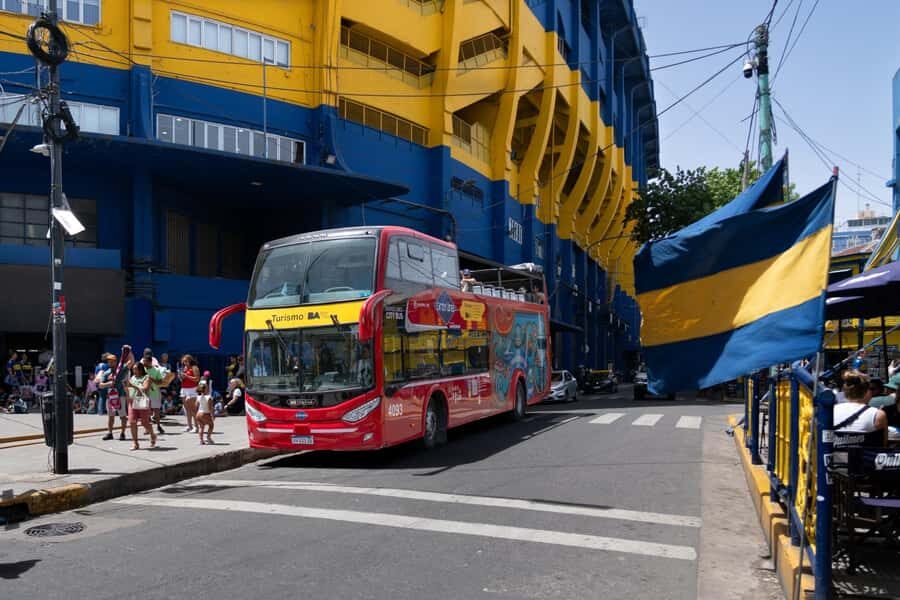
Stop 6: La Bombonera (pass by): This is a must for football fans and a big “only in Buenos Aires” stop. The circuit also connects you to the Boca Museum area from here, which is the move if stadium history is your thing.
Stop 7: Caminito (pass by): If you only hop off once on day one, make it this zone. This is where the neighborhood vibe is visual, not explained. Expect color, crowds, and great photo angles from multiple sides of the street.
Stop 8: Costanera Sur (pass by): A breath of space. This area works well if you want a lighter moment between dense neighborhoods.
Stops 9–11: Puerto Madero and the Waterfront Contrast
Stop 9: Puerto Madero (pass by): This is Buenos Aires with a modern skyline mood. It’s also a good contrast stop—go if you want to feel how the city changes street by street.
Stop 10: Bus Turístico-Circuito Rojo y Amarillo-Estación Fluvial (pass by): This functions like a connector zone. If you’re mixing this bus with other activities, this is a useful reference point.
Stop 11: Galerías Pacífico (pass by): If you like old shopping-arcade style spaces, this is a stop you’ll enjoy even if you only do a quick look.
Stops 12–15: Green Spaces, Floralis, and Latin American Art
Stop 12: Plaza General San Martín (pass by): This is close to the office starting point area. It’s also a solid place to plan your day—like a “reset button” between neighborhoods.
Stop 13: Floralis Genérica (pass by): A futuristic-looking landmark that’s easy to recognize. It’s a quick visual win and a good one if you want something different from classic stone architecture.
Stop 14: Museum of Latin American Art of Buenos Aires (pass by): If you like contemporary culture and regional art, this stop is where you’d convert interest into time. Even if you don’t go inside, the bus gives you the idea of the cultural footprint.
Stop 15: Planetario Galileo Galilei (pass by): A fun stop if you’re traveling with kids or if you love anything science-meets-city.
Stops 16–18: Fishing-Club Vibes and Memory Stops
Stop 16: Club de Pescadores (pass by): This is a local-flavored stop. Even as a drive-by, it adds personality because it’s not just “tourist postcard.”
Stop 17: Jorge Newbery Airfield (pass by): It’s a geography anchor. You’ll understand where the city’s movement connects to transport and the wider region.
Stop 18: Parque de la Memoria de Buenos Aires (pass by): This kind of stop isn’t about shopping or skyline pics. It’s about meaning, and it gives your day a more thoughtful tone if you’re ready for it.
Stops 19–22: Monumental Area, ChinaTown, and Stadium Energy
Stop 19: Estadio Monumental Antonio Vespucio Liberti (pass by): Great for football culture. The route also gives access to the River Museum from this area, which is your best bet if you want to pair stadium and story.
Important note: If River or Boca have games, tours won’t take place on those stadium days. If match-day access is your reason for choosing this bus, double-check dates before you build your schedule around it.
Stop 20: Chinatown, Buenos Aires (pass by): If you like food zones and cultural streets, this stop can be perfect for lunch timing. Even if you don’t go deep into shops, it’s a distinct neighborhood change.
Stop 21: Argentine Polo Association (pass by): This adds a different angle of Argentine identity. It’s not the everyday-tourist stop, and that’s a good thing.
Stop 22: Carta Magna Monument (pass by): A civic-monument stop that helps connect the city to its political and legal story. Easy to appreciate if you like context rather than only visuals.
Stops 23–24: Recoleta and the Classic Big Finale
Stop 23: Recoleta (pass by): Recoleta is a neighborhood you’ll likely want to wander. If you’re short on time, the bus can help you decide where to start once you get off.
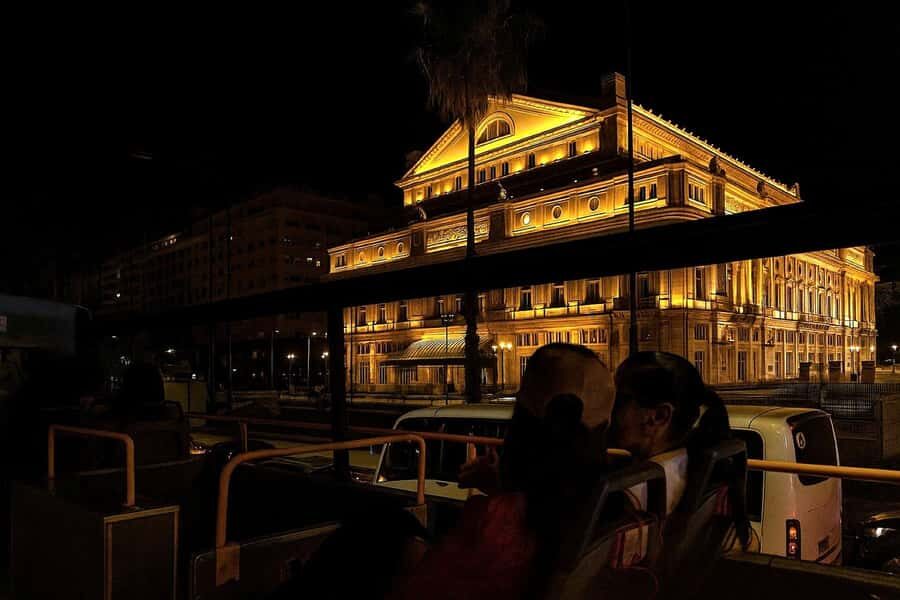
Stop 24: Teatro Colón (pass by): This is the cultural “wow” factor. Even without a show, seeing it from the bus gives you a real sense of Buenos Aires’ performing-arts importance.
Two notes from rider experience (so you can plan smarter)
- The full loop can take a few hours. Some riders report around three hours to complete one circuit. If you want lunch off-bus, plan for a hop-off early, not late.
- Getting your timing right matters. Sometimes the bus narration can run a bit ahead or feel like it’s tied to the schedule rather than your exact position. Keep your ears open, but also don’t ignore the “look up” moment when you’re at the landmark.
How to Use This Tour for Best Value (Not Just Motion)
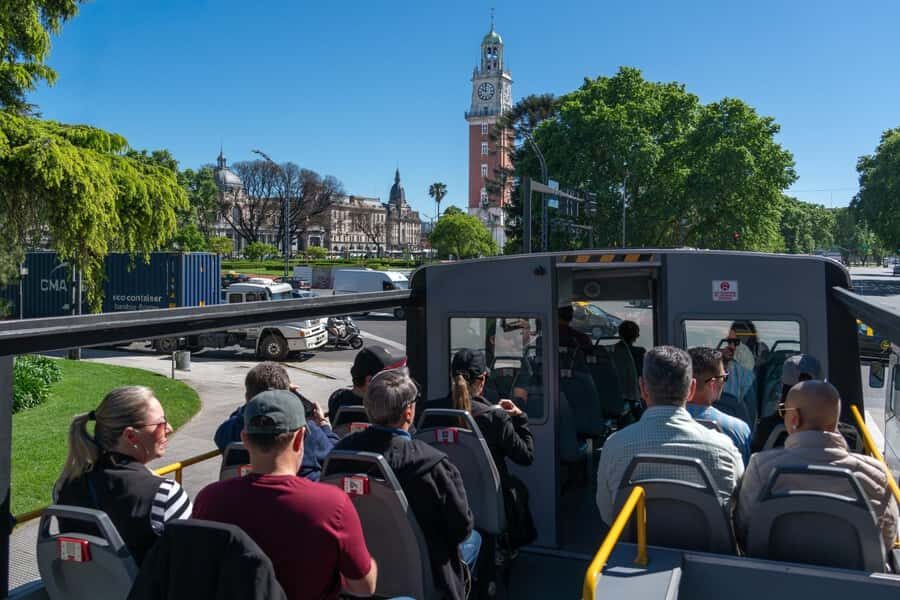
Here’s how I’d use it to get real payoff.
If you’re in Buenos Aires for only a short time, start the tour on a day when you don’t have a tight museum list. Use the loop as a city orientation tool. Hop off once for a neighborhood taste (La Boca/Caminito is the obvious choice), then stay on longer for the big architectural rhythm.
If you have the 48 or 72-hour option, do it differently: ride in the morning for context, then choose one or two neighborhoods to explore at normal walking pace. Buenos Aires neighborhoods can feel totally different from block to block, and that’s hard to copy with taxis and guesswork.
Also, use the bus stop timing to your advantage. In a city where weather can swing, getting on an air-conditioned bus when you need it is a legit travel skill.
Logistics and Real-World Comfort: What Can Go Wrong (and What Doesn’t)
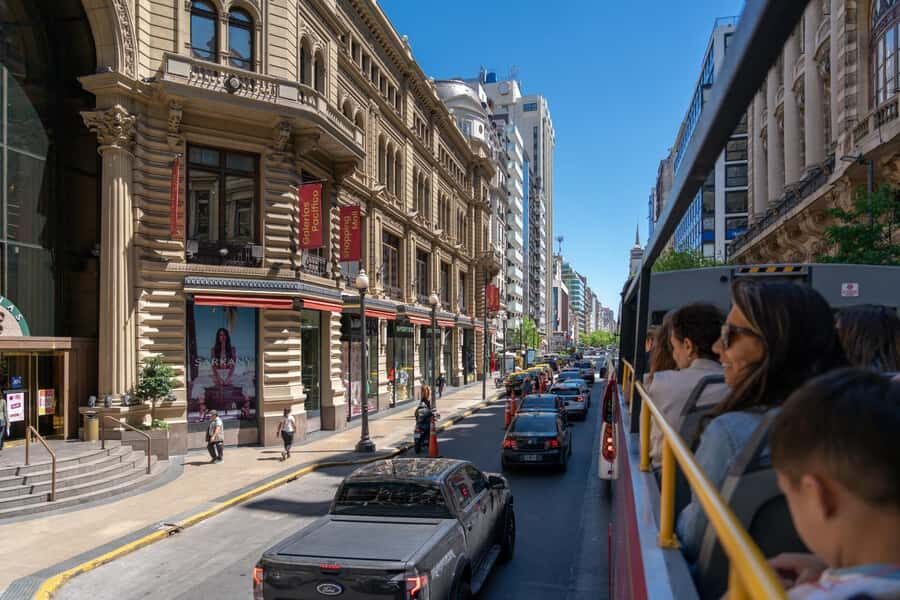
This is a generally easy way to get around safely, and the route design makes sense for first-time visitors. A lot of riders praise the commentary for being factual and clear, and some mention the bus experience includes local music between segments, which adds a nice sense of place.
But keep your expectations grounded:
- WiFi may fail even if it’s advertised as available. Have a backup plan for maps.
- Buses can occasionally run a little behind if traffic is heavy or stops get crowded. If you’re exact about time, give yourself buffer.
- Some buses may be busy, but you can usually still find a seat upstairs.
The one “nice human” detail I’d highlight: there are stories of staff helping when something was left on board. That’s not something you should test, but it’s reassuring that there’s a process when problems happen.
Who This Hop-On Hop-Off Bus Is Best For
This tour makes sense if you want:
- A big-picture overview of Buenos Aires neighborhoods without building a complicated transit plan
- A safe, simple way to move between famous sights like La Boca, Recoleta, and Teatro Colón
- Multilingual audio support if you don’t want to rely on an offline map only
It’s also a solid choice if you like flexibility—hop off when you feel like wandering, then hop back on when your feet start complaining.
If you’re the type who hates long rides or only wants to focus on one museum per day, consider using the bus for one strategic loop rather than expecting it to replace all your other plans.
Should You Book the Buenos Aires Hop-On Hop-Off City Bus?
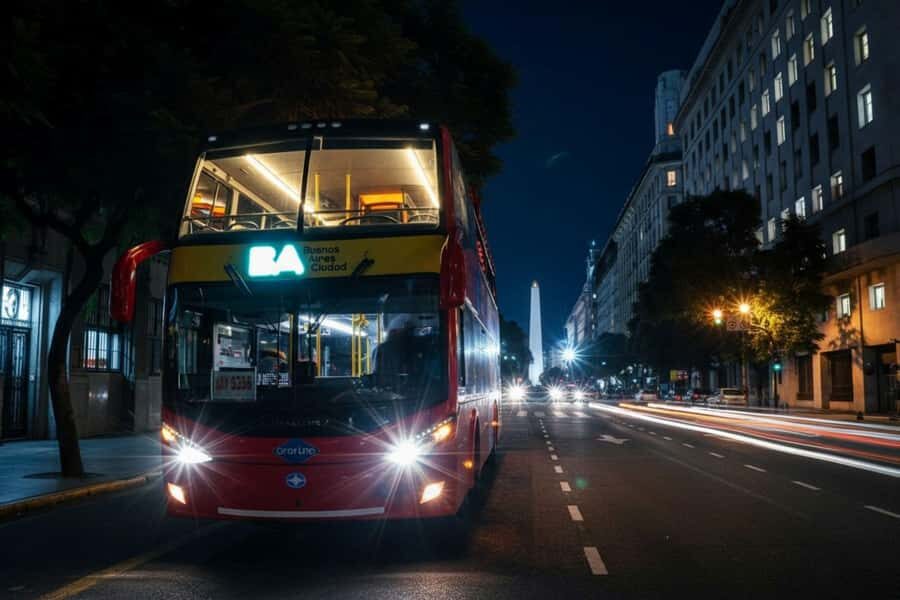
I’d book it if you want a dependable first pass through the city and you like learning as you go. For $35, the value comes from the combination of loop mobility, comfort, and a real audio guide system—not just transportation.
Skip it only if your plan is already laser-focused and you’re not interested in neighborhood context. In that case, you might get more value using taxis or metro for specific destinations.
If you do book, my advice is simple: start early, pick at least one neighborhood to explore deeply (Caminito/Bombonera and Recoleta are the top candidates on this route), and treat the rest as your orientation compass. Then you’ll leave Buenos Aires with a clear sense of where you want to spend your next hour.
FAQ
How long is the Buenos Aires hop-on hop-off tour ticket valid?
You can choose a 24, 48, or 72 hour ticket. The time starts when you first board the hop-on hop-off bus on your initial reserved day.
How often does the bus run?
During the day, buses run about every 25 minutes.
Where can I start the tour?
You can start at any bus stop. The two main options mentioned are Diagonal Norte (Av. Pres. Roque Sáenz Peña 728) and Plaza San Martín (Av. Santa Fe 808).
What languages are available on the audio guide and live guide?
The audio guide includes many languages such as Spanish, English, Portuguese, Japanese, Chinese, Russian, Italian, French, German, Ukrainian, and Korean. The live tour guide is offered in Spanish, English, and Portuguese.
Does the ticket include admission to attractions?
No. The ticket includes the bus ride and audio guide, but admission to attractions is not included.
What time does the bus operate?
The bus operates Monday to Sunday from 9:30 a.m. to 6:00 p.m., with buses beginning circulation at 9:20 a.m. from the main start points. The last buses leave at 5:30 p.m. and run only a partial return.