REVIEW · BUENOS AIRES
Buenos Aires Hop-On Hop-Off Bus, Free Walking Tours & Discounts
Book on Viator →Operated by Gray Line Argentina · Bookable on Viator
Buenos Aires can feel huge. This hop-on hop-off bus is a clean way to cover lots of neighborhoods fast. You can prebook, choose a 1-, 2-, or 3-day pass, then ride at your own pace with an included multilingual audio-guide.
What I like most is the comfort: open-top double-decker buses with air conditioning and a sunroof, so you can catch views without roasting. I also like the extras—access to optional walking tours and a voucherbook of benefits. One caution: the experience can be frustrating if you hate hunting for stops, since some boarding points are hard to locate and the audio can be inconsistent about stop numbers.
In This Review
- Key Points at a Glance
- Getting Your Bearings With 1-, 2-, or 3-Day Hop-On Hop-Off Options
- What’s Included on the Bus: Comfort, Audio-Guide, Discounts, and Walking Tours
- Your Ride Plan, Stop by Stop: Where to Hop Off (and What to Watch For)
- Diagonal Norte → Congreso and the City Center Start
- San Telmo / Plaza Dorrego and the Usina del Arte Side
- Bombonera Area → La Boca / Caminito
- Costanera Sur Variations (Weekdays vs Weekends)
- Puerto Madero → Estación Fluvial → Galerías Pacífico → El Ateneo
- Plaza San Martín → Floralis Genérica → MALBA and the Museum Stretch
- Planetario → Club de Pescadores → Parque de la Memoria
- Monumental → Barrio Chino → Polo Fields Area → Monumento a los Españoles
- Museo Nacional de Arte Decorativo → Recoleta → Teatro Colón
- The Big Watch-Out: Stop Numbers, Signage, and Audio Sync
- Optional Walking Tours: How to Add Real Texture (Without Losing Your Schedule)
- Price and Value: Is $39 Worth It for Your Buenos Aires Plan?
- Where It Can Go Wrong, and How to Fix It Fast
- Stop-finding stress
- Audio-guide mismatch
- Route changes and planning
- Air conditioning control
- Bad weather days
- Who This Bus Is Best For (and Who Should Think Twice)
- Should You Book This Buenos Aires Hop-On Hop-Off Bus?
- FAQ
- How long is the Buenos Aires hop-on hop-off bus experience?
- What pass options are available?
- What is included with the ticket?
- Are the buses air-conditioned?
- Do you get hotel pickup or drop-off?
- Is the walking tour free?
- Can I change the ticket duration on an existing reservation?
Key Points at a Glance

- Flexible 1-, 2-, or 3-day passes let you build your own Buenos Aires day plan instead of rushing one fixed tour
- Air-conditioned open-top buses keep you comfortable, even when the sun is doing its job
- Many famous areas on one route: Congreso, San Telmo/Plaza Dorrego, La Boca/Caminito, Puerto Madero, Recoleta, and more
- Audio-guide quality can vary: expect occasional cut-outs or stop-number confusion
- Optional walking tours are a real add-on but depend on weather and require you to be at the right stop
- Stop-finding can make or break the day since some stops aren’t obvious on arrival
Getting Your Bearings With 1-, 2-, or 3-Day Hop-On Hop-Off Options
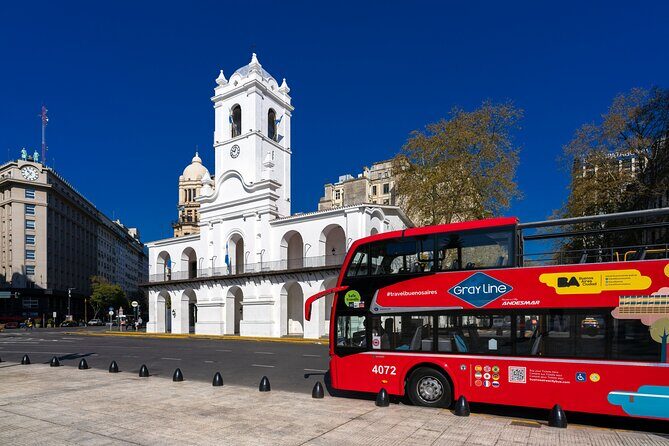
A hop-on hop-off bus works best in Buenos Aires because the city spreads out. This one gives you that classic flexibility: you’re not stuck with a single loop tour time. You choose a pass length—1 day, 2 days, or 3 days—and then hop on and off as you please.
The basic circuit is about 3 hours (approx.). That matters because it’s long enough to get a feel for how neighborhoods relate to each other, but short enough that you can still decide what you want to repeat on foot or by metro afterward.
One useful detail: your time window is tied to when you first activate the ticket. If you activate late in the day, you may still have access across a second day depending on how that 24-hour window works for your option. That’s a smart way to stretch the pass if your flight times are messy.
I’d also treat this as a planning tool, not just “transport.” The real value is that it turns Buenos Aires from a map full of dots into a line you can ride, pause, and then come back to later—especially if it’s your first visit.
You can also read our reviews of more walking tours in Buenos Aires



What’s Included on the Bus: Comfort, Audio-Guide, Discounts, and Walking Tours
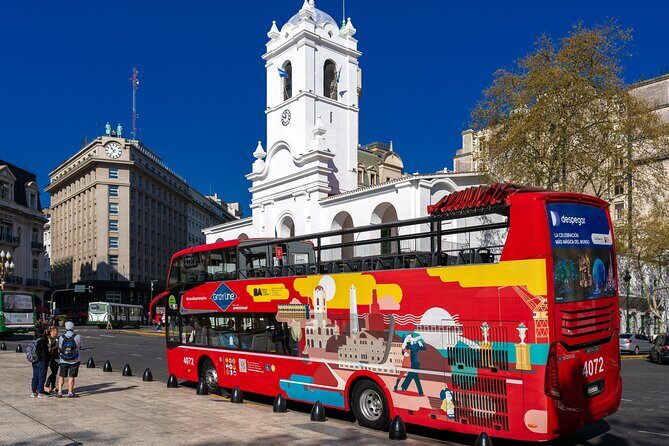
This experience includes:
- Open top double-decker buses with air conditioning and sunroof
- A multilingual audio-guide
- Bus ticket valid for your chosen duration option
- Access to exclusive fee walking tours (optional)
- A voucherbook of selected benefits and discounts
The bus is the anchor. The double-decker setup helps because you can usually get better sightlines from up top. In practical terms, it’s a good way to reduce the “where do I even start?” stress, since you’ll repeatedly pass the big-name areas while staying in one vehicle.
The audio-guide is helpful when it’s working right. But you should know what can go wrong: some people found the audio not synced to where they actually were, or unclear with cut-outs. Others reported wrong stop numbers, and at times the announced stop guidance felt off by one. That doesn’t mean the system is useless—it means you should treat the audio as a guide, not a guarantee.
Then there are the walking tours. They’re included as an option through the provider’s “exclusive fee walking tours” access, but they run under a voluntary payment system for the guide. You also need to arrive at the corresponding stop. Weather and operating conditions can affect whether a tour runs, and there’s no refund if the walking tour isn’t taken because it doesn’t operate.
I like walking tours when they’re done right because they give texture you miss from a bus seat. The catch is simple: you have to show up at the right stop on time, and be flexible if weather changes.
Your Ride Plan, Stop by Stop: Where to Hop Off (and What to Watch For)
The route is loaded with major sights and neighborhood areas. Here’s how I’d think about each stop as you build a day, plus a few “watch-outs” based on how this service can behave in the real world.
Diagonal Norte → Congreso and the City Center Start
Your first stop is listed as Diagonal Norte (Stop 0), with a nearby official boarding address at Av. Pres. Roque Sáenz Peña 728 (Stop 1). This is a useful starting point because it gets you into motion without you having to cross the whole city right away.
Next comes Av. Rivadavia 1545 (Stop 2) labeled for Congreso (Stop 1). Congreso is a handy “middle-of-everything” area when you want to reposition yourself rather than commit to a long walk.
Then you’ll hit Av. Independencia 311 (Stop 3) for Paseo de la Historieta (Stop 2). If you enjoy quirky, photo-friendly stops, this kind of label tends to be a quick win because it’s easy to aim for a specific thing.
Tip: since some guests experienced stop-number mismatch, don’t rely on the number alone. Use the stop address text and the nearby avenue landmarks when you’re lining up for your next hop-off.
San Telmo / Plaza Dorrego and the Usina del Arte Side
After that, Av. San Juan 350 (Stop 4) connects you with San Telmo / Plaza Dorrego (Stop 3). This is one of those areas that’s great to visit with a slow pace. Even if you don’t stay all day here, getting off lets you “feel” the neighborhood shape beyond the bus window.
Then you move to Agustín R. Caffarena 51 (Stop 5) for Usina del Arte (Stop 4). This is also a stop where the optional walking tour add-on has been praised, so if you’re choosing only one walking tour during your trip, consider putting this one near the top of your list.
Practical note: some people reported that guidance connected to certain stops didn’t match what was expected in advance. I’d plan with redundancy—if you miss a stop, you can usually catch the next cycle rather than abandoning the whole plan.


Bombonera Area → La Boca / Caminito
Next is Brandsen 805 (Stop 6) for Bombonera (Stop 5). This is a “one-stop destination” type of stop: you hop off for a set area, take in what you came for, and hop back on when you’re ready.
Then comes Av. Don Pedro de Mendoza 2163 (Stop 7) labeled La Boca – Caminito (Stop 6). La Boca is exactly the kind of place where a bus helps you get there without losing hours to crossing the city the hard way.
If you like photos, timing helps. The upstairs deck is the easiest place to get city-and-street views. Just keep an eye on heat and sun exposure if the day is bright, since open-top views also mean less shade.
Costanera Sur Variations (Weekdays vs Weekends)
The route includes Costanera Sur, but the labeled stop differs:
- Costanera Sur (Monday to Friday): Av. Dr. Tristán Achával Rodríguez 337 (Stop 8)
- Costanera Sur (Saturday and Sunday): Julieta Lanteri 1700 (Stop 9)
This is important for planning. Don’t assume you’ll get the same exact stop address every day—your day-of-week changes the pickup point. If you’re trying to attach Costanera Sur to a meal or another reservation, double-check which stop applies to your visit day.
Puerto Madero → Estación Fluvial → Galerías Pacífico → El Ateneo
Now the route swings to Puerto Madero at Av. Alicia Moreau de Justo 930 (Stop 10), then to Estación Fluvial at Cecilia Grierson 320 (Stop 11).
Next is Galerías Pacífico (Stop 10) near Av. Córdoba 787 (Stop 12). Then you reach El Ateneo (Stop 11) at Av. Callao 927 (Stop 13).
These stops are great when you want a mix of strolling and quick sightseeing pauses. They also tend to work well if you’re tired of the sun and want places where you can slow down for a bit without a long trek.
Plaza San Martín → Floralis Genérica → MALBA and the Museum Stretch
Continuing, you’ll get Plaza San Martín (Stop 12) at Av. Sta. Fe 808 (Stop 14).
Then there’s Floralis Genérica (Stop 13) at Av. Pres. Figueroa Alcorta 2800 (Stop 15). After that, MALBA (Stop 14) is near Av. Pres. Figueroa Alcorta 3465 (Stop 16).
If you’re planning a museum-focused afternoon, this stretch makes it easier because you can hop off, then decide which place to prioritize without committing to a long walking route upfront.
Planetario → Club de Pescadores → Parque de la Memoria
Next, Planetario (Stop 15) is at Av. Sarmiento 3866. Then you’ll reach Club de Pescadores (Stop 16) at Av. Costanera Rafael Obligado 2610 (Stop 18) and Parque de la Memoria (Stop 17) at Av. Costanera Rafael Obligado 1055 (Stop 19).
Costanera-area stops like these are strong when you want open-air breaks. Just remember: you’re still in Buenos Aires, so expect weather and light to matter. If the forecast is hot or changeable, your bus comfort (air conditioning on board) becomes a bigger deal.
Monumental → Barrio Chino → Polo Fields Area → Monumento a los Españoles
Further along:
- Monumental (Stop 19) at Av. Pres. Figueroa Alcorta 7576 (Stop 21)
- Barrio Chino (Stop 20) at Av. Virrey Vértiz & Echeverría
- Campo Argentino de Polo (Stop 21) at Av. del Libertador 4000 (Stop 22)
- Monumento a los Españoles (Stop 22) at Av. del Libertador 3250 (Stop 24)
This part of the route is useful if you want to spot different cultural or district textures without losing half a day to crossing town. It’s also a good way to “sample” instead of commit—hop off for a short look, then move on.
Museo Nacional de Arte Decorativo → Recoleta → Teatro Colón
The later route includes:
- Museo Nacional de Arte Decorativo (Stop 23) at Av. del Libertador 1920 (Stop 25)
- Recoleta (Stop 24) at Av. del Libertador 1480 (Stop 26)
- Teatro Colón (Stop 25) at Cerrito 892 (Stop 27)
Recoleta is one of those “stay longer” areas because it pairs well with a slower stroll after you’ve arrived by bus. Teatro Colón is another stop you can use as a pivot point—see it from outside, then decide if you want to spend more time in the Recoleta/center area afterward.
The Big Watch-Out: Stop Numbers, Signage, and Audio Sync
Here’s the practical reality from people’s firsthand experiences: the most common issues were about finding stops and stop-number/audio mismatches. Some stops were described as hard to locate with little signage. Others found the audio was hard to hear, cut out, or pointed to the wrong stop number.
So I recommend you do two things:
- Save the stop address and look for the general avenue segment, not just a number on a map.
- When you’re on the bus, treat it like live info. If guidance seems off, ask onboard staff for the next best move instead of waiting and hoping.
Optional Walking Tours: How to Add Real Texture (Without Losing Your Schedule)
The walking tours are optional, and the guide is paid through a voluntary system. You get access through the bus package, but the tour itself runs only when conditions allow.
The key steps:
- You must arrive at the corresponding stop to participate.
- To reconfirm the schedule, you’re advised to contact the guide on board the bus.
- If the tour doesn’t run due to weather or operating conditions, no refund is issued for missing it.
If you’re trying to decide which stops are most worth hopping off for a walking add-on, two areas have earned positive attention: Usina del Arte and Costanera Sur. That doesn’t mean other stops are bad—it means these are places where the extra time tended to pay off.
Language is another reality check. Walking tours have been described as often running in Spanish. If you’re not comfortable with Spanish, you might still enjoy the walking tour format, but plan to rely more on your own observation and the bus audio for context.
Price and Value: Is $39 Worth It for Your Buenos Aires Plan?

At $39.00 per person, this bus isn’t the cheapest way to move around Buenos Aires—but it’s often one of the most time-efficient. That’s the trade.
You’re paying for:
- A comfortable ride with air conditioning and sunroof access
- A flexible hop-on hop-off schedule
- A multilingual audio-guide
- Voucherbook discounts at selected places
- Access to optional walking tours
- Included additional activities depending on which duration option you choose
If your schedule is tight or you’re the kind of person who wants to see a lot first and decide later, the value tends to be strong. The bus gives you an overview loop (about 3 hours) so you can prioritize your next steps.
If you’re planning to focus on just one or two neighborhoods and you’re confident using public transport, you might find it easier to save money by skipping the pass. But if you want a “city orientation with comfort” tool, $39 can make sense—especially since you prebook and avoid wasting vacation time figuring out transport on the fly.
Where It Can Go Wrong, and How to Fix It Fast
This is the part I’d treat like a checklist before you step outside.
Stop-finding stress
Several people described stop locations as difficult to locate, with some stops lacking clear signs. My advice:
- Take screenshots of the stop addresses before you go.
- Arrive a bit early, especially in heat.
- If you get confused, ask staff on the bus or nearby when the next departure is going to happen.
Audio-guide mismatch
Audio issues showed up in multiple ways: cut out, hard to hear, wrong stop numbers, and routes not matching what the audio seems to describe. So:
- Use audio as guidance, not navigation.
- When you’re close to a stop you want, confirm visually with the stop address and surroundings.
Route changes and planning
Some people experienced route variations where their expectations didn’t match what happened. That’s a real risk in any big city transit situation. The bus system can still work, but build flexibility into your day: don’t schedule a “must be there at exactly this time” plan right after you’re aiming for a specific stop.
Air conditioning control
One theme in feedback was that requests to adjust air conditioning weren’t accepted. If you’re sensitive to temperature, plan to dress for layers and be ready for the bus’s default comfort settings.
Bad weather days
On rainy or stormy days, your hop-on hop-off plan can collapse fast. The bus is still a good strategy for covering ground, but if conditions are rough, expect delays and consider shortening your route.
Who This Bus Is Best For (and Who Should Think Twice)
This works best if you:
- Want a first-time Buenos Aires overview without committing to a single walking itinerary
- Like hopping off in the moment when something catches your eye
- Value comfort with air-conditioned double-decker seating and sunroof views
- Want access to optional walking tours and discount benefits
I’d think twice if you:
- Hate searching for stops or dislike ambiguous boarding points
- Need fully reliable audio narration tied perfectly to your location
- Are traveling on a day with severe weather risk and can’t tolerate delays
Should You Book This Buenos Aires Hop-On Hop-Off Bus?
I’d book it when you want a time-saving way to see a lot of Buenos Aires in a short window and you like the freedom to choose your pace. The combination of air-conditioned open-top rides, a big route footprint, optional walking tours, and discount benefits is a practical package for many travelers.
But go in prepared. Bring your stop addresses, expect that audio may occasionally lag behind reality, and give yourself buffer time for stop-finding—especially if you’re starting early or traveling on a hot day.
If you want a low-stress orientation tool, this pass can deliver. If you’re looking for a precise, narration-perfect guided experience with obvious stops, you may feel more frustration than joy.
FAQ
How long is the Buenos Aires hop-on hop-off bus experience?
The bus circuit is about 3 hours (approx.), based on the selected pass option.
What pass options are available?
You can choose from 1-, 2-, or 3-day pass options.
What is included with the ticket?
The ticket includes the bus ride for your option length, an included multilingual audio-guide, access to exclusive fee walking tours, and a voucherbook with discounts at selected locations.
Are the buses air-conditioned?
Yes. The buses are open top double-decker buses with air conditioning and a sunroof.
Do you get hotel pickup or drop-off?
No. Hotel pickup and drop-off are not included.
Is the walking tour free?
It is free and optional, but it uses a voluntary payment system for the guide. You must arrive at the correct stop to join.
Can I change the ticket duration on an existing reservation?
If you have a confirmed reservation and want to change the duration, you need to cancel the current reservation first and then generate a new one, so you get an updated QR code.
If you want, tell me your travel month and whether you’ll do 1 day or 2 days, and I’ll suggest a simple hop-on strategy that fits the kinds of stops on this route.