REVIEW · BUENOS AIRES
Buenos Aires: San Telmo and Market Guided Walking Tour
Book on GetYourGuide →Operated by Buenos Aires Free Walks · Bookable on GetYourGuide
San Telmo can feel like a time machine in motion, and this guided walk keeps the story moving. I like how it links 19th-century architecture to the modern Buenos Aires you see today, and I love that you also stop for the cartoon-world touchstones like Mafalda and the Paseo de la Historieta. One thing to consider: the streets can get tight in a bigger group, especially on narrow lanes.
This is also a smart way to add food-market and street-fair energy to your first pass through the neighborhood. The mix of a church stop, comic-themed spots, and the indoor Mercado San Telmo makes the route feel varied rather than repetitive. Just remember it runs rain or shine, so bring weather gear and plan on walking the whole time.
In This Review
- Key highlights to look for
- San Telmo at walking pace: what this tour does well
- Meeting at Parroquia San Ignacio de Loyola and finding your guide
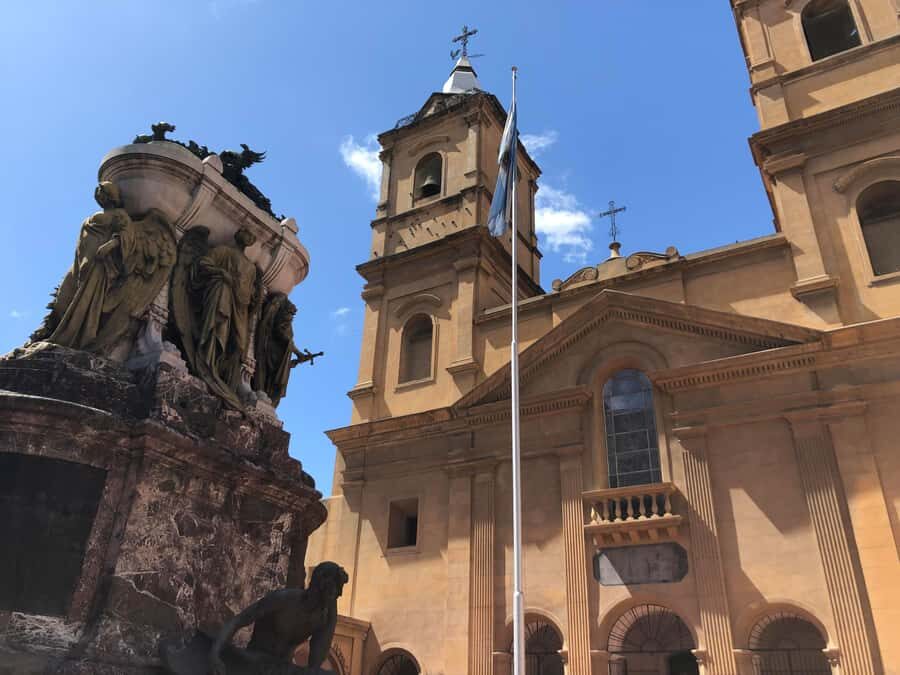
- Iglesia y Convento de San Francisco: where Buenos Aires shows its older face
- Through San Telmo’s 19th-century façades: collective houses and the city’s changing story
- Clemente and the Paseo de la Historieta: comics turned into a street guide
- Mafalda statue: modern Buenos Aires with one iconic face
- The Argentine flag creator stop plus the foundation storyline
- Mercado San Telmo: your stop for indoor market atmosphere and traditional flavors
- Sunday street fair: when San Telmo turns louder
- Guides make the difference: Santiago, Juan, and Jorge’s impact
- Value for $13 in two hours: why this price feels fair
- Should you book this San Telmo guided walking tour?
- FAQ
- FAQ
- How long is the Buenos Aires San Telmo and Market guided walking tour?
- How much does it cost?
- What language is the tour in?
- Where does the tour start?
- How can I recognize the guide?
- Does the tour run in bad weather?
- What major stops are included on the walk?
- Is there an included food experience at Mercado San Telmo?
- What’s included in the price?
- Is free cancellation available?
Key highlights to look for
- Mafalda: a must-see stop that ties the neighborhood to modern pop culture
- Paseo de la Historieta (Clemente): comic-strip characters turned into street landmarks
- Argentina flag creator stop: a history moment that gives context to the city’s identity
- 19th-century collective house facades: photo-worthy exteriors you’ll pass on the way
- Mercado San Telmo: an indoor market stop for traditional Argentine food atmosphere
- Sunday street fair: music, art, and that slow-lively neighborhood chaos
San Telmo at walking pace: what this tour does well
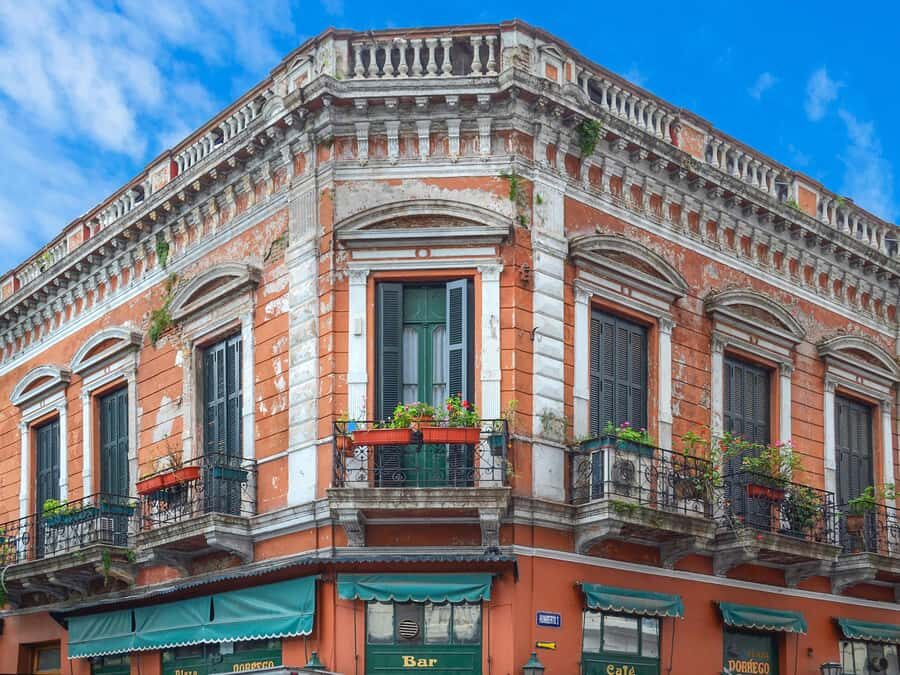
San Telmo is Buenos Aires’ oldest neighborhood, but it’s not just preserved for show. It feels lived-in: shop fronts, working markets, sidewalk chatter, and weekend performers all sharing the same cobblestones. This tour is built for that reality. In two hours, you get an orientation tour that actually explains what you’re looking at, not just where to stand for photos.
What makes it especially good value is the mix of categories. You’ll see places tied to the city’s foundation and colonial past, then you’ll jump to modern Buenos Aires through comic art and street culture. Add the food market and Sunday fair, and the walk becomes more than sightseeing—it becomes a quick way to understand why San Telmo still feels culturally loud.
One more practical note: since it’s guided, you don’t have to figure out the connections yourself. You walk, you stop, you listen, and you look with fresh context. That saves time in a city where “where should I go next” can easily eat your afternoon.
You can also read our reviews of more walking tours in Buenos Aires

Meeting at Parroquia San Ignacio de Loyola and finding your guide
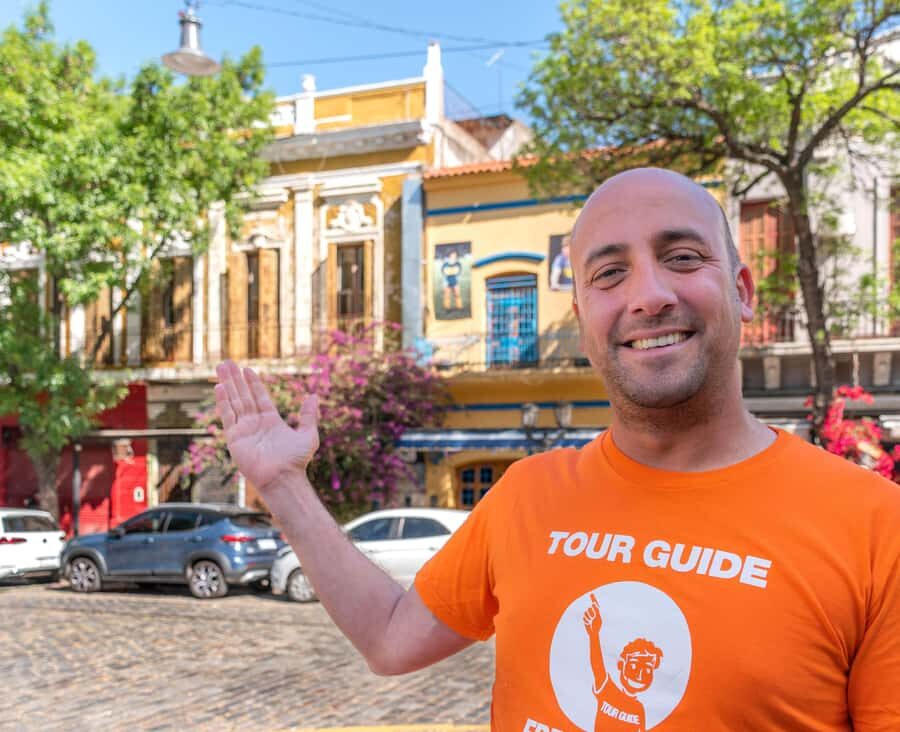
The tour starts at Parroquia San Ignacio de Loyola. The guide is easy to spot: look for an orange t-shirt or an orange umbrella.
That small detail matters more than it sounds. San Telmo’s streets can be confusing fast, and this kind of small-group-but-still-on-a-public-street setup can turn into a hunt if you arrive late or unsure. Showing up a few minutes early helps you settle, find the guide, and get moving without stress.
Also keep in mind this tour runs rain or shine. If it’s wet, expect slower footing on cobblestones and prepare for a “keep walking” style of tour. Bring something you can comfortably move in for two hours.
Iglesia y Convento de San Francisco: where Buenos Aires shows its older face
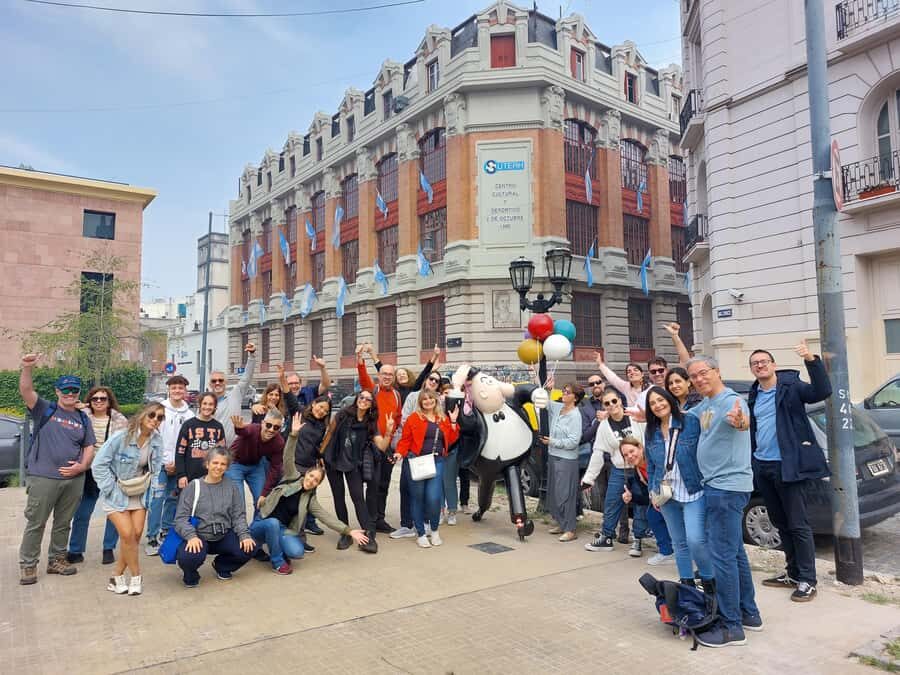
One of the first formal landmarks on your route is the Iglesia y Convento de San Francisco. Church and convent stops can become one-note if the guide’s focus is only architectural terms. The better version is what this tour aims for: using the building as a doorway into how Buenos Aires grew.
Here, you’ll get that sense of depth—colonial-era power, daily life shaped by religious institutions, and the way the city’s identity kept forming long after those first layers took root. Even if you’ve seen churches before, this stop works best as context. It helps you read the neighborhood you’re walking through afterward.
Practical tip: plan to slow down here. Places like this make you want to look up and around, and your guide’s talking points will give you a better eye for what you might otherwise miss.
Through San Telmo’s 19th-century façades: collective houses and the city’s changing story
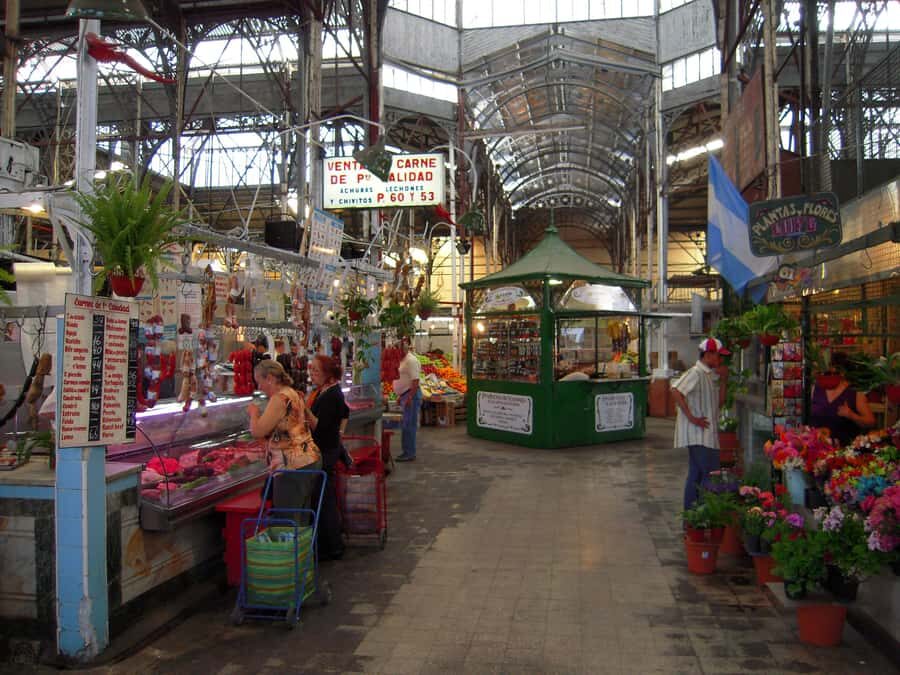
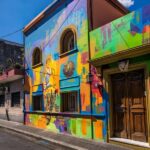
As you continue, you’ll admire the facades of 19th-century collective houses (the kind of multi-tenant architecture that reflects immigration-driven growth and urban density). This is one of those “looks pretty, but now you know why” moments.
Buenos Aires didn’t become modern all at once. It grew through waves of people, new needs, and changing neighborhood rhythms. The walk turns those façades into evidence of that process. You start seeing the neighborhood less like a set of pretty old buildings and more like a timeline you can walk through.
This part of the tour also helps you understand a big idea: San Telmo’s present-day energy isn’t separate from its past. It’s built on it.
Clemente and the Paseo de la Historieta: comics turned into a street guide
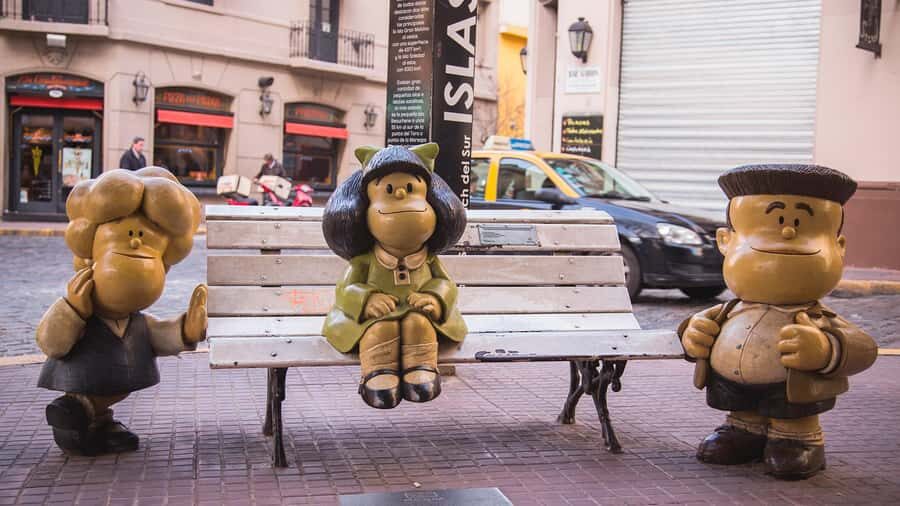
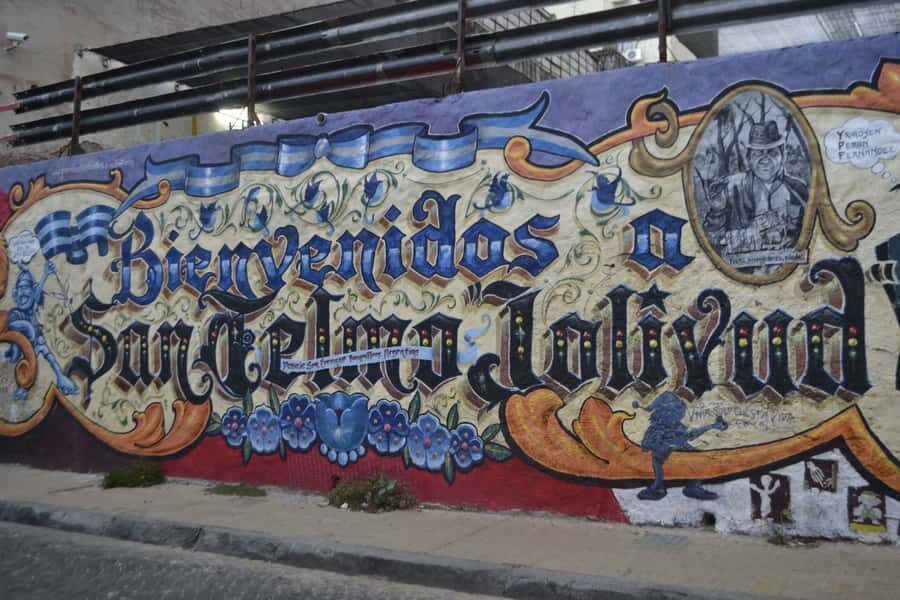
Then the tour flips your perspective with Clemente – Paseo de la Historieta. This is where San Telmo’s public art becomes practical. Instead of treating the comics as decoration, the stop connects them to how Argentines see themselves—humor, satire, and everyday character turned into something you can point at on a walk.
If you like street art or you’re the type who reads murals like a local newspaper, you’ll appreciate how this area frames pop culture as part of the neighborhood’s visual identity. It’s not “random art you happen to pass.” It’s a deliberate part of the route.
It also breaks up the traditional-history pacing. After the heavier historical context, these comic spots add levity and personality. You end up with a tour that feels more like a cultural conversation than a lecture.
You can also read our reviews of more guided tours in Buenos Aires


Mafalda statue: modern Buenos Aires with one iconic face
Next up is the Mafalda Statue, a beloved symbol of Buenos Aires. Mafalda is the kind of cultural reference many people recognize, but the value here is in how your guide places it in the neighborhood’s larger story.
This stop works on two levels. First, it’s a photo moment (easy, iconic, and quick). Second, it’s a reminder that San Telmo isn’t only old stone and colonial time. Buenos Aires uses humor and characters to comment on real life, and you’ll see that attitude reinforced as you keep walking.
If you’re traveling with someone who prefers “I want to see things” over “I want a museum lecture,” this is the kind of stop that keeps everyone engaged.
The Argentine flag creator stop plus the foundation storyline
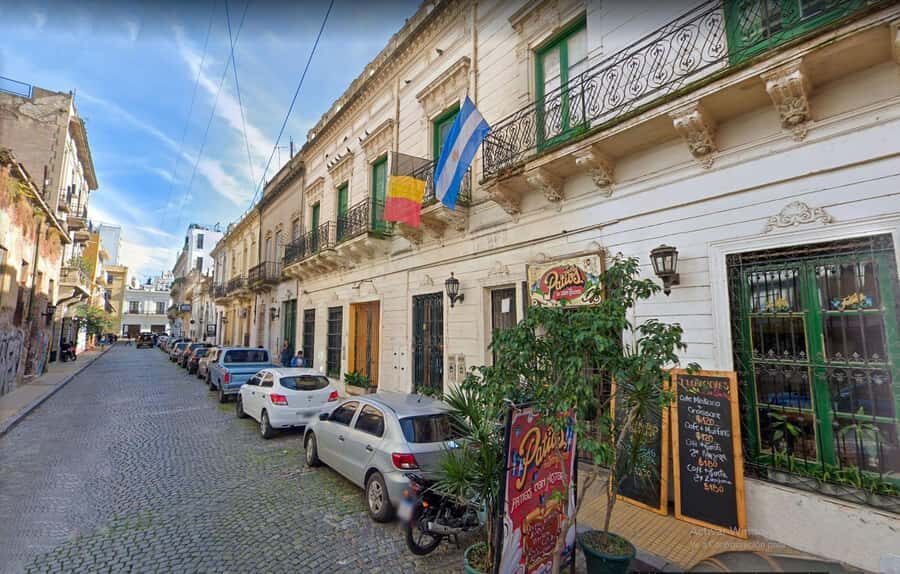
One highlight on this tour is visiting the creator of the Argentine flag, paired with lessons about Argentine history and how it connects to the city’s foundation. This is the moment where the walk stops being only neighborhood-focused and becomes national in scale.
Even if you know the basics already, this kind of guided context helps you place what you learned into a real location. You don’t just remember a fact; you understand how Buenos Aires carries identity in its public spaces.
As a travel strategy, I like this approach. It gives your walking tour a spine: you’re not jumping from landmark to landmark. You’re building understanding as you go, so later, when you see similar symbols around the city, they click into place.
Mercado San Telmo: your stop for indoor market atmosphere and traditional flavors
The route then leads you to Mercado San Telmo, the famous traditional indoor food market. Markets are great on a guided walk because your guide can help you read what you’re seeing: what stalls represent, why certain food traditions matter, and how the market fits into the neighborhood’s daily rhythm.
You’ll have time here to experience the market atmosphere, and the tour description makes it clear you can sample traditional Argentine cuisine. That’s a big part of the value. Two hours can feel short for sightseeing—unless you include a sensory stop like this. You come away remembering smells, textures, and the feeling of the place, not just street names.
If you’re short on time in Buenos Aires, the market stop is also a practical win. You can taste a slice of local culture without trying to plan multiple separate food experiences.
Sunday street fair: when San Telmo turns louder
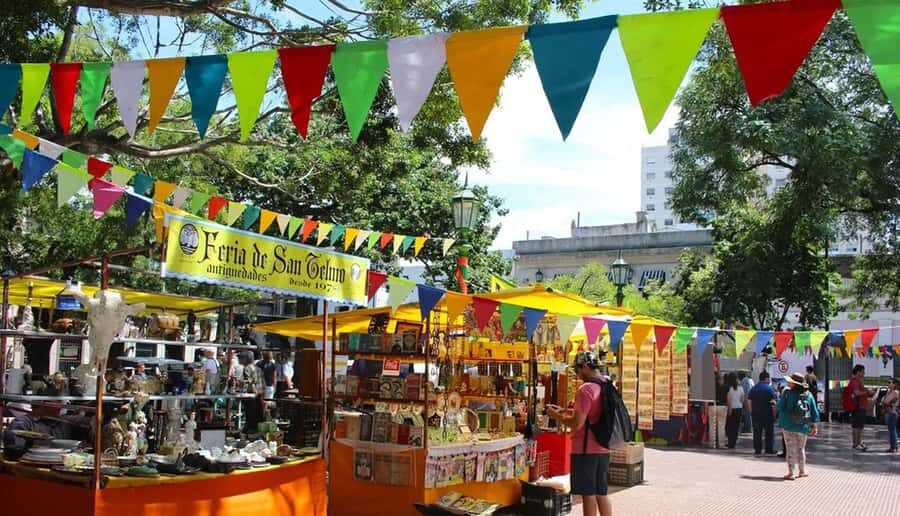
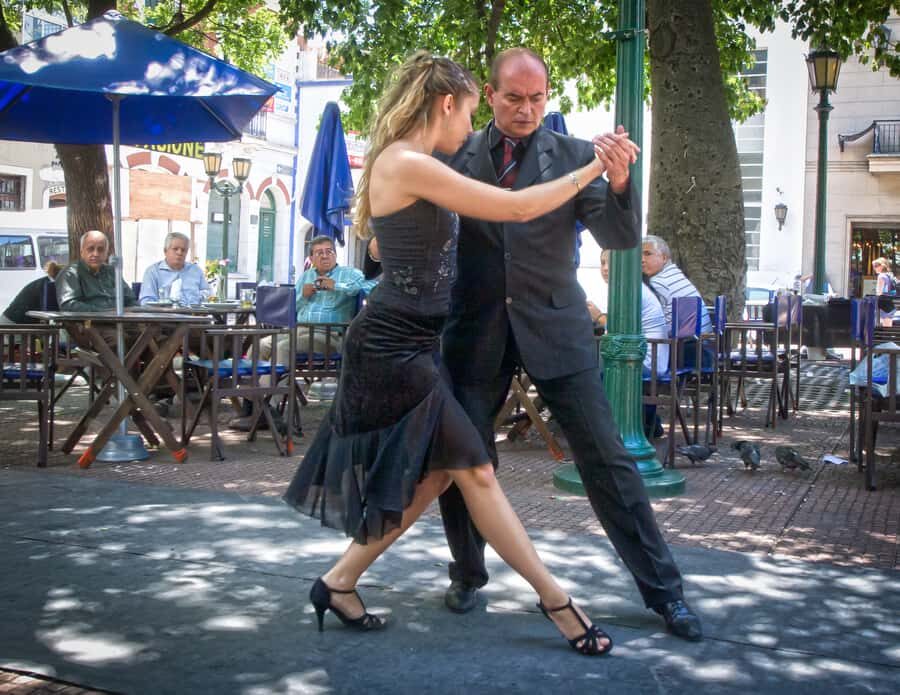
Finally, the tour spends time at the lively Sunday street fair, where music, art, and street culture come together. This is where San Telmo becomes less historic display and more living neighborhood.
You’ll likely enjoy this part most if you like your travel experiences to feel a bit unpredictable. Street fairs are where you see community energy. You’ll get that “wait, that’s right here?” sense of discovery as performers and stalls fill the public space.
One consideration: this is also where crowds can build. If you end up in a bigger group, narrow stretches can feel crowded and you may need a bit more patience to move as a unit. The payoff is real—you’ll see the fair from a guided point of view instead of wandering in the noise with no context.
Guides make the difference: Santiago, Juan, and Jorge’s impact
This tour lives or dies on the guide, and the standout theme is strong personal delivery. I’m glad this provider includes guides who keep things friendly and question-friendly, not stiff and scripted.
In particular, names like Santiago and Juan show up with praise for being warm, funny, and quick with answers. Jorge is also highlighted for delivering detailed explanations that keep the walk interesting even when the group is large. That matters because San Telmo is busy. If your guide can keep everyone together—especially on tight streets—you get a calmer experience and more actual learning.
So here’s what I’d aim for when you book: pick this tour because you want a guided narrative, not just a checklist. When the guide connects architecture, symbols, and neighborhood culture, the route becomes memorable.
Value for $13 in two hours: why this price feels fair
At $13 per person for a 2-hour guided walk, the math works if you value variety. You’re not paying for one highlight. You’re paying for a structured route that includes major neighborhood anchors: a church/convent stop, comic-themed public-art areas, a landmark tied to the Argentine flag creator, a market, and time in the Sunday fair.
That blend is hard to replicate solo in such a short window. Without a guide, you could still see many of these places—but you’d likely lose the connections between them, and you’d spend time figuring out what matters. Here, you get the “why” woven in while you walk.
The main trade-off is time and movement. Two hours means you cover a lot, which is great for orientation, but it isn’t a slow, deep museum-style pace. If you like lingering, you’ll want to plan extra independent time afterward in the areas that hooked you most.
Should you book this San Telmo guided walking tour?
Book it if you want a fast, structured way to understand San Telmo without turning your day into a scavenger hunt. This is a good choice when you like walking neighborhoods and you enjoy culture in public spaces—church façades, comic characters, food-market energy, and Sunday street performance.
Skip it (or pair it wisely) if you’re sensitive to crowding or if you strongly prefer quiet, unhurried sightseeing. On busier Sunday routes, tight streets plus a larger group can feel a bit packed. Also, because it runs rain or shine, bring weather-ready gear so you don’t spend the tour thinking about being uncomfortable.
FAQ
FAQ
How long is the Buenos Aires San Telmo and Market guided walking tour?
It lasts 2 hours.
How much does it cost?
The price is $13 per person.
What language is the tour in?
The tour is in English.
Where does the tour start?
The meeting point is Parroquia San Ignacio de Loyola.
How can I recognize the guide?
The guide uses an orange t-shirt or an orange umbrella.
Does the tour run in bad weather?
Yes, it runs rain or shine.
What major stops are included on the walk?
The route includes Iglesia y Convento de San Francisco, Clemente – Paseo de la Historieta, the Mafalda statue, Mercado San Telmo, and it finishes in San Telmo.
Is there an included food experience at Mercado San Telmo?
You’ll visit Mercado San Telmo, and the tour gives you time to sample traditional Argentine cuisine.
What’s included in the price?
What’s included is an English-speaking guide for 2 hours.
Is free cancellation available?
Yes. You can cancel up to 24 hours in advance for a full refund.