REVIEW · BUENOS AIRES
Palermo: Graffiti and Street Art Guided Tour in English
Book on GetYourGuide →Operated by Buenos Aires Free Walks · Bookable on GetYourGuide
Street art in Palermo tells political stories. On this English guided walk through Palermo Soho, you connect murals and tags to Argentina’s political history, from 1920s election-era messaging to later protest graffiti you can still photograph today.
Two things I especially like: the Trump Wall photo stop at Madison Avenue Bar, and the history lessons that explain why paint was seen as public endorsement and propaganda. I also like that guides such as Elina, Aylen, Vito, Juan, and Victor tend to bring humor and crisp storytelling that keeps a group moving without you feeling lost.
One consideration: you’re on your feet for the full 2 hours, so if you want a low-effort outing, plan accordingly.
In This Review
- Key highlights to know before you go
- Why Palermo Soho’s Street Art Feels Like Politics in Public
- Finding the Meeting Point Fast: Plaza Serrano and the Orange T-Shirt
- How the 2-Hour Walk Flows Through Palermo
- The Trump Wall at Madison Avenue Bar: A Photo Stop With Meaning
- From the 1920s to Election Posters: Why Graffiti Became Political Endorsement
- The 1969 Shift: Aerosol Paint and Faster Messages
- The 1970s and Protest Culture: Reading Street Art as Social Conflict
- What Makes the Guides Work: Humor, Pace, and Clear Storytelling
- Price and Value: Why $13 for 2 Hours Makes Sense
- Logistics That Actually Matter on the Day
- Who This Tour Is For (and When to Skip It)
- Should You Book This Palermo Graffiti and Street Art Tour?
Key highlights to know before you go
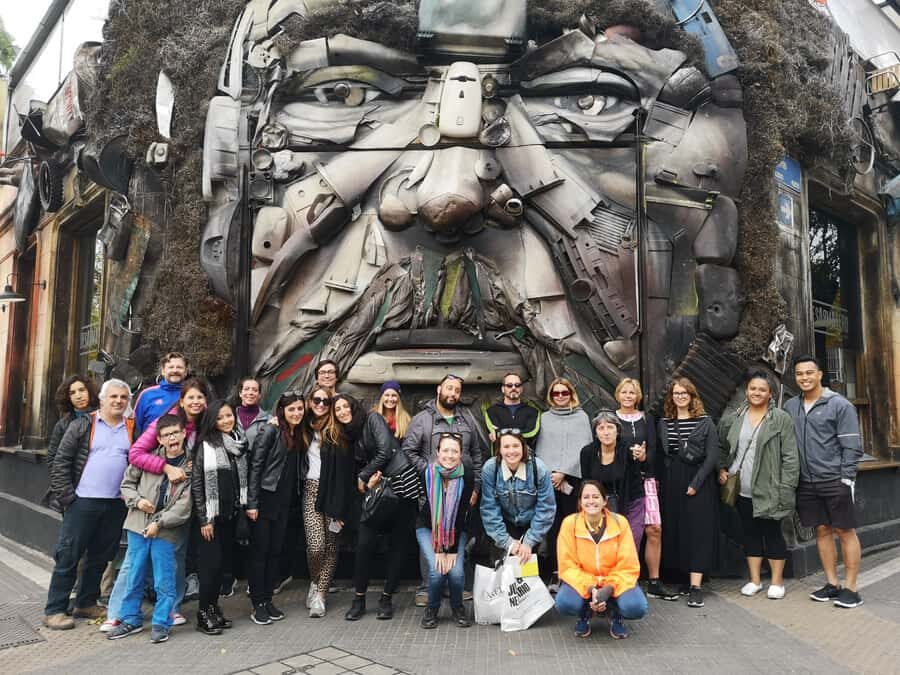
- Trump Wall at Madison Avenue Bar: a specific, iconic mural you’ll know how to spot and why it matters.
- A tight political timeline: the tour links Argentina’s street art to major shifts in protest and power.
- Palermo Soho street-level viewing: you see work where it actually lives, not behind glass.
- Easy meeting spot: Plaza Serrano (Plaza Cortazar) at Borges and Honduras, with an orange-shirt guide and a big PALERMO sign.
- Consistent guide energy: English storytelling with humor that helps you hear details even in a larger group.
- Good value for time: $13 for a 2-hour guided walking tour in one of Buenos Aires’ most photogenic neighborhoods.
Why Palermo Soho’s Street Art Feels Like Politics in Public
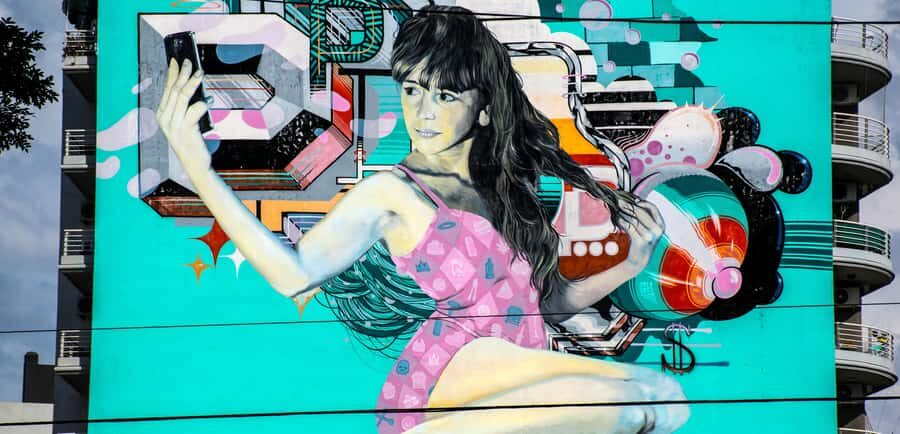
Palermo Soho can look like just another colorful Buenos Aires neighborhood at first glance. But this tour frames the walls as a form of public communication, not just decoration. Once you start seeing the messages as part of Argentina’s political culture, the streets stop being background and start acting like a living bulletin board.
What makes this walk worth your time is the way it ties art to real moments: political endorsement, propaganda, and street-level protest. The guide’s job is to help you read what’s on the wall, and then explain why that message showed up there when it did.
You can also read our reviews of more guided tours in Buenos Aires
Finding the Meeting Point Fast: Plaza Serrano and the Orange T-Shirt
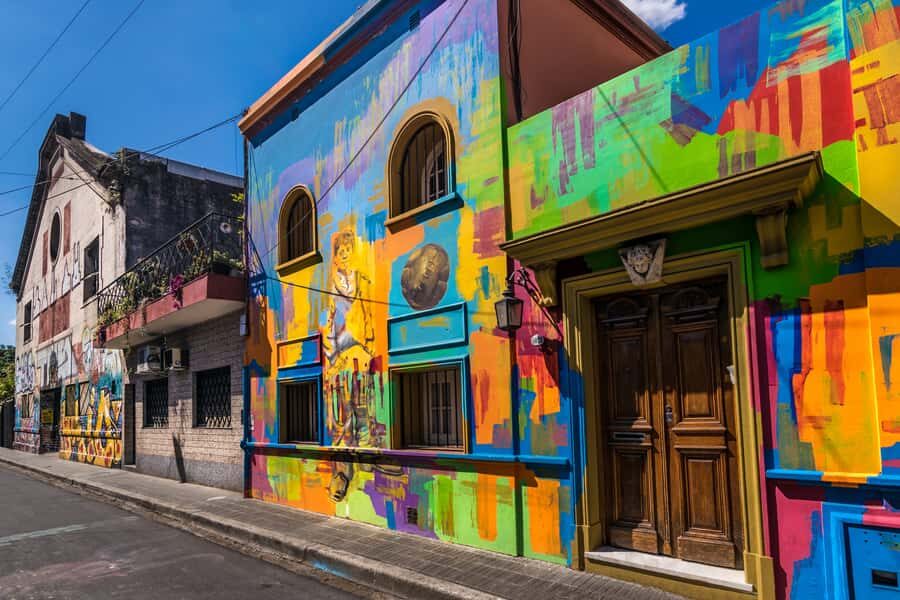
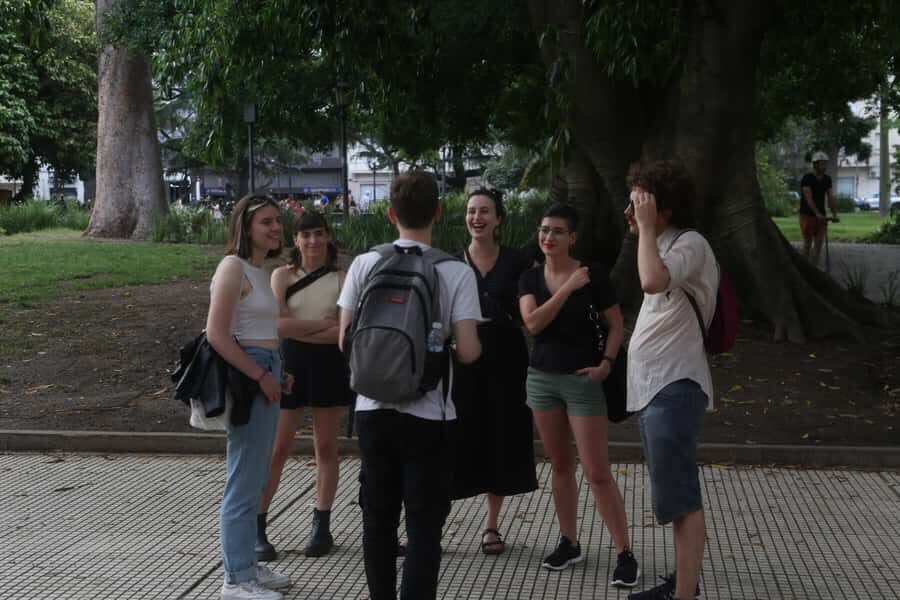
Your starting point is simple to locate if you go in with a plan. Meet at Plaza Serrano (Plaza Cortazar), on the corner of Jorge Luis Borges and Honduras in Palermo. Look for the guide wearing an orange t-shirt and a big PALERMO sign.
This matters more than you might think, because the first few minutes set the tone. When you find the group quickly, you spend your energy looking up at walls instead of scanning sidewalks.
Also note that the walk begins from Plazoleta Julio Cortazar during the tour flow, and it wraps at Plaza Inmigrantes de Armenia. That means you get a neighborhood loop without needing to manage your own route at every turn.
How the 2-Hour Walk Flows Through Palermo
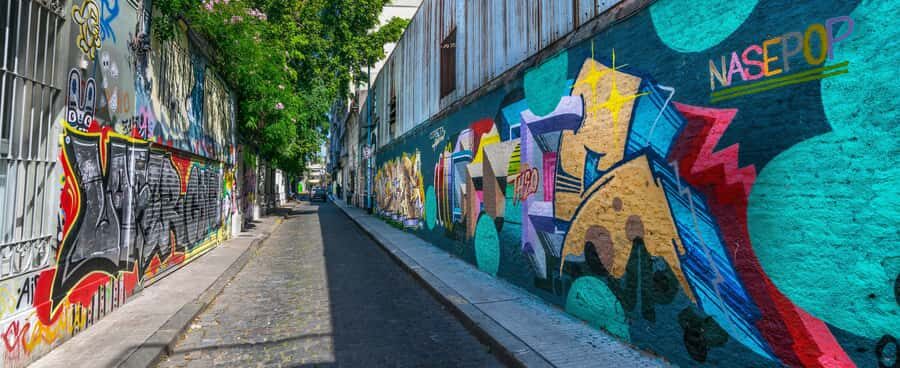
The tour is a focused 2-hour guided walking experience, paced for seeing and learning without dragging on. You’ll move through one of Buenos Aires’ most eclectic pockets, where street art mixes with everyday neighborhood life.
The guide keeps it grounded in what you’re seeing right now: styles, locations, and the kind of message each piece is trying to send. You’re not just hearing dates and names. You’re learning how the city’s walls respond when politics gets tense.
If it’s raining, it’s still on. That’s useful to know because Buenos Aires weather can change fast, and you’ll want to be ready with a light rain layer so the outing stays enjoyable.
The Trump Wall at Madison Avenue Bar: A Photo Stop With Meaning
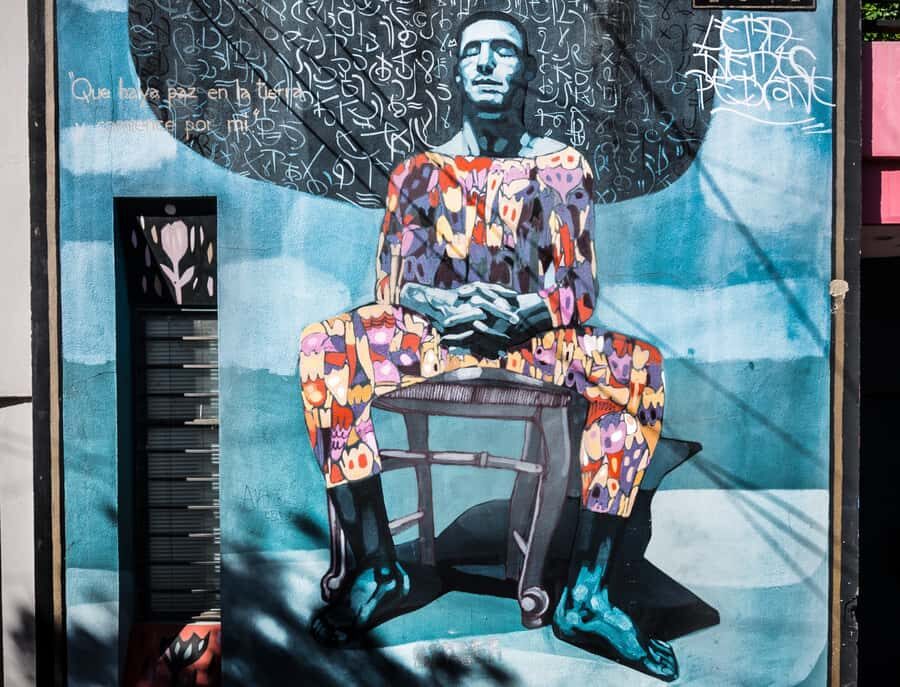
One of the clearest “point and shoot” moments is the Trump Wall’s graffiti at Madison Avenue Bar. You’ll get a chance to take photos, but the tour doesn’t treat it like a sightseeing gimmick.
Instead, the guide uses that spot to talk about the broader idea of street art as public messaging. You’ll learn how graffiti can function like a headline: visible from the sidewalk, instantly recognizable, and aimed at shaping how people think or vote.
If you’re the type who likes your photos to come with context, this is a good stop. You’ll be capturing an image and also picking up the story that explains why that image became worth watching.
From the 1920s to Election Posters: Why Graffiti Became Political Endorsement
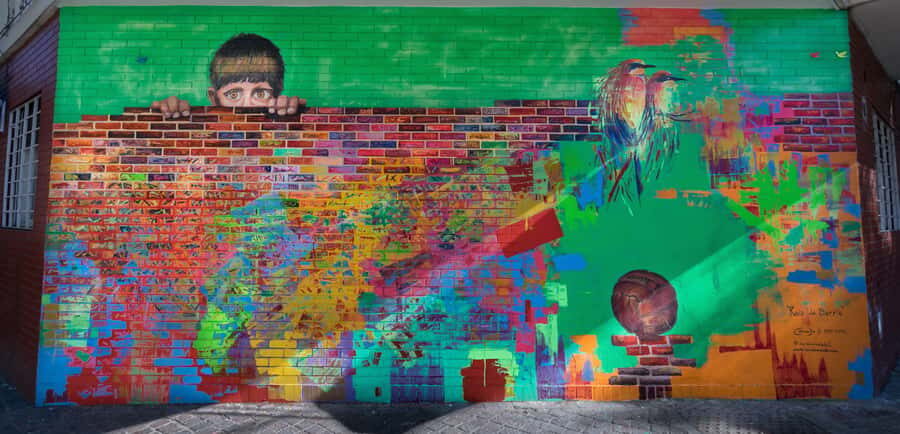
A big part of the tour is the historical arc. You start by traveling back to the 1920s, when Argentina’s political movements were gaining traction and public messaging was a serious business.
The guide explains how graffiti and similar street imagery were seen as political endorsement. In other words, it wasn’t only about art or rebellion for its own sake. It could operate as propaganda and show up in election campaigns as a way to influence people in public space.
That context changes how you look at the “style” of later works too. When you understand that the street has long been part of political messaging, modern tags and murals feel less random and more like the same conversation with new tools.
A few more Buenos Aires tours and experiences worth a look
The 1969 Shift: Aerosol Paint and Faster Messages
Then the tour moves into the turning point of 1969, when aerosol paints arrived and changed what was possible on walls. This is where street art starts feeling like it accelerated, both in speed and in how quickly ideas could spread.
You’ll hear how a different military government period influenced the atmosphere, and how the new materials allowed messages to be written much faster than before. That speed mattered. When communication is quick, it changes how movements organize and how the public responds.
I like this part because it connects technique to politics. Instead of treating paint type as a niche detail, the guide uses it to explain a chain reaction: new tools lead to new ways to protest, which leads to more visible conflict.
The 1970s and Protest Culture: Reading Street Art as Social Conflict
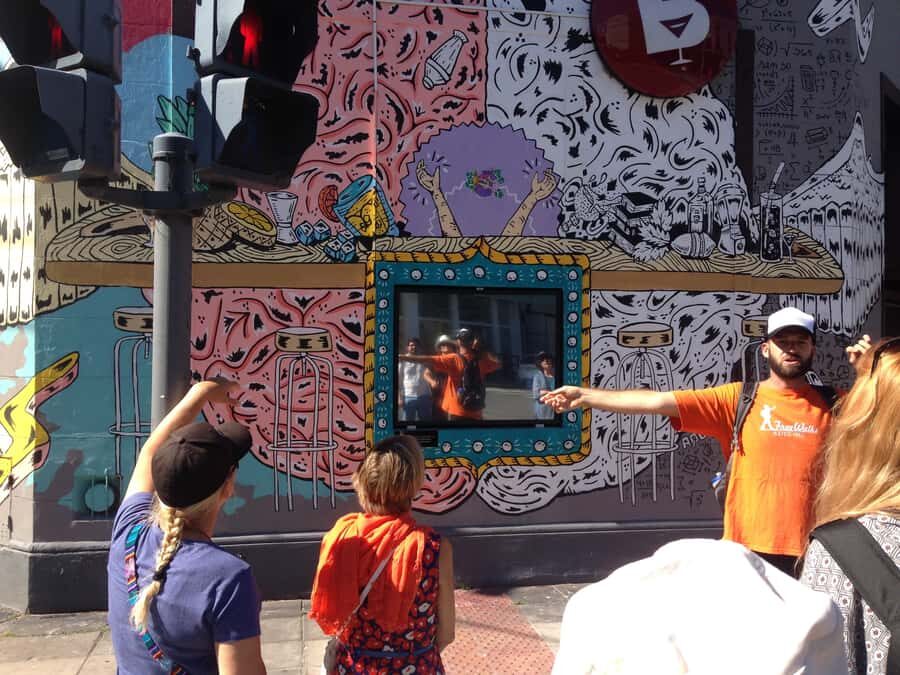
By the time the tour reaches the 1970s, the discussion shifts from messages to people and action. You’ll hear stories about how Argentinians became progressively more involved in protesting and how street art became part of that push.
The guide frames the messages as part of a social conflict happening in real time. That matters because you stop seeing murals as isolated artworks and start seeing them as responses to pressure, fear, power, and anger.
This is also where the tour can be especially fun for photography. Once you know what to look for—tone, symbolism, and the kind of statement being made—you’ll start noticing details you’d otherwise walk past.
What Makes the Guides Work: Humor, Pace, and Clear Storytelling
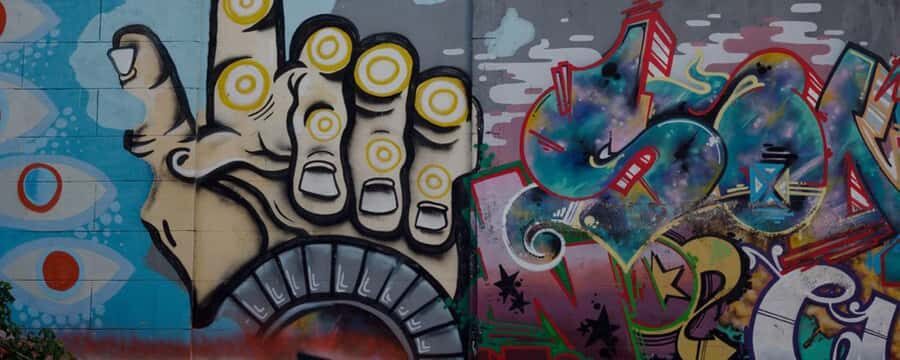
A lot of the best moments on this kind of tour come down to the guide. In this case, the standout pattern is energy paired with clarity. Guides such as Juan, Vito, and Elina are described as entertaining and engaged, with a sense of humor that keeps the group interested.
You’ll also appreciate how the guides manage a group and keep everyone together. Even when the group is larger, the tour is designed so you can still follow what’s happening without straining.
If you like asking questions, this is a friendly format. The guide is telling stories on the spot and responding in the moment, which makes the street art feel more like a conversation than a lecture.
Price and Value: Why $13 for 2 Hours Makes Sense
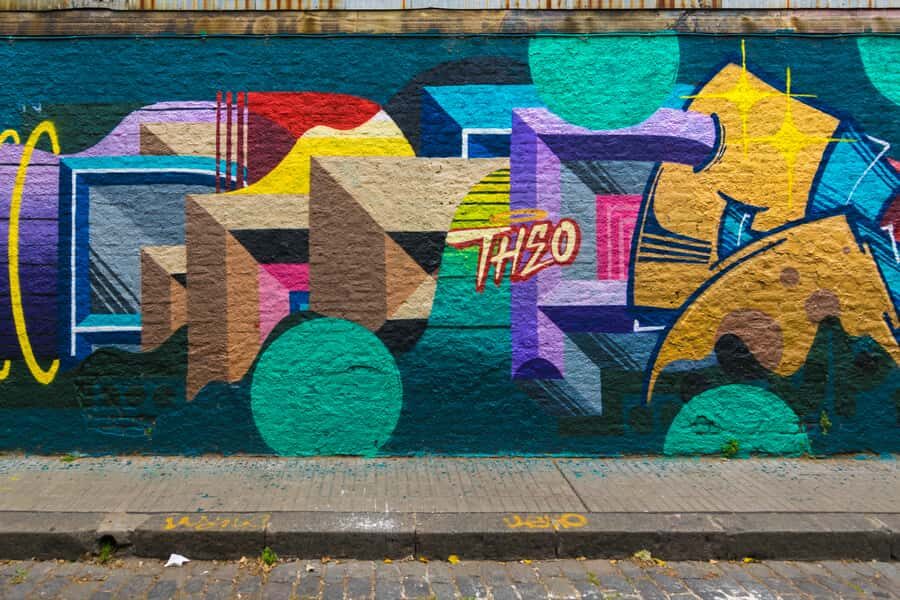
At $13 per person for a 2-hour walking tour, you’re paying for two things: expert guidance and a structured way to read the neighborhood. The value is that you get both visual stops (including the Trump Wall) and the political context that explains what you’re seeing.
This isn’t an expensive “wow, art museum” day. It’s a street-level experience. That’s a strength, not a compromise. In Buenos Aires, the street is where art and politics meet, and a guided walk helps you access that intersection without spending hours researching each piece on your own.
Also, because it’s a walking tour with a clear route, it fits easily into a day when you don’t want to overplan.
Logistics That Actually Matter on the Day
Here’s the practical stuff you’ll want to keep in mind so the outing stays smooth.
You’ll do a 2-hour guided walking tour with English language support. Hotel pickup and drop-off aren’t included, so you’ll want to get yourself to the meeting area near Plaza Serrano.
Food and drink also aren’t included. If you tend to get hungry during walks, plan a snack or a drink before or after.
The good news: the tour is wheelchair accessible, and it still takes place if it rains. That makes it a dependable option when your other outdoor plans get shaky.
Who This Tour Is For (and When to Skip It)
This tour is a strong fit if you want to understand Buenos Aires through the eyes of its walls—especially if you like learning how art connects to politics and protest. It’s also a great choice for people who enjoy taking photos, because you’ll visit specific, recognizable spots rather than roaming randomly.
If you only want purely decorative street art with zero political context, you might find the focus heavy. This walk is built around messages, history, and why people used paint to make statements.
Should You Book This Palermo Graffiti and Street Art Tour?
If you’re in Palermo Soho and you want a short, high-impact way to learn what street art means here, I’d book it. The mix of clear stops (like the Trump Wall), a structured historical timeline, and guide energy makes the 2 hours feel like more than a casual wander.
On the other hand, if you dislike walking or want a totally non-political art experience, you might choose something lighter. But if you’re curious about how a city talks back in public space, this is a smart, affordable pick.