REVIEW · BUENOS AIRES
Buenos Aires: Montserrat, San Telmo, La Boca, and Puerto …
Book on GetYourGuide →Operated by VIP TOURS BA · Bookable on GetYourGuide
Buenos Aires history hides in plain sight. This 4-hour walk stitches together Montserrat, San Telmo, La Boca, and Puerto Madero, with stops that range from the city’s oldest institutions to Santiago Calatrava’s famous bridge. I love how the guide ties street-level details to real stories, and I also like finishing at Puente de la Mujer with a view that feels like a postcard. One heads-up: it’s a lot of on-foot time, so comfy shoes matter more than you think.
I especially appreciated the human touch in the guide-led experience. In past tours, guides named Alejandra have been praised for being friendly and bringing the neighborhoods to life, and there’s also mention of Sebastian keeping things moving smoothly. If you like getting the right amount of context without info overload, this format fits.
Price-wise, at $100 per person for 4 hours, it’s not a “just a bus ride” deal. You’re paying for a live guide, a tight route across major districts, and set highlights like Caminito and Puente de la Mujer, with some flexibility depending on what’s available.
In This Review
- Key points worth knowing before you go
- Montserrat: Plaza de Mayo and Avenida de Mayo, starting at the Catedral
- Montserrat’s old institutions: bookstore, church, pharmacy, and a first two-story building
- San Telmo: Calle Defensa, Mafalda, Plaza Dorrego, and the 1897 market
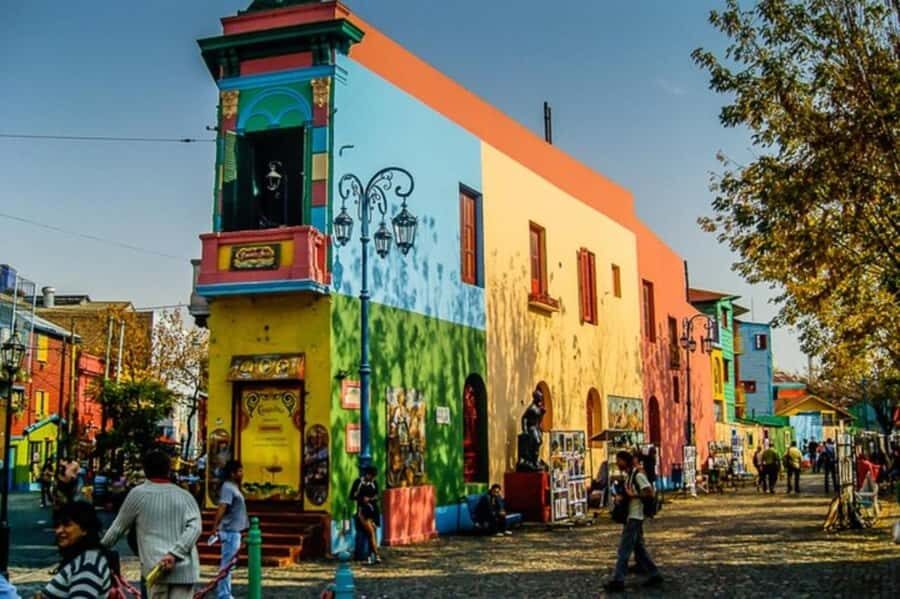
- La Boca and Boca Juniors Stadium: Caminito’s color and tango roots
- Puerto Madero: Puente de la Mujer, historic ships, and Costanera Sur reserve
- Price and value: why $100 for 4 hours can work
- Who this tour suits best (and who should think twice)
- Should you book this Buenos Aires neighborhood walk?
- FAQ
- How long is the tour?
- How much does it cost?
- Where does the tour start and where does it finish?
- Which neighborhoods are included?
- Is Puente de la Mujer included?
- Are meals included?
- What landmarks are specifically mentioned in the tour?
- Is Café Tortoni guaranteed?
- What languages are available for the live guide?
- Is the tour suitable for wheelchair users?
Key points worth knowing before you go
- Montserrat first: Plaza de Mayo, Avenida de Mayo, and the city’s oldest bookstore, church, and pharmacy are part of the story
- San Telmo details: Mafalda’s statue, the smallest house, and legends about sailors and immigrants
- Caminito plus football: Boca Juniors Stadium energy, then the colorful street that shaped tango culture
- Puerto Madero icons: Puente de la Mujer by Santiago Calatrava, plus historic ships like the frigate Sarmiento and corvette Uruguay
- Nature in the middle of the city: Costanera Sur Ecological Reserve is included near the center
Montserrat: Plaza de Mayo and Avenida de Mayo, starting at the Catedral
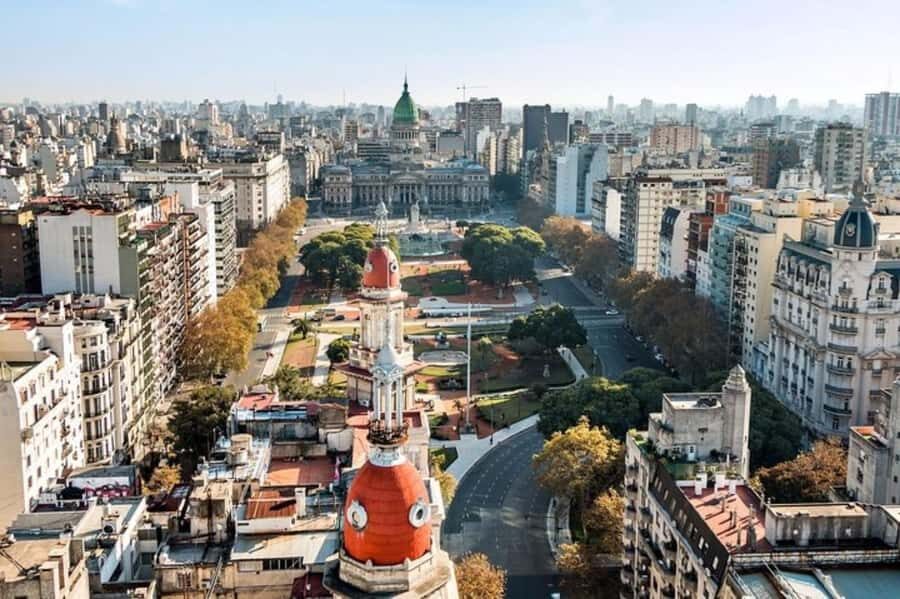
You begin at the Catedral Metropolitana de Buenos Aires, right in the city’s historic gravity well. From here, I love how fast you can get your bearings fast—not by memorizing facts, but by seeing the civic center in context. Plaza de Mayo is the pulsing heart of Buenos Aires, and it’s surrounded by major landmarks like the Casa Rosada, the Cabildo, and the Metropolitan Cathedral.
If you’ve ever wondered how a city “organizes” power and religion around the same square, this is where it clicks. The tour also points out the cluster of ministries around the plaza, including Economy and Defense. You’ll walk with the idea that this area isn’t just pretty—it’s where Buenos Aires has long made decisions.
Then you move toward Avenida de Mayo, described as the city’s first boulevard and the first avenue in South America. This avenue is more than a postcard street. It’s positioned as a link between the National Congress and Casa Rosada, so you’re literally walking between the legislative and executive powers. It’s a smart way to understand the city’s layout in real time.
A small treat can be Café Tortoni, the oldest café in Argentina and South America. The important detail: it depends on availability. If it doesn’t work out on your day, don’t assume you’re missing the “real tour.” You’re still getting Montserrat’s core streetscape and the story behind them.
You can also read our reviews of more tours and experiences in Buenos Aires.


Montserrat’s old institutions: bookstore, church, pharmacy, and a first two-story building
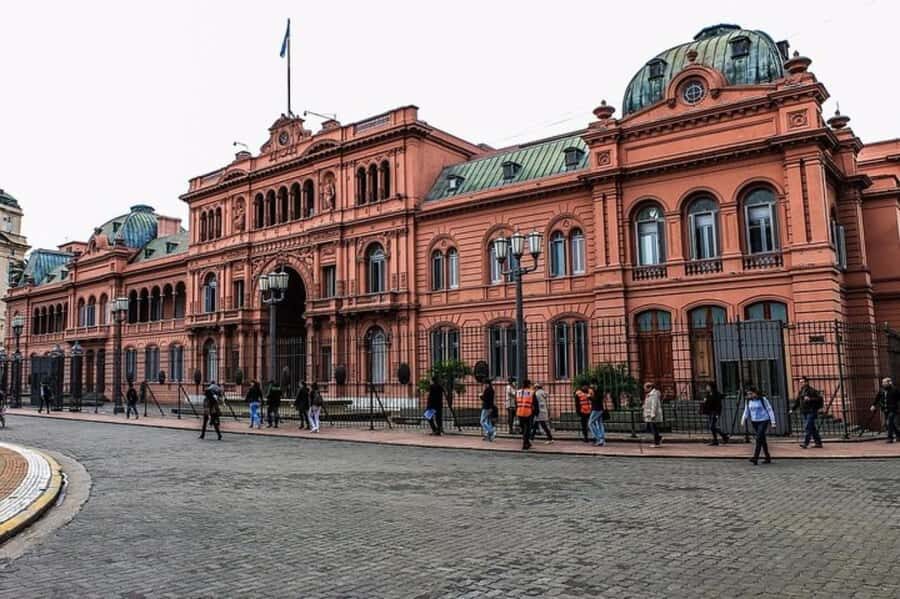
Montserrat is where Buenos Aires shows its age in a way that feels human. You’ll spend time in the area around Calle Defensa, picking up the smaller-but-meaningful landmarks that most people rush past.
The tour highlights the oldest bookstore, church, and pharmacy in the city. That trio matters because it reflects what societies preserve: knowledge, faith, and daily life. Even if you’re not a museum person, you’ll likely enjoy the idea that these places are still part of the neighborhood rhythm.
You’ll also see the first two-story building in Buenos Aires during this Montserrat walk. That’s a detail I love because it turns “old city” into something measurable. Instead of vague nostalgia, you get a clue about when the city started changing upward—literally.
If you like walking through places where you can imagine ordinary life happening centuries ago, this stretch is a highlight. And because you’re on foot, the guide can point out what to watch for—street patterns, building style cues, and the way Calle Defensa carries a long list of stories.
San Telmo: Calle Defensa, Mafalda, Plaza Dorrego, and the 1897 market
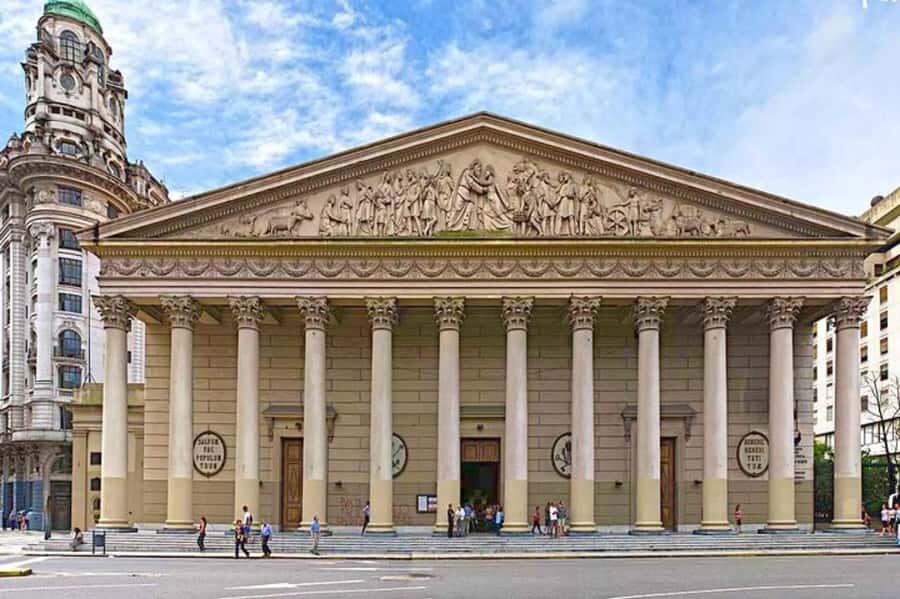
Next comes San Telmo, the second oldest neighborhood, and the vibe shifts. This is where history feels more intimate, like it’s been living on the street for a long time.
You’ll walk down Calle Defensa again and spot the statue of Mafalda, Argentina’s beloved comic character and cultural ambassador. Even if you’re not a comics fan, it’s an easy win because it gives you a modern pop-culture anchor in an old neighborhood.
Then the tour leans into the kind of details that make a city memorable: you’ll see the smallest house in the city and hear stories tied to sailors, immigrants, slaves, and urban legends. The exact version of the story will depend on the guide, but the point is consistent—San Telmo’s identity is partly built from migration and maritime life.
You’ll also stop at the San Telmo Market, inaugurated in 1897. What I like here is that it’s not treated like a dead artifact. It has evolved into an active hub with antique shops, small restaurants, and traditional fruit and vegetable stalls. It’s a practical place to browse and get a sense of what locals buy and where casual meals fit into the neighborhood.
Before you reach San Juan Avenue, there’s time around Plaza Dorrego, described as the second oldest square. Next to that area, you’ll also find Ezeiza’s house nearby. You’ll also get photo opportunities with the French Passage, which is a great backdrop when the light cooperates.
Food note: there’s a specific mention that this area is ideal for a meal, but meals are not included. I like having this built-in pause because you can choose something quick and local without forcing it into the tour pace.
La Boca and Boca Juniors Stadium: Caminito’s color and tango roots
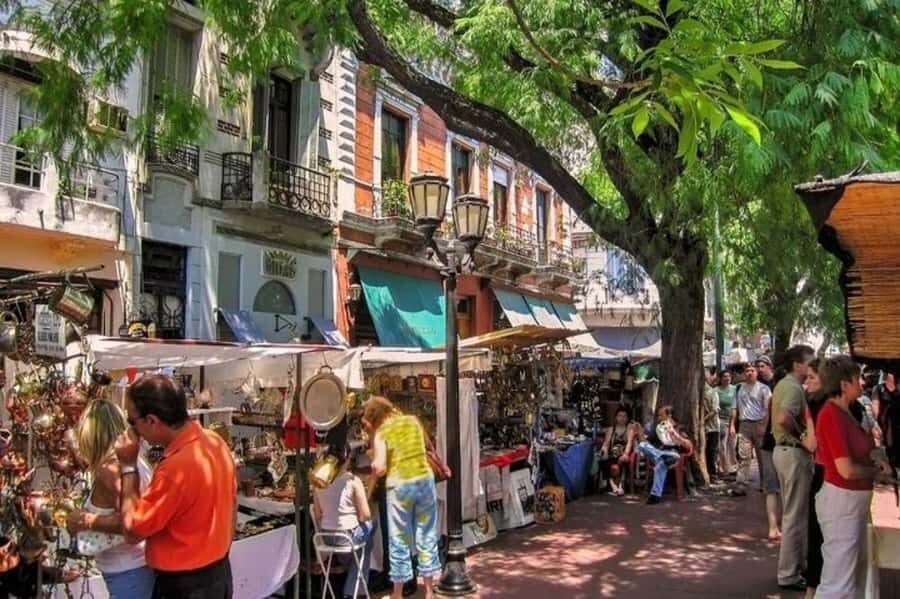
La Boca is the district for big emotion. Football first, then tango, with the street itself acting like a stage.
You’ll visit the iconic Boca Juniors Stadium and learn about the club. Even if you don’t follow Argentine football closely, you’ll feel the neighborhood’s pride around the stadium. The tour makes room for that cultural pulse rather than treating it like a one-and-done sightseeing stop.
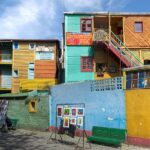
From there, you’ll spend time in Caminito, a well-known colorful street that functions like an open-air museum. This is also closely tied to tango. The neighborhood is described as the birthplace of tango, and the tour points you toward traditional restaurants where you may catch tango dancers.
That’s the kind of detail I find useful because it helps you plan your expectations. This isn’t only about walking past a pretty street. It’s about seeing how tango culture keeps showing up in daily life—sometimes loud, sometimes performance-style, and often with souvenir shops right alongside it.
If you’re a photographer, Caminito is naturally fun. Just remember that La Boca can draw crowds, so keep your phone protected and your pace calm.
Puerto Madero: Puente de la Mujer, historic ships, and Costanera Sur reserve
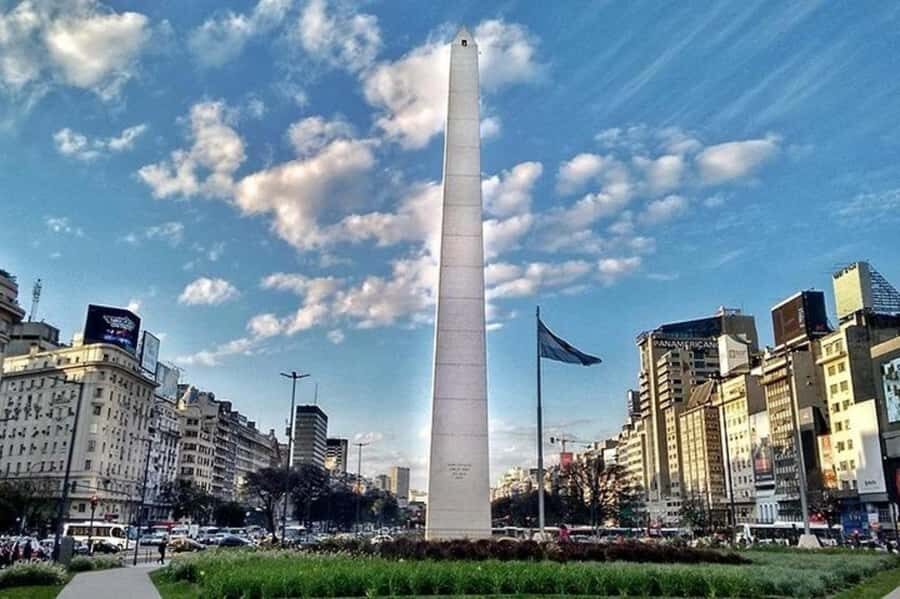
Puerto Madero is a contrast scene. You go from older neighborhoods with story-heavy streets into a district that looks designed for the future—skyscrapers, wide promenade views, and a lot of places to stop for a drink or meal (not included on this tour).
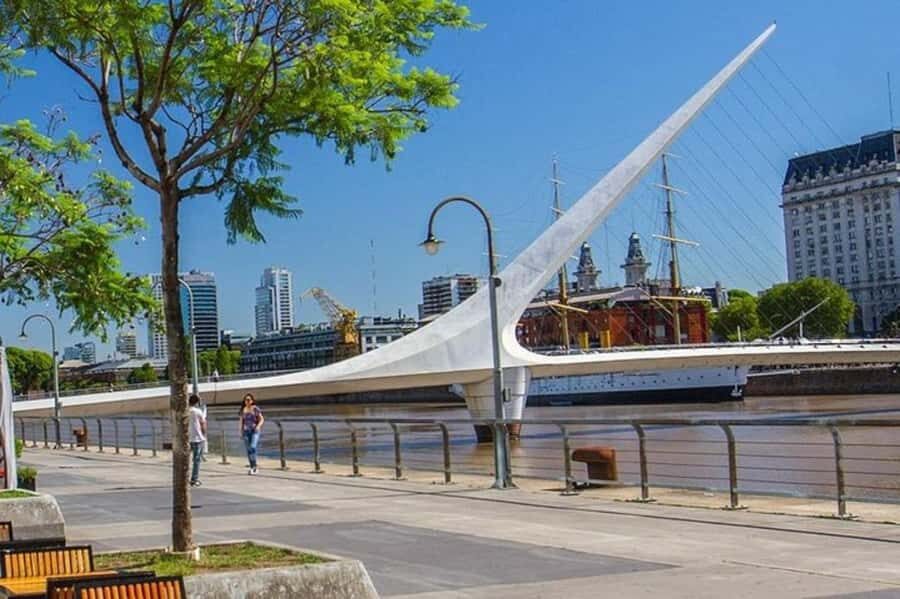
The tour’s centerpiece is Puente de la Mujer, designed by Santiago Calatrava. This is a dramatic ending spot because the bridge is instantly recognizable and visually different from anything you’ve seen earlier. If you’re the type who likes architecture with personality, you’ll get why people come here just for photos.
In Puerto Madero, you’ll also learn about historical treasures like the frigate Sarmiento and the corvette Uruguay. This is a neat reminder that Puerto Madero wasn’t always the polished skyline scene. The tour frames the area as a once-abandoned port project that later transformed into the modern district you see today.
And then there’s Costanera Sur Ecological Reserve, included as a natural space near the city center. I like that this tour doesn’t end only with concrete and steel. You get a chance to shift gears into nature-focused breathing room without leaving the city core.
If the weather is mild, this part feels especially good. If it’s windy or rainy, the promenade views still work, but your best bet is to keep moving and save the longer lingering for a clear moment.

Price and value: why $100 for 4 hours can work
At $100 per person for 4 hours, the value depends on what you want from Buenos Aires. If your goal is to hit major neighborhoods—Montserrat, San Telmo, La Boca, and Puerto Madero—while still learning what you’re seeing, this price can feel fair.
Here’s what you’re really buying:
- a live guide who covers the key neighborhoods and landmarks
- structured time that prevents “random walking” from turning into wasted hours
- iconic stops that are hard to string together efficiently on your own
Also, the tour language options are English, Spanish, and Portuguese, and past guides have been specifically praised by name—Alejandra is mentioned as a standout for friendly, well-prepared guiding. That’s a big deal because the best part of neighborhood tours is not the checklist. It’s how the guide turns street corners into meaning.
Timing-wise, you move between areas with short transfers, then walk the most interesting sections on foot. That’s efficient. But it also means you’ll want shoes you trust. Even with breaks, it’s still a walking-focused outing.
Finally, note the one “maybe” item: Café Tortoni depends on availability. If you’re hoping it’s guaranteed, keep your expectations flexible. You’ll still get the historic Montserrat core regardless.
Who this tour suits best (and who should think twice)
This tour is a strong fit if:
- you’re visiting Buenos Aires for the first time and want a clear route through major neighborhoods
- you care about both old city texture and modern Buenos Aires icons
- you like football and tango culture showing up as part of the neighborhood story
It may be less ideal if:
- you don’t do well with walking time (it’s not suitable for wheelchair users)
- you want a fully relaxed pace with lots of free time sitting and shopping
- you need guaranteed entry to Café Tortoni every day
Should you book this Buenos Aires neighborhood walk?
I’d book it if you want a guided route that balances civic history, immigrant-era street stories, football-tango culture, and one of the city’s most famous modern landmarks. The biggest reason is that you’re not just collecting sights—you’re connecting them, step by step, with a guide people have praised for getting the right amount of information.
One practical check before you go: bring comfortable shoes and plan for changing weather. If Café Tortoni happens, it’s a bonus. If it doesn’t, you’ll still leave with Montserrat, San Telmo, La Boca, and Puerto Madero firmly understood in your head.
If that sounds like your kind of Buenos Aires, this 4-hour tour is a solid value for your time.
FAQ
How long is the tour?
It lasts 4 hours.
How much does it cost?
The price is $100 per person.
Where does the tour start and where does it finish?
It starts at Catedral Metropolitana de Buenos Aires and finishes at Puente de la Mujer.
Which neighborhoods are included?
Montserrat, San Telmo, La Boca, and Puerto Madero are included.
Is Puente de la Mujer included?
Yes. The tour includes Puente de la Mujer.
Are meals included?
No. Meals and drinks are not included.
What landmarks are specifically mentioned in the tour?
Plaza de Mayo, Avenida de Mayo, Café Tortoni (subject to availability), San Telmo Market, Plaza Dorrego, Caminito, Boca Juniors Stadium, and the Puente de la Mujer area are all mentioned.
Is Café Tortoni guaranteed?
No. The visit to Café Tortoni depends on availability.
What languages are available for the live guide?
The tour offers a live guide in English, Spanish, and Portuguese.
Is the tour suitable for wheelchair users?
No. It is not suitable for wheelchair users.