REVIEW · BUENOS AIRES
From Colonialism to Eclecticism, Buenos Aires arquitectonica
Book on GetYourGuide →Operated by Viajes de Juani tours · Bookable on GetYourGuide
Buenos Aires has a habit of hiding its best details in plain sight. This architecture-focused walking tour starts at Plaza de Mayo and moves through iconic landmarks plus under-the-radar facades, with mate tasting built into the afternoon rhythm. I love how the route jumps between styles and eras without feeling like a textbook, and I really liked the way the guide connects buildings to Argentine culture and daily life. One possible drawback: it’s a walking tour, so you’ll want comfortable shoes and sun protection.
In a small group of up to 4 people, you get room to ask questions and follow the tour at a pace that makes the details stick. If you’re the type who looks up at cornices and old bank buildings instead of only chasing photos, you’ll get a lot out of this. If you want lots of indoor time, note that Teatro Colón’s interior visit is optional and not included.
In This Review
- Key points worth knowing before you go
- A Building-First Buenos Aires Walk That Actually Makes Sense
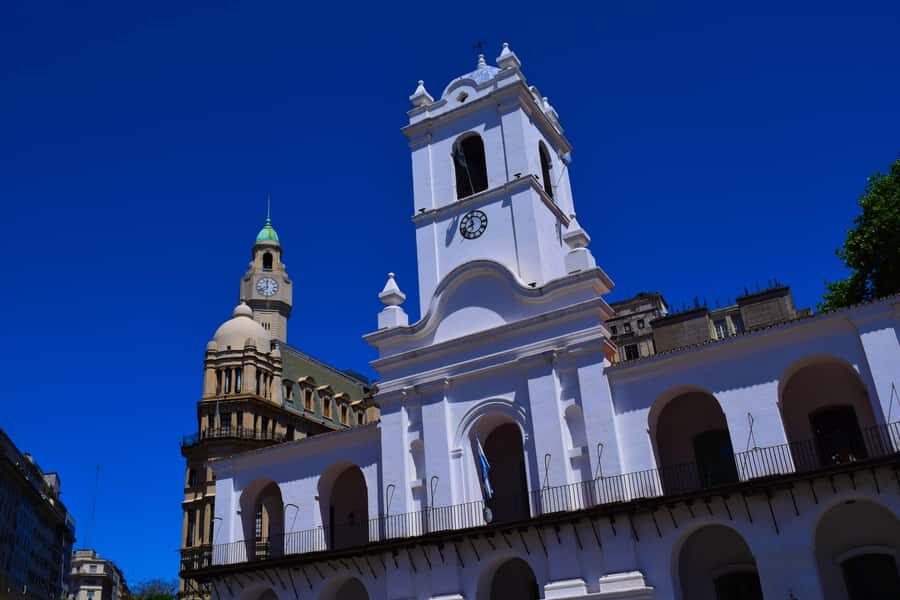
- Plaza de Mayo: Cabildo, Cathedral, Casa Rosada, and Banco Nación
- Reconquista Street and the Brutalist Banco Hipotecario Facade
- CCK and the Former Post and Telegraph Palace: Corrientes Begins to Sing
- Obelisk to Diagonal Norte: Politics, Public Space, and a Clear View
- Plaza Lavalle: Courts Palace, Julio Argentino Roca School, and Real Everyday Stops
- Mate Tasting at the Right Moment, Then a Finale at Teatro Colón
- Price, Timing, and What You’re Really Getting for $25
- Who This Tour Fits Best
- The Bottom Line: Should You Book?
- FAQ
- How long is the Buenos Aires architectural walking tour?
- Where does the tour start?
- What’s the price?
- Is the tour in English?
- Is this a small group?
- What’s included in the tour?
- Do I get to go inside Teatro Colón?
- Which areas and sights does the tour cover?
- Can the tour be customized?
- What should I bring for the walk?
Key points worth knowing before you go
- Plaza de Mayo to Corrientes Avenue: a route that connects politics, money, and nightlife architecture.
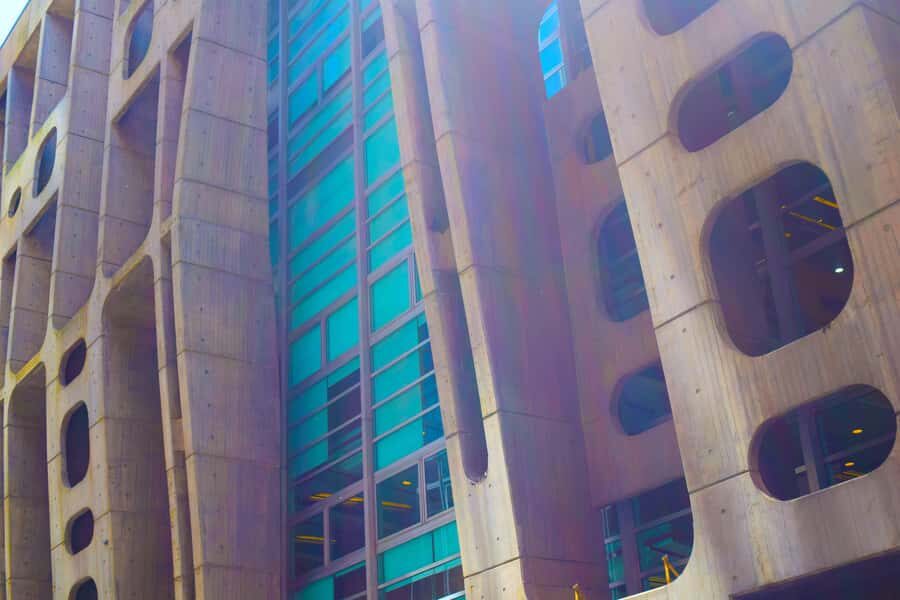
- Brutalist Banco Hipotecario stop: one of the most unusual building choices on the day.
- CCK and the former Palacio de Correos y Telégrafos: you see both the building’s look and its earlier role.
- Corrientes Avenue icons: you pass Gran Rex and the Opera, still known for shows and crowds.
- Mate tasting with a local explanation: you learn the tradition, not just take a sip.
- Small group size (max 4): more attention and easier questions while walking.
A Building-First Buenos Aires Walk That Actually Makes Sense
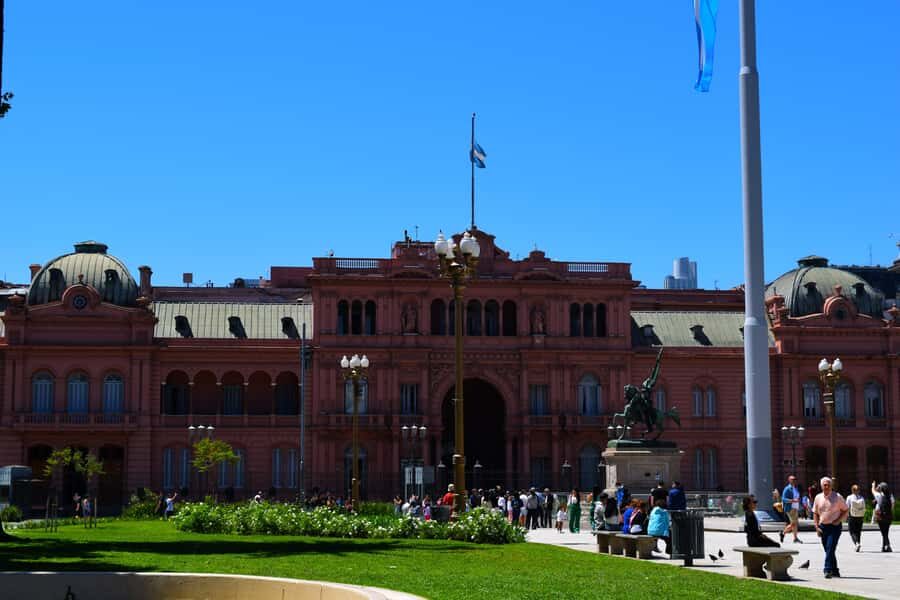
This tour is for people who want Buenos Aires to “click” through its buildings. Instead of jumping randomly between attractions, you walk a line across central neighborhoods and let the architecture tell the story: church authority, government power, banking ambition, and the city’s theater culture.
I like the shape of the route. You start at Plaza de Mayo, where you can’t miss the political center. Then you head north through Microcentro, where a mix of architects and styles rub elbows. By the time you reach Corrientes Avenue and Teatro Colón, the city stops feeling like a pile of monuments and starts feeling like a living timeline.
The group stays small—limited to 4 participants—so you don’t feel like you’re getting sprayed with information from across the street. You can also customize the tour based on your tastes or interests, which is a big deal if you care more about one theme (like brutalism or theaters) than another.
Practical note: it’s three hours of walking. You won’t be stuck indoors, and you’ll be out in the open for several stretches. Bring comfortable shoes, plus sunglasses, hat, and sunscreen if the sun is doing its usual Buenos Aires work.
You can also read our reviews of more tours and experiences in Buenos Aires.


Plaza de Mayo: Cabildo, Cathedral, Casa Rosada, and Banco Nación
Your day starts right where you want it: at Plaza de Mayo, at the intersection of Bolívar and Av. de Mayo. From the start, the guide frames what you’re looking at so it feels less like sightseeing and more like reading the city.
You first see the Cabildo of the city, a classic anchor for Buenos Aires’ colonial-era identity. Even if you’ve passed by similar buildings on other trips, this is one of those stops where the details—scale, materials, and the building’s role—start to matter. Then you move to the Metropolitan Cathedral and the Casa Rosada, both tied to Buenos Aires’ political heart.
After that, you’ll also come across Banco Nación, which helps the story broaden. Government and religion explain power, but finance explains the next layer: who built the modern city, and why they put their money on dramatic street-facing facades. Seeing these side by side makes the early part of the tour feel intentionally designed, not random.
I especially liked how this first stretch sets your eye for the rest of the route. By the time you’re walking away from Plaza de Mayo, you’re already primed to notice contrasts: old versus new, formal versus bold, and the way each building tries to communicate authority.
Reconquista Street and the Brutalist Banco Hipotecario Facade
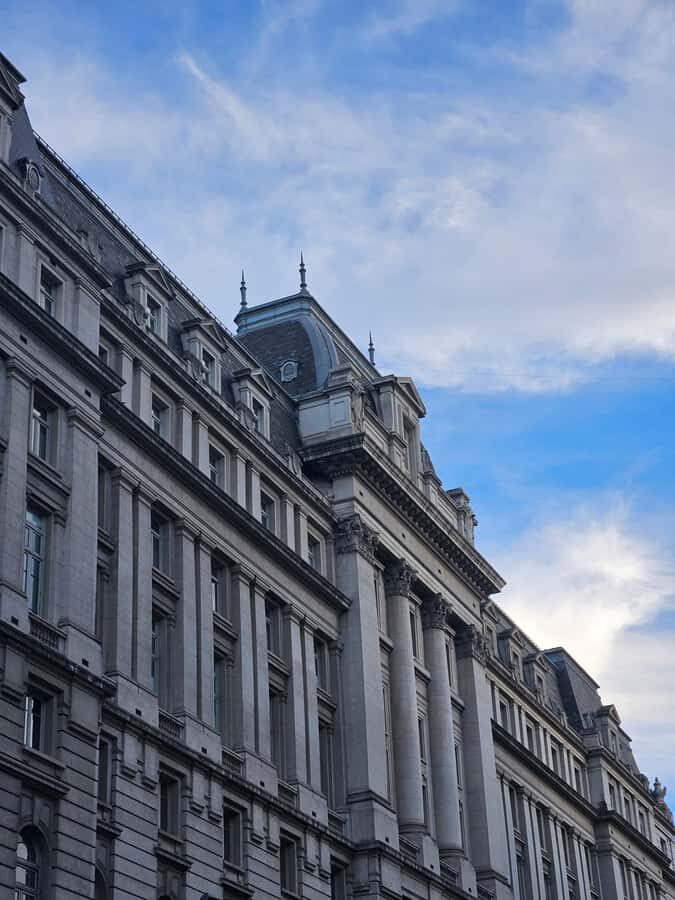
After the big-name anchors, the tour shifts into a more “follow the clues” mode. You head north on Reconquista Street, a corridor where you can spot multiple styles without leaving the center of town.
Then comes the standout architectural detour: the headquarters of Banco Hipotecario and its Brutalist facade. This is the moment when the day stops being only about famous facades and becomes about architectural personality. Brutalism can feel heavy or confusing if you’ve only seen it in photos. Up close, you notice rhythm, structure, and the way the facade behaves at street level—how it blocks, frames, or channels movement.
This stop also does something useful for your brain: it shows that Buenos Aires isn’t just “European elegance.” It has modern language too, and it’s willing to spend political and economic energy on bold design.
You’ll also get a sense of how Microcentro works as a district of coexistence—different eras and architects sharing the same grid. That’s one of the best ways to understand Buenos Aires quickly: not by chasing a single style, but by watching how styles collide.
CCK and the Former Post and Telegraph Palace: Corrientes Begins to Sing
From Microcentro, the route continues toward the Centro Cultural Kirchner (CCK), including time at the former Palacio de Correos y Telégrafos (Post and Telegraph Palace). Even if you’re not a history nerd, you’ll appreciate the contrast between what the building was for and what it’s used for now.
The guide focuses on the facade and the building’s earlier role, so you can connect function to design. It’s a great way to understand why grand civic buildings look the way they do. A post and telegraph palace wasn’t just a service center—it was a statement about communication, reach, and modernity.
Next, you go up the mythical Corrientes Avenue, famous for nightlife and culture. This part of the walk is more than architecture sightseeing. You’re also seeing the city’s performance geography in real life.
Two key street icons anchor this stretch: the Gran Rex and the Opera. They had their heyday as major landmarks for the city’s entertainment scene, and today they still pull in crowds for shows. Passing by them helps you see how a neighborhood keeps using the same stage areas across generations.
If you like “architecture with atmosphere,” this is where you’ll feel it most. The buildings don’t just sit there—they participate in the city’s habits.
Obelisk to Diagonal Norte: Politics, Public Space, and a Clear View
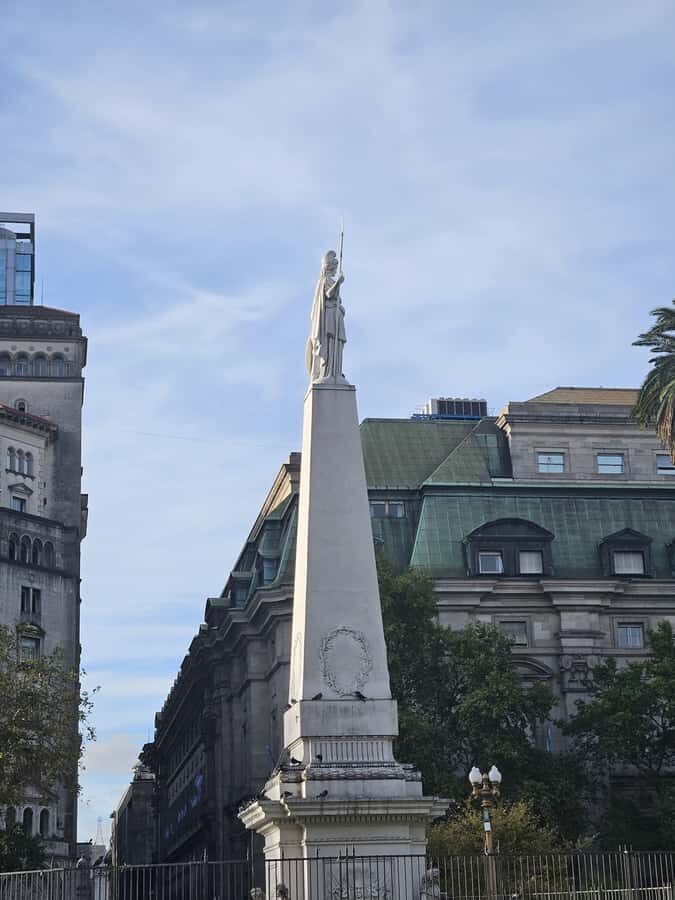
The first part of the tour wraps with the Obelisk and Plaza de la República. These aren’t just photo stops. You learn why this spot matters for political and social life—why the city keeps returning here when it wants to mark big moments.
Then you continue along Diagonal Norte, with a brief pause at the Obelisk staircase. This stop is short, but it’s a smart one: you get a panoramic view of one of Buenos Aires’ most intense intersections, including Av. 9 de Julio and Corrientes.
I find this kind of viewpoint break is what separates a good architecture tour from a tiring one. You walk through details, then you step back and see the urban layout. It helps you understand scale. It also helps you understand why some facades feel grand from far away and why others only make sense up close.
It’s also a good moment to slow down and take a few photos without rushing, because the rest of the day is still about precision.

Plaza Lavalle: Courts Palace, Julio Argentino Roca School, and Real Everyday Stops
In the last section, the tour shifts to Plaza Lavalle, where you see two prominent buildings: the Courts Palace and the Julio Argentino Roca School in front of it.
This is a smart choice because courts and schools represent different kinds of institutions—justice and education. You’re not just touring “pretty” architecture. You’re looking at the design languages institutions use to shape public behavior. Even from the outside, you can often feel the difference between a building built to command attention and one built to support learning and daily routines.
If you tend to skip this kind of city infrastructure, this stop is a good reminder: the everyday civic buildings tell you more about a society than the most famous postcard monuments.
Mate Tasting at the Right Moment, Then a Finale at Teatro Colón
Right around this point in the walk, you’ll take a mate tasting break. Mate is more than a drink here; it’s a tradition with real social meaning, and the guide explains a bit of the history behind it.
You’ll also have a traditional Argentine snack along with water during the tour. This combination matters because the day is mostly outdoors and most people will start to feel the effort by then.
When the tour finishes, you end at Teatro Colón. You’ll get the exterior experience and the connection to why the theater matters in Buenos Aires’ public culture. There’s also an option to stay for a guided visit inside, but entrance to the theater isn’t included—so if you want that extra time, plan to confirm the details with your guide.
Even without going inside, Teatro Colón is a strong final punctuation mark. It ties together everything earlier in the day: money, government, public space, and performance culture—all visible in architecture.
Price, Timing, and What You’re Really Getting for $25
At $25 per person for three hours, this tour is priced like a smart “first architecture day” option. You’re paying for three things that are hard to replicate on your own: an organized walking route, an English-speaking guide who connects buildings to cultural context, and the included tasting break.
The most practical value is the guide’s ability to help you see patterns. With a route that moves from Plaza de Mayo to Corrientes Avenue and then down toward Teatro Colón, you’d need a lot of independent research to get the same level of “why this building matters” while you’re walking.
Also, the small group size (up to 4) makes the price feel even more fair. When the group is tiny, you can ask follow-ups without feeling like you’re holding everyone back.
Who This Tour Fits Best
This is a great match if you:
- enjoy architecture and city structure, not just sightseeing photos
- want off-the-classic-circuit buildings mixed into a central route
- care about cultural context, including Argentine traditions like mate
- like small groups where you can ask questions and get answers on the spot
It’s less ideal if you:
- want a lot of museum-style interior time (Teatro Colón interior is optional, and other major stops are mainly about facades/history)
- don’t like walking for extended stretches outdoors
- prefer self-paced exploring where you control every pause
The Bottom Line: Should You Book?
If you want Buenos Aires to make sense fast—through buildings, institutions, and the city’s cultural rhythms—book this. The route hits the core landmarks without staying trapped in the obvious circuit, and the guide brings in details that change how you look at the street after the tour ends.
If you’re planning your first or second day in town and you want a guided “map” for what to notice later, this is a strong use of time. For a small amount of money, you get both city context and an included mate break—two things that make the tour feel like more than just walking.
FAQ
How long is the Buenos Aires architectural walking tour?
It lasts 3 hours.
Where does the tour start?
The meeting point is Plaza de Mayo, right at the intersection of Bolívar and Av. de Mayo.
What’s the price?
The tour price is $25 per person.
Is the tour in English?
Yes. The tour includes an English-speaking guide throughout the tour, and the guide also speaks Spanish.
Is this a small group?
Yes. The group is limited to 4 participants.
What’s included in the tour?
Included are an English-speaking tour guide, water and a traditional Argentinean snack, and a mate tasting.
Do I get to go inside Teatro Colón?
You can finish at Teatro Colón with the option to stay for a guided visit inside, but entrance is not included.
Which areas and sights does the tour cover?
You’ll cover central Buenos Aires architecture, including Plaza de Mayo, stops connected to Cabildo, Metropolitan Cathedral, Casa Rosada, Banco Nación, Reconquista Street, Banco Hipotecario, Centro Cultural Kirchner (CCK) and the former Palacio de Correos y Telégrafos, Corrientes Avenue with Gran Rex and the Opera, the Obelisk and Plaza de la República, Diagonal Norte, Plaza Lavalle with the Courts Palace and Julio Argentino Roca School, and the finale at Teatro Colón.
Can the tour be customized?
Yes. The tour can be customized based on your tastes and/or interests.
What should I bring for the walk?
Bring comfortable shoes, sunglasses, a hat, sunscreen, and comfortable clothes.