REVIEW · BUENOS AIRES
Best of Buenos Aires Private Walking Tour
Book on Viator →Operated by Buenos Aires Walking Tours · Bookable on Viator
Buenos Aires can feel like a blur on your first day. This private walk turns it into a clear, story-driven route, from the shopping bustle of Calle Florida to the emotion-heavy art and memorial sites in Recoleta Cemetery. You get a guide who links architecture to Argentina’s political swings, European immigration, and those surprising British fingerprints around the city.
I especially like how the tour doesn’t treat landmarks like postcards. It explains why places matter—like the reason Torre Monumental sits across from a Malvinas/Falklands memorial, and why the palaces along Barrio Norte look so French. The itinerary also builds momentum: each stop sets up the next one.
One possible drawback: this is a solid walking day. Expect a lot of time on your feet, and while the route is designed to fit in about 3 hours, what you see most closely can shift with weather and timing.
In This Review
- Key points worth your attention
- The Big Idea: Buenos Aires, Explained Street by Street
- First 30 Minutes: Getting Oriented on Calle Florida
- Basilica del Santisimo Sacramento: Family Power in 1916
- Edificio Kavanagh: Buenos Aires’ Art Deco World-Focus Moment
- Torre Monumental and Malvinas/Falklands: British Influence with a Pulse
- Plaza General San Martín: Layers Under Your Feet
- Palacio Paz and Palacio San Martín: When France Met Buenos Aires Money
- Palacio Paz
- Palacio San Martín
- Barrio Norte’s French Costume: Palacio Estrugamou and Avenida Alvear
- Palacio Estrugamou
- Avenida Alvear
- Churches and Embassies: When Architecture Becomes the Story
- Basilica de Nuestra Señora del Pilar
- Embassies that Tell Personal Stories
- Patio Bullrich: From Auction House to Upscale Mall
- Recoleta: A Neighborhood Designed for Strolling
- La Recoleta Cemetery: More Than Evita
- Ending at La Biela: A Clean Finish and a Good Next Step
- Price and Value: What $109 Buys You Here
- Who This Tour Fits Best (and Who Might Want Something Else)
- Should You Book This Buenos Aires Private Walking Tour?
- FAQ
- What is the duration of the Best of Buenos Aires Private Walking Tour?
- How much does the tour cost?
- What’s included in the price?
- What is not included?
- Where does the tour start and end?
- Does the tour run in bad weather?
Key points worth your attention
- Calle Florida to Plaza San Martín: a downtown-to-midtown route that makes the city’s layout make sense fast
- Edificio Kavanagh: Art Deco at full power, with the commissioning story behind the skyline
- British Buenos Aires: Torre Monumental and the Malvinas/Falklands monument put the history in plain view
- Barrio Norte’s Paris connection: Avenida Alvear and the mansion-filled streets explain the city’s nickname
- Recoleta with a bigger agenda: a longer, detailed cemetery visit tied to tango, ports, and immigration
- English-speaking private guide: you only share the route with your group, so questions stay easy
The Big Idea: Buenos Aires, Explained Street by Street
This tour is built like a guided walk-through of Buenos Aires’ identity. You start where most first-timers begin—downtown near the action—but you don’t stop at the obvious views. Instead, the guide threads themes through the route: European influence, political power, and how immigration reshaped neighborhoods and architecture.
That’s why the walk feels more useful than a typical “see the sights” loop. By the time you reach Recoleta, you’re not just seeing grand buildings. You’re understanding what made them possible. And along the way, you get the kind of context that helps you enjoy the city even when you’re doing nothing but wandering later.
You also get a real sense of pace and structure. The stops are short—often just a few minutes—so you’re constantly moving and constantly recalibrating your mental map. If you like learning on your feet (and don’t mind being outside), this format works.
You can also read our reviews of more walking tours in Buenos Aires
First 30 Minutes: Getting Oriented on Calle Florida
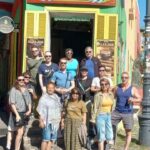
The meeting point is straightforward: you’ll meet outside a café corner door (the corner with Paraguay St.) and look for guides holding a small BA Walking Tours sign. It’s designed to start promptly—no later than 10am—so arrive a bit early, especially if you’re pairing this with other morning plans.
From there, you head onto Calle Florida, Buenos Aires’ famous shopping street. The tour frames it as more than a pedestrian corridor. The guide explains how Florida Street acts like a connector—linking the foundational area around Plaza de Mayo with Plaza San Martín (San Martin Park). That one idea makes the street feel purposeful, not just commercial.
At this stage, you’ll also get a quick sense of how the city “talks” to you through buildings. The tour keeps pointing out architecture and layout in a way that helps you later recognize what you’re seeing without constantly staring at your phone.
Basilica del Santisimo Sacramento: Family Power in 1916
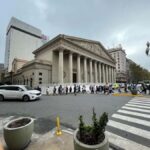
A standout early stop is the Basilica del Santisimo Sacramento, built in 1916 by Lady Mercedes Anchorena for her family. The church is described as astonishingly beautiful, but what makes it memorable is the way the guide uses it as a launching point for stories about love, hate, power, and influence.
This is one of those places where the guide doesn’t just name dates and styles. The tour treats it like a clue. If you’re the type who enjoys connecting dots—who had the money, who wanted visibility, who shaped the city with private wealth—this stop hits.
Edificio Kavanagh: Buenos Aires’ Art Deco World-Focus Moment
Then comes the skyline headline: Edificio Kavanagh. You’ll see it towering over Plaza San Martín, and the guide frames it as the tallest Art Deco skyscraper in Buenos Aires. It’s also noted as a UNESCO heritage building, and the facts are part of the story:
- Construction took only 14 months
- It was commissioned in 1934
- The commissioning figure named is Corina Kavanagh, an Irish-descent millionaire who sold two ranches at age 39 to build the landmark
This is a good stop to slow down mentally, because the architecture is only half the point. The other half is the human ambition behind it. You end up seeing it not as a random tall building, but as a statement of who wanted to be at the center of modern Buenos Aires.
Torre Monumental and Malvinas/Falklands: British Influence with a Pulse
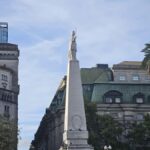
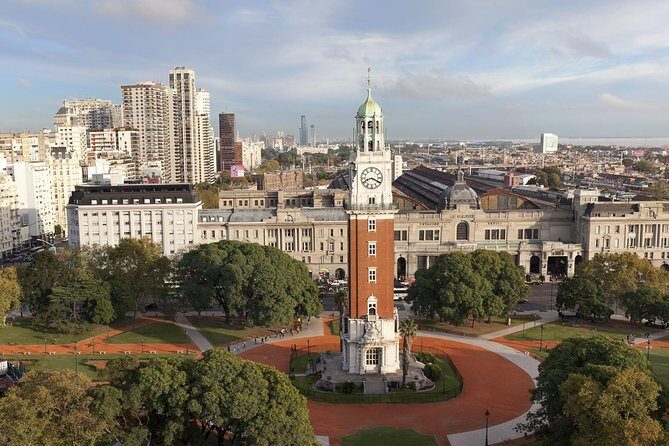
Next you hit Torre Monumental, the British-clock-tower landmark in the city’s landscape. The tour explains the strong legacy of England in Argentina, and it’s not delivered abstractly. The guide points out what you can actually see: the tower itself, and the memorial opposite it for the 1982 South Atlantic war (Malvinas/Falklands).
Immediately across the way, you get Monumento a Combatientes de Malvinas, and the tour’s tone gets more intense. Here, the guide ties together Argentina’s love/hate relationship with England and the way British presence shows up in the economy. It’s a reminder that “influence” isn’t always a sweet story. Sometimes it’s mixed, costly, and political.
If you’re curious about how modern Argentina processes identity and history—especially around the UK/Argentina relationship—this section is one of the most meaningful parts of the walk.
You can also read our reviews of more private tours in Buenos Aires




Plaza General San Martín: Layers Under Your Feet
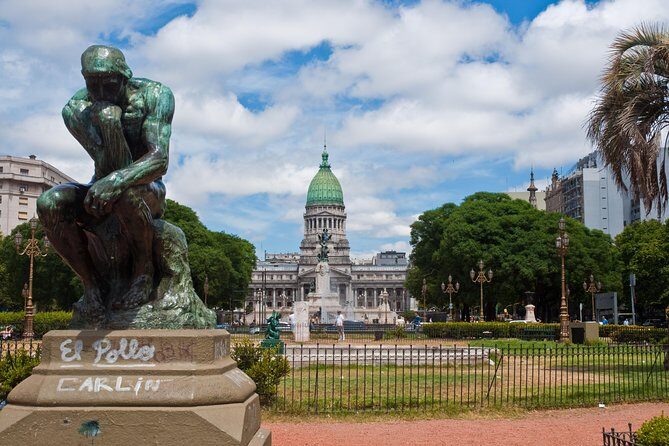
At Plaza General San Martín, you’ll get the kind of context that changes how you perceive a park. The tour notes that this area is close to old slave depots and includes a timeline of uses—there once was a fort and even a bullfight ring.
Today, the park centers on the monumental figure of General José de San Martín, with the guide outlining his full story. Even if you’ve heard his name before, the point here is to connect him to the physical city space. Buenos Aires isn’t just scenery; it’s where power and conflict played out.
Palacio Paz and Palacio San Martín: When France Met Buenos Aires Money
Then the tour shifts into palace mode with two major stops side by side in theme, even if not literally adjacent.
Palacio Paz
Palacio Paz is described as an impressive city palace built in 1914 for José C. Paz, a newspaper proprietor who was aspiring to the presidency. What really grabs attention is the construction detail: it was built entirely with materials imported from France, with 120 rooms for a family of four.
That contrast—French material + Argentine ambition—is exactly what makes this tour worth doing. You learn how elite taste traveled, how wealth wanted visible proof, and how European style became part of Buenos Aires’ social language.
Palacio San Martín
Next is Palacio San Martín, described as the Anchorena family palace, now called San Martín for political reasons. The story centers on Mercedes Anchorena, the woman behind the palace and the nearby family church. This stop adds emotional texture: it’s not just about a building. It’s about a family’s choices and how those choices became public architecture.
Barrio Norte’s French Costume: Palacio Estrugamou and Avenida Alvear
After that, the walk opens up into Barrio Norte, where the tour leans hard into Buenos Aires’ nickname: the Paris of the South.
The tour explains that Avenida Alvear and surrounding streets are known for elegant streets and mansion-lined views. You’ll also hear about immigration during 1880–1930, with examples named like Spanish, Italians, French, British, and more. The idea isn’t just that people moved—it’s that Buenos Aires’ neighborhoods turned those movements into visible design.
Palacio Estrugamou
In this area, you’ll see Palacio Estrugamou, where the tour points out the Parisian flavor of the buildings. It’s a good stop because it turns reputation into evidence. Instead of telling you Barrio Norte is elegant, the guide shows you why the comparison makes sense.
Avenida Alvear
You’ll stroll along Avenida Alvear, specifically called out as one of the most elegant avenues in Argentina. Here, you’re not just photographing façades. You’re reading the city’s wealth language—mansions as status, street scale as comfort, and design as identity.
A small practical note: this section is less about “one wow moment” and more about a gradual build of impressions. If you enjoy slow, steady street viewing, it will be a highlight.
Churches and Embassies: When Architecture Becomes the Story
A big part of the tour’s value is that it doesn’t separate religion, politics, and power. It connects them.
Basilica de Nuestra Señora del Pilar
In Recoleta, you’ll visit Basilica de Nuestra Señora del Pilar, part of the Franciscan Recoletos monastery area and completed in 1732. The tour notes it’s the second-oldest church in Buenos Aires.
This is one of the stops where the age of the building adds weight to everything else you’ve seen. Earlier stops were about modern ambition and imported style. Here, you’re seeing the older religious footprint that helped shape the city long before the “Paris” reputation.
Embassies that Tell Personal Stories
You’ll also pass and learn from several diplomatic buildings, each with a human angle:
- Plaza Israeli Embassy: the tour explains the 1992 bombing that killed 24 people, along with why it matters politically and in terms of justice.
- Embajada de Francia: originally the Ortiz-Basualdo Palace, where the guide shares historical gossip, including a story about Edward VII of England visiting with his American wife-to-be.
- Embajada de la Santa Sede Nunciatura Apostolica: the tour asks why Argentina has an Argentine Pope and connects that to relationships between ultra-rich women (Anchorena/Harilaos/Alvear are named) and the church. It also includes the story of Adelia Harilaos donating her palace to the Vatican.
If your travel style is history-with-people, not history-with-headlines, you’ll appreciate this part. These stops also help break up the heavier Recoleta cemetery time.
Patio Bullrich: From Auction House to Upscale Mall
At Shopping Patio Bullrich, the tour takes you to a building you might otherwise treat as just another mall—unless you hear its origin story first.
The tour explains that Patio Bullrich was originally a livestock auction house. It was built in 1867 for the Bullrich family and designed by English Argentine architect Juan Waldorp. It describes the auction uses: prize bulls and thoroughbreds, plus the building serving as a consignment house for valuable heirlooms and other collectibles.
Then, it notes how it got repurposed around 1990 into a posh shopping space. That’s a perfect example of what the tour does well: it makes you see reuse and reinvention as part of Buenos Aires’ character, not just a business decision.
Recoleta: A Neighborhood Designed for Strolling
Recoleta is framed as affluent and strollable, with Paris-style townhouses and lavish former palaces. You’ll spend time here both in the neighborhood itself and in the cemetery.
The tour’s Recoleta approach feels practical. You’re given enough context about why Recoleta looks the way it does, so when you walk again later on your own, your eyes will land on different details than they would on day one.
La Recoleta Cemetery: More Than Evita
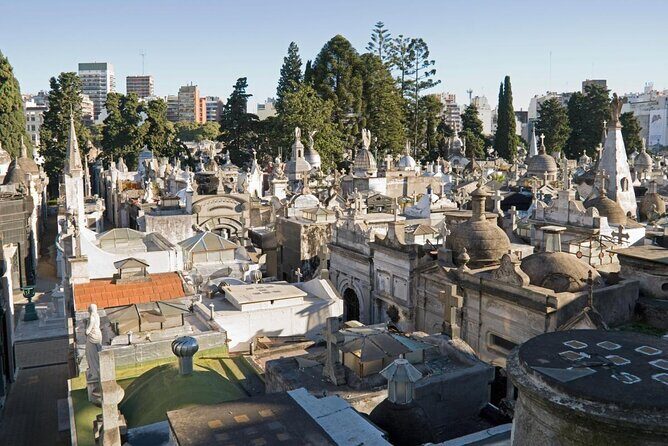
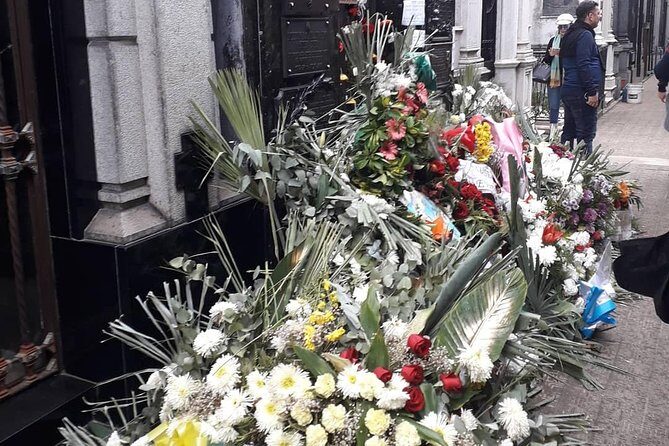
Recoleta Cemetery is the big named draw, and it’s handled with care. You get what the tour calls a detailed visit, including:
- Evita Perón’s memorial and her story
- Multiple named individuals and their family histories and misfortunes
- Pilar Basilica visit as part of the cemetery experience
- Stops tied to art and tango, including Bourdelle’s monument to Alvear and Palais de Glace, where tango is described as becoming of age
- Themes around ports and immigration, and connections to design and museums
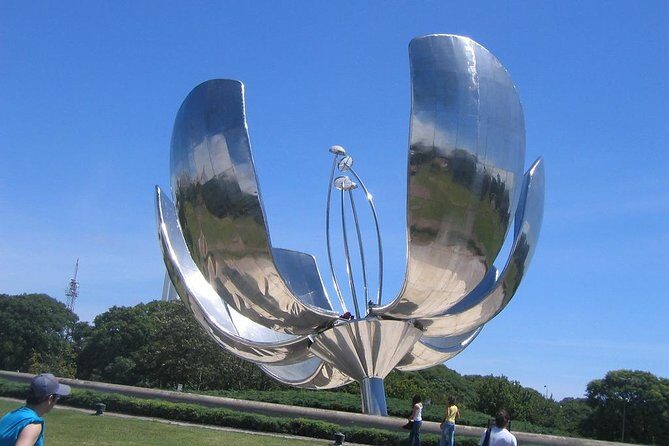
The tour also includes lots of specific local stops you may hear about during the cemetery block: the cultural center and old monastery, the BA Design Center and terraces, a giant flower close-up visit when available, plus mentions of Palermo Chico and nearby areas like Loma Mitre.
Admission is included for the cemetery portion, which matters because it makes this stop feel complete. This is one of the easiest “value wins” on the day: you’re paying for time with a guide, and the ticket piece is handled.
One consideration: the most detailed cemetery experiences can depend on weather and timing. The tour already notes that the full itinerary can vary with conditions, so go in expecting a plan built to fit real life, not a rigid museum script.
Ending at La Biela: A Clean Finish and a Good Next Step
You end outside La Biela in the Recoleta area (Av. Pres. Manuel Quintana 596). La Biela is positioned as a landmark café, and the tour wraps with a brief guide on neighborhood context and nearby attractions so you can choose what to do next.
This ending is smart. You’re not dumped in a random corner. You’re placed near a known café and restaurant zone, which makes it easier to transition into independent exploring—whether that means a slow lunch, a museum detour, or just letting the afternoon unfold.
Price and Value: What $109 Buys You Here
At $109 per person for about 3 hours, the real question is value. For me, the value comes from three places:
- Depth per stop. You’re not just walking past famous buildings. The stops are framed with story-level details that help you remember what you saw.
- A full thematic arc. Downtown to British monuments to Barrio Norte palaces to Recoleta churches and cemetery. That’s a lot of different Buenos Aires rolled into one guided plan.
- Included admissions. The tour includes cemetery admission, and you also have church admission for the Pilar Basilica portion.
If you’re short on time in Buenos Aires, this type of private walking tour can be the highest return on day-one energy. If you hate walking, or if you only want the “biggest” sights without context, you might feel it’s too much on foot. But if you want your first visit to stick, it’s built for that.
Who This Tour Fits Best (and Who Might Want Something Else)
This is a great fit if you:
- Want a private guide with English
- Like architecture that comes with political and personal context
- Want a route that goes beyond the usual downtown highlights
- Plan to explore Recoleta and want to understand what you’re seeing there
It may be less ideal if you:
- Struggle with a lot of walking in a morning/early afternoon window
- Want a relaxed, minimal-stops sightseeing style
- Prefer to pick your own stops without a fixed sequence
A final small practical thought: bring comfortable shoes and a light rain layer. The tour runs rain or shine, so you’ll want to be ready to keep moving.
Should You Book This Buenos Aires Private Walking Tour?
Yes—if you want Buenos Aires to make sense quickly and you’re okay with a serious walking pace. The route links downtown, British history cues, French-style grandeur, and a cemetery visit that connects to tango and immigration. That combination is rare in one morning.
Book it especially if it’s your first time in Buenos Aires or if your schedule is tight. If you’re already spending the day in Recoleta later anyway, this tour becomes even more efficient: you’ll get the neighborhood story first, then enjoy your own wandering afterward.
If you want, tell me your travel dates and whether you’re more into architecture, politics, or tango. I can suggest what to pair with this walk for a strong second half of the day.
FAQ
What is the duration of the Best of Buenos Aires Private Walking Tour?
The tour is listed at about 3 hours (approx.), with the overall walking experience described as around 2.5 hours, depending on time and circumstances.
How much does the tour cost?
The price is $109.00 per person.
What’s included in the price?
A professional English-speaking guide is included, and cemetery admission is included.
What is not included?
Hotel pickup and drop off and meals are not included.
Where does the tour start and end?
It starts at Buenos Aires Walking Tours outside the café corner door (corner with Paraguay St.) and ends outside La Biela at Av. Pres. Manuel Quintana 596 in Recoleta.
Does the tour run in bad weather?
Yes. The tour operates rain or shine.