REVIEW · BUENOS AIRES
Buenos Aires: Chacarita, The Largest Cemetery In Argentina
Book on GetYourGuide →Operated by daddiescuriosos · Bookable on GetYourGuide
Chacarita Cemetery is where Buenos Aires gets quiet. What makes this tour special is that you do not just read names—you get a guided route through Argentina’s cultural icons and the cemetery’s distinct national-style sections, including German and British grounds.
I love the fact that the walk is built around big, recognizable people (Carlos Gardel, Gustavo Cerati, and more), which makes the cemetery feel personal instead of intimidating. I also like that the guide, Miguel, stays calm and organized even when conditions are less than perfect—one review noted light rain did not spoil the experience—and he can slow down Spanish for learners.
One consideration: the route is a lot of walking on cemetery paths, and it is not suitable for mobility impairments or wheelchair users, so plan your comfort first if you have any limitations.
In This Review
- Key highlights worth your attention
- Why Chacarita Cemetery feels different from a regular cemetery visit
- Getting your bearings: meeting point and how the 3-hour route works
- Carlos Gardel’s mausoleo: tango’s final stop
- Gustavo Cerati, Gilda, and the pull of modern Argentine music
- Jorge Newbery: aviation and national memory in stone
- Beyond the headline names: where the tour gets meaning
- The capilla and panteón moments: why architecture matters here
- Commonwealth War Graves and the German cemetery: shifting from art to history
- Elcano Park: a final pause that keeps the walk from feeling endless
- Price and value: why $20 for a 3-hour guided walk makes sense
- Should you book this walk if you like culture, art, or Spanish practice?
- Quick decision guide: book it or pass?
- FAQ
- How long is the Chacarita Cemetery tour?
- What’s the meeting point?
- What will I see during the tour?
- What language is the tour guide?
- How big is the group?
- How much does it cost?
- What should I bring?
- Is the tour suitable for wheelchair users?
- Is there a restroom stop?
Key highlights worth your attention
- Gardel’s mausoleo: a must-see stop tied to tango’s best-known voice
- Gustavo Cerati’s resting place: modern Argentine music gets its own moment
- German and British cemeteries: different styles, temples, and monuments in one place
- War graves at Buenos Aires’ Commonwealth sector: a solemn historical contrast
- Small group of up to 6: more chances to ask Miguel questions as you walk
- Photo-stop pacing: short pauses so you can actually look, not just rush
Why Chacarita Cemetery feels different from a regular cemetery visit
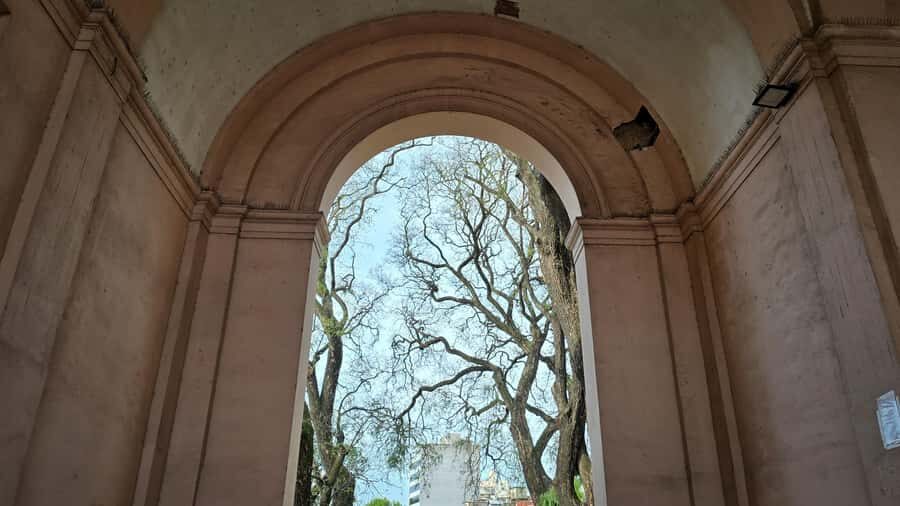
Most cemetery visits are either too fast or too confusing. Chacarita can be the same at first glance—rows of monuments, family names, and lots of stone—but this tour gives you a path with meaning. You walk with a live guide in Spanish, and you keep learning as you go, which is exactly what helps a place like this click.
The cemetery’s appeal is not just spiritual. You also get architectural variety. Even without being an architecture nerd, you’ll start noticing changes: different memorial styles, different religious forms, and different national sections that reflect how many communities have shaped Buenos Aires. That mix is part of why this tour is more interesting than simply paying respects and moving on.
And there is a very practical reason it works: the route is paced in bite-sized segments. Many stops are designed as short guided visits (often around 10 minutes, with a couple longer ones). That keeps the story from turning into one long blur of facts.
You can also read our reviews of more tours and experiences in Buenos Aires.


Getting your bearings: meeting point and how the 3-hour route works
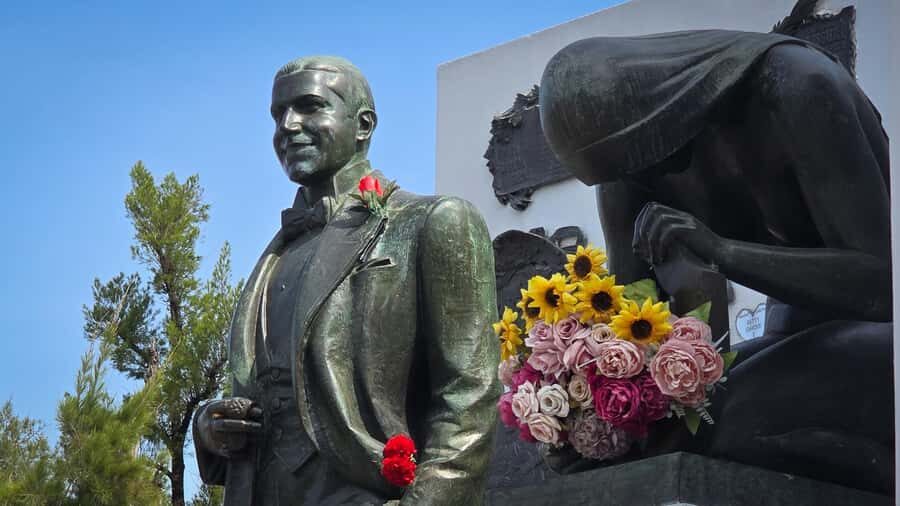
You meet at the main door to Chacarita Cemetery, then the walking tour follows the guided order. The entire experience is listed as 3 hours, with a 10-minute restroom pause. That matters here because you will be on your feet.
The small group size (up to 6 participants) is also a real quality factor. In a big crowd, cemetery tours often become a shuffle behind someone else. With a tight group, you can ask follow-up questions without feeling like you’re holding up the line.
The guide’s language is Spanish, but the reviews highlight that Miguel can be patient—one review specifically mentioned he spoke Spanish slowly for a learner. If you’re practicing Spanish on vacation, this kind of tour is a smart way to combine culture with language practice.
Practical comfort tips are clear and simple: comfortable shoes, plus hat, sunscreen, and water. In cemetery settings, shade and benches are not guaranteed the way they might be in a city park, so you’ll be glad you prepared.
Carlos Gardel’s mausoleo: tango’s final stop
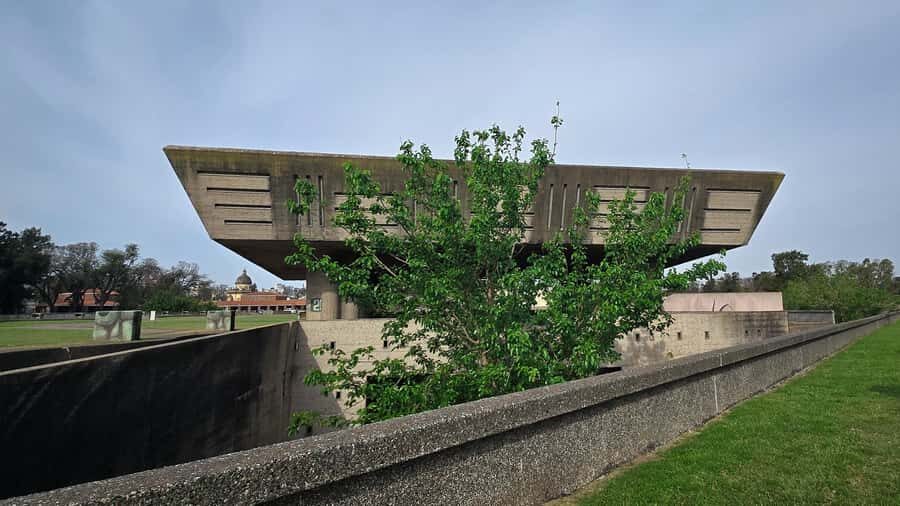
If you come to Buenos Aires for tango, Carlos Gardel is your shortcut to understanding why people cared so much. This tour places Gardel’s mausoleo early in the walk, which is a smart move: it gives you a headline the moment you start, so everything afterward feels more grounded.
Expect a photo stop and a guided visit focused on what makes Gardel culturally huge. You are not just looking at stone—you’re learning how the cemetery becomes part of the public memory of tango’s golden voice. Even if your tango knowledge is basic, the guide’s approach helps you connect the cultural importance to the physical place.
The short pacing here is helpful. You get just enough time to look closely, absorb the story, and move on—without the stop stretching into fatigue.
Gustavo Cerati, Gilda, and the pull of modern Argentine music

Argentina’s music legacy is not frozen in the past. The tour makes that clear with stops including Gustavo Cerati’s mausoleum and the tumba de Gilda.
Cerati’s presence in Chacarita does something important for your perspective: it signals that the cemetery honors more than one era or one style. It helps you see how Argentine pop and rock culture earned lasting public respect, not just attention during the years when people were actively listening.
The Gilda stop adds a different emotional tone. You get a guided visit and time to look, and you come away with a sense of how everyday-loved artists can become major cultural references for many families. This is one reason I like cemetery tours done well: they show you how a society decides who mattered, not just who was famous for a season.
The guide’s job here is to connect the individual to the bigger cultural thread. If you pay attention to those connections, you’ll feel the tour working like a timeline, even though you’re just walking.
Jorge Newbery: aviation and national memory in stone
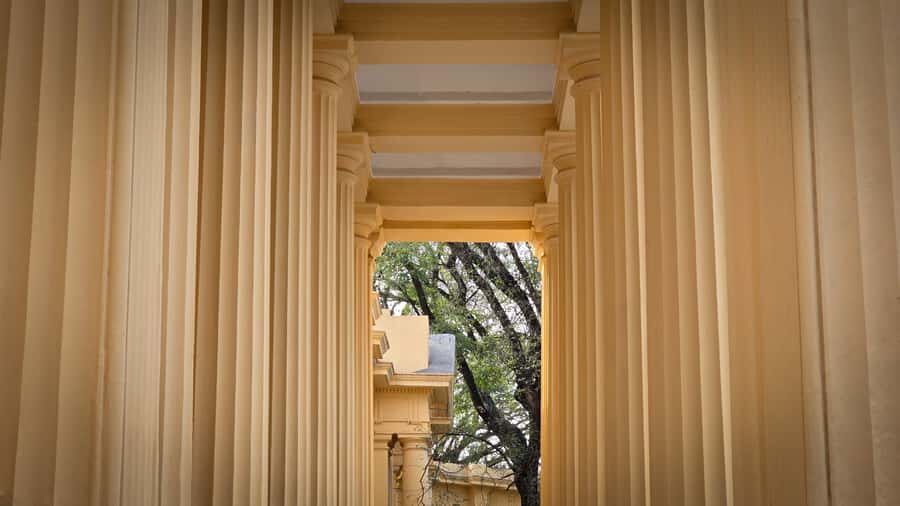
One of the route stops is the mausoleo Jorge Newbery. Newbery is a different kind of icon than the singers and actors you’ll see in other parts of the cemetery. Here, the story shifts toward national achievement and public myth-making—how a country turns explorers and innovators into lasting symbols.
What I like about this stop is that it stops the tour from becoming a straight line of entertainment history. You get variety: music, performing arts, poetry, and then a figure tied to aviation and broader national identity.
Even with limited time at each monument, a good guide can help you read the memorials like clues. So when you see a mausoleo like this, you’re not only looking for the name—you’re learning what that person represented in Argentina’s story.



Beyond the headline names: where the tour gets meaning
The tour’s description points to more than just the widely known famous faces. During your walk, you’ll also pay homage to other Argentine figures—Luis Sandrini (a legendary actor), Osvaldo Pugliese (a major tango composer and orchestra director), and Alfonsina Storni (a poet). You may not spend equal time at every single name, but the guide’s commentary places them in the same emotional landscape.
Why this matters for you: if you only focus on a checklist of famous people, cemetery visits stay surface-level. But when a guide brings in actors, composers, and poets alongside tango legends, the cemetery stops being only a tourist stop and starts feeling like a cultural archive.
It also helps if you like connections. Storni, for example, is a poet you might associate with literature first. Here, you understand how Argentine identity stretches across art forms, not only through one genre.
You will also see additional famous athletes and personalities from Argentina as part of the broader walk. The exact mix is guided by what’s most meaningful along the route, which is part of the value of having someone direct your attention.
The capilla and panteón moments: why architecture matters here
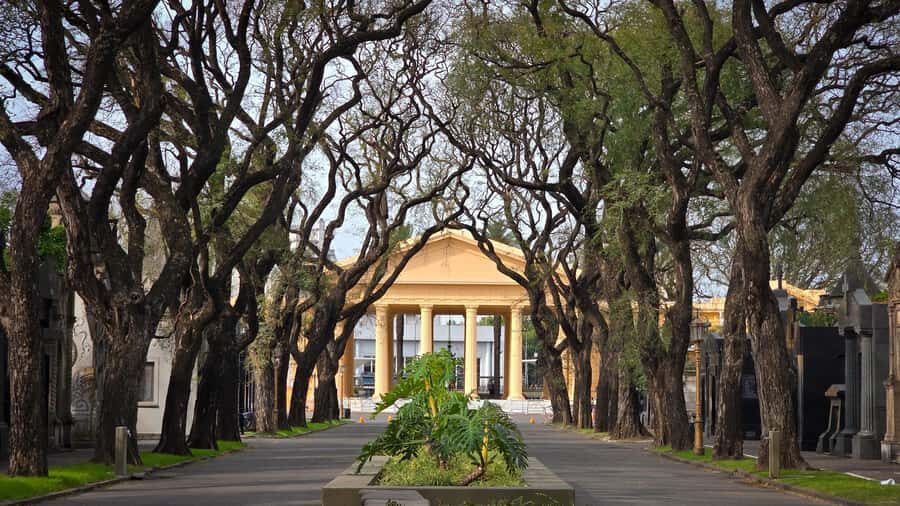
Cemeteries can be either uniform or dramatically styled. Chacarita leans toward the dramatic. You’ll spend time at Capilla Cementerio Chacarita and also at Panteón VI, plus a stop connected to Loredo de Subiza María Salomé.
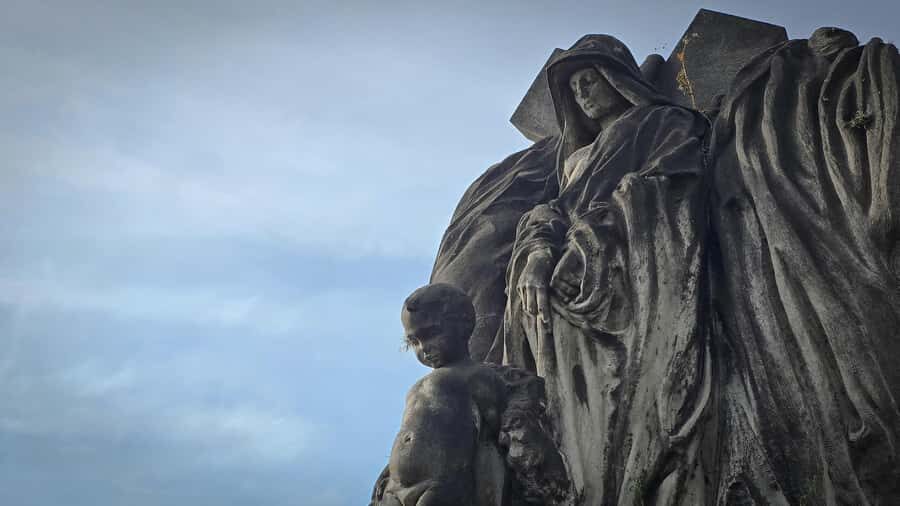
I like these segments because they remind you that this is not just a list of graves—it’s a place where people invested in lasting design. A capilla (chapel) signals religious tradition. A panteón signals family legacy and community memory. Mausoleos and larger tomb structures often carry visual language: scale, form, and how space is organized around commemoration.
One practical note: these stops are structured as guided visits, not long free wandering. That’s good. You’ll know where to look and what details matter, even if you do not know much about cemetery art in general.
If you’re photographing, these are your better moments too. The tour includes photo stops along the way, and the architectural shapes tend to produce clearer images than the more repetitive stretches of stone.
Commonwealth War Graves and the German cemetery: shifting from art to history
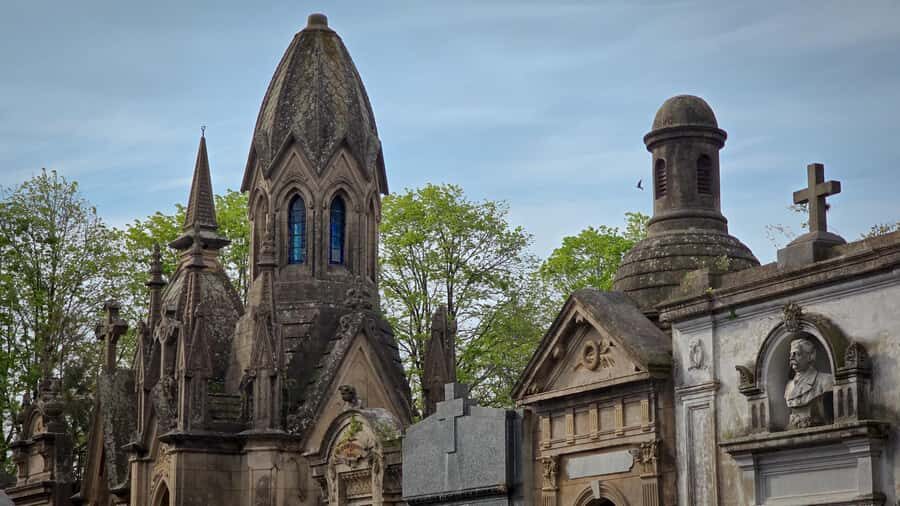
Not every highlight on a cemetery tour is about famous entertainers. You also visit the Commonwealth War Graves Buenos Aires, with a guided visit focused on that solemn historical sector.
This stop changes the emotional register of the walk. Instead of tango, you’re looking at the way wars and international remembrance become part of Buenos Aires’ cemetery geography. Even in a short guided timeframe, it helps you understand why Chacarita is not limited to one community’s story.
Then the tour includes sightseeing at Cementerio Alemán (the German cemetery). The value here is the contrast: different cemeteries bring different styles, religious temples, and commemorative monuments. The tour description also notes that this German-and-British comparison is part of what you’re meant to notice—different architectural and national signatures within the same cemetery complex.
In practical terms, this is where your eyes start working like a comparison tool. You’ll notice how design choices reflect tradition—how people built sacred space and honor space differently. If you enjoy travel that teaches you how to look, these sections do that job.
Elcano Park: a final pause that keeps the walk from feeling endless
Near the end of the route, you’ll visit Elcano Park. This is a nice pacing trick. Cemetery tours can sometimes feel like they go on too long, because there’s always another name. A park stop breaks the pattern and gives you a place to regroup before finishing.
The tour structure keeps it to about 10 minutes for this sightseeing moment, so it doesn’t turn into a long detour. It works like a mental reset: look at stone, learn the stories, then take a breather.
Price and value: why $20 for a 3-hour guided walk makes sense
At $20 per person for a 3-hour guided walking tour, the value mostly comes from access to context. You could wander Chacarita on your own, take pictures, and read some names. But you’d be guessing what matters most and why. The guide’s job is to translate the cemetery into stories you can actually use.
This tour also packages the time well. You’re not stuck in a long lecture. The format is short guided visits with photo stops, plus one scheduled restroom pause. That rhythm is part of the value.
The small group (up to 6) also helps justify the price. In a bigger tour, you’d spend the entire time watching your guide’s back. Here, you’re more likely to get questions answered clearly—something the reviews strongly connect to Miguel’s patience and teaching style.
One more thing: the language is Spanish. If you want Spanish practice in a place that feels meaningful rather than classroom-like, this route is a useful option.
Should you book this walk if you like culture, art, or Spanish practice?
This tour is a good fit if you:
- want to see Carlos Gardel and Gustavo Cerati without trying to navigate the cemetery yourself
- like learning how a city remembers its famous people
- care about the comparison between German and British cemetery styles and their associated monuments
- want a small-group guide who can be patient and help with Spanish pacing (based on how Miguel has been described)
It may not be the best fit if you:
- need wheelchair access or mobility-friendly routes, since the tour is not suitable for wheelchair users
- want a mostly free-form experience with minimal walking and minimal structure
If you’re going with friends who are less interested in cemetery visits, the music-and-actor focus makes it easier to pull everyone along. If you’re the kind of traveler who wants one or two stops to matter, this one gives you many anchors.
Quick decision guide: book it or pass?
I’d book this tour if your Buenos Aires days include tango, music, Argentine culture, or if you simply want a guided way to understand Chacarita Cemetery instead of hoping you’ll figure it out alone. The combination of well-known icons, different national sections (German and British), and historical contrast (Commonwealth war graves) makes the 3 hours feel purposeful.
I’d think twice only if walking distance and uneven cemetery surfaces are a concern for you, since the tour isn’t designed for mobility impairments or wheelchair users.
FAQ
How long is the Chacarita Cemetery tour?
It’s listed as a 3-hour guided walking tour.
What’s the meeting point?
Meet at the main door to the cemetery.
What will I see during the tour?
You’ll visit key tombs and guided stops including Carlos Gardel’s mausoleo and Gustavo Cerati’s mausoleum, plus German and British cemetery areas and the Commonwealth War Graves Buenos Aires.
What language is the tour guide?
The live tour guide speaks Spanish.
How big is the group?
It’s a small group limited to 6 participants.
How much does it cost?
The price is $20 per person.
What should I bring?
Bring comfortable shoes, a hat, sunscreen, and water.
Is the tour suitable for wheelchair users?
No. It’s not suitable for people with mobility impairments or wheelchair users.
Is there a restroom stop?
Yes, there’s a 10-minute pause included for restroom use.