REVIEW · SALTA
Salta en un Bocado – Cultural Tour & Empanada Tasting
Book on GetYourGuide →Operated by Chilto Viajero EVT · Bookable on GetYourGuide
Salta’s empanadas taste better with a story. This one-day cultural walk mixes classic city sights with a hands-on empanada salteña workshop, led by an expert guide and a chef.
Two things I really like: you don’t just hear about Salta—you see it, from Plaza 9 de Julio to the Guemes monument—and you leave with the skills (and a recipe booklet) to make the empanadas again later. One thing to consider: you’ll be on your feet on uneven streets, so it’s not the best fit if you have mobility limits.
The vibe is part history lesson, part food class. You’ll stroll cobblestone lanes, hit local markets and typical crafts, then cook the dough and filling with the chef before tasting what you made. If you’re hoping for a super-fast tour with lots of spare time, this schedule moves at a steady pace and fills the day.
In This Review
- Key Points at a Glance
- Why Salta’s Empanadas Belong on Your Walking Tour
- Meeting at Mitre y España: What to Know Before You Go
- Plaza 9 de Julio and Salta’s Colonial Core: Getting Oriented Fast
- The Monument to Martín Miguel de Güemes: A Pause With City Views
- The Casona Histórica Workshop: Learn Empanadas Salteñas Like a Local
- Taste Time: Wine With Your Own Empanadas and the Recipe Booklet
- Price and Value: What You’re Really Paying For at $60
- Who This Tour Fits Best in Salta
- Should You Book Salta en un Bocado?
- FAQ
- Where does the tour start?
- How long is the experience?
- What’s included in the price?
- What languages are available for the guide?
- Do I eat the empanadas I make?
- What should I bring?
- Is it suitable for people with mobility impairments?
Key Points at a Glance
- Plaza 9 de Julio first: start in Salta’s historic center and orient fast
- Gaucho hero stop: a guided visit to the monument of General Martín Miguel de Güemes
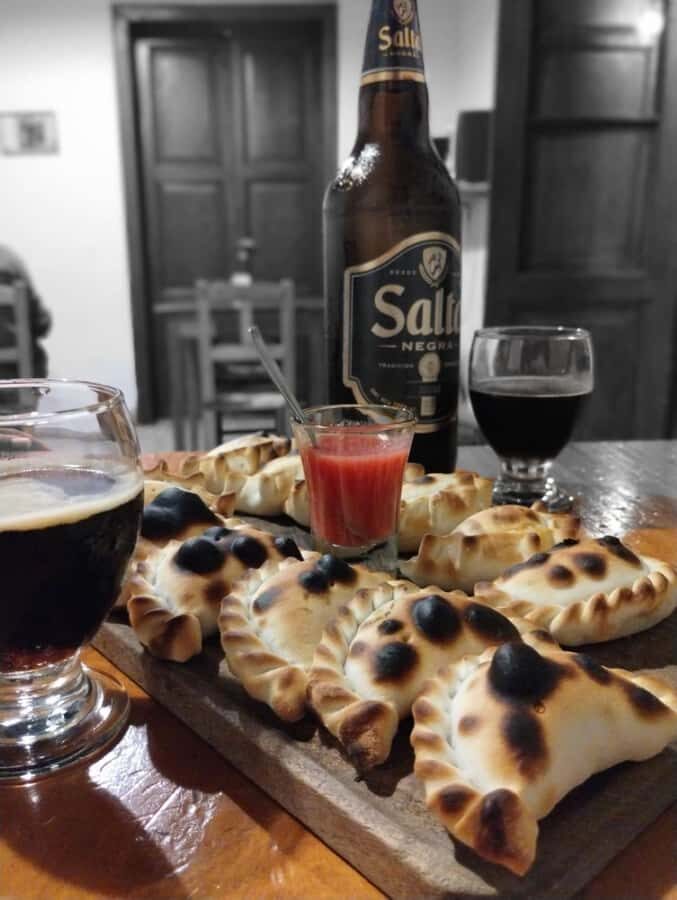
- 75-minute empanada class: learn the process from dough to filling
- Taste your own work: empanadas plus regional wine
- Recipe booklet included: take home a step-by-step to recreate it
Why Salta’s Empanadas Belong on Your Walking Tour
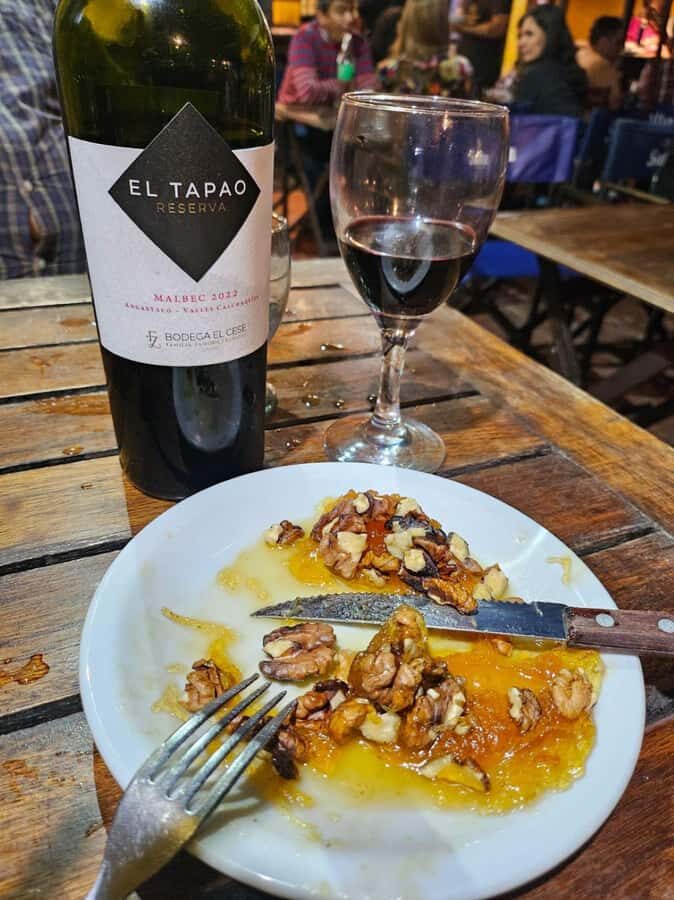
Salta isn’t just about pretty buildings and mountain air. It’s also about what people actually eat and how food connects to place. This tour smartly ties the two together: you walk the city with context, then you learn why empanadas salteñas have the reputation they do.
The best part is that it’s not a demo where you watch and smile. You handle the dough, learn the filling, and finish by tasting your own empanadas. That makes the flavors stick. Even if you’ve had empanadas before, this is a more grounded way to understand the dish.
And yes, you’ll get the classic cultural touches too. You start in the colonial core, then you head to the monument tied to Salta’s gaucho memory. It’s a nice mix of architecture, tradition, and food without feeling like three unrelated activities stitched together.
You can also read our reviews of more food & drink experiences in Salta

Meeting at Mitre y España: What to Know Before You Go
You meet at a clear, specific spot: the corner of Mitre and España, by the statue of Pope John Paul II. That matters because Salta walking tours can get chaotic if the meeting point is vague. Here, it’s concrete.
This is a private group format, so you’re not just part of a big herd. Your guide can keep the pace and explanations tied to the group. Languages are Spanish and English, so you should have real-time guidance rather than relying on a pamphlet.
The tour runs about 4 hours. That’s short enough to fit into most Salta days, but long enough to include both the walking portion and the cooking class. Wear comfortable shoes—you’ll be walking cobblestones—and bring a hat if the sun is strong.
A few items matter because they affect comfort and rules:
- Audio recording isn’t allowed.
- Smoking isn’t allowed.
- No bikes.
- No bare feet.
- No feeding animals.
If you’re the type who likes to bring a reusable bottle and keep hands free for photos, this format works well. You’ll also want a camera.
Plaza 9 de Julio and Salta’s Colonial Core: Getting Oriented Fast
You begin at the Palacio Arzobispal area, then move into Plaza 9 de Julio. This is the kind of start that helps you make sense of the rest of Salta. Instead of drifting from landmark to landmark, you build a mental map: where the main civic buildings sit, and how the city’s historic center feels when you’re walking through it.
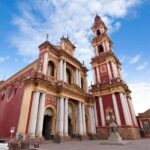
The tour includes a guided visit of the plaza (about 15 minutes). You’ll also learn about key points like the Cathedral and the Cabildo. The time may sound tight, but it’s paced so you get the essentials without turning it into an encyclopedia reading marathon.
After that, you continue with sightseeing around the center for about 30 minutes. Here’s where you’ll experience Salta at human scale: cobblestone streets, local markets, and typical handicrafts. Even if you don’t buy anything, you’ll get a feel for what’s on offer and how everyday life shows up in the middle of the historic area.
What to watch for: keep your camera ready but don’t rush. The street angles and colonial façades can look different depending on where you stop and how you frame the shot. A short guided stop is often better than sprinting on your own.
The Monument to Martín Miguel de Güemes: A Pause With City Views
Next comes a strong change of scenery: the monument to General Martín Miguel de Güemes. The guided stop is short (about 15 minutes), but it’s the kind of stop that gives your walking tour meaning. Guemes is tied to Salta’s gaucho story, and the guide’s context helps you understand why this monument matters beyond the photo.
You’ll also get a view of the city from here. That’s more than a scenic bonus. It helps you connect what you saw back in the plaza to the bigger shape of Salta—how the historic center sits in relation to the rest of town.
Then you continue onward, about 300 meters, to the Casona Historica. This transition is helpful. It keeps the day flowing instead of dragging between distant points.
The Casona Histórica Workshop: Learn Empanadas Salteñas Like a Local
This part is the heart of the tour. You’ll arrive at the Casona Historica, the headquarters of the Agrupación Tradicionalista Gauchos de Güemes. That setting matters because the empanadas class isn’t presented as a generic cooking stunt. It’s tied to local tradition.
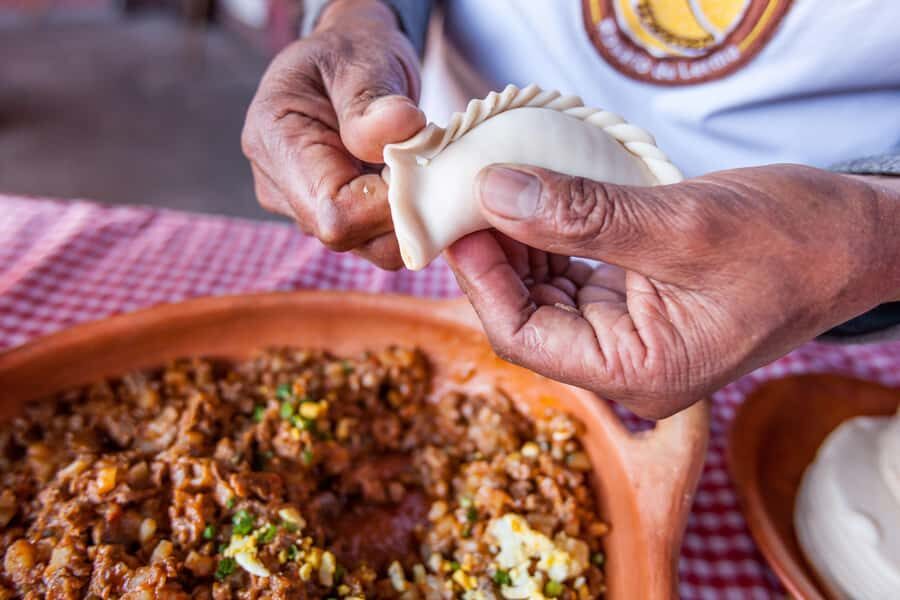
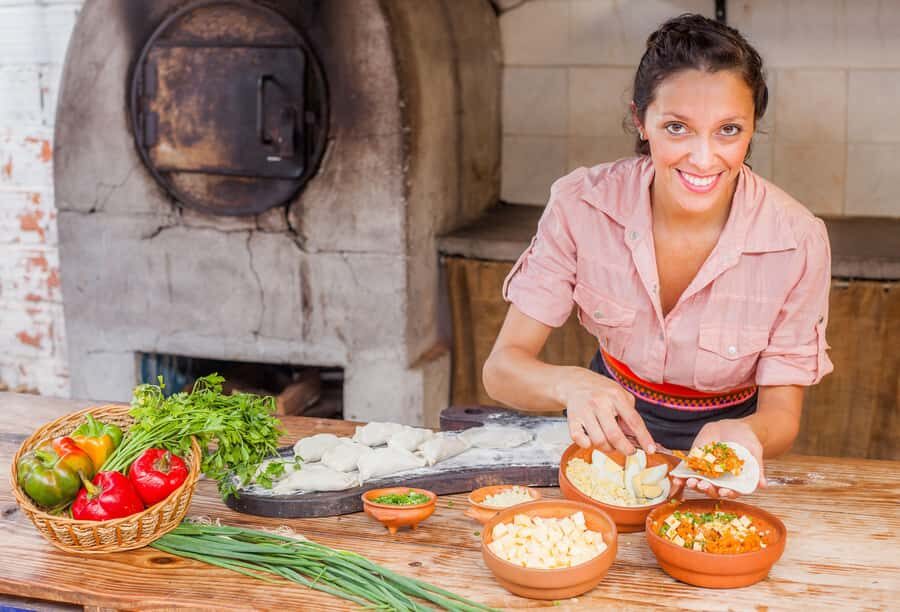
The class runs about 75 minutes. You’ll work with an experienced chef and learn how to make empanadas salteñas, from the dough to the filling. That full process is what makes the experience feel practical.
Instead of only tasting, you’re building muscle memory:
- You learn the dough basics first.
- Then you move into the filling.
- Finally, your group gets to shape and cook what you learned.
One small reality check: if you’re expecting “perfect Instagram empanadas,” don’t overthink it. Your end result will still taste great, even if your shapes aren’t as polished as the chef’s. The point is skill and understanding, not looking like a pastry contest winner.
This workshop format also breaks up the day nicely. After walking and stories, you get a hands-on reset. Your brain switches gears from sightseeing mode to making mode, and that’s a welcome change.

Taste Time: Wine With Your Own Empanadas and the Recipe Booklet
After the class, it’s time to enjoy what you made. You’ll taste your own empanadas with a good glass of regional wine. Pairing wine with empanadas is a very Salta-style move, and it turns the cooking class into a full meal moment rather than a short snack.
Then you share anecdotes and laughs with the other participants. Since this is a private group, the social tone tends to feel more comfortable than a giant group tour. Still, don’t worry if you’re quiet—you’re sitting with food and conversation, not in a formal lecture.
At the end, there’s a toast and you receive a recipe booklet. This is a big deal for value. If you only learn the basics and can’t repeat them, the experience fades fast. With a booklet, you can recreate the empanadas at home and remember the parts that mattered to you—dough texture, filling balance, and the overall method.
If you’re traveling with food goals, this is one of the best kinds of souvenirs: edible skills.
Price and Value: What You’re Really Paying For at $60
At $60 per person for a roughly 4-hour experience, you’re paying for three things that usually cost separately:
1) a guided walking tour with city context
2) a chef-led cooking class with instruction
3) tasting, including regional wine, plus a recipe booklet
If you’ve ever tried to stitch together a city guide and a food class on your own, you know how quickly that turns into time and money stress. Here, the schedule is organized so the walking part sets the stage for the cooking part.
Also, you’re getting a structured experience. You’re not just wandering markets and hoping you find something worth your time. You’re moving through specific stops, with guided explanations, then transitioning directly into a hands-on class.
And since it’s a private group, the experience doesn’t feel like you’re competing for attention. You’re part of a smaller, managed group where the guide and chef can keep things running smoothly.
One more value angle: you’re leaving with something usable at home. The recipe booklet means you can turn one great day into multiple meals.
Who This Tour Fits Best in Salta
This tour is a strong match for you if:
- You like city walks but want them to come with real context.
- You love learning food technique, not just sampling.
- You want a fun, social cooking experience without needing prior cooking skills.
- You’re visiting Salta and want one activity that covers both culture and the iconic local flavor.
It’s also a good option if you’re traveling as a couple or small group who doesn’t want a chaotic large-group pace.
Who should reconsider: the activity isn’t suitable for people with mobility impairments. You’ll be walking and standing on cobblestones, and the flow depends on everyone moving between stops and into the cooking area.
If you’re on a very tight schedule or hate structured tours, you might find the 4-hour pace a bit full. But for most people, it hits a sweet spot: enough time to learn and eat, not so much time that you feel trapped.
Should You Book Salta en un Bocado?
Yes, if you want a Salta experience that feels more grounded than a typical food tasting. This tour connects the dots: you get the historic center, a gaucho-themed monument stop, then a chef-led class where you actually make empanadas salteñas and taste them with regional wine.
It’s especially worth booking if you love practical learning. The recipe booklet is the kind of take-home item that turns a fun day into repeatable meals. And based on the consistently high feedback, the guides and the cooking part tend to land well—people come away saying they learned a lot about the city and loved the hands-on class.
Before you go, do one small thing: plan your footwear like you’re going on a real walk day. Bring your water bottle, wear comfortable shoes, and come hungry. Empanadas reward patience and attention, and this tour gives you exactly that.
FAQ
Where does the tour start?
The tour starts on the corner of Mitre and España, where the statue of Pope John Paul II is located.
How long is the experience?
It runs approximately 4 hours.
What’s included in the price?
You get a tour guide, a cooking class, empanada tasting, and a recipe booklet.
What languages are available for the guide?
The tour guide speaks Spanish and English.
Do I eat the empanadas I make?
Yes. After the class, you taste the empanadas you cooked, accompanied by regional wine.
What should I bring?
Bring comfortable shoes, a hat, a camera, and a reusable water bottle.
Is it suitable for people with mobility impairments?
No, it is not suitable for people with mobility impairments.