REVIEW · BUENOS AIRES
Full Day Private Walking Tour of Buenos Aires Neighborhoods
Book on Viator →Operated by To Be in Buenos Aires · Bookable on Viator
Cemeteries can be tourist gold. This private 7-hour Buenos Aires tour strings together big sights and real neighborhood texture, from Recoleta Cemetery to the colorful streets of La Boca, while your guide keeps transit and timing under control. It is a straightforward way to see a lot without doing the city math all day.
I especially like two things. First, you start at Recoleta Cemetery, where the sculptures are more than decoration and you learn the stories behind them, including the connection to Evita. Second, the route is smart: it mixes walking with short rides and even a subway segment, so you get multiple districts in one day without feeling like you are sprinting.
One possible consideration: food and drink are not included, so you will want to budget for lunch or snack stops.
In This Review
- Key highlights to look forward to
- A private Buenos Aires day that actually makes sense
- Recoleta Cemetery: sculptures, symbolism, and Evita’s shadow
- Recoleta neighborhood stroll: the streets behind the nickname
- Plaza General San Martín and the Retiro-area views
- Obelisco and Diagonal Norte: BA’s version of Times Square
- Plaza de Mayo: the Pink House, Cathedral, and Cabildo context
- San Telmo: antiques, tango, cafes, and the Sunday street market feel
- La Boca: port origins, conventillos, and colorful street life
- Transportation, timing, and what to expect from a 7-hour format
- Price and value: what $135 includes, and what it does not
- The guide makes the day: stories, tweaks, and clear English
- Should you book this private walking tour across Buenos Aires?
- FAQ
- How long is the full day private walking tour of Buenos Aires?
- What does the $135 per person price include?
- Is the Recoleta Cemetery entrance fee included?
- Is food or drink included?
- What are the tour operating hours?
- Is this a private tour?
- Are service animals allowed, and can I cancel for a full refund?
Key highlights to look forward to
- Recoleta Cemetery entrance included so you can focus on the stories, not the ticket hunt
- A route that blends walking and transit to keep the day moving smoothly
- Iconic architecture in tight hops from Retiro-area views to the Obelisco
- San Telmo market and tango energy with time for browsing and street atmosphere
- La Boca’s port history in living color through conventillos turned into everyday spots
A private Buenos Aires day that actually makes sense
Buenos Aires can feel huge on your first day. This is the kind of tour that helps you get your bearings fast, because you’re not just hitting postcard stops. You’re also learning why each neighborhood looks the way it does, and how the city shifted over time.
The pacing is built around roughly an hour per main stop, with a mix of walking, short vehicle transfers, and one subway ride. That matters because the city is spread out in a way that can punish people who try to do everything by themselves. Here, you’re paying for the efficiency and the human context: someone who can point at a building and tell you what you’re looking at and why it matters.
Also, it’s private. Only your group goes along. That means you can move at your pace, ask questions, and adjust priorities without feeling like you’re stuck behind a tour herd.
You can also read our reviews of more walking tours in Buenos Aires


Recoleta Cemetery: sculptures, symbolism, and Evita’s shadow
Recoleta Cemetery is not your typical quiet graveyard. It is a sculpture garden built out of marble, symbolism, and family stories. You walk in and quickly realize why this place earns so much attention: the artwork is dramatic, and the people connected to it helped shape Argentina in ways you can feel even today.
What makes this stop especially valuable is the way the guide handles the details. Instead of treating the cemetery like a checklist, you get the secrets and stories behind the sculpted monuments, including the link to Evita. You also spend time on the beautiful works that many people miss when they wander without context.
A practical note: the entrance fee (about $15 USD) is included in the tour price. That is one less cost and one less task for you when you’re trying to travel light.
If you tend to skip cemeteries on principle, I get it. But Recoleta Cemetery is one of the few where art and history are literally stacked on top of each other in a way that makes you stop and look twice.
Recoleta neighborhood stroll: the streets behind the nickname
After the cemetery, you step into Recoleta proper, where the vibe shifts from solemn marble to polished streets and elegant façades. This is where Buenos Aires earned its nickname the Paris of South America. You will see it in the architecture, in the luxury feel, and in the cafe-and-shopping rhythm.
This part of the tour is a walk through exclusive, beautiful streets—palaces, homes, upscale cafes, and high-end shopping. Even if you do not buy anything, it helps to understand the visual language here. The neighborhood looks like money and style because, historically, it played a big role in the city’s wealth patterns.
What I like about this stop is that it is not just about admiring buildings from afar. You’re actually moving through the area with commentary that connects what you see to how Buenos Aires shaped itself.
Plaza General San Martín and the Retiro-area views
Next up is Plaza General San Martín, and it’s a great reminder that Buenos Aires loves big architecture. From this plaza, you get broad views of major landmarks clustered near the transportation and business heart of the city.
You can look across to Retiro train station, the British Tower, and the Kavanaugh Building, which is often described as the city’s first skyscraper and a strong example of rationalist architecture. You also get the Palacios San Martín and Paz in the same wide-angle sweep.
This is a stop where your eyes do the walking. It helps to have someone who can put names to the buildings you’re seeing and point out the design ideas behind them. Without that, you might just register impressive façades and miss the story.
From here, you take the subway to reach the next destination. That is not an afterthought. Buenos Aires metro travel is part of the city experience, and having the guide manage the transit keeps the day from getting messy.
Obelisco and Diagonal Norte: BA’s version of Times Square
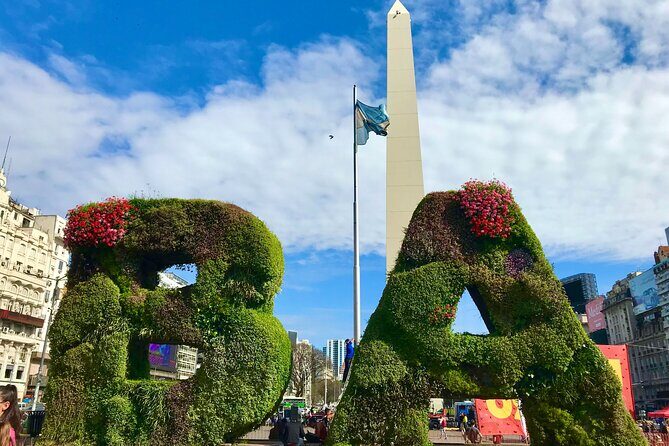
Then you arrive at one of the city’s most recognizable icons: the Obelisco. It sits at the centerpoint of 9 de Julio, which is described as the widest avenue on the planet. Standing near it gives you the same kind of orientation you would get from a city’s central stage—busy, public, and instantly “this is the center.”
The tour ties this space to the theatre culture Buenos Aires is famous for. You walk along Diagonal Norte while keeping the Obelisco in view. The idea is to connect the urban energy around you to the stages around you, including Teatro Colón and other theatre venues in the area.
Practical value: this is a good stretch to reset your sense of scale. If you’re trying to understand how Buenos Aires moves—foot traffic, street life, and the pull of performance—this corridor helps.
You can also read our reviews of more private tours in Buenos Aires




Plaza de Mayo: the Pink House, Cathedral, and Cabildo context
Plaza de Mayo is one of those places where history is not stuck in a museum. It is right in front of you, in the buildings around the square and in the atmosphere of the public space.
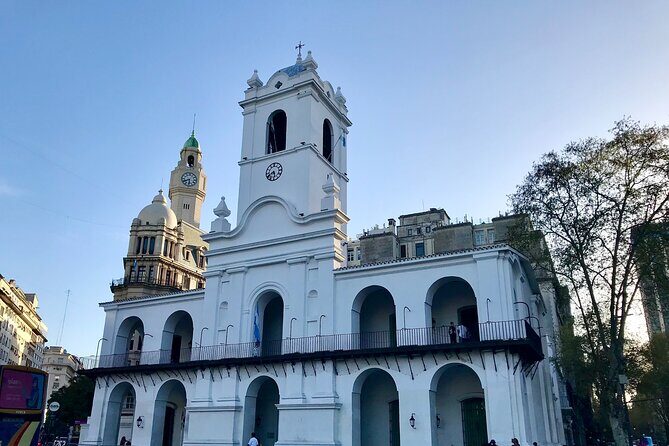
You’ll see the Pink House (Argentina’s version of the White House), the national Cathedral, the Cabildo (noted as Argentina’s first government building from Spanish colonial times), plus other historical buildings that surround the plaza.
One detail worth noting here: the Cathedral is described as a place where Pope Francis used to work. That adds a human time marker beyond politics and architecture.
This is a stop where commentary really matters. You might recognize names, but the guide helps connect the pieces—how the Spanish colonial era evolved into the institutions you see now, and why Plaza de Mayo remains the symbolic center.
San Telmo: antiques, tango, cafes, and the Sunday street market feel
San Telmo is a neighborhood with layers. It used to be where the city’s wealthiest families lived, and then yellow fever epidemics pushed those families to the outskirts (now Recoleta and Retiro). San Telmo’s decline, followed by a shift in who lived there, is why you get the bohemian tone you see today.
On this part of the tour, you get the sense of what San Telmo became: artists and working-class residents, older mansions converted into new uses, and the modern reputation for antiques, tango, cafes, bars, and restaurants. You also get time for the San Telmo Street Market, which is held every Sunday.
I like San Telmo because it is less about standing still and more about doing small things: looking through stalls, grabbing a snack, watching street performers. It is the sort of place where your day starts to feel like Buenos Aires, not like a checklist.
If you like photography, it’s also a strong area. Watch for street-level scenes, storefront details, and the mix of old architecture with everyday life.
La Boca: port origins, conventillos, and colorful street life
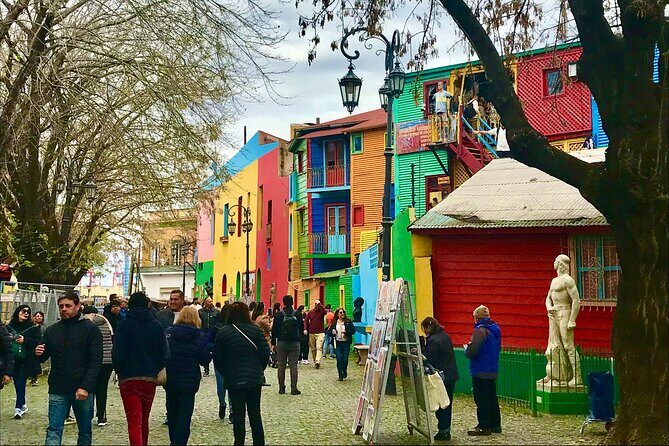
La Boca is where the day turns playful. This neighborhood was home to the country’s original port, and its working history still echoes through the streets.
Today it is known for colorful streets full of tango, art, and fútbol. But the tour keeps tying the color back to the history. You’ll hear about conventillos, the tenement housing that served the old port labor force. Many of those spaces were later converted into places you can actually use now: cafes, steakhouses, and souvenir shops.
This stop is ideal for two reasons. First, it gives you a different side of Buenos Aires than the formal architecture you saw earlier. Second, it’s practical for souvenirs that feel tied to place rather than mass-produced.
And yes, tango and street music show up here in a way that feels natural. Even if you are not planning to watch a full show, the neighborhood energy helps you understand why tango is such a big piece of Buenos Aires identity.
At the end, the tour includes transport back so you can head to your accommodation without having to figure out late-day logistics.
Transportation, timing, and what to expect from a 7-hour format
The tour runs about 7 hours and is designed around a morning start window, with daily hours from 9:00 AM to 11:00 AM. The exact start time can vary, but plan for a full day.
Because transport costs are included, you’re not stuck paying for separate rides between neighborhoods. During the day, you may take private car or taxi, a bus, and a subway ride as part of getting between stops. That mix matters: it keeps you from overheating your legs with unnecessary long walks, while still leaving time to experience each area on foot.
The tour also uses private transportation at the beginning and end. That is a nice comfort if you’re traveling with luggage or just do not want to waste your morning hunting for a meeting point and then another ride home.
What you should prepare for is the rhythm. There are many areas where you stop, look, and learn, then move on. It’s not a sit-down lecture tour. It’s a walk-and-spot tour with stops paced to keep you from losing energy.
Price and value: what $135 includes, and what it does not
At $135 per person, this is not a budget tour. You are paying for two big things: private guiding and included transit across multiple neighborhoods. On top of that, the Recoleta Cemetery entrance fee is included (about $15 USD).
Here’s where I think the value shows: Buenos Aires is a city where the difference between a good day and a frustrating day often comes down to movement. This tour builds that movement into the price. You’re not negotiating taxis all day or trying to stitch together a subway plan while also learning the city.
One thing that is not included is food and drink. That is common for many walking tours, but it changes your planning. You’ll want to budget for lunch or snacks during the day, especially since you cover neighborhoods that can make it tempting to stop for something local.
Also, pricing is set in USD, which helps if you are worried about Argentina’s currency swings. Booking in a stable currency can take one stress off the table, even if you still pay in your own local money at checkout.
Finally, this tour is popular enough that it’s often booked well ahead (on average, 161 days). If your schedule is tight, you’ll want to reserve early.
The guide makes the day: stories, tweaks, and clear English
What separates this tour from the “look at the building” style is the way the guide explains the city. The experience is private, so you get more than facts. You get connections.
In particular, this tour stands out for guides who speak English clearly and are comfortable talking history, architecture, and everyday culture in a way you can actually follow. One name that comes up again and again is Tracy, who is described as bilingual and friendly, with a knack for customizing the day. That customization matters because you might want more time for photos, shopping, or a specific kind of local experience.
I also like that the guidance does not stop at the tour ending. There are mentions of pre-arrival help, including practical tips like currency exchange guidance, and even assistance with arranging rides with a colleague named Osvaldo if you need it. That kind of support is the difference between arriving with uncertainty and arriving with a plan.
And there is room for small pivots. For example, the tour has been adjusted for shopping time tied to tango shoes, which shows the guide is listening to what you want from the day, not forcing a rigid script.
Should you book this private walking tour across Buenos Aires?
Book it if you want a structured way to see major districts in one morning-to-afternoon day. This is especially good for first-time visitors who do not want to guess at how far neighborhoods really are from each other, and who would rather spend the day learning why the city looks the way it does.
Skip it if you already have your schedule locked in with specific restaurants and you truly want full freedom. This tour is about efficiency and guided context, so if you want wandering without a plan, you may prefer self-guided time.
If your goal is a memorable sampler of Buenos Aires—cemetery art and sculpture stories, Plaza de Mayo institutions, San Telmo texture, and La Boca’s port-colored energy—this private format is a strong fit.
FAQ
How long is the full day private walking tour of Buenos Aires?
The tour lasts about 7 hours.
What does the $135 per person price include?
It includes all transportation costs during the tour (private car, taxi, bus, or subway), private transportation at the beginning and end, and the Recoleta Cemetery entrance fee.
Is the Recoleta Cemetery entrance fee included?
Yes. The entrance fee for Recoleta Cemetery (about $15 USD) is included in the tour price.
Is food or drink included?
No. Food and drink are not included.
What are the tour operating hours?
The tour operates daily, Monday through Sunday, with hours from 9:00 AM to 11:00 AM.
Is this a private tour?
Yes. It is private, and only your group participates.
Are service animals allowed, and can I cancel for a full refund?
Service animals are allowed. You can cancel up to 24 hours in advance for a full refund. If you cancel less than 24 hours before the start time, the amount paid is not refunded.