REVIEW · BUENOS AIRES
Premium Day Trip to Colonia del Sacramento
Book on Viator →Operated by Tours Buenos Aires · Bookable on Viator
Crossing the river feels like time travel. This premium day trip takes you from Buenos Aires into Uruguay to explore UNESCO-listed Colonia del Sacramento, with ferry tickets and hotel transfers handled.
I especially like the small group cap of 15, which helps keep check-in and timing under control. And I like that the day blends guided history (Portuguese-era details included) with real free time to wander, eat, and shop. The tradeoff is the early 7:00 am start, plus a long day with passport checks and customs, and at $248 it is not the cheapest way to do it.
On a trip like this, the guide matters. Look at the energy and care from guides such as Jesus (Buenos Aires side) and Lily or Alejandra (in Colonia), because that’s often what turns a walk around town into actual understanding.
In This Review
- Quick hits before you commit
- Buenos Aires to Uruguay: what that 7:00 am really means
- Colonia del Sacramento: UNESCO old town on a short timeline
- The walking tour block: Church Matrix, the museum, and the port
- La Calle de los Suspiros: a narrow lane with engineering in its bones
- Puerta de la Ciudadela and the pirates problem
- Faro de Colonia: lighthouse math you can see
- Basilica del Santisimo Sacramento: Portuguese influence in the altar
- Timing and free time: how to make lunch actually work
- Price and logistics: is $248 worth it?
- What kind of traveler should book this?
- Should you book this Colonia day trip?
- FAQ
- How long is the trip?
- What time does the tour start?
- What’s included in the price?
- Is food included?
- What size is the group?
- Do I need a passport?
- Is this tour kid-friendly?
- Are any of the stops free?
- What if I cancel?
Quick hits before you commit
- Premium logistics, not just tickets: hotel pick-up/drop-off and round-trip ferry tickets are included.
- Guided history in the right places: Portuguese-style streets, fort-era remnants, and major landmarks are part of the walk.
- Photo stops with real backstory: La Calle de los Suspiros and Puerta de la Ciudadela are short stops that explain how the town worked.
- Lighthouse details you’ll remember: Faro de Colonia’s red flashes every nine seconds is the kind of fact that makes the view stick.
- Free time for lunch and strolling: you’re not stuck in a classroom; you get time to wander the cobblestones on your own.
- Kid-friendly, with a caveat: it is listed as kid-friendly, but it still starts early and involves long travel hours.
Buenos Aires to Uruguay: what that 7:00 am really means
This is a 12-hour day trip, starting at 7:00 am. That early start is not just to beat the crowds; it helps you fit in ferry crossings and the paperwork that comes with crossing an international border.
The good news: you are not doing any of the messy planning yourself. Hotel pick-up and drop-off are included, and ferry tickets are handled for you. That matters because the ferry terminals can feel chaotic if you show up unsure of where to go next.
One practical reality: plan for customs and immigration to take time. A steady flow of people means lines move, but not instantly. I treat this day like a “full day out,” not a quick hop. If you run on a tight schedule or you hate long waits, you will feel the hours. If you’re the type who enjoys settling in with snacks, water, and calm patience, the structure is worth it.
Also, bring your passport. Not just on the day—your passport name, number, date of birth, and country are required at booking. Missing details is the fastest way to ruin a good morning.
A few more Buenos Aires tours and experiences worth a look

Colonia del Sacramento: UNESCO old town on a short timeline
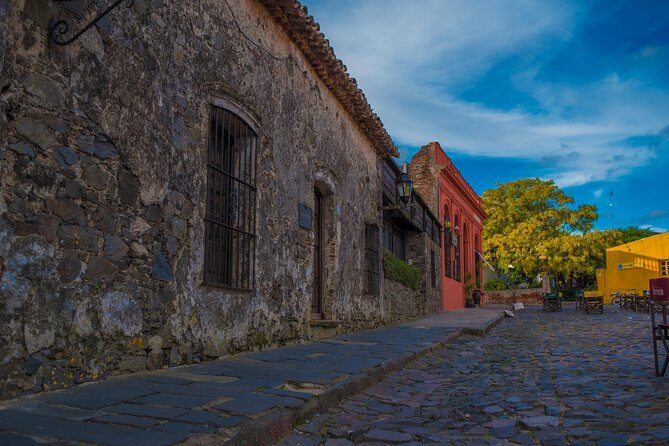
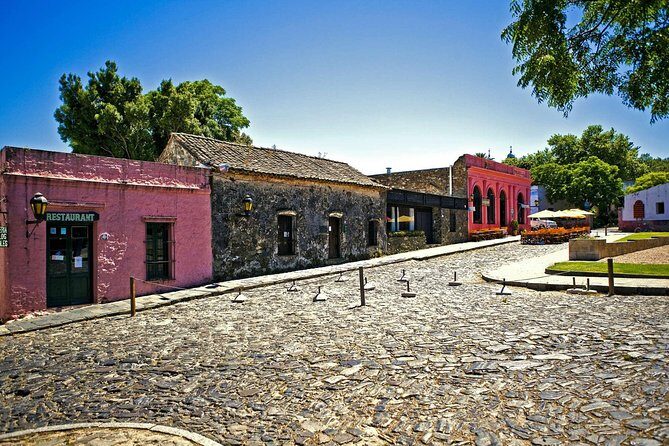
Colonia del Sacramento is the kind of place where the streets do the teaching. It was founded in 1680, and the UNESCO site label (since 1995) is basically a formal nod to what you see right away: Portuguese influence, older stonework, and narrow lanes that make you slow down.
You’re visiting the historic core on foot, which is exactly how it should be done. The cobblestones, the sloping streets, and the way buildings sit close together all create that “you’re in the past” feeling—without needing a museum ticket for every block.
What I like most about Colonia on a day trip is that you get variety fast. You’ll go from religious architecture (brickwork and altar features) to coastal defenses (fort-era doorways) to maritime identity (a lighthouse with measurable specs). It is a small town, but the themes change as you walk.
You will also get time beyond the big headline sites. One of the best values in this format is not just the history; it is the unscheduled moments—grabbing lunch where the locals eat, finding a shop you actually want to browse, and stepping away from the “tour pace” for a while.
If you have limited time in Buenos Aires and want a real taste of Uruguay, this is a strong way to do it.
The walking tour block: Church Matrix, the museum, and the port
The main guided segment focuses on the core highlights, and it starts with the reason Colonia feels distinctive: Portuguese-style layout and architecture tied to an older river port culture.
You’re set up to learn the story of the town’s major monuments, including the Church Matrix, the Municipal Museum, and the port dating from the seventeenth century. The Church Matrix matters because it is described as the oldest in the country—so even if you’re not a church person, you’re looking at something that anchors how this community developed.
The port piece is also key. Colonia’s identity is coastal and trade-based. When you connect the riverfront to the defensive posture nearby, the town stops being “cute old streets” and becomes a working coastal settlement with reasons for its layout.
A detail worth knowing: your schedule indicates an admission ticket is included for the primary guided segment, while several specific sights are listed as free. In practice, that means you do not need to build your own ticket plan day-of. It is one less thing to think about while you’re managing passport checks and ferry timing.
If you plan museum stops independently later, keep an eye on currency needs. One traveler noted you may need Uruguayan currency for the museum and that there is a bank in town. For this reason, I’d rather have a little local cash than count on plastic working perfectly everywhere.
La Calle de los Suspiros: a narrow lane with engineering in its bones
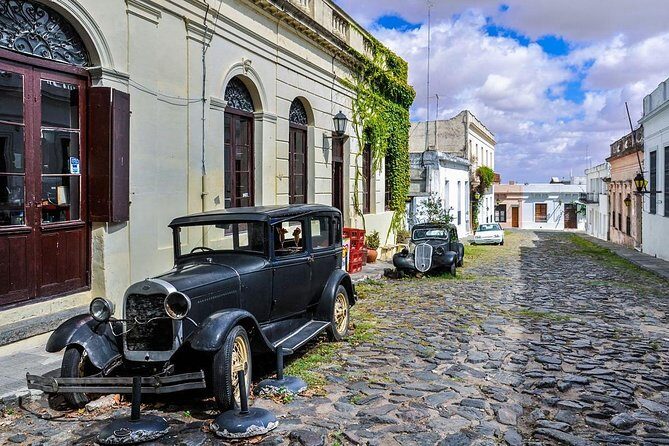
This is one of those stops that could feel like a quick photo, but it’s worth listening to. La Calle de los Suspiros begins at the Plaza Mayor and runs downhill toward the Río de la Plata.
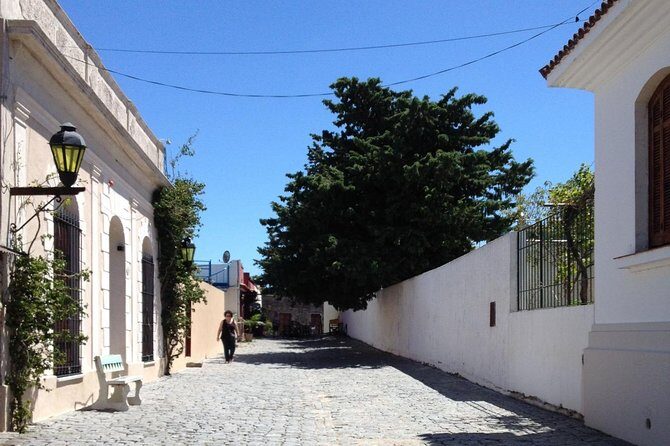
The street is narrow and cobbled, with a design detail that’s easy to miss unless you’re told. The sides are tilted toward the center to form a drainage channel. It’s basically old-school engineering for rainwater and street runoff.
The houses lining the street are described as early 18th-century construction, with stone walls, tile roofs, and ceramic floors. Doors and windows were small and made of wood. Even if you never go into a house, you can read the design logic: compact openings, sturdy materials, and a street shape that handles the elements.
So yes, it’s romantic-looking. But it’s also practical architecture. That blend is what makes Colonia so satisfying as a guided day trip. You’re not just seeing what’s pretty; you’re learning why it had to be built that way.
If you like walking slowly, pause at different angles. This lane changes how it feels depending on where you stand—up the slope, mid-street, or looking toward the river end.
Puerta de la Ciudadela and the pirates problem
Puerta de la Ciudadela is a fast stop with a surprisingly dramatic origin story. It was built in 1745 by order of the Portuguese governor Vasconcellos. In its early days, it wasn’t just an architectural feature; it was the entrance structure tied to military defenses protected by thick walls.
That defensive context is where the pirate angle comes in. The area was a frequent target of pirate attacks, with attacks attributed to Spanish and English forces in the story you’re given on the walk.
This is why I like including doorways in the itinerary. A church facade can be admired. But a city gate teaches you about daily life: who controlled access, what movement looked like, and how a small town protected its value.
And because the stop is short, it doesn’t steal your free time. You get the story, you take your photos, and you move on with the day still feeling paced—not rushed.
Faro de Colonia: lighthouse math you can see
Faro de Colonia del Sacramento is built January 1857, and it has a clean, measurable identity. It has two red flashes every nine seconds, with a luminous range of 7.8 nautical miles.
Visually, it’s a circular white masonry tower with a dome marked by white and red radial stripes. The structure is described as having a square base that transitions into a cylindrical tower reaching the lantern. There’s also a link to older land history: it was built on one of the old towers of the Convent of San Francisco, whose ruins sit at the foot of the lighthouse.
Here’s the practical value of including the lighthouse in a day tour: you stop thinking of Colonia as only a “historic center.” You see it as a river and maritime town. That lighthouse detail gives you context while you look out over the Río de la Plata.
If you’re the type who likes facts you can remember, this is one of the best stops on the schedule. The red flashes-in-nine-seconds detail turns the lighthouse from a background view into a specific point you can mentally mark later.
Basilica del Santisimo Sacramento: Portuguese influence in the altar
Religious architecture in Colonia isn’t just about being old. The Basilica del Santisimo Sacramento stands out because of an unusual altar feature for its time, and it’s noticeable even if you only have a short visit.
Inside, there’s a back lit semi-circular alcove featuring a very large monstrance, which is the receptacle used to display the Sacred Host or Blessed Sacrament. Outside, the brickwork shows Portuguese influence, connecting back to the Portuguese character you see across town.
This is one of those stops where a guide really helps. Without context, you might just notice bricks and shapes. With context, you understand what the builders were trying to highlight.
Keep your expectations simple: this is a brief stop, not a long church tour. Use it to reset your focus in the middle of the walk, then head back out for more streets and river air.
Timing and free time: how to make lunch actually work
A key part of the day is the mix of guided time and time on your own. The format typically includes a guided walk through the old town sights, then several hours for lunch and browsing.
That free time is where Colonia becomes yours. You can choose how to spend it: sit down for a meal, pop into small shops, or keep walking beyond the main clusters for quieter corners and architectural surprises.
One practical point: it can get hot, depending on the season. If you’re walking a lot in the historic center, build in a cooling break. Gelato shops and cafés are part of the town’s rhythm, and using them strategically helps you stay comfortable through the day.
Also plan around the ferry return. You’ll meet up again for the trip back to Buenos Aires, and you’ll want to move at a pace that keeps you from sprinting back at the end.
If you care about shopping value, know that tax-free or VAT refund steps may be possible at the ferry station before security. That’s not something you want to figure out last minute, so keep receipts and double-check what you’re holding.
Price and logistics: is $248 worth it?
At $248 per person, this is a premium-priced day trip. The question is not only whether you’ll enjoy Colonia. The question is what you’re buying for that price.
You’re buying:
- Hotel pick-up and drop-off (no dragging luggage or guessing transport)
- Round-trip ferry tickets (handled for you)
- A professional guide and a structured city tour that focuses on the main historic sights
- A small group experience (maximum of 15)
What you’re not buying is food and drinks. You’ll plan your own lunch and snacks.
Could you do it cheaper on your own? Most likely. But the cost here is basically paying for reduced decision fatigue. With customs and immigration time factored in, having your ferry process guided can be the difference between smooth sailing and a messy scramble.
One downside is that the price feels steep to some people, especially if they compare the cost of transfers and ferry only against the length of guided time. If you’re very time-sensitive and you already know Colonia well, you might feel the cost more than the value.
My take: this is worth it if you want a guided introduction and clean logistics more than you want to maximize savings. If that sounds like you, the structure fits.
What kind of traveler should book this?
This trip is listed as kid-friendly, and the group size helps. That said, it still runs long and starts early, so it’s best for families who can handle a full-day schedule and don’t mind waiting during border formalities.
It’s also a strong pick if you:
- want to see Uruguay with minimal planning from Buenos Aires
- enjoy walking tours but don’t want to build your own route
- value small groups and guide-led explanations of architecture and history
- like having both structure and free time
It may feel less ideal if you:
- hate early mornings and long travel days
- dislike sitting through border procedures
- only want a few photos and plan to move on quickly
If you’re choosing between Colonia and another Uruguay option, this one is built to maximize your time on the ground in a single day.
Should you book this Colonia day trip?
I’d book it if you want Colonia del Sacramento to be more than a quick stroll. The included ferry tickets, hotel transfers, and guided walk through major sights are a practical bundle, and the Portuguese-era details (La Calle de los Suspiros, Puerta de la Ciudadela, and the lighthouse specifics) give you plenty to connect and remember.
I’d think twice if $248 feels uncomfortable for you and you’re comfortable doing border logistics and ferry planning yourself. In that case, you might prefer a DIY approach and spend the savings on a longer stay in Uruguay instead.
If you do book, do this before your morning: confirm your passport details are correct, pack a light day bag, and plan your energy for a long border day. Also, if you have any choice about ferry seating class, more space can make the ride easier.
FAQ
How long is the trip?
It runs about 12 hours.
What time does the tour start?
The start time is 7:00 am.
What’s included in the price?
A professional guide, hotel pick-up and drop-off, ferry tickets, and a Colonia del Sacramento city tour are included.
Is food included?
No. Food and drinks are not included.
What size is the group?
The tour has a maximum of 15 travelers.
Do I need a passport?
Yes. A current valid passport is required on the day of travel, and passport details are required at booking.
Is this tour kid-friendly?
It is listed as kid-friendly.
Are any of the stops free?
Some stops are listed as admission ticket free (including La Calle de los Suspiros, Puerta de la Ciudadela, Faro de Colonia del Sacramento, and Basilica del Santisimo Sacramento). The main city tour segment includes an admission ticket.
What if I cancel?
This experience is non-refundable and cannot be changed for any reason.