REVIEW · USHUAIA
National Park and Train Trip End of the World Guided Tour
Book on Viator →Operated by Info de Ushuaia · Bookable on Viator
The road to Ushuaia’s end-of-the-world feeling starts here. You’ll get the End of the World Train ticket plus guided time in Tierra del Fuego National Park with several photo stops that make the day feel full but still relaxed. What I like most is the mix: prisoners-railway history in the morning and real southern scenery in the afternoon. One thing to plan for is the park entrance fee, which is not included.
I also like that the day is built for efficiency. You’ll be picked up from your hotel, shuttled between viewpoints, and returned to the city center with time to breathe and shop before you move on. The group stays small (max 24), which helps the pacing work even when the weather is moody.
My one heads-up: the train part can be a hit or miss depending on your expectations. Some people love the symbolism and story; others find it a bit touristy or slow for the price.
In This Review
- Key takeaways before you go
- Why Ushuaia’s train and the national park make sense together
- Meeting up, pacing, and how the day actually flows
- Southern Fuegian Railway: the End of the World Train and the Senda de los Presos
- Tierra del Fuego National Park: 63,000 hectares in about three hours
- Bahia Ensenada Zaratiegui: Round Island and the End of the World post office
- Bahia Lapataia: the End of the World poster and Pan-American Route symbolism
- The colorful pool viewpoint and Cerro Cóndor / Cerro Guanaco
- Lago Roca: the Yámana name and the postcard combo
- Price and value: what $115 covers, and what costs extra
- Best-fit for your style of travel
- Should you book this Ushuaia End of the World tour?
- FAQ
- How long is the tour?
- What does the tour cost?
- Is hotel pickup included?
- What’s included in the price?
- Do I have to pay the national park entrance fee?
- Is the End of the World Train ticket included?
- What are the main stops and photo points?
- Where does the tour start and end?
- How big is the group?
- Is it free to cancel?
- Are service animals allowed?
Key takeaways before you go
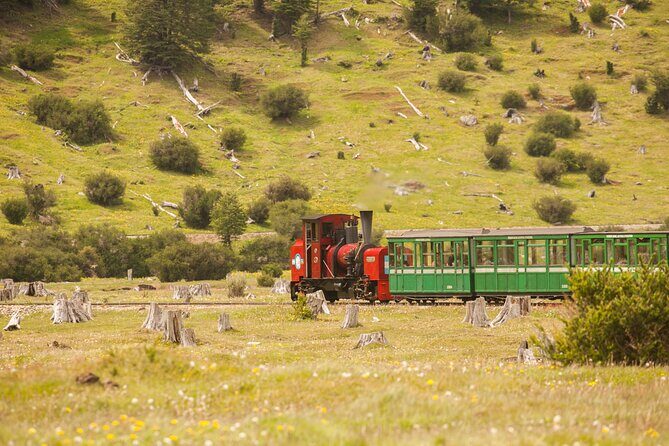
- End of the World Train ticket included, plus time on the old prisoner-era route on the Senda de los Presos
- Tierra del Fuego National Park stop is the real star, with multiple scenic pull-offs and photo opportunities
- Iconic bays and viewpoints: Ensenada Zaratiegui, Bahia Lapataia, the End of the World poster photo point, and Lago Roca
- One extra cost: the national park entrance fee is not included (foreigners pay on-site)
- Weather affects comfort and visibility, especially around bays and walking time
Why Ushuaia’s train and the national park make sense together
Ushuaia sells a dream, but this day is more than a postcard run. The Southern Fuegian Railway route connects directly to the city’s origin story, when this part of the world was tied to the prison and the work it took to keep it running. That history matters here because you’re not just riding through scenery. You’re moving through the same kind of landscape that shaped the town.
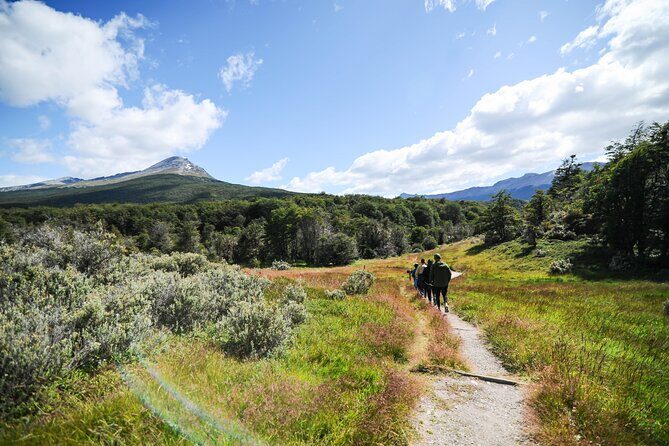
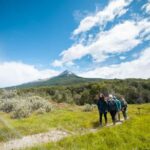
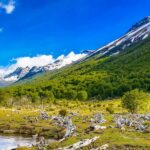
Then you step into Tierra del Fuego National Park, which is where Ushuaia becomes real. You’ll see the forest types and plants that define this corner of Patagonia—shrubs, beeches, ñires, and details like old man’s beard hanging from branches. The tour also gives you panoramic stops where you can actually absorb the scale: 63,000 hectares is not small, even if your time on the ground is limited.
So the combo works. The train gives you the human story. The park gives you the ecosystem and the views that make the story meaningful.
You can also read our reviews of more guided tours in Ushuaia
Meeting up, pacing, and how the day actually flows
This is about a 6-hour experience in total, with hotel pickup and a small-group format (up to 24 people). The meeting point tied to the operation is Av. San Martín 775 in Ushuaia, and the day ends back in the city center at the same address. If you’re doing a cruise day in town, this kind of timed logistics is often the difference between seeing the highlights and ending up stressed.
The pacing feels like: drive, short walks, viewpoint stops, then back-to-back “photo moment” bays. Within the park, you get multiple stops geared toward photos and overlooks rather than long hikes. Expect that you’ll be moving often enough to keep energy up, but not so often that you’re constantly climbing.
Language support is typically bilingual, with guides explaining in both English and Spanish. One recurring theme from real-world experiences: when the group is mixed, the guide can be easier to follow if you position yourself where you can hear clearly. If you’re sensitive to sound, choose a spot closer to the guide when you can.
Southern Fuegian Railway: the End of the World Train and the Senda de los Presos
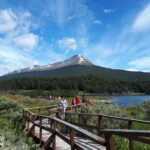
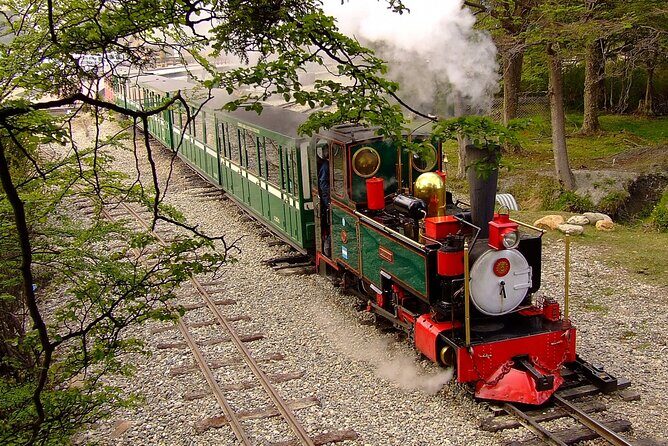
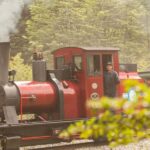
Stop 1 centers on the End of the World Train ride and the story behind it. You also get time for a walk tied to the old prisoner route: the tour includes about a 50-minute walk to explore the last 7 kilometers of the Senda de los Presos.
What to expect: this portion is short. It’s not a full-day rail adventure. You’re there to get the feel of the route and hear the context so the visuals connect to the city’s past. Some visitors love that it’s symbolic—Ushuaia’s link to the penal colony era is part of the reason this is such a famous attraction.
The practical downside is that the train experience can feel “more theatrical” than a traditional railway. Reviews and informal feedback around the experience often point to a tourist-facing vibe and slower pace than people expect if they’re used to faster, more purely scenic rail rides. If your main goal is scenery and engine views, you might want to temper expectations and focus on the story and the moments you can photograph.
Tip from how the day is structured: bring a jacket even if it looks fine at the start. Ushuaia weather can turn quickly, and the wind by the water makes short outdoor sections feel colder.
Tierra del Fuego National Park: 63,000 hectares in about three hours
This is the heart of the day. The park portion runs about three hours, and the national park entrance ticket is not included. The fee is listed for foreigners at ARS 40,000, and you’ll need to plan to pay in cash or card as required on the day.
Inside the park, you’re not aimless. The tour makes several stops for panoramas and pictures, which is smart if you only have one shot at Tierra del Fuego. You’ll learn the names of plant types and see how the vegetation changes across the forested areas. The tour highlights species common to this region such as ñires and beeches, and you’ll also hear about details like old man’s beard and local flowers such as Indian bread.
What I like about this format: it gives you a guided “map” of what you’re seeing. On your own, it’s easy to walk past a lot of interesting vegetation without realizing what you’re looking at. With a guide, those small signs and plant names turn into something you remember.
What to watch: time at each stop can be tight. If you love scrambling off-trail, chasing wildlife, or doing a proper hike, this guided highlights approach may feel short. A complaint you might see is that a visitor center stop can swallow time when you’d rather be out hiking. Still, the viewpoints built into the route tend to give you the “best postcards” quickly, which is often exactly what you need in a limited stopover.
Bahia Ensenada Zaratiegui: Round Island and the End of the World post office
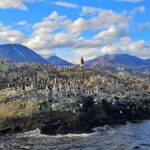
Stop 3 heads to Bahía Ensenada Zaratiegui, and this one is emotional in a silly-fun way. You get a chance to admire Round Island, then you visit the famous post office where stamps and postcards are part of the ritual. This is described as the last post office of the Argentine Post Office network, and it’s a popular spot for visitors who want their passport marked with the End of the World stamp.
You’ll usually want to build a minute or two into your plan for lines and “let me check if my postcard made sense” moments. This is a short 30-minute stop with something you’ll want to do carefully rather than rush.
One reality check: this post office can be subject to closures depending on the day. In at least one real experience, the post office was closed during the scheduled stop. So if this is a must-do for you, consider having a backup plan: enjoy the bay view even if the stamps aren’t available that particular day.


Bahia Lapataia: the End of the World poster and Pan-American Route symbolism
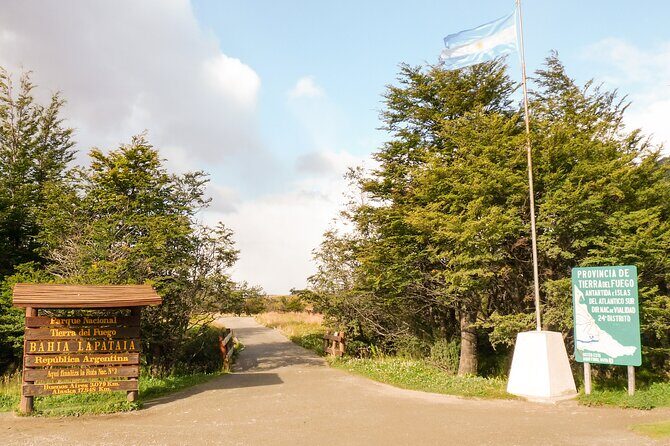
Stop 4 is Bahía Lapataia—and yes, you’re going to the photo spot everyone wants. This is where you’ll see the famous End of the World poster, symbolizing the connection between Ushuaia and Alaska through the Pan-American Route.
You get a dedicated 30-minute window here, which is enough time to take the classic photo, adjust your angle, and not feel like you’re fighting the clock. This kind of icon works best when you understand what it represents: it’s not just a sign. It’s the idea of being at the edge of a continent and looking outward.
If you’re planning for photos: winter light can change fast. Keep an eye on clouds, and don’t assume the view will look exactly like your phone screen preview. Take your first photo early, then come back for a second if the sky clears.
The colorful pool viewpoint and Cerro Cóndor / Cerro Guanaco
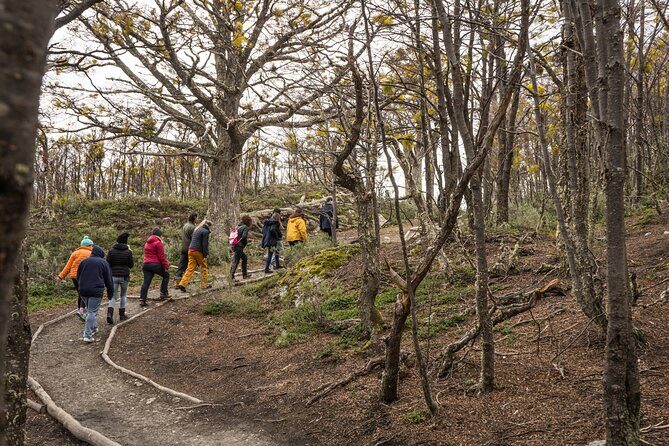
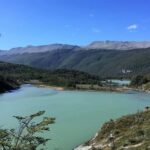
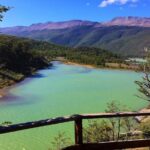
Between the main bays, you’ll also hit another viewpoint area where you see a pool named for its intense water color, plus two imposing hills: Cerro Cóndor and Cerro Guanaco.
This stop is quick, but it matters because it breaks up the day. It gives you a different kind of scenery than the forest-and-bay rhythm. If you like geology and named landforms, this is the kind of pull-off that makes you stop and notice shapes you’d otherwise ignore.
Because the time is limited, I’d treat this as a “look, shoot, breathe” stop. Don’t plan to walk a lot here unless the group does.
Lago Roca: the Yámana name and the postcard combo
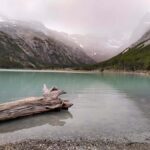
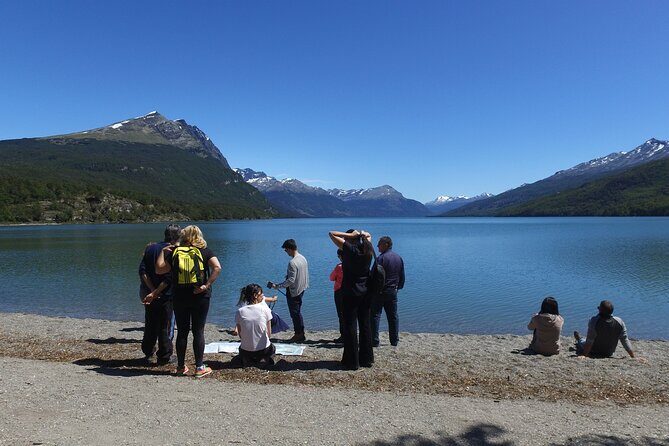
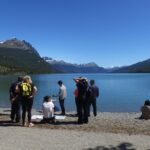
Stop 5 brings you to Lago Roca, where the tour explains the name origin. In the Yámana language, the lake is tied to the word ACIGAMI, described as meaning an elongated basket.
What you’re really doing here is collecting one last scenic theme: mountains, forests, and lakes in one view—the classic southern picture. The stop is about 30 minutes, and the goal is to let you watch the scenery long enough that your photos don’t feel like rushed souvenirs.
This is also a nice moment to notice the scale of the park again. The earlier stops show you forest and bays. Lago Roca ties it together visually, so the day feels coherent instead of like disconnected stops.
Price and value: what $115 covers, and what costs extra
The tour price is listed at $115 per person and includes hotel pickup, guided service, and the End of the World Train ticket. That’s real value because the train is not a small add-on. It’s also time-saving: you don’t have to manage separate tickets and scheduling.
The biggest extra cost is the Tierra del Fuego National Park entrance fee, which is not included. For foreigners it’s listed at ARS 40,000. If you’re traveling in a group, this fee is still straightforward, but you don’t want to be surprised after you’ve already committed.
So is it worth $115? For me, the answer is yes if:
- you want a structured overview in one day,
- you like having stops timed so you don’t lose daylight,
- and you care about the prison-era context tied to the region.
If your priority is long hikes or maximum time outdoors, you might find better value going independently or mixing self-guided time with only the train portion. This tour is designed for “see the highlights” days, not “I want to disappear into trails all afternoon” days.
Best-fit for your style of travel
This tour fits best if you:
- have one day in Ushuaia and want the highlights without planning fatigue,
- prefer guided context (plant names, history, why locations matter),
- want a mix of views + story, not just one or the other,
- like small-group touring where you can still hear the guide.
It may feel less ideal if you:
- expect the train to be like a scenic rail journey first and a story second,
- hate short stops and want longer walks,
- are very sensitive to how crowded a visitor center or station can get.
Also, if you’re English-speaking only, focus on where you can hear clearly. The tour is typically bilingual, and sound can be a real issue in moving vehicles and busy stations.
Should you book this Ushuaia End of the World tour?
I’d book it if you want a guided “greatest hits” day that actually connects history to geography. The End of the World Train ticket included is a strong anchor, and the park stop gives you the plant-and-view experience that makes Ushuaia more than a souvenir town.
I wouldn’t book it if the park entrance fee surprise would stress you out, or if you really want deep hiking time. In that case, do the train separately and spend the rest of your day on longer trails—or pick a plan with fewer scheduled stops.
If you’re on a tight schedule, this is one of the easiest ways to check the core boxes in a single pass, while still getting real southern scenery and enough guided context to make it stick.
FAQ
How long is the tour?
It’s listed at about 6 hours.
What does the tour cost?
The price is $115.00 per person.
Is hotel pickup included?
Yes. The tour includes pick-up from your hotel.
What’s included in the price?
The included items are hotel pickup, guided service, and the End of the World Train ticket.
Do I have to pay the national park entrance fee?
Yes. The Tierra del Fuego National Park entrance ticket is not included and is listed for foreigners at ARS 40,000.
Is the End of the World Train ticket included?
Yes. The train ticket is included as part of the tour.
What are the main stops and photo points?
You’ll visit Southern Fuegian Railway, Tierra del Fuego National Park, Bahía Ensenada Zaratiegui (including the post office), Bahía Lapataia (the End of the World poster photo spot), and Lago Roca.
Where does the tour start and end?
It starts and ends at Av. San Martín 775, V9410DDD Ushuaia (with the tour ending in the city center).
How big is the group?
The tour has a maximum of 24 travelers.
Is it free to cancel?
Free cancellation is offered, and you can cancel up to 24 hours in advance for a full refund.
Are service animals allowed?
Yes. Service animals are allowed.