REVIEW · USHUAIA
Full Day Reduced Tour to the Ojo del Albino Glacier in Argentina
Book on Viator →Operated by 54° Trek-expeditions · Bookable on Viator
A glacier trip in the far south hits different. This reduced Ojo del Albino experience gives you big patagonian views and solid guide support, with crampons and lunch taken care of. The trade-off: the schedule can run fast, and a few guests felt the pace and timing left less room than expected for breaks or a longer glacier moment.
You’ll start at the End of the World area around 7:30am, ride out of Ushuaia, and hike through wetland valleys, then into lenga forest toward Laguna Esmeralda, where the water’s green tint links back to the Ojo del Albino Glacier. Just keep in mind you’ll need moderate fitness and you’ll want an outfit that handles cold, wind, and traction work since the tour doesn’t include that part.
In This Review
- Key things I’d focus on before you book
- First steps from the End of the World Sign (7:30am starts)
- Carbajal Valley and the Route 3 viewpoints before the hike
- Lobos Valley: when dog sled history meets today’s boot prints
- Tierra Mayor wetland stop: Sierra Alvear viewpoints for photos
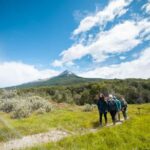
- Laguna Esmeralda trek: lenga forest, peat bog sections, and altitude feel
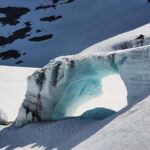
- Ojo del Albino Glacier: what the reduced format means in real life
- Lunch, included gear, and the outfit you still have to bring
- Price and value: how $210 adds up when gear and transport are included
- Pace, fitness, and why the guides’ style matters (Manuel and Emi)
- Organization and communication: what I’d confirm before your day
- Who should book this reduced glacier trek?
- Final call: should you book the Ojo del Albino reduced tour?
- FAQ
- Where does the tour start and end?
- What time does the tour start?
- How long is the tour?
- What’s included in the price?
- What should I bring since the outfit isn’t included?
- Do I need a certain fitness level?
- Is this a private tour?
- What happens if the tour is canceled due to poor weather?
- How much time do I have to cancel for a full refund?
Key things I’d focus on before you book
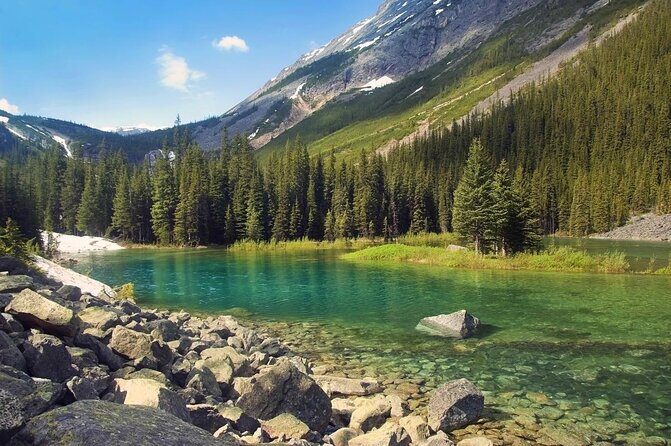
- Laguna Esmeralda’s green water: it comes from sediment tied to the Ojo del Albino Glacier.
- Gear is included: poles, crampons, and a helmet are provided.
- Two terrain “zones”: wetland valleys and panoramic points first, then lenga forest and peat bog sections.
- Photo-friendly stop at Tierra Mayor: a panoramic viewpoint aimed at seeing Sierra Alvear peaks.
- Pace can feel intense: especially during steep segments with short pauses for water, restroom, and photos.
- Confirm what you’ll actually reach: some past participants reported not getting all the way to the Albino glacier when time or fitness didn’t line up.
First steps from the End of the World Sign (7:30am starts)
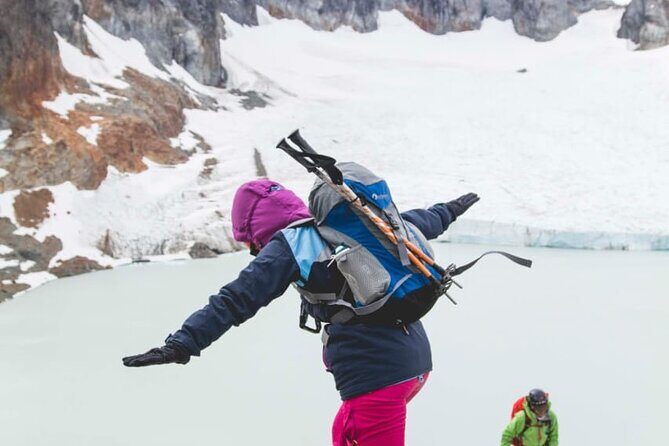
This tour is built around an early start, with the meeting point at the End of the World Sign area in Ushuaia, then the group heads out from there. A 7:30am departure matters because the mountains around Ushuaia can change quickly—wind and cloud cover can make traction and visibility harder as the day goes on.
If you’re the type who hates rushing, plan your morning like a trip prep day, not a sleep-in day. You’ll be out in cold air, walking on mixed ground, and using traction gear. Also, since one guest reported waiting longer than expected when transport timing shifted, it’s smart to show up a bit early and keep your expectations flexible.
A few more Ushuaia tours and experiences worth a look
Carbajal Valley and the Route 3 viewpoints before the hike
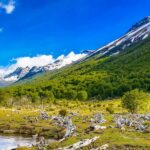
Before you ever put crampons on, you get a drive-and-look segment that’s worth paying attention to. The journey heads away from the city and includes a view of Carbajal Valley, described as having major peaks and one of the largest wetlands in the area. That’s a good warm-up for your eyes: you’re not staring at nothing while waiting for the trek to start.
Along the way on Route 3, you’re also set up for sweeping views of Cerro Cinco hermanos and Monte Olivia. This is the part that makes the day feel more like a journey and less like a checklist. Even if you’re mostly in hiking mode later, you’ll remember these first big sightlines when the trail narrows and gets steeper.
Lobos Valley: when dog sled history meets today’s boot prints
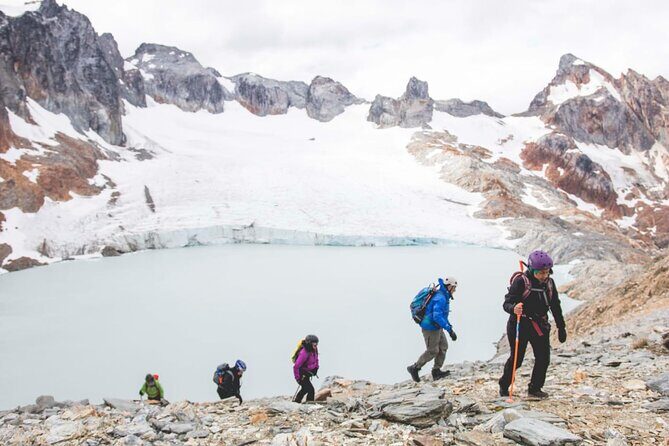
The trek begins in the valley of Lobos, where the first dog sleds were located in Ushuaia. It’s a small line in the plan, but it gives context to what you’re doing: in a region built around snow travel and harsh conditions, people didn’t just survive winter—they organized their movement around it.
When a hike starts in a place with that kind of practical history, you tend to walk a little more thoughtfully. It’s not a museum stop; it’s a “you are in the real weather world” feeling that helps the day click.
Tierra Mayor wetland stop: Sierra Alvear viewpoints for photos
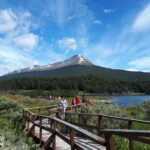
Once you’re walking, you cross through the Province of Tierra del Fuego area and the Tierra Mayor valley, which is highlighted as a major wetland. Wetlands in the Tierra del Fuego region are not just scenery—they’re part of the water system that shapes the whole trail environment, including how the ground behaves.
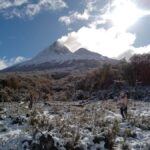
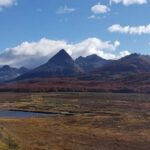
Then you get to a panoramic photo point with Sierra Alvear peaks. This matters for two reasons:
- You get a wide-angle moment before the hike turns more demanding.
- The trail alternates between open views and forest/peat terrain later, so this viewpoint helps you anchor what you’re seeing.
The stop notes also indicate admissions are free for these segments, which is one less thing to worry about during the day. In practice, that means you can focus on the walking rhythm and keeping your footing.
Laguna Esmeralda trek: lenga forest, peat bog sections, and altitude feel
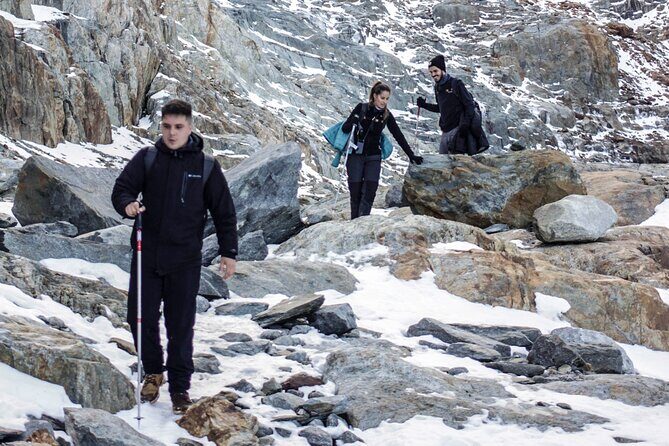
The most iconic walking portion is the push toward Laguna Esmeralda. After about a 4.5 km walk, you reach the lagoon area, and the scene changes in a way I think most people will feel instantly.
The trail begins with the lenga forest, and you’ll move through sectors where foliage and peat bogs alternate. That mix is the reason this part can feel trickier than it looks from a map. Peat bog ground tends to be softer and can test balance, especially when you’re also managing steep grades and cold air.
From there, the route climbs into a higher mountain environment—around 600 meters on average above sea level. Even if you’re reasonably fit, altitude plus wind-chill plus steep walking can take your breath. This is also where good foot placement coaching makes a real difference (more on that shortly).
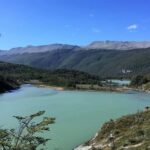
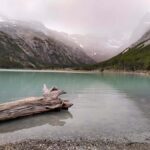
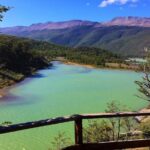
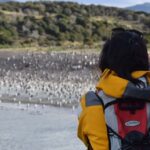
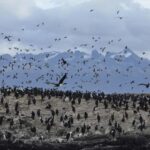
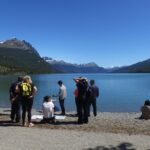
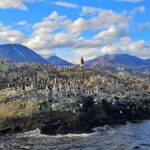
When you finally reach the lagoon, the surroundings do the talking: forest, snowy peaks, and the water color. The lagoon’s greenish coloration is attributed to sediment coming from the Ojo del Albino Glacier. That detail makes the day feel connected, not random. You’re seeing an effect of glacial activity without needing to spend all day on ice to understand the relationship.
Ojo del Albino Glacier: what the reduced format means in real life
This is labeled a reduced tour to the Ojo del Albino Glacier, and the name only makes sense if you’re aware of how glacier access can depend on time, conditions, and group pace.
The itinerary description gives a clear link between the lagoon and the glacier (the sediment explanation), but it doesn’t promise a long, lingering ice walk in the way some full-day glacier trips do. In fact, some participants reported not going far enough to reach the Albino glacier, and others described not having enough time to complete a glacier hike when the schedule stretched.
So here’s the practical way to think about it: this day is designed to get you to key high-impact scenery in a single chunk of time, with glacier connection built into the experience. If you’re going specifically for guaranteed time on the ice, you should ask your operator a direct question before booking:
- How much time is actually spent on the glacier portion for a normal day?
- What makes the plan shorten or skip any part?
That one conversation can prevent the kind of disappointment that comes from thinking you bought one hike and got a shorter version.
Lunch, included gear, and the outfit you still have to bring
Good news: you don’t have to solve the gear puzzle yourself. The tour includes equipment like poles, crampons, and a helmet. That’s a big value point in a place like Ushuaia, where cold-weather traction gear isn’t the kind of thing you want to improvise at the last minute.
You also get lunch, which matters because a long cold hike without a proper meal can drain energy fast. One past guest described the sandwich portion as small and basic, but also said the sweets and tea were enjoyable. Translation: expect simple, warming fuel—not a gourmet mountain picnic.
What’s not included is the outfit. That single line can make or break your comfort. You’ll want clothing that handles wind and wet cold, plus footwear that works with traction. If you show up in the wrong gear, you may still do the hike—but you’ll do it tired, which affects pace and your ability to keep up during steeper climbs.
Price and value: how $210 adds up when gear and transport are included
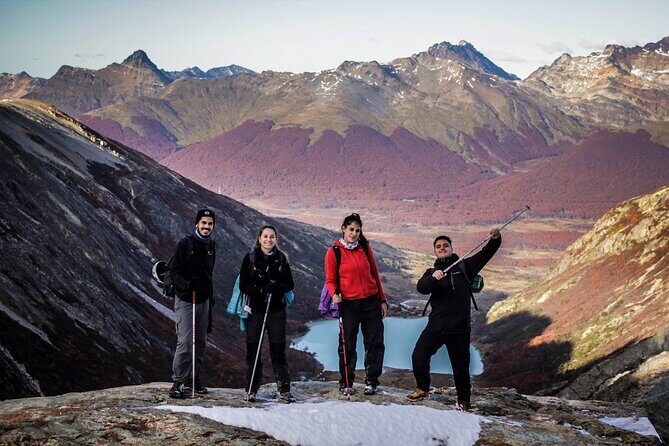
At $210 per person, the value is strongest if you treat the package as what it is: transportation + guided trekking + lunch + critical safety/comfort equipment.
Here’s how the math typically lands for people:
- Paying separately for gear rentals (poles/crampons/helmet) often costs time and money.
- Paying separately for a private-ish transport setup costs more than you’d expect in Ushuaia.
- A guided day also reduces planning stress in weather-dependent conditions.
The price is less justified if your goal is mostly the scenery and you’d be happy improvising a hike on your own. But if you want the structure of a guided route with the right traction and the lagoon/glacier story stitched together, this cost can make sense.
Still, there’s one “value check” I recommend: verify the expected duration and what portion you should realistically plan to cover. A couple of past experiences described timing changes and schedule confusion, which can affect how much glacier time you actually get.
Pace, fitness, and why the guides’ style matters (Manuel and Emi)
This is where you’ll feel the difference between an okay hike and a great one.
The tour requires moderate physical fitness, and that’s not a throwaway line. One guest reported that an older participant couldn’t make it to the glacier portion, and that reduced the route for the whole group. When someone in the group can’t keep the pace on steeper sections, it impacts timing, breaks, and the chance to reach the furthest goal.
On the positive side, the guide support seems to be a standout feature. One participant praised Manuel for being excellent at indicating where to place your feet and adjusting walking speed, which is the kind of instruction that improves safety on uneven, slippery ground. Another praised Emi for knowing the area in detail and keeping a good walking rhythm—still, they also stressed that the trek is physically demanding.
Now for the balance: some guests felt the pace was faster than expected, with limited stops and a steep ascent where breaks were minimal. At the summit, they reported little time to rest, eat, and take photos before starting the descent. So yes, the guides can be supportive—but you should still prepare for a “keep moving” day rather than a slow sightseeing walk.
If you want the best experience, go in with the right mindset:
- Bring hydration and accept short breaks.
- Plan on working through steep moments without expecting long pauses.
- Take your photos when the group stops, not between stops.
Organization and communication: what I’d confirm before your day
Most operators aim for smooth logistics, but real-world days can bend. A few issues show up in the history: transport timing that arrives late, pickup time changes, and confusion around the expected duration.
Here’s what I’d confirm directly (quick questions that save headaches):
- Your exact pickup time and where the car meets you (and whether cruise schedules change timing).
- The real expected day length on the day you go (the tour description says 7 to 8 hours, but some people reported last-minute changes).
- Whether your booking is truly private in practice, including headcount and how many guides you’ll have.
- How break frequency is handled, especially during the steep ascent.
- The chance of reaching the glacier portion if conditions are good.
In a place where weather can decide everything, clarity from the start is your best protection.
Who should book this reduced glacier trek?
Book this if:
- You want a guided trek out of Ushuaia with serious cold-weather traction gear included.
- You care about photo stops as well as walking, especially around Sierra Alvear viewpoints and the lagoon.
- You’re comfortable with a steep, physically demanding hike and you don’t need long summit downtime.
Consider another option if:
- You’re expecting a relaxed hike with lots of long breaks.
- You have mobility limitations or you know steep climbs will be a challenge.
- You’re traveling on a tight schedule where a day length change would derail your plans.
Final call: should you book the Ojo del Albino reduced tour?
If you’re fit enough for moderate, steep walking and you want a one-day adventure that connects lenga forest, wetland valleys, and a glacier-linked lagoon, I’d say this tour is worth serious consideration. The strongest parts are the scenery density and the guided help—people like Manuel and Emi seem to focus on keeping you moving safely and at a pace that works.
But I’d be honest with yourself about two things before you spend $210:
- This is a reduced glacier day, so ask what portion is included in a normal run.
- The schedule may not feel slow-and-easy, so don’t bank on long rests or extended photo time.
If you confirm the plan clearly and you show up prepared, you’ll likely love the day’s mix of views and real traction hiking in the Tierra del Fuego air.
FAQ
Where does the tour start and end?
The tour starts at the End of the World Sign area in Maupu, Pres. Julio Argentino Roca, V9410 Ushuaia, Tierra del Fuego, Argentina. It ends back at the same meeting point.
What time does the tour start?
The start time is 7:30am.
How long is the tour?
It’s listed as 7 to 8 hours approximately.
What’s included in the price?
The tour includes lunch, private transportation, and equipment such as poles, crampons, and a helmet.
What should I bring since the outfit isn’t included?
The tour notes that the outfit is not included, so you’ll need to bring your own cold-weather clothing suited for trekking conditions.
Do I need a certain fitness level?
The experience says travelers should have a moderate physical fitness level.
Is this a private tour?
Yes. It’s described as a private tour/activity, with only your group participating.
What happens if the tour is canceled due to poor weather?
The experience requires good weather. If it’s canceled due to poor weather, you’ll be offered a different date or a full refund.
How much time do I have to cancel for a full refund?
You can cancel up to 24 hours in advance for a full refund. If you cancel less than 24 hours before the experience starts, the amount paid will not be refunded.