REVIEW · BUENOS AIRES
Electric Scooter Tour: North Buenos Aires
Book on Viator →Operated by Rollin Argentina · Bookable on Viator
Wind on a scooter, stories on full volume. This North Buenos Aires e-scooter tour is an easy, fun way to see the city without sprinting from sight to sight, while your guide stitches together Argentine culture through football, politics, and everyday attitudes. I like that it includes a real #MateTime moment with mate and a classic alfajor break, not just photo stops. I also love how the route covers iconic places like the Obelisco and Recoleta Cemetery in one smooth afternoon, using a small group format with provided safety gear. The main thing to consider: the ride can get windblown, and the tour isn’t recommended if you don’t already feel comfortable on a bicycle.
You’ll start at Tres Sargentos 463 and circle through North BA at a relaxed pace for about 2 hours 30 minutes, covering roughly 10 km. Along the way, guides (like Miguel Salazar, Michael, and Rita, based on past tour experiences) tend to mix local history with candid social commentary, including how people relate to authority and how migration shaped the city. It’s a great value at $39 when you want highlights plus cultural context, but do expect to feel the motion and handle the scooter confidently.
In This Review
- Key Things You’ll Notice on This North Buenos Aires Scooter Tour
- What This Tour Feels Like: Momentum, Not Marathon
- Safety, Skills, and the Practical Stuff That Matters
- Stop-by-Stop: How Each Place Teaches You Something
- Plaza General San Martín: Why Buenos Aires Gets Called European
- Torre Monumental: Migration, Football, and a Little Ben Reminder
- Obelisco: The City’s Witness in Plain Stone
- Embajada de Francia: The Joke Behind the Reputation
- Facultad de Derecho (Universidad de Buenos Aires): Where Public Leaders Are Forged
- Floralis Generica: The #MateTime Break Where You Actually Pause
- La Recoleta Cemetery: Heroes, Photos, and the Real-World Feel of the Area
- Basilica de Nuestra Senora Del Pilar: Religion as a Visible Thread
- MALBA (Museo de Arte Latinoamericano de Buenos Aires): Art Time with a Note on Cost
- Why the Guides’ Stories Make the Difference
- Food and Drink: The #MateTime Moment Plus an Alfajor Snack
- Price and Value: What $39 Buys You in Buenos Aires
- Weather, Timing, and How to Set Expectations
- Who This Tour Suits Best
- Should You Book North Buenos Aires on an E-Scooter?
- FAQ
- How long is the North Buenos Aires electric scooter tour?
- How much does the tour cost?
- What’s included in the price?
- What sights do you visit?
- Is MALBA admission included?
- Is the group small?
- Do I need bicycle-riding experience?
Key Things You’ll Notice on This North Buenos Aires Scooter Tour
- #MateTime with hands-on learning, plus a typical alfajor you’ll actually taste, not just see
- Small max group size (8 people) for a less chaotic ride and more back-and-forth
- Major landmarks in one afternoon, from Plaza San Martín to Recoleta Cemetery and MALBA
- Safety included with helmet and a reflective belt for day-to-day confidence
- Guide storytelling that’s about people, including football passion, migration, and political life
- Most entrances are free, but the MALBA museum visit isn’t included
What This Tour Feels Like: Momentum, Not Marathon
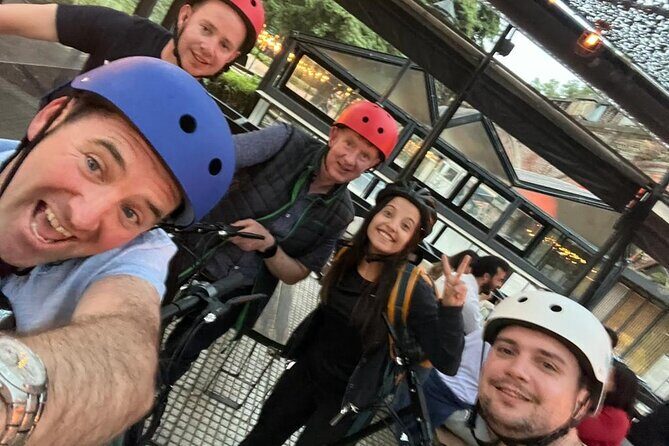
This is one of those Buenos Aires activities that helps you get your bearings fast—but it doesn’t feel like a lecture on wheels. You’ll glide through North BA on an e-scooter with the route built for steady progress: stop, look, learn, ride again. The whole thing runs around 2.5 hours, with a total ride distance of about 10 km, so it’s long enough to feel like a proper outing but short enough that you’re not wiped out afterward.
For many people, the best part is the balance. You get big-photo landmarks like the Obelisco, but you also get the smaller “why does this place feel like Europe?” and “what does Argentina think about authority?” explanations that make the city click. The guides have a knack for connecting details that tourists often treat separately—architecture, soccer culture, and public life—into a single picture of how Buenos Aires thinks.
The tour’s vibe is relaxed. Still, you should plan for movement. If you’re sensitive to wind, or you’re not sure you’ll stay comfortable while rolling, you might feel it on the ride. And if you truly don’t know how to ride a bicycle, this tour is not recommended, because scooter control matters for safety and enjoyment.
A few more Buenos Aires tours and experiences worth a look

Safety, Skills, and the Practical Stuff That Matters
You start with the basics: safety gear is included, with a helmet and a reflective belt. That’s a good sign in a city where traffic and sidewalks can be unpredictable. You’ll also use the provided e-scooter equipment (listed as Segway use), so you’re not showing up to figure out hardware on your own.
Before you go, be honest about your comfort level. The tour is designed for most travelers, but the operator specifically doesn’t recommend it for people who do not know how to ride a bicycle. In plain terms: if you’ve never balanced on two wheels, you’ll spend your energy worrying instead of enjoying. On the other hand, if you’re comfortable on a bike—even at a beginner level—you should be fine.
Since the tour is capped at 8 people, you’re less likely to get bunched up in tight areas. That makes the experience feel smoother for first-timers, especially when the guide needs to slow things down for a quick explanation.
Stop-by-Stop: How Each Place Teaches You Something

This tour works because each stop isn’t random. You move from one “Buenos Aires idea” to the next, and the guide stories give you a reason to look longer than you would on your own.
Plaza General San Martín: Why Buenos Aires Gets Called European
You begin at Plaza General San Martín, and the point of this first stop is orientation and contrast. Buenos Aires has a reputation for feeling European, and this plaza helps you understand why—big civic spaces, a formal urban feel, and the sense that the city was shaped by waves of influence. Even if you’re only there for about 20 minutes, it sets the tone: this isn’t just a sightseeing loop, it’s an introduction to the city’s “look and attitude.”
Practical tip: treat this as your “warm-up.” When you learn the pace of the ride and the rhythm of stops here, the rest feels easier.
Torre Monumental: Migration, Football, and a Little Ben Reminder
Next is Torre Monumental, where the story connects three themes: migration, soccer, and a clock-tower reference to Little Ben. Buenos Aires grew through movement of people, and the city’s identity carries that imprint. Then football enters—because in Argentina, soccer isn’t a hobby, it’s part of how people talk about life and belonging.
You’re there for around 15 minutes, which is enough to take in the tower and still keep the energy moving.




Obelisco: The City’s Witness in Plain Stone
Obelisco is quick but powerful—about 10 minutes. This monument is one of those shapes that instantly registers, even if it’s your first time in BA. The tour framing helps you treat it as more than a postcard: it’s a witness to the city’s changing eras and public moments, and the guide uses it as a springboard into broader Buenos Aires identity.
If you like getting a cultural explanation with your photos, this stop delivers.
Embajada de Francia: The Joke Behind the Reputation
At Embajada de Francia, the discussion turns lighter and sharper. The stop focuses on why Argentinians sometimes have a reputation for being conceited, but the way it’s handled is more about humor and social dynamics than insult. It’s a chance to think about how countries describe each other—and how locals see themselves.
This is around 10 minutes, so don’t expect a full deep lecture. Do expect a perspective shift on how people talk and perform confidence.
Facultad de Derecho (Universidad de Buenos Aires): Where Public Leaders Are Forged
At Facultad de Derecho – Universidad de Buenos Aires, you get a history lesson with a human outcome. The tour explains that the Faculty of Law is the birthplace of Argentina’s social and political leaders, tied to the university being an alma mater with major figures associated with its inauguration, including Domingo and Evita Peron.
This stop is about 15 minutes. It’s well-suited if you enjoy understanding why the city’s politics feel so personal—because here, institutions aren’t distant. They’re part of the story people tell about power.
Floralis Generica: The #MateTime Break Where You Actually Pause
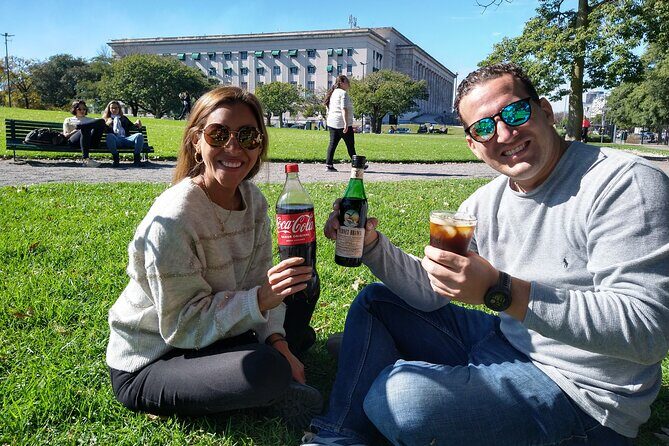
Then comes Floralis Generica, and this is where the tour changes pace on purpose. You take about 20 minutes for a break, with the #MateTime moment: learning to prepare mate and tasting typical alfajores.
This stop is more than a reset. It’s built into the tour so you don’t only experience Buenos Aires as an external view. When you learn how people prepare and share mate, you start to understand the social rhythm of the city—small rituals, repeated daily, and shared as comfort.
If you’re the type who forgets to drink water and snack on tours, this is a gift. It gives you a structured moment to refuel.
La Recoleta Cemetery: Heroes, Photos, and the Real-World Feel of the Area
Next: La Recoleta Cemetery. Here the tour emphasizes the fact that it’s a resting place for heroes from the country and continent, and it allows time to go inside for photos (about 10 minutes inside, and roughly 15 minutes total for the stop).
This is the kind of place where the visuals hit fast, but it helps to have context. The guide framing makes the cemetery more about memory and identity than just architecture.
One practical note: the Recoleta area can be lively around weekends, and you may need to pass through a feria to reach the cemetery. That can slightly affect flow and waiting time, but it also reflects how the neighborhood actually functions.
Basilica de Nuestra Senora Del Pilar: Religion as a Visible Thread
At the Basilica de Nuestra Senora Del Pilar, the tour shifts to religion and public belief. The guide connects the Catholic Church’s influence to a story about the church choosing a pope associated with the end-of-the-world phrase. Even if you don’t follow every historical reference, the tour angle helps you understand why faith is not tucked away here—it’s part of the urban identity.
You’ll have about 10 minutes at this stop, which is enough to appreciate the building and the meaning tied to it.
MALBA (Museo de Arte Latinoamericano de Buenos Aires): Art Time with a Note on Cost
Finally, you’ll reach Museo de Arte Latinoamericano de Buenos Aires (MALBA) for around 15 minutes. The big catch: admission to the museum is not included. So treat this like a planned art stop where you can appreciate the space and possibly decide what you want to do based on your time and ticket preferences.
If you’re an art-first visitor, you might want more time than the tour offers. If you’re mainly there for the big cultural highlights, the short stop still makes sense because it adds a modern counterpoint to the older monuments.
Why the Guides’ Stories Make the Difference
The tour is built on interpretation. You’re not just being moved from landmark to landmark; you’re being given a lens.
From past experiences with guides such as Miguel Salazar (including frank talk about Argentina’s political situation and the economy), Michael (lots of football talk mixed with city highlights), and Rita (friendly, funny, and clearly enjoying the storytelling), there’s a consistent pattern: the guide tries to help you understand how people live with politics, pride, and public opinion.
That matters because Buenos Aires can feel contradictory. One street gives you architecture that looks European. Another scene reminds you that Argentina is its own thing—socially intense, politically charged, and deeply rooted in football and family rituals like mate time. When the guide connects these dots, the tour becomes more than a photo loop.
You’ll likely hear how migration shaped the city’s identity, plus a recurring theme about how Argentinians relate to authority—sometimes with respect, sometimes with skepticism, often with humor. It’s the kind of background you can carry into dinner conversations later.
Food and Drink: The #MateTime Moment Plus an Alfajor Snack
Food on a tour can be a throwaway. Here it’s a featured part of the experience.
You’ll have a scheduled break at Floralis Generica for #MateTime—learning to prepare mate and tasting a typical alfajor. You’ll also get snacks: a chocolate alfajor stuffed with traditional dulce de leche. On top of that, you’ll have coffee and/or tea in the form of an infusion based on yerba mate.
For me, the best part is the structure. Instead of eating while walking, you’re doing it with intention. Mate also works as a cultural shortcut: it’s not just a drink, it’s a social habit and a way to slow down.
If you’re new to mate, this is a good low-pressure introduction.
Price and Value: What $39 Buys You in Buenos Aires
At $39 per person, this tour is priced to be a practical add-on rather than a once-in-a-lifetime splurge. You’re paying for several things at once:
- A guided route through North BA’s top sights
- A provided ride system (e-scooter/Segway-style equipment) plus safety gear
- Time-efficient coverage of major landmarks in about 2.5 hours
- A snack package: alfajor plus coffee/tea infusion
- A structured cultural segment: #MateTime
It’s also worth noting that most stops have free admission, which supports the value. The one exception is MALBA, where museum admission is not included, so you might want to plan that decision separately depending on what you enjoy.
If you compare this to doing the same route solo with taxis and entrance fees, the math often tilts toward taking the tour—especially because you’re getting explanation, not just transportation.
And since the tour is often booked around 5 days in advance, reserving ahead helps you lock in a time that fits your schedule.
Weather, Timing, and How to Set Expectations
This tour requires good weather. If it’s canceled due to poor weather, you’ll be offered a different date or a full refund.
Plan for the afternoon start time too: it begins at 2:00 pm. That’s a nice slot because you still get daylight for photos, but you’re not spending your whole day commuting.
Duration is listed at about 2 hours 30 minutes, though real life always has variables like traffic, crowding, and pacing. If you have a tight schedule afterward, I’d give yourself a buffer.
Who This Tour Suits Best
This is a strong fit if you want:
- A fast, fun introduction to North Buenos Aires
- A blend of landmarks plus cultural context
- An activity that doesn’t require deep museum time
- A small-group experience with guide interaction
It’s also a good choice for families who can handle the riding and attention span. Past experiences include families enjoying it together and using the tour to see lots of sights without feeling exhausted.
It’s less suitable if you:
- Don’t feel comfortable on two wheels and especially if you don’t know how to ride a bicycle
- Prefer quiet, slow walking tours where you can stop whenever you want
- Are very sensitive to wind during rides
Should You Book North Buenos Aires on an E-Scooter?
If you’re trying to see Buenos Aires with energy and still learn what makes the city tick, I’d say yes. This tour hits the sweet spot of value: iconic landmarks, short stops with context, and a real cultural moment with #MateTime and alfajores. The small group size also makes it feel personal in a good way—more like a friend guiding you than a moving crowd.
Before you book, do two quick checks: make sure you’re comfortable riding (the bicycle comfort note matters), and be ready for some wind during the ride. If that sounds fine, you’ll likely come away with better mental maps of North BA—and stories you can repeat at dinner.
FAQ
How long is the North Buenos Aires electric scooter tour?
The tour lasts about 2 hours 30 minutes.
How much does the tour cost?
It costs $39.00 per person.
What’s included in the price?
Inclusions include the use of the Segway (e-scooter equipment), helmet and reflective belt, snacks (chocolate alfajor with dulce de leche), coffee and/or tea, plus infusion based on yerba mate. The #MateTime experience also includes learning to prepare mate and tasting alfajores.
What sights do you visit?
You visit Plaza General San Martín, Torre Monumental, Obelisco, Embajada de Francia, Facultad de Derecho – Universidad de Buenos Aires, Floralis Generica, La Recoleta Cemetery, Basilica de Nuestra Señora Del Pilar, and MALBA.
Is MALBA admission included?
No. Admission to MALBA is not included.
Is the group small?
Yes. The tour has a maximum of 8 travelers.
Do I need bicycle-riding experience?
The tour is not recommended if you do not know how to ride a bicycle.