REVIEW · BUENOS AIRES
Bike Tour: Buenos Aires to the North
Book on GetYourGuide →Operated by La Bicicleta Naranja · Bookable on GetYourGuide
Buenos Aires by bike hits different. This North Tour is a smart way to cover the city’s big contrasts in about 3.5 hours, with e-bikes that keep the pace comfortable and bilingual guides (English and Spanish) who can turn landmarks into a story. On recent rides, guides like Chan and Nan made the stops feel connected, from Law School views to that unforgettable Floralis Genérica moment.
One thing to plan around: snacks aren’t included, and you’ll be outside for a while. If you get hungry fast (or it’s a hot day), bring your own bite or plan to top up after the ride, plus don’t forget your sun hat and sunscreen.
In This Review
- Key highlights to look forward to
- Getting your bearings in Buenos Aires, fast, by e-bike
- Puerto Madero and the modern port vibe (your quick warm-up)
- Plaza Francia and Plaza San Martín: geometry, monuments, and city scale
- Facultad de Derecho (UBA) and the Law School viewpoint
- Embassy of France and Floralis Genérica: where Buenos Aires turns cinematic
- Biblioteca Nacional, Fine Arts, and the culture hits you in the face
- Recoleta’s sophisticated charm and Eva Perón’s resting place
- Palermo’s green break: Rosedal, Bosques de Palermo, and Palermo Chico
- National monuments and memory stops: Pilar Church and the Malvinas Cenotaph
- Guides are the difference: what the best days feel like
- Price and value: what you actually get for $48
- What to bring so the 3.5 hours feels easy
- Who this tour is best for
- Should you book the Buenos Aires North e-bike tour?
Key highlights to look forward to
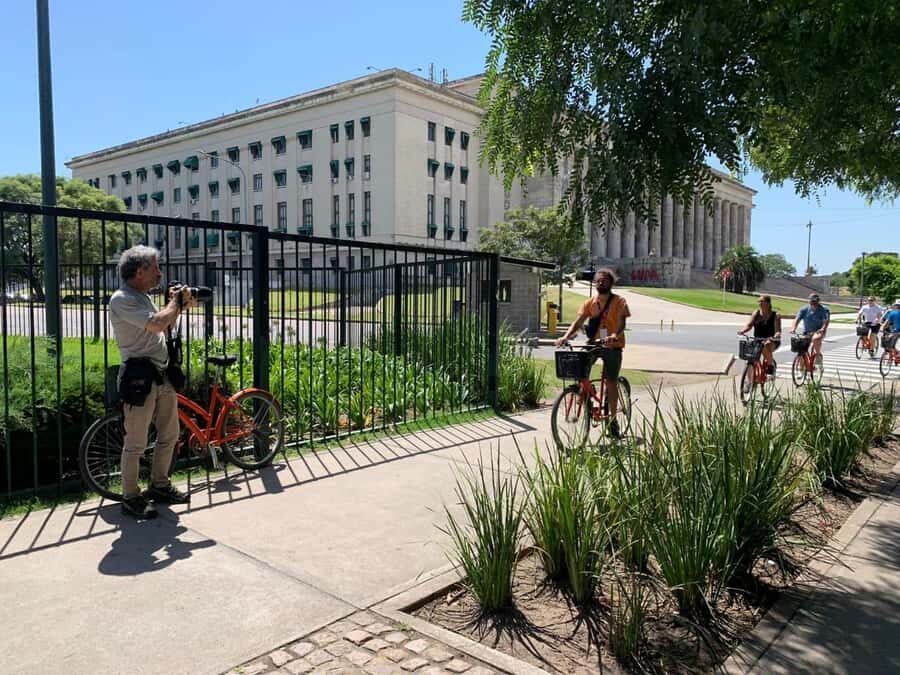
- E-bike setup for an easier city ride: you get the bike and a helmet, so you spend your energy sightseeing, not fighting traffic hills.
- Puerto Madero to old-meets-new contrast: you start with the modern port area, then work your way toward older neighborhoods.
- Floralis Genérica photo stop: a standout sculpture that’s hard to ignore and easy to frame.
- Recoleta Cemetery and Eva Perón’s final resting place: a serious stop with a big cultural weight.
- Palermo’s Rosedal and Bosques de Palermo greenery: parks and gardens that make the ride feel like a break from the streets.
- Small-group pace (up to 6): enough attention to feel guided without feeling rushed.
Getting your bearings in Buenos Aires, fast, by e-bike
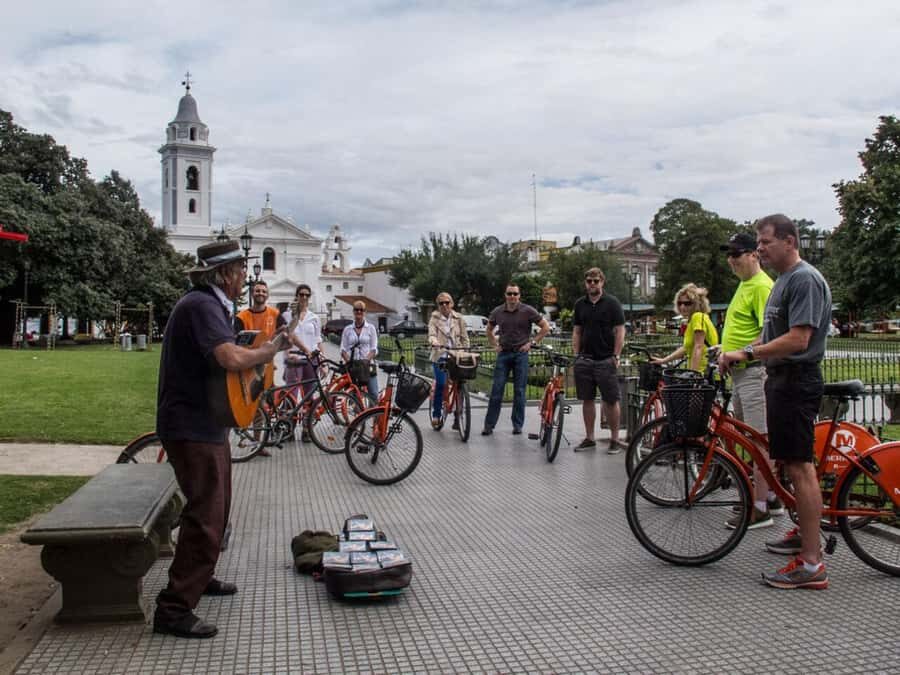
Buenos Aires is a city you can read two ways at once: through what’s on the buildings and through how the neighborhoods behave. This tour helps you do both by moving you across San Telmo, Retiro, Recoleta, and Palermo without turning your day into a bus schedule.
The starting point is Dr. José Modesto Giuffra 370 (La Bicicleta Naranja, San Telmo). From there, you head toward the northern side of the city, and the ride quickly turns into an easy rhythm of bike lane flow, landmark spotting, and short guide-led context.
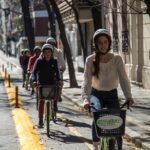
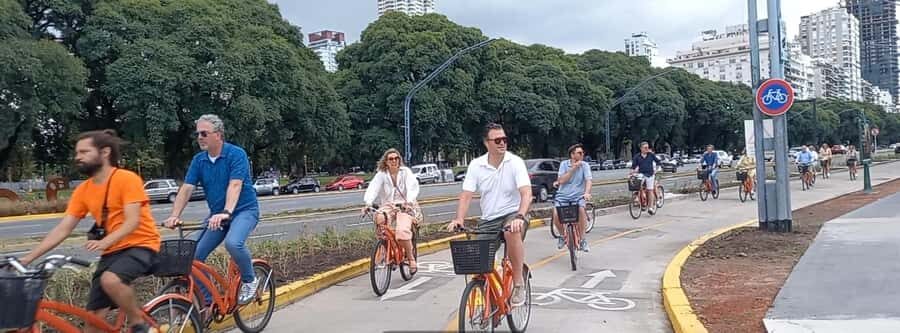
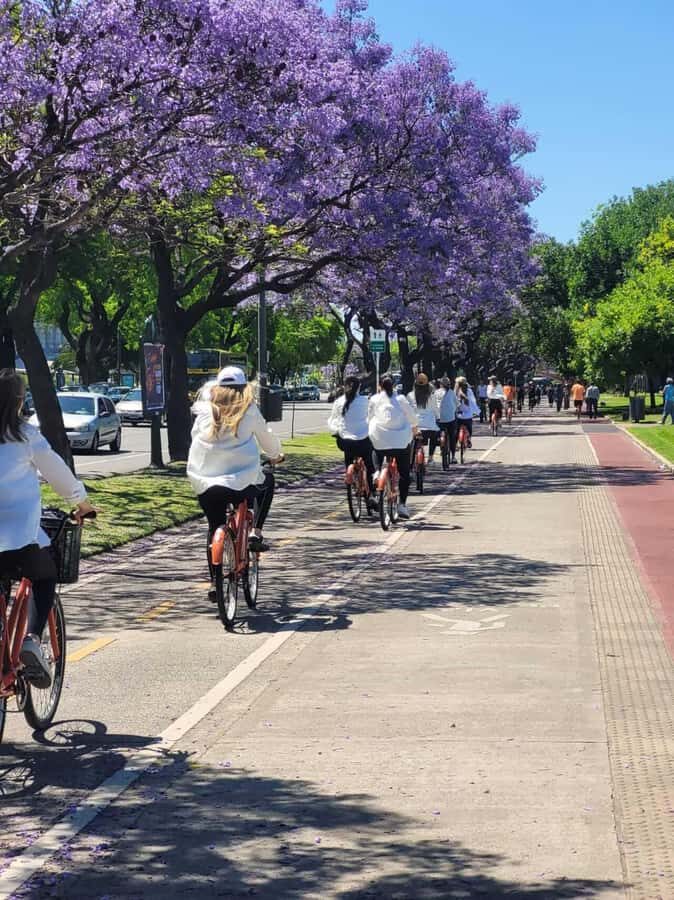
The e-bikes matter more than you’d think. A normal bike tour can feel like a fitness test by the second hour. Here, the assist keeps you in “look around” mode, which is what you want when your route includes places like Facultad de Derecho (UBA) and the sweeping open-air feel of Puerto Madero.
And because the group is limited to 6 participants, you usually get the kind of attention that helps you feel comfortable on the streets. In one ride, Barbie was praised for problem-solving when someone had bike trouble, which is exactly the kind of calm competence that makes a city tour safer and less stressful.
You can also read our reviews of more cycling tours in Buenos Aires
Puerto Madero and the modern port vibe (your quick warm-up)
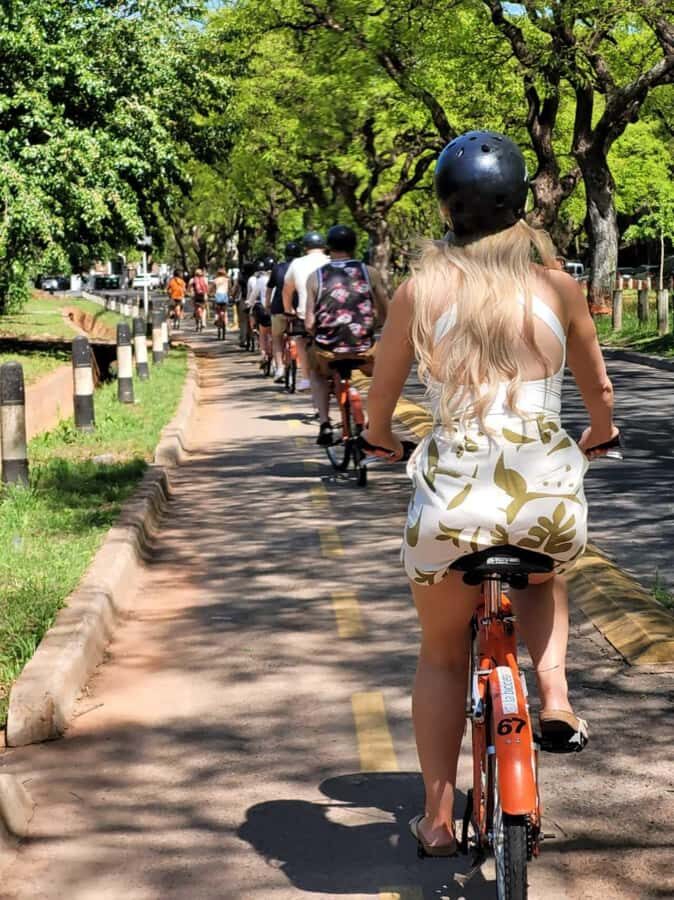
The ride kicks off with Puerto Madero for about 10 minutes. This is a useful first stop because it’s visual contrast. You go from the city’s older fabric into a cleaner, more contemporary waterfront energy.
Puerto Madero tends to make people pause without meaning to. The port area gives you a wide-open sense of space, and that helps you settle into the tour before you start stacking up bigger landmark stops.
Practical tip: use this segment to get comfortable with your bike. Check your brakes, your grip, and where your guide expects you to ride. Once you’re confident, the rest of the route feels like a sightseeing walk with wheels.
Plaza Francia and Plaza San Martín: geometry, monuments, and city scale
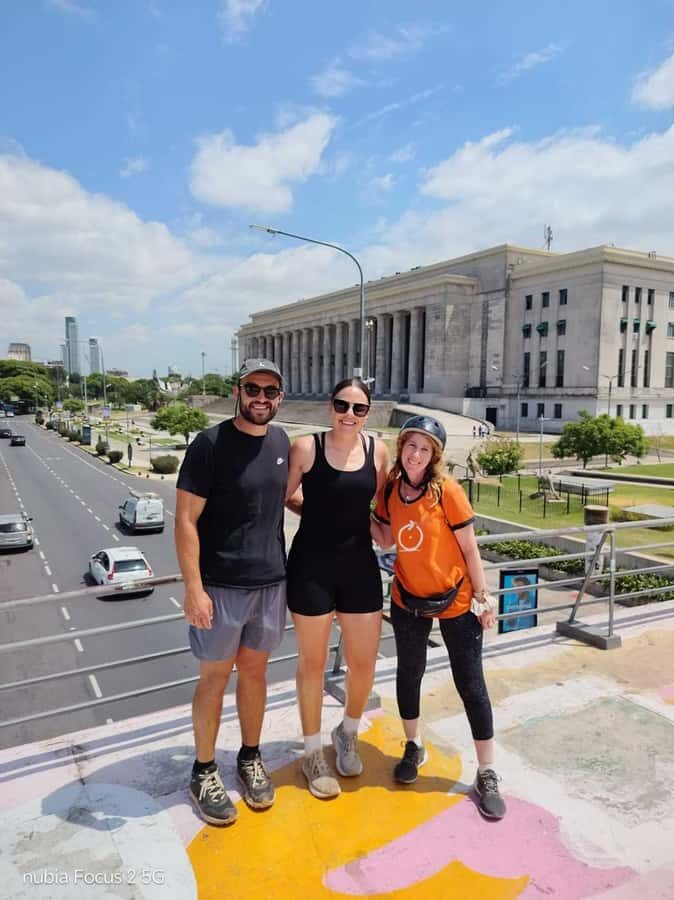
After Puerto Madero, you move to Plaza Francia and then Plaza General San Martín (10 minutes). Squares like these are not just decoration. They help you understand how Buenos Aires organizes space—wide, structured areas that let neighborhoods breathe.
Plaza General San Martín is a great moment to slow down mentally. You’ll get a clearer sense of distance before the tour threads into heavier landmark territory. It also helps that the guide is typically using these stops to set up what’s coming next.
If you’re the type who likes architecture cues, look for how buildings frame the open space. The guide explanations help you connect the shapes you see with the stories behind them.
Facultad de Derecho (UBA) and the Law School viewpoint
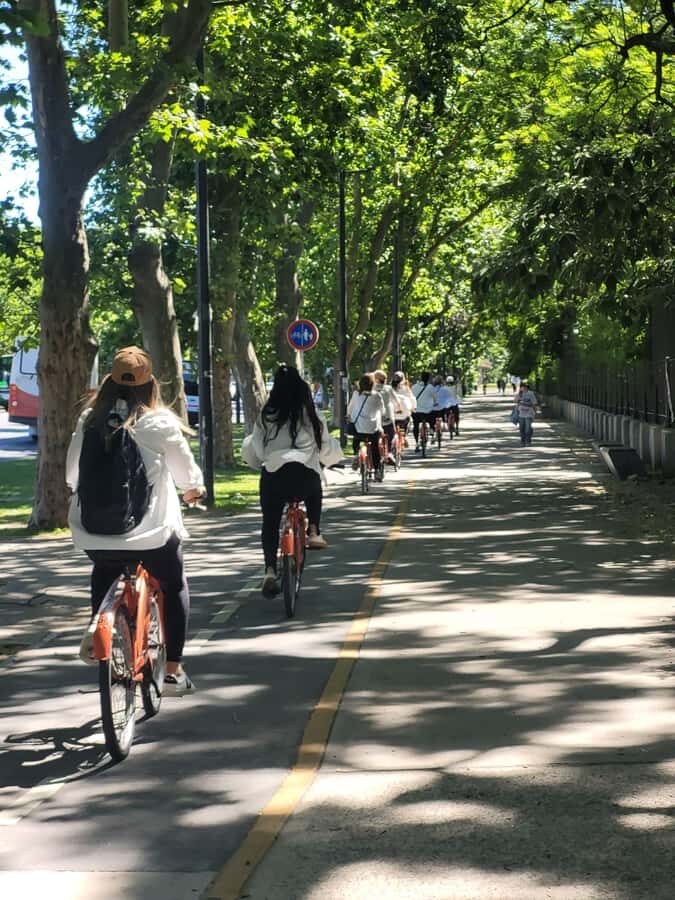
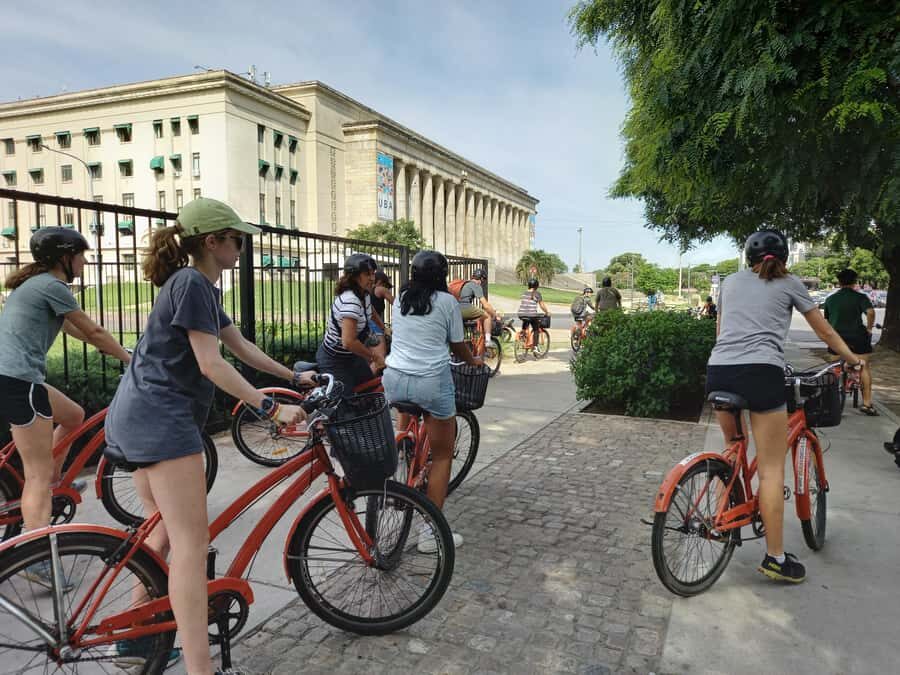
Next up is Facultad de Derecho (UBA) by bike. This is one of those stops where you’re not just seeing a building—you’re seeing an institution that shaped generations of Argentine public life.
On this route, the Law School stop works as a bridge between the city’s formal, civic side and the more cultural stops ahead. The guide’s job here is to point out what to notice quickly: where the landmark sits in the wider street grid, and why it’s a key reference point as you move toward Retiro.
If you’ve never done a neighborhood-based tour by bike before, this is a good one to start with. The stop sequence helps your brain learn the city in pieces.
Embassy of France and Floralis Genérica: where Buenos Aires turns cinematic
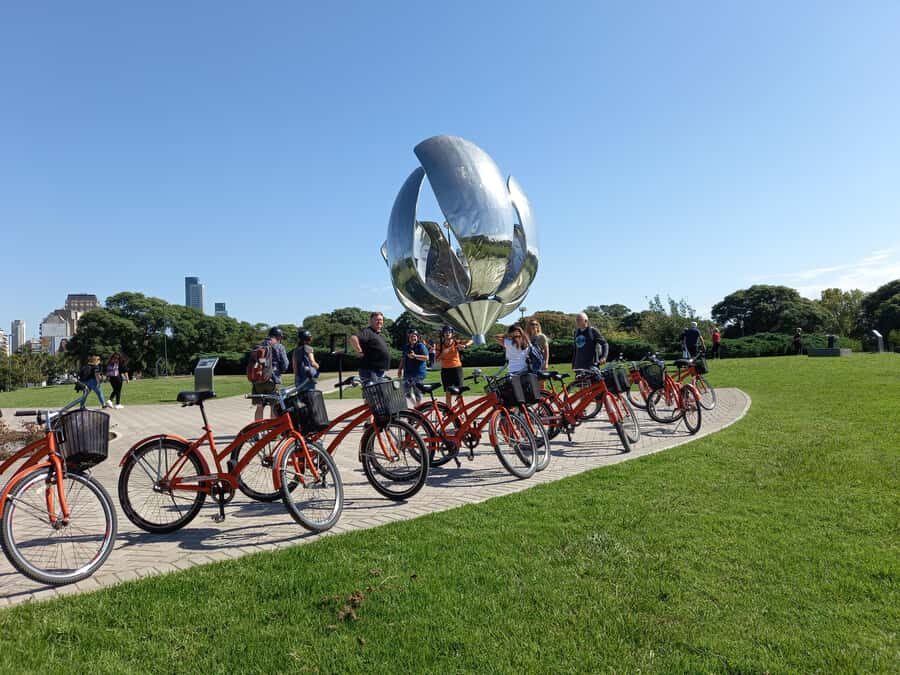
You’ll pass the Embassy of France, Buenos Aires, and then you’ll hit Floralis Genérica (about 10 minutes).
Floralis Genérica is the kind of sculpture that feels like it was designed for a movie poster. Even if you know nothing about it, the scale and the form pull you in. This is also a practical stop length: long enough for photos and a calm look, short enough that you don’t lose momentum.
What I like about including it mid-tour is pacing. You get serious institutional stops earlier, then a lighter, more visual landmark here. It keeps the day from feeling like only “look, read, repeat.”
Photo tip: if the light is harsh, step to the side. The sculpture’s angles change how it looks, and you’ll get a better sense of dimension.

Biblioteca Nacional, Fine Arts, and the culture hits you in the face
As you continue, the route includes Biblioteca Nacional Mariano Moreno (10 minutes), Instituto Nacional Sanmartiniano (10 minutes), and Museo Nacional de Bellas Artes.
These stops are valuable because they connect Buenos Aires to its intellectual side. It’s easy to treat the city like a postcard place. Stops like these remind you that Buenos Aires is also a place where ideas have been built, debated, and archived.
The National Library segment is especially good for first-time visitors because it gives you a big, grounded feeling of national identity. The fine arts museum stop does the same through art culture. And the Sanmartiniano institute ties into Argentina’s broader historical memory—one of those things you’ll notice more later when you start reading signs, monuments, and cemetery symbolism.
If you like learning quickly without getting lectured, the guides’ style is usually the right match. On past rides, guides like Flore were praised for clear explanations, and the route’s stop structure keeps information from running on too long.
Recoleta’s sophisticated charm and Eva Perón’s resting place
Then you reach Recoleta, where the mood shifts. Recoleta feels more polished, with the kind of streetscape that encourages strolling—except you’re doing it on an e-bike, so you cover more ground with less fatigue.
One of the tour’s biggest highlights is the stop at the final resting place of Eva Perón in Recoleta Cemetery. This isn’t just a landmark for photos. It’s a place that carries emotion and political weight, and the guide context helps you understand why it’s so important to Argentine history.
Here’s the balance: you’ll get enough explanation to make the site feel meaningful, but you’re not stuck in an all-day museum setting. The bike tour keeps moving, so the cemetery stop lands as a strong moment, not as another “checklist item.”
If you’re sensitive to heavy themes, just know that this part of the route is reflective by nature. You can treat it as a pause inside a busy day.
Palermo’s green break: Rosedal, Bosques de Palermo, and Palermo Chico
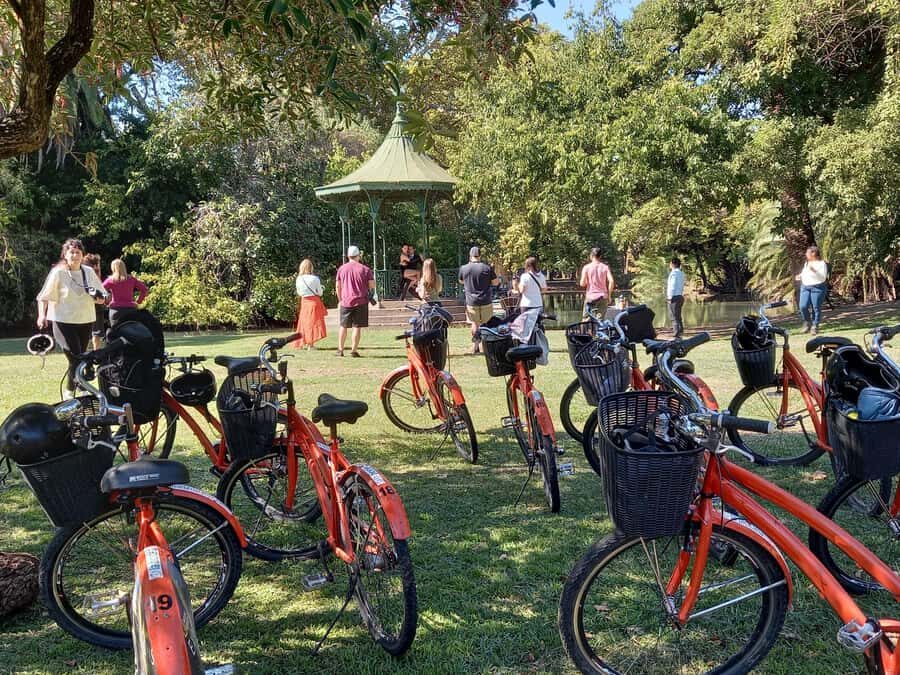
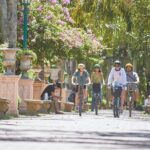
After Recoleta, the ride opens up into Palermo, including Bosques de Palermo and El Rosedal Garden (about 20 minutes). This is your unwind section.
Palermo’s greenery does two things for you:
1) it cools the day in a way that feels real, and
2) it breaks the “constant landmark” feeling with slower scenery.
Rosedal is a standout because it gives you a structured garden look, and the 20-minute stop is long enough to walk a bit, take photos, and not feel like you’re being herded.
You also pass Palermo Chico, known for its elegant residences. This segment is more about atmosphere: you’re seeing how the city’s wealth and architecture show up in streets and setbacks. The guide’s anecdotes help you connect the houses and streets to the people and stories tied to the neighborhood.
If you want a tour where you get both city intensity and a real green break, this is the part that earns it.
National monuments and memory stops: Pilar Church and the Malvinas Cenotaph
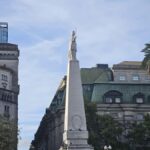
The route includes stops connected to Buenos Aires’ religious and national memory, including the Pilar Church and a cenotaph commemorating those who fell in the Malvinas conflict.
These are meaningful because they show how the city keeps history in public space. Even if you don’t read every plaque, the guide points you toward what matters, so your understanding grows beyond surface-level seeing.
Also, these stops work well in a bike tour format. You can appreciate the architecture and symbolism without turning the day into a long walking itinerary. You pause, you learn, you move on.
Guides are the difference: what the best days feel like
The tour’s rating is high for a reason: the guide experience tends to drive the quality. People have specifically praised guides like Chan, Nan, Flore, Ikki, and Barbie for mixing history with day-to-day context.
Here’s what that looks like in practice:
- you get quick explanations that make the landmark easier to place in the city,
- you feel safe on the route, and
- you don’t just stop and look—you stop and understand.
You’ll also appreciate that the group is small. If you’re new to city cycling, that matters. You’re less likely to get lost in the crowd, and your guide can keep an eye on the rhythm of the ride.
Price and value: what you actually get for $48
At $48 per person for 210 minutes, you’re paying for a few key things that add up fast if you’d do them yourself: an e-bike, a helmet, a bilingual live guide, and a water bottle. You’re also paying for the route design, which strings together landmarks efficiently so you don’t waste time figuring out transit and logistics.
This is one of those prices that makes sense for Buenos Aires, especially if you want to see a lot without exhausting yourself. If your alternative is hiring a bike rental and trying to follow a route on your own, the guided context is where the value really shows.
The only missing piece is snacks. That’s not a deal-breaker, but it does mean you should plan ahead if you know you’ll want food midday.
What to bring so the 3.5 hours feels easy
You’ll move through sunny streets and open plazas, so pack like it’s a walking day with a bike attached. Bring:
- a sun hat
- sunscreen
- passport or ID (a copy is accepted)
Also, since snacks aren’t included, consider bringing a small personal snack. The tour provides a water bottle, which helps, but it’s still smarter to control your own hunger timing.
Who this tour is best for
This Buenos Aires North bike tour fits best if you want:
- a first-time orientation to northern neighborhoods,
- a good blend of iconic landmarks and quieter, scenic breaks in Palermo,
- a guided experience in English or Spanish,
- and a route that doesn’t beat you up physically thanks to e-bike support.
If you love photography, you’ll enjoy Floralis Genérica and the Rosedal garden stop. If you love history, Recoleta Cemetery and the public memorial sites bring real weight. If you just want an easy win that helps you feel more confident in the city, the small-group format and guided flow do that job.
Should you book the Buenos Aires North e-bike tour?
I’d book it if you want a practical way to cover Puerto Madero, Recoleta, and Palermo in one go without turning the day into a workout. The price is fair for what’s included, and the small group plus bilingual guiding makes it feel personal rather than rushed.
I’d think twice only if you’re very sensitive to sitting in the sun for a while or you need snacks during tours—because the tour doesn’t include them. If that’s you, just plan a quick food plan of your own.
If you want a city day that mixes architecture, parks, and real Argentine stories, this route is a strong pick.