REVIEW · BUENOS AIRES
La Boca Out off the Beaten Track
Book on GetYourGuide →Operated by Paola De Luca tuguiaenba · Bookable on GetYourGuide
La Boca feels real when you skip the postcards. I love the way this tour turns Boca murals into stories and gets you inside the conventillo instead of just pointing at colors. One thing to consider: it is not suitable for people over 95, and the focus is on walking the neighborhood streets.
What makes it stand out in the best way is the mix of art, daily life, and the barrio’s hard past—harbor views, an immigrant train station area, the first Volunteer Fire Department in Argentina, and then a finish at Caminito for tango and fileteado, plus coffee in a historic cafe from 1882.
In This Review
- Key things to know before you go
- Why this La Boca tour works better than the typical stroll
- Getting your bearings: meeting point and tour tempo
- Harbor, warehouses, and the immigrant train-station area
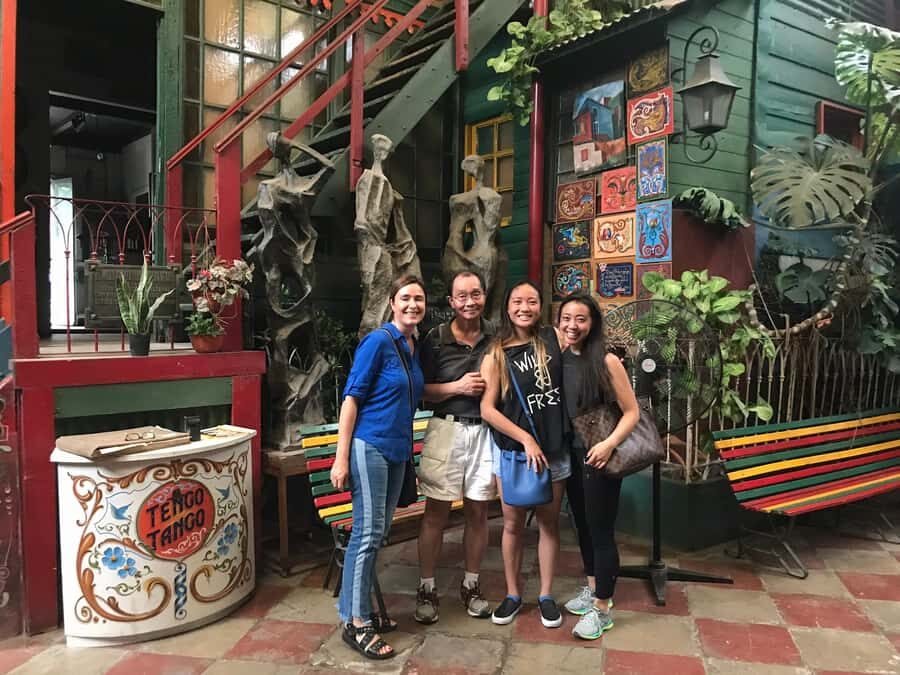
- Inside the conventillo: corrugated metal, immigrants, and today’s cultural life
- The first Volunteer Firefighter Station in Argentina
- Murals in La Boca: art that explains social issues
- Old buildings tied to anarchist newspapers and early bordellos
- Football and religion: Boca Juniors and the Salesian Church as refuges
- Crawling toward Caminito: tango energy and fileteado details
- The coffee stop in an old cafe from 1882
- Optional add-on: the Museum of Fine Arts of La Boca and Quinquela Martín
- Price and value: what $35 really buys you
- Who this tour suits best (and who should skip it)
- Practical tips to make the walk easier
- Should you book La Boca Out off the Beaten Track?
- FAQ
- How long is the tour?
- Where does the tour start and end?
- How much does it cost?
- Is the tour offered in English and Spanish?
- What is included in the price?
- Is food included?
- Do I need an extra ticket for the Museum of Fine Arts of La Boca?
- Is it a small group?
- What items are not allowed?
- Who might not be suitable for this tour?
Key things to know before you go
- Small-group feel (up to 10) means you can ask questions and actually talk with Paola.
- Paola De Luca’s local perspective comes from growing up as a neighbor and telling La Boca like a lived-in place.
- Two interiors with real context: a corrugated conventillo and the Volunteer Firefighter Station.
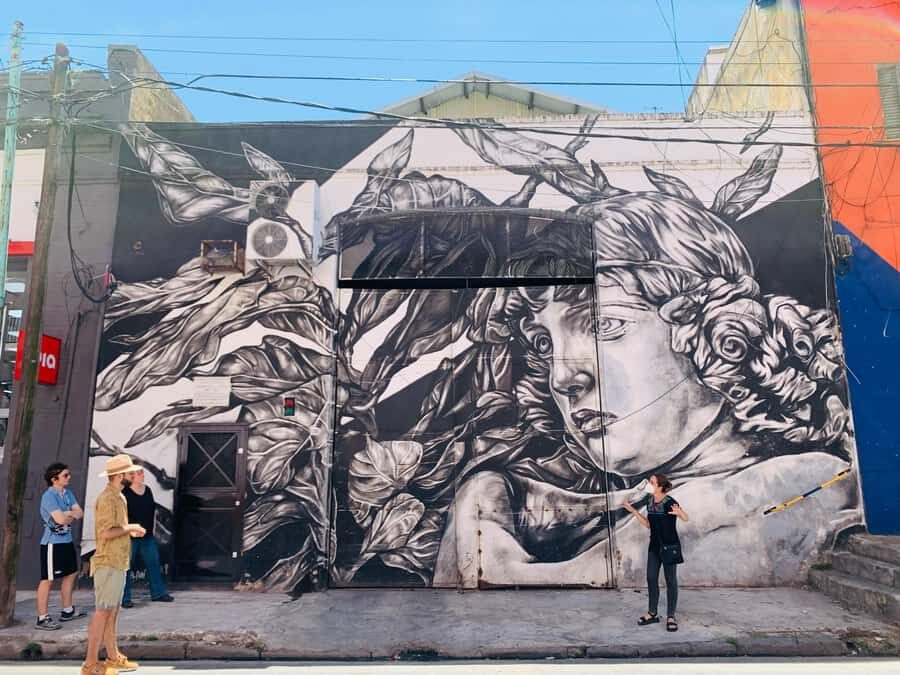
- Street art that has a point: murals tied to social issues, not just pretty walls.
- Caminito is the payoff: tango energy and fileteado details at the end of the walk.
- Coffee is part of the experience: a stop at a notable cafe dating to 1882.
Why this La Boca tour works better than the typical stroll
La Boca is famous for a reason. But if all you do is chase the classic postcard corners, you miss the neighborhood’s why. This tour is built to give you the missing pieces fast.
The guide, Paola De Luca, brings La Boca down to street level. She grew up there, so she explains how the barrio formed—immigration, work, faith, clubs, and the social problems that showed up on walls. In practice, it means you do not just see murals. You understand what shaped them, and why the neighborhood keeps telling its story in paint.
I also like the way the tour mixes art with places that served actual purposes. You get inside the conventillo—these corrugated metal tenement houses that once sheltered immigrants—and you also visit the Volunteer Fire Department, described as the first created in all of Argentina. That blend of culture plus community is the difference between sightseeing and feeling grounded.
You can also read our reviews of more tours and experiences in Buenos Aires.

Getting your bearings: meeting point and tour tempo
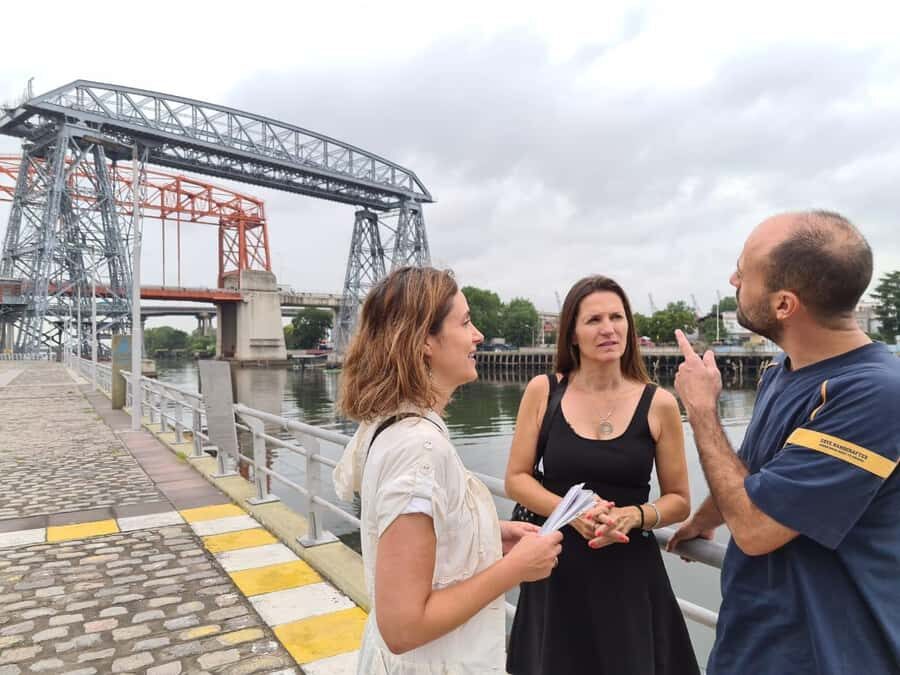
You start at the corner of Martín Rodríguez and Avenida Don Pedro de Mendoza, in La Boca. The tour runs about 150 minutes total, and you’ll keep moving through the neighborhood on foot.
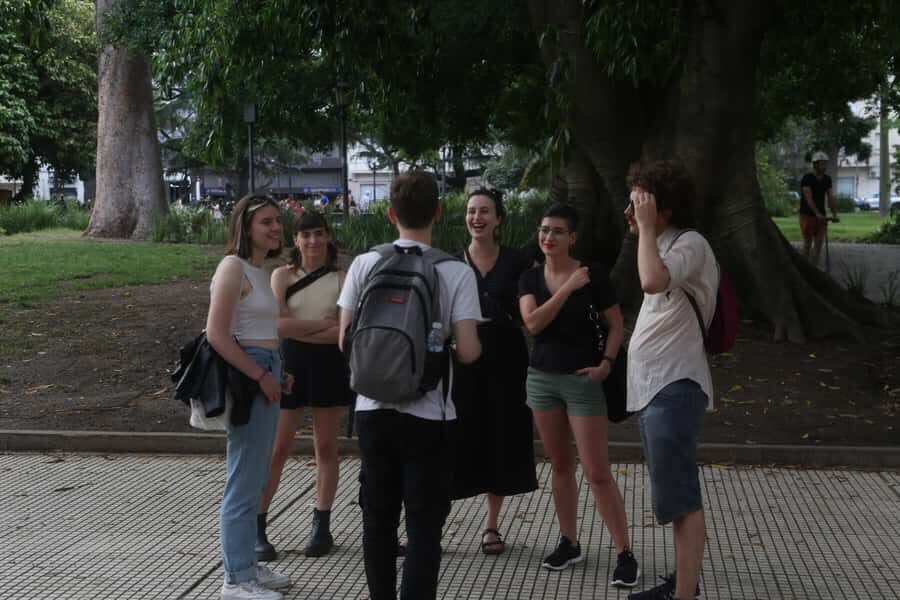
It’s a live guided tour in Spanish and English, and it’s limited to 10 participants. That size matters here. La Boca can get busy around the most photographed areas, and a small group keeps the experience from turning into a traffic jam.
Also, keep in mind you’re walking through active streets. It’s not a sit-and-stare museum day. The guide is attentive to your comfort, including during intense heat, so plan to dress for warmth and sun exposure.
Harbor, warehouses, and the immigrant train-station area
Early on, you head toward the harbor and the warehouse zone, then toward the picturesque train station area connected with waves of immigrants arriving. This is the part that sets the tone.
La Boca’s look did not come from nowhere. It grew from labor and arrivals—people stepping off trains, looking for work, and trying to build a life with limited resources. When you connect that backdrop to what you’ll see later—street art, tenements, mutual aid, and religious refuges—the neighborhood starts making sense in a way photos alone can’t do.
This section is also where you get your first wide view of La Boca’s maritime feel. Even if you’ve been to Buenos Aires before, this harbor-side angle is a reminder that the city’s identity was shaped by the sea and the docks.
Inside the conventillo: corrugated metal, immigrants, and today’s cultural life
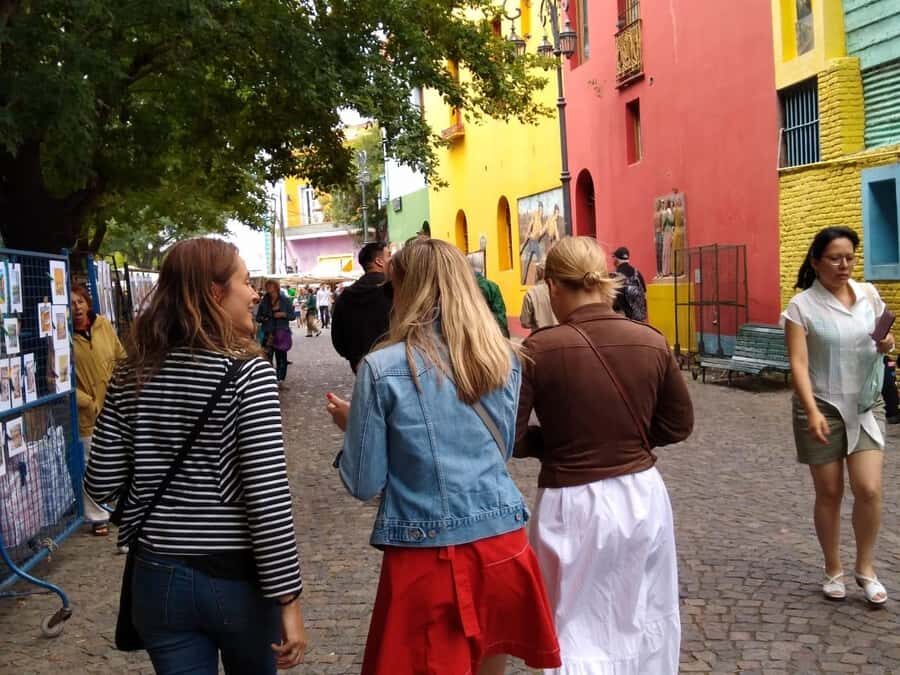
Next you’ll enter a conventillo—a corrugated metal-clad tenement house. These buildings were created to shelter immigrants when Buenos Aires was absorbing newcomers at a rapid pace.
What I like here is the continuity. The conventillo you visit used to house people looking for safety and community, and it still has a cultural role today. Now it hosts a cultural center. So you’re not only looking at history as an object. You’re walking into the same kind of space where people once lived and watched how culture took root in tight quarters.
Expect a more grounded, human experience than you’d get from outside-only views. You’ll see how architecture and daily life connect. And since the tour is small, you’ll have time to ask Paola questions as you go—she links details directly to La Boca’s identity.
The first Volunteer Firefighter Station in Argentina
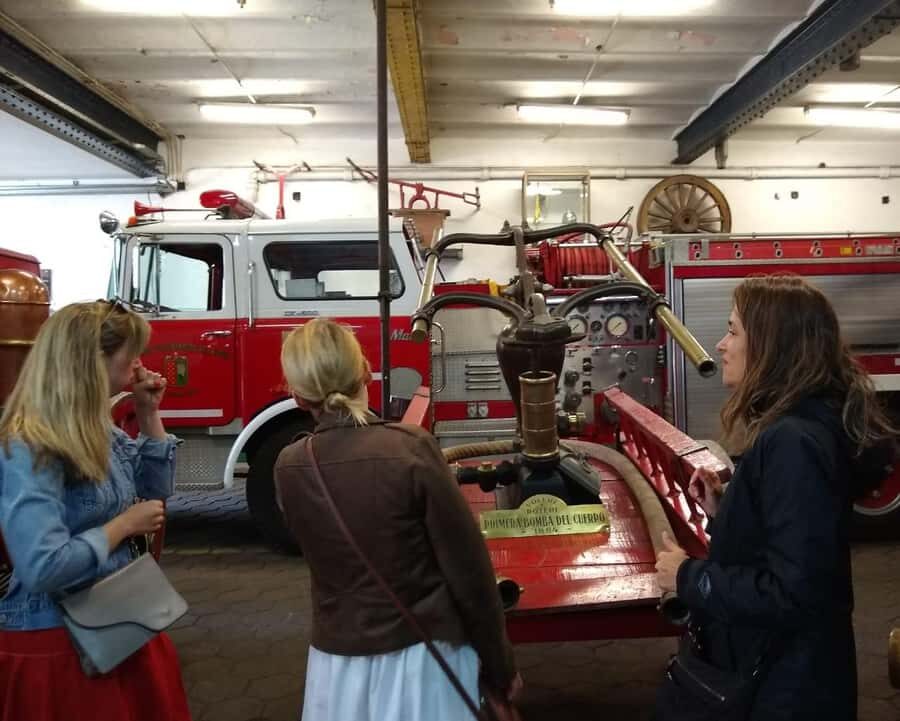
One of the most practical, surprising stops is the Volunteer Fire Department. The tour frames it as the first Volunteer Fire Station created in Argentina.
Why it matters: mutual aid organizations are often the backbone of neighborhoods that deal with big problems—fires, poverty, instability, and weak infrastructure. In La Boca, community organizations weren’t just symbolic. They provided real protection and real support.
Visiting the station gives you a different lens on the barrio. Instead of only focusing on the colorful surface, you see how residents organized to manage risk and look after one another. It’s an easy stop to underestimate until you’re standing in the place and realizing how essential it would have been.
The tour includes entry into this station, so you do not have to hunt down extra tickets or figure out separate timing.
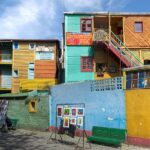
Murals in La Boca: art that explains social issues
After you understand where people arrived and how they survived, the murals land differently.
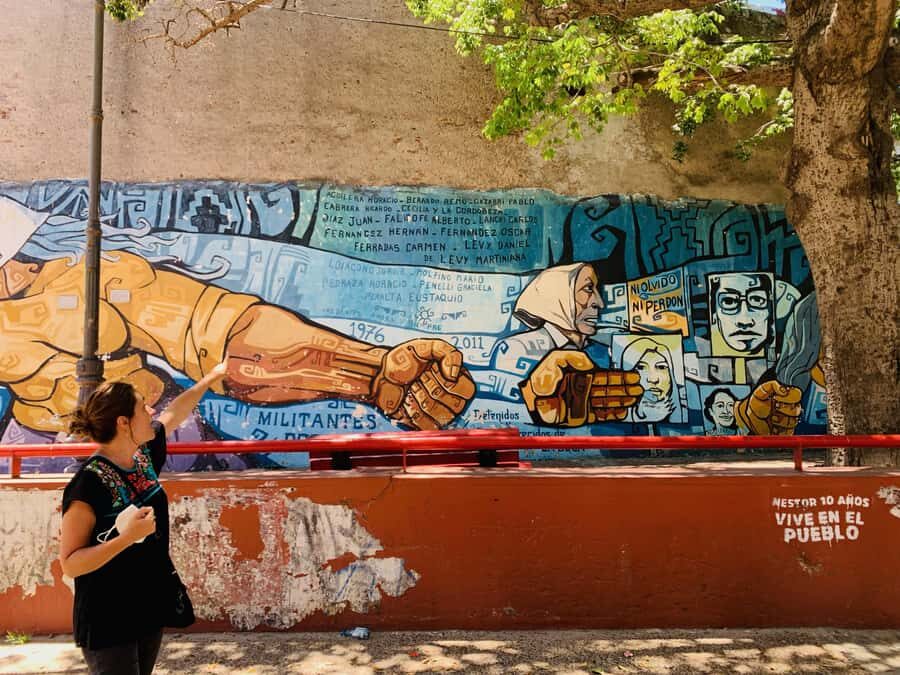
You’ll walk past incredible murals and streets that are not much visited. Paola focuses on how Boca mural art reflects different social issues. That means you’re guided to read the walls like documents—expressions of struggle, community identity, and local concerns.
If you’ve ever looked at street art and thought it was just decoration, this is the antidote. The goal isn’t to give you a slow lecture. It’s to give you the right context so the images become meaningful.
And it’s not just about the murals on their own. The tour connects them to the neighborhood’s past—where newspapers circulated, where people gathered, and where the community sought refuge.
Old buildings tied to anarchist newspapers and early bordellos
La Boca also has layers tied to the early 20th century. On this walk, you’ll see old buildings that hosted anarchist newspapers and bordellos in that period.
I like including this kind of detail because it stops La Boca from being sanitized into a single vibe. The neighborhood has always held contradictions: creativity and survival, hope and exploitation, community and hardship.
This part of the tour gives you permission to see La Boca as it is—messy, human, and shaped by people living close together with limited choices. It’s not meant to shock you. It’s meant to explain the social world that helped create the barrio’s voice.
Football and religion: Boca Juniors and the Salesian Church as refuges
Two local icons get their time: football and religion.
You’ll see the Boca Juniors stadium from the outside. It’s not an indoor visit here, but seeing it in context helps you understand why the club feels like more than sports. In many parts of La Boca, football is a language for belonging.
Then you’ll look at the Salesian Church, which the tour describes as having worked as refuges for rootless communities. That’s another key theme: La Boca is a place where people sought safety where they could find it—through community systems, through institutions, and through faith.
When you connect the church and the club with the earlier stops—immigrant arrivals, conventillos, and mutual aid—it makes sense why La Boca residents talk about identity with emotion. It wasn’t invented for tourists. It was built for real life.
Crawling toward Caminito: tango energy and fileteado details
You finish the experience in Caminito. This is where the tour leans into performance and visual style—tango and fileteado in every corner.
Caminito is the familiar face of La Boca, but with the context from earlier, it feels different. Instead of walking in and thinking it’s just an open-air set, you can now see it as the neighborhood’s public stage. The walls, the color, the references to daily life and social identity—they all connect back to what you saw before.
You end the tour here, so it’s a good point to keep your bearings for the rest of your day in Buenos Aires. If you want to explore more, you’ll understand what you’re looking at and why.
The coffee stop in an old cafe from 1882
One of the more pleasant parts of the day is the coffee. The tour includes coffee at an old cafe dating back to 1882, and it fits naturally at the end.
After walking and taking in a lot of context, coffee is how you let the day settle. It also gives you a chance to talk with Paola one last time and ask a few follow-up questions while the neighborhood is still fresh in your mind.
This is included in the price, which helps the tour feel like a complete experience instead of a series of separate add-ons.
Optional add-on: the Museum of Fine Arts of La Boca and Quinquela Martín
If you want to go further, the Museum of Fine Arts of La Boca is mentioned as an option. Part of the building was the home of Benito Quinquela Martín.
Just know this: museum ticket entrance is not included. So if you’re planning to do both, budget extra time and money. If you’re short on time, I’d treat this museum as a bonus rather than something you count on during the main tour window.
Price and value: what $35 really buys you
At $35 per person for about 150 minutes, this tour isn’t trying to sell you only “views.” You’re paying for guided interpretation and two included entries: the Conventillo and the Volunteer Firefighter Station, plus coffee.
That’s the value equation. If you were to do only outdoor walking in La Boca, it could be cheaper. But the interior access and the context take it into a different category. You’re not just seeing La Boca. You’re learning how it formed and what residents built to survive and belong.
Two small cautions on value:
- Food is not included, so plan to eat separately before or after.
- The tour is focused on walking streets and community spaces, so it’s not built for people who need frequent long sitting breaks.
Who this tour suits best (and who should skip it)
This works best if you:
- Like history, but you want it connected to real places you can walk into.
- Care about art with meaning, not only art as a photo backdrop.
- Enjoy small-group guiding and conversation.
It’s less ideal if:
- You’re looking for a mostly relaxed, stroller-friendly outing.
- You need electric wheelchair access. Electric wheelchairs are listed as not allowed.
- You’re over 95 years old, which the activity notes as a limitation.
- You plan to wear jewelry. Jewelry is listed as not allowed.
If you fall into the middle—able to walk a neighborhood loop and curious about why La Boca looks the way it does—you’re a perfect match.
Practical tips to make the walk easier
Because you’re moving through streets and stopping in community buildings, keep your plan simple:
- Wear comfortable walking shoes. You’ll cover a neighborhood route.
- Bring light layers and something to deal with sun. One review experience noted the guide stayed attentive during intense heat.
- Leave jewelry at home. It’s not allowed on this tour.
- Skip alcohol and recreational drugs. They’re listed as not allowed.
And if you’re the type who likes to photograph, you’ll want to do it with intention: pause for the mural context, not just the shot.
Should you book La Boca Out off the Beaten Track?
I’d book it if you want La Boca with context. This isn’t about ticking off famous spots. It’s about how the neighborhood formed—through immigrant arrivals, conventillo life, mutual aid, murals tied to social issues, and the emotional pull of football and faith.
If your idea of La Boca is mostly one or two photo stops and then you’re done, you might feel this is more structured than you want. But if you like to understand what you’re seeing, the combination of Paola De Luca’s storytelling, the inside visits, and the coffee finish in a cafe from 1882 makes it a solid value.
FAQ
How long is the tour?
The duration is 150 minutes.
Where does the tour start and end?
It starts at the corner of Martín Rodríguez and Avenida Don Pedro de Mendoza in La Boca, and it ends in Caminito.
How much does it cost?
The price is $35 per person.
Is the tour offered in English and Spanish?
Yes. The live guide works in Spanish and English.
What is included in the price?
Entrance to the Firefighter Station and the Conventillo are included, and coffee is included.
Is food included?
No. Food is not included.
Do I need an extra ticket for the Museum of Fine Arts of La Boca?
Yes. If you want to visit the Quinquela Martín museum, the ticket entrance is not included.
Is it a small group?
Yes. The group is limited to 10 participants.
What items are not allowed?
Jewelry and alcohol and drugs are not allowed. Electric wheelchairs are also listed as not allowed.
Who might not be suitable for this tour?
The activity notes it is not suitable for people over 95 years.