REVIEW · BUENOS AIRES
Montevideo Private Full Day Tour from Buenos Aires
Book on Viator →Operated by Signature Tours · Bookable on Viator
Crossing to Uruguay is the fun part, too. This private day trip takes you from Buenos Aires to Montevideo by ferry, then strings together neighborhoods, viewpoints, and major landmarks with a professional guide keeping the story straight. I like that you’re not just hopping from photo spot to photo spot—you get context as you walk cobblestone streets and pause at meaningful places.
Two things I really like: the guided commentary that connects politics, culture, and everyday life, and the way the route mixes classic sights with the city’s hangout spaces like the Rambla waterfront. You also get hotel pickup and drop-off plus ferry tickets, which cuts out a lot of stress for a long day.
One drawback to think about: this is an 18-hour day. Even when everything runs smoothly, you’ll be moving early, walking some, and spending serious time on the water and in transit. If you dislike tight schedules or long travel days, plan carefully.
In This Review
- Key things that make this tour worth your attention
- Ferry Crossing First: Starting Montevideo the Right Way
- Mirador Panorámico and the Rambla: Your Best Free Views
- Plaza Virgilio and Plaza de la Armada: The Meaning Behind the Waterfront
- Ciudad Vieja on Foot: Colonial and Baroque Fronts That Reward Slow Looking
- Palacio Legislativo: Neo-Classical Architecture With Greek-Inspired Presence
- Carrasco and Batlle Park: Where Montevideo Gets More Residential
- Lunch Break and Mercado Agrícola (MAM): Eat Like You Mean It
- Logistics and Timing: A Long Day That Can Still Feel Smooth
- Price and Value: Is $545 Worth One Long Day?
- Should You Book Montevideo From Buenos Aires Like This?
- FAQ
- What time does the tour start from Buenos Aires?
- How long is the Montevideo private full-day tour?
- What’s included in the price?
- Is lunch included?
- Do I need a passport for this day trip?
- What if I miss the tour or need to cancel?
Key things that make this tour worth your attention
- Rio de la Plata ferry crossing with big-water views before you even start sightseeing
- Mirador Panorámico (about 80 meters high) for a strong first look at the city
- Ciudad Vieja + Palacio Legislativo packed into one day with architecture time for your eyes
- Plaza Virgilio and the Plaza de la Armada sculpture stop tied to maritime memory
- Carrasco (near Avenida Arocena) for upscale neighborhood strolling and river views
- Montevideo Mercado Agrícola (MAM) for food-market browsing without needing a ticket
Ferry Crossing First: Starting Montevideo the Right Way
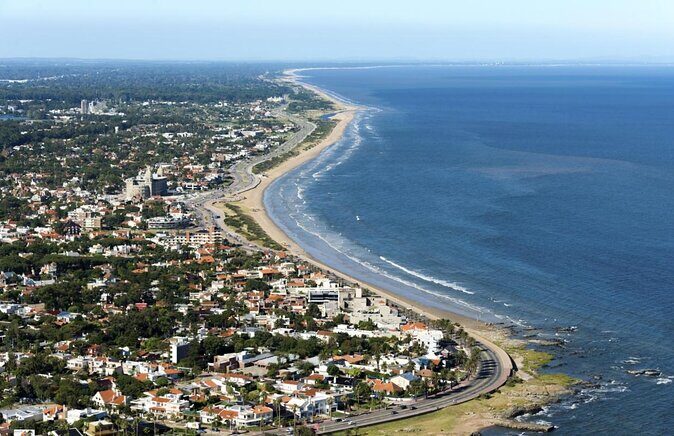
The day starts early, around 6:00 am, with hotel pickup from Buenos Aires. You head to the port, then board the ferry to Montevideo. The crossing is part transportation and part preview—this stretch of water frames the day, and once you’re out there you can actually feel the shift from one country to the next.
On this kind of route, the value is in not having to think. The tour includes ferry tickets, so you’re not juggling schedules, maps, or ticket counters while trying to keep your day on track. In at least one case, guests reported their ferry experience included business-class tickets that helped avoid long lines, which is the sort of small comfort that matters when you’re up at dawn.
A practical note: some days have delays. I’ve seen feedback like a ferry arrival being about 30 minutes behind schedule, and when that happens it can ripple through the rest of the day. The good news is the tour pattern is designed to wait for passengers when plans slip.
Also, pack like it’s a seaside crossing. The wind can be noticeable on the water, even if Buenos Aires felt warm that morning.
You can also read our reviews of more private tours in Buenos Aires


Mirador Panorámico and the Rambla: Your Best Free Views
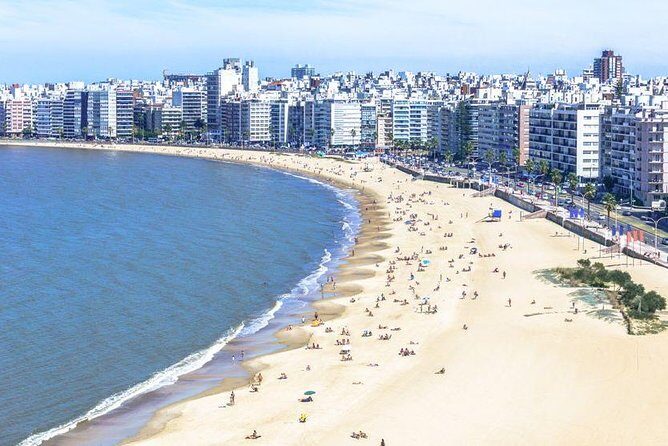
Once you arrive, the first stop sets the tone: Mirador Panorámico de Montevideo. This viewpoint sits almost 80 meters high, and it’s described as one of the city’s most complete and emblematic outlooks. It first opened in 1979, and the earlier restaurant and cafeteria spaces were used for social events. That makes the place more than a basic overlook—you’re stepping into a viewpoint with a local past.
You’ll get roughly 30 minutes here, and admission is free, so it’s a strong use of time. I like this stop because it gives your brain a map. After you look down and across, the later neighborhoods make more sense, even if you’re only seeing them for short stretches.
Then comes the real Montevideo daily-life setting: the Rambla de Montevideo. This is the waterfront boulevard lining the beaches—about 30 kilometers of walking and sports time for Montevideans. The tour gives you about 1 hour, and admission is free.
If you’re trying to understand Montevideo, this is where you do it. The city has an easy rhythm along the Rambla, and it’s not just for tourists. You’ll see the everyday side: people out walking, exercising, and using the coast as their long outdoor living room.
A quick realism check: the Rambla is great, but it’s still outdoors. Wear comfortable shoes and bring something for the breeze.
Plaza Virgilio and Plaza de la Armada: The Meaning Behind the Waterfront

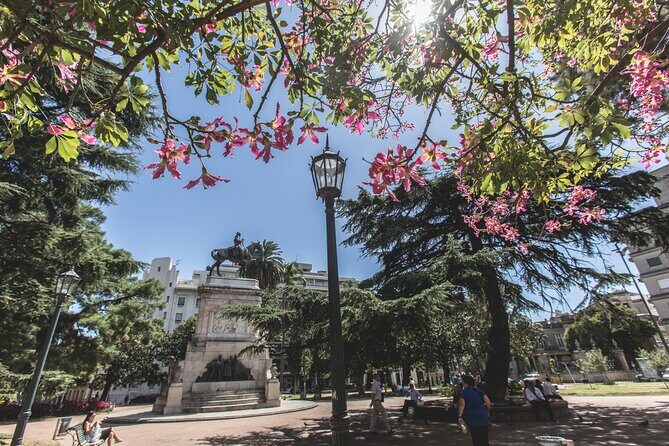
After the wide-open views, you move to a smaller but powerful stop: Plaza Virgilio. This public space is a frequent meeting point for locals from Malvinas and Punta Gorda, and it also offers panoramic sightlines over the Río de la Plata.
You’ll have about 15 minutes here, and admission is free. The highlight is the bronze sculpture (often tied to the site’s maritime theme). It depicts the struggle for life at sea using circular forms, stars, marine animals, and hands reaching toward a ship. A nearby gray granite plaque references the service act of the navy, which is why the area is commonly referred to as Plaza de la Armada.
I like this stop because it adds emotional texture to a day that could otherwise feel like a checklist of viewpoints and buildings. It’s the kind of pause that makes Montevideo feel like a real place with real memories, not just scenery.
If the sky cooperates, this is also a good kind of location for sunset-time vibes—especially since your schedule includes time later on for back-and-forth sightseeing.
Ciudad Vieja on Foot: Colonial and Baroque Fronts That Reward Slow Looking
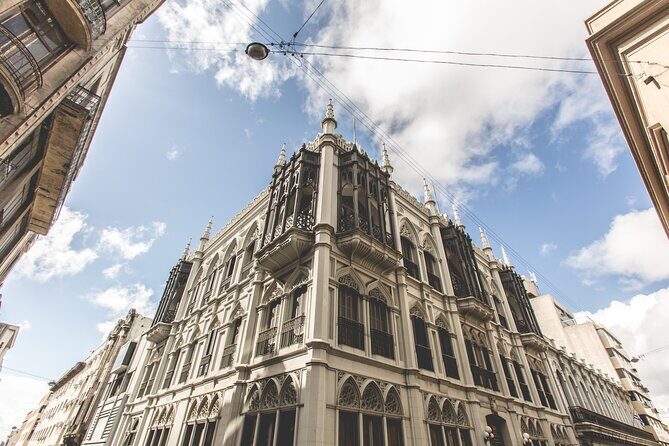
Then you shift into Ciudad Vieja, the Old City. The tour spends about 1 hour 30 minutes walking through an area known for colonial, baroque, and classic buildings with heritage value.
Here’s why this matters: in older European-style districts, the streets often carry the story in the stonework. The facades aren’t just decorative—they show how the area evolved. The Old City began as residential space, then moved toward offices and shops, and eventually became a center of financial activity.
You’ll want to look up. The fronts are described as worth long contemplation, and that tracks with how the city is experienced on foot. On this kind of walking time, I find it helps to slow down at a few buildings instead of sprinting to the next corner.
If you’re short on time in Uruguay, this is the best “sense of place” chunk of the day. You’ll feel the change from the modern waterfront to the older streets with a different kind of atmosphere.
Palacio Legislativo: Neo-Classical Architecture With Greek-Inspired Presence
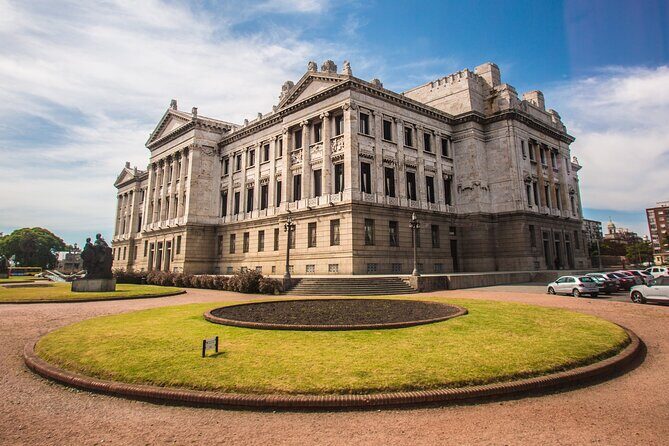
Right after the Old City, the tour includes Palacio Legislativo for about 10 minutes, admission free.
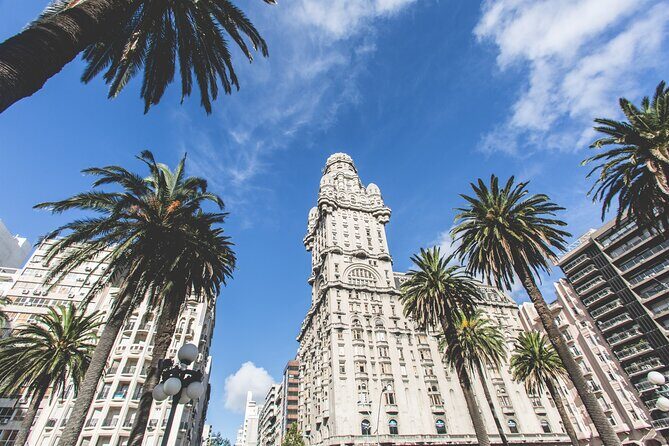
This building is the headquarters of Uruguay’s legislative power, and it’s known for balanced neo-classical architecture. The facade exterior leans into Greek inspiration, while the interiors are described as dazzling, with impressive decoration.
Ten minutes isn’t enough to appreciate every detail at a museum-level pace, but it’s long enough to absorb the overall scale and style. I like the quick hit of this stop because it gives your eye a different kind of landmark than the churches and old houses—more formal and civic.
A few more Buenos Aires tours and experiences worth a look





Carrasco and Batlle Park: Where Montevideo Gets More Residential
After the core sights, the route turns toward neighborhoods that show Montevideo’s living fabric rather than only its historic center.
One highlight is Carrasco, specifically the area around Bolonia 1722. Carrasco is described as a neighborhood about 15 kilometers from the center, southeast of it, and it’s known as the city’s more luxurious residential area. You’ll also spend time around Avenida Arocena, a river-facing corridor where shops and restaurants gather.
This stop is about 30 minutes, and there’s no stated admission ticket requirement since you’re mainly strolling. I like Carrasco because it balances the day’s older architecture with a calmer, more residential vibe, and you can see how people live when they’re not walking tourist loops.
Next is Parque Batlle, another neighborhood stop with about 30 minutes of time. It’s framed by major arteries like Italia Avenue and Rivera Avenue and centered around a large green space—the “green lung” concept. The area is also noted for very particular architecture.
Parque Batlle gives you a breather. After older streets and civic buildings, the green and neighborhood feel can reset your energy level before you head back toward the food-market area.
Lunch Break and Mercado Agrícola (MAM): Eat Like You Mean It
Lunch is on your own, so you’ll need to budget for food and drinks. This is common on day trips, but it also means you can choose what matches your day—quick and local, or sit-down and unhurried.
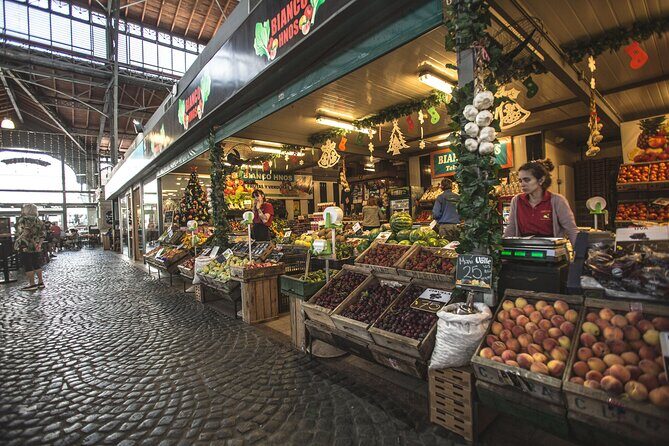
The tour then includes Mercado Agrícola Montevideo (MAM) for about 30 minutes. Admission is free. This market is described as a newer tourist spot and a family-friendly stop that works for all senses—fresh foods, the smell of produce, and that sense of commerce that feels real.
The renewed Mercado Agrícola is described as the first retail mall specialized in selling non-perishable and fresh foods, representing Montevideo’s food identity. You’ll find fruit and vegetables, fresh food, natural specialties, and a gourmet-style proposal, plus some services.
I recommend approaching Mercado Agrícola like a browse stop, not a mission. In 30 minutes, you can sample, buy a small snack, or pick up items to carry back without turning it into a full meal.
Logistics and Timing: A Long Day That Can Still Feel Smooth
This tour is private, meaning only your group participates. That matters on a day like this because you’re not waiting for strangers to shuffle from one step to the next. You also get professional guide time and hotel pickup and drop-off, which reduces the risk of you getting stranded during transfers.
The overall duration is about 18 hours, starting at 6:00 am. That length is the trade-off for doing Montevideo in one day from Buenos Aires. It’s also why you should treat the day like a marathon: plan hydration, build in snack flexibility, and keep your expectations realistic about walking and waiting.
Some important practical patterns from what I’ve seen people deal with on this kind of ferry-based itinerary:
- Connections can be chaotic at terminal level. One guest described confusion about where the team met them, and even an extra ride via bus terminal before the next ferry connection.
- Rain can change the flow. There’s feedback that the guide adjusted the route to spend less time moving in heavy rain. That’s the kind of adaptation you want to see.
- The return ferry can feel long. A few people noted the night ride felt very long, even though the ferry itself is described as smooth.
If you’re the type who hates uncertainty, your best move is to travel with a calm mindset and keep your essentials accessible: passport, a light layer, and something simple to eat during transit if needed.
Also, bring your passport. A current valid passport is required on the day of travel.
Price and Value: Is $545 Worth One Long Day?
At $545 per person, this is not a budget outing. But you are paying for a lot that would cost time (and sometimes money) to arrange yourself: hotel pickup and drop-off, ferry tickets, and a private city tour with a guide.
Here’s how I’d judge the value:
- If you’re trying to avoid ferry planning stress and want a guide to make the stops meaningful, the price can feel fair.
- If you only want a couple of photo stops, DIY might be cheaper—but you’ll lose the context and the efficient pacing.
- If your schedule is tight, remember you’re signing up for a full day. The cost buys you structure more than it buys you comfort.
One review sentiment you should take seriously: a few guests considered it expensive, especially when delays and extra transfers stretched the day. That doesn’t automatically mean the tour is bad—it means you should double-check your own tolerance for long days and terminal changes.
As for guide quality, the strongest praise in the feedback centers on guide performance and communication. Names that came up include Andrea and Manuel, Paola, Bea (Beatrice/Beatriz), Lorenzo, Pilar, Patricia, Maria, Brigitte, Fatima, and drivers like Horacio, Adrian, Fernando, and Martin. The overall theme: the guide makes the city make sense, not just show up.
If history-and-culture commentary is why you travel, that’s where your money tends to pay off.
Should You Book Montevideo From Buenos Aires Like This?
I’d book this tour if you fit any of these:
- You want Montevideo in one day and you’d rather spend your energy on the city than on planning ferries and meeting points.
- You like walking city streets with a guide who connects architecture, culture, and local life.
- You’re okay with an early start and a very long return day.
I’d think twice if:
- You hate long transit days, even when the touring is good.
- Your tolerance for schedule surprises is low. Ferry days can run behind, and terminal changes can add stress.
- You only want minimal walking and maximum free time. Lunch is also not included, so you’ll still handle food decisions yourself.
One more thing: this experience is non-refundable and can’t be changed. So it’s smart to book only when your dates are solid.
If you want a structured, guided way to see Montevideo’s key neighborhoods and waterfront in limited time, this private ferry-and-city combo is a strong match.
FAQ
What time does the tour start from Buenos Aires?
The meeting time is 6:00 am, with hotel pickup and transportation to the ferry.
How long is the Montevideo private full-day tour?
It runs for about 18 hours (approx.), from the early morning start to the late return.
What’s included in the price?
Included are a professional guide, hotel pick-up and drop-off, ferry tickets, and a Montevideo city tour.
Is lunch included?
No. Food and drinks are not included. Lunch is at your own expense.
Do I need a passport for this day trip?
Yes. A current valid passport is required on the day of travel.
What if I miss the tour or need to cancel?
This experience is non-refundable and cannot be changed. Refunds are not issued if you miss the tour due to late or non-arrival of a cruise ship.