REVIEW · USHUAIA
Tierra del Fuego Park & Train Tour for Cruisers (no tickets)
Book on GetYourGuide →Operated by Yellow Penguin · Bookable on GetYourGuide
The ride from Ushuaia’s port is like time travel south. You get the End of the World Train plus big-name Patagonia stops that most people only see from brochures.
I love how the train section connects prison history with the Yámana presence you can still spot along the route. I also really like the way the park day keeps switching from forests to bays to viewpoint panoramas.
One thing to consider: the tour is advertised as no tickets, and you’ll likely need to budget time and money for Tierra del Fuego National Park entrance and the End of the World Train tickets separately. There’s also some conflicting accessibility info you should double-check before you go.
In This Review
- Key moments worth marking on your map
- Why this tour starts at the Ushuaia cruise dock
- The End of the World Train: what you’re really paying for
- A note on “no tickets”
- Train to minibus: a practical flow for a busy cruise day
- Entering Tierra del Fuego National Park without feeling rushed
- What you should know about walking
- Lapataia Bay and the Route 3 End of the World sign
- Laguna Verde and Condor Hill: views with a border in mind
- Lake Roca: the postcard stop that still feels real
- Zaratiegui Cove: Round Island and the calm at the end
- Price and logistics: where the real value sits
- Guides, language, and how to get the best experience
- What to bring for Patagonia weather and a photo-filled day
- Who this tour is best for (and who should rethink it)
- Should you book this Tierra del Fuego Park & Train Tour?
Key moments worth marking on your map
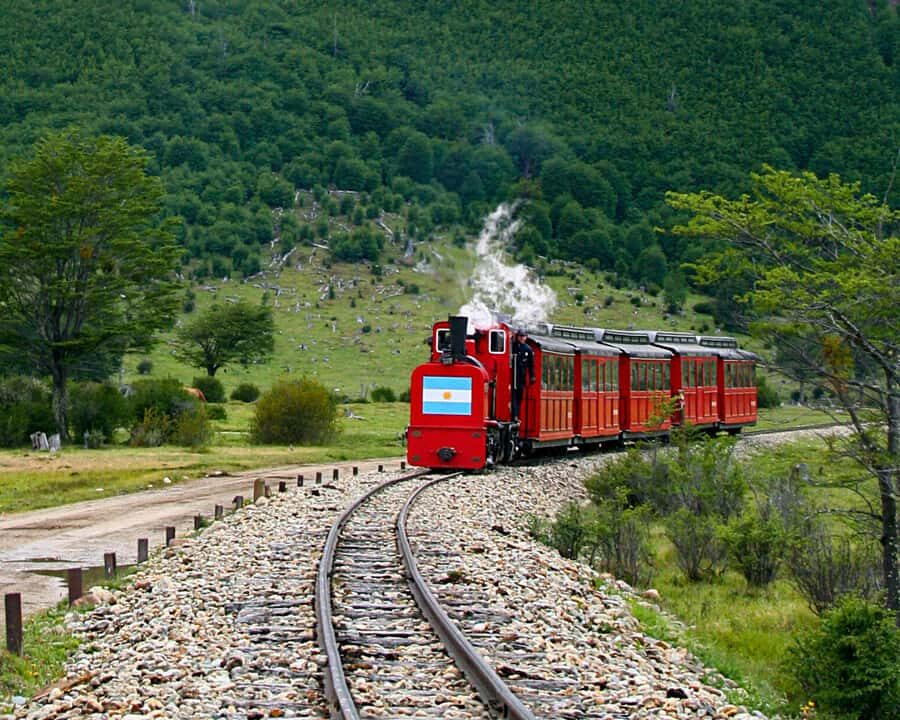
- Last 7 kilometers on the historic End of the World Train, recreated for the prisoners’ route to Mount Susana
- Lapataia Bay and the Route 3 End of the World sign, where the Pan-American Highway concept ends
- Fuegian subantarctic forests across 63,000 hectares, with species you can actually name and spot
- Condor Hill and Laguna Verde views, including a Chile-border perspective from the bus-friendly stops
- Zaratiegui Cove with Round Island and the End of the World Post Office viewed from outside (temporarily closed)
Why this tour starts at the Ushuaia cruise dock
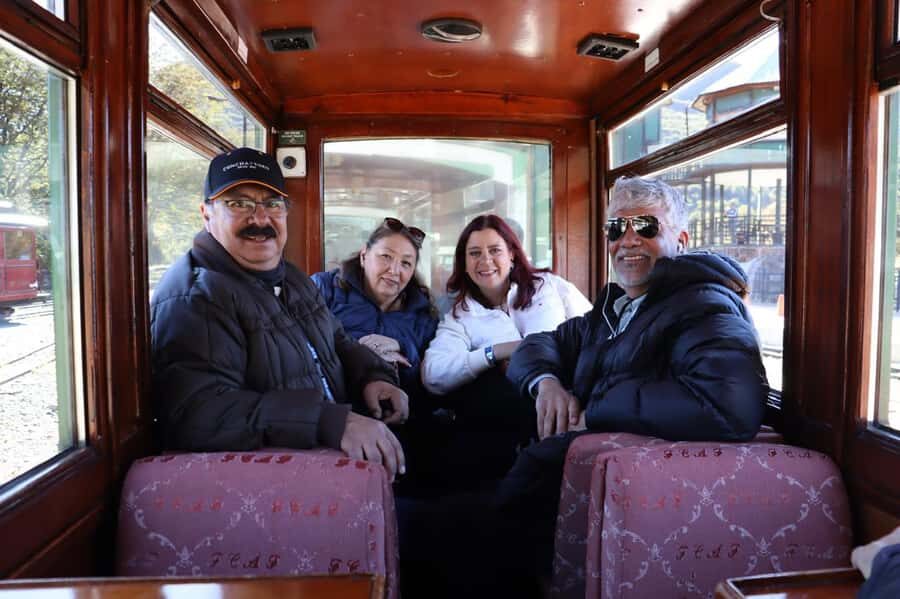
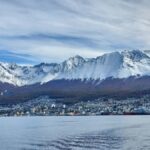
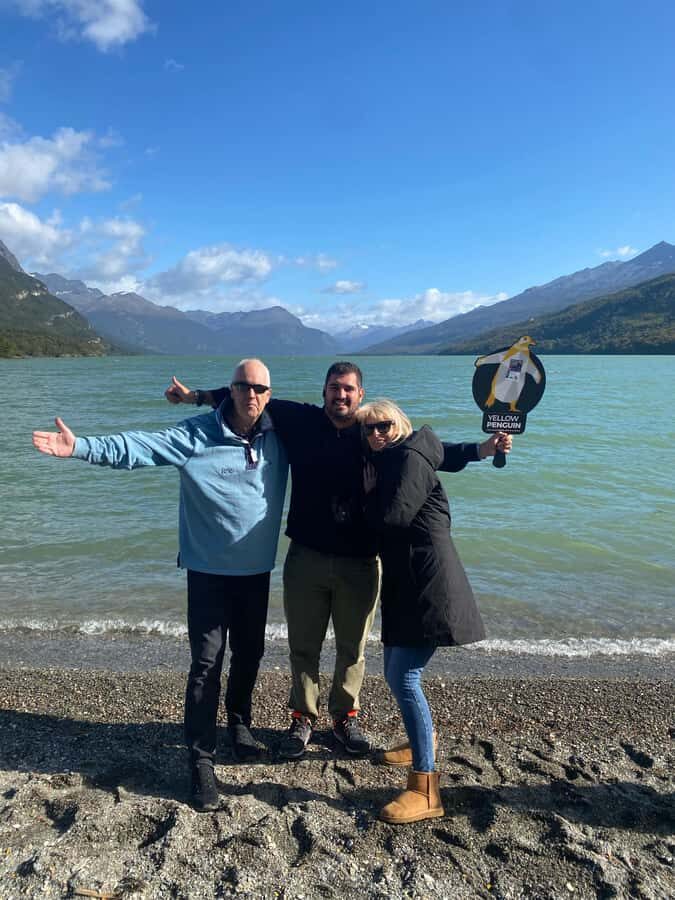
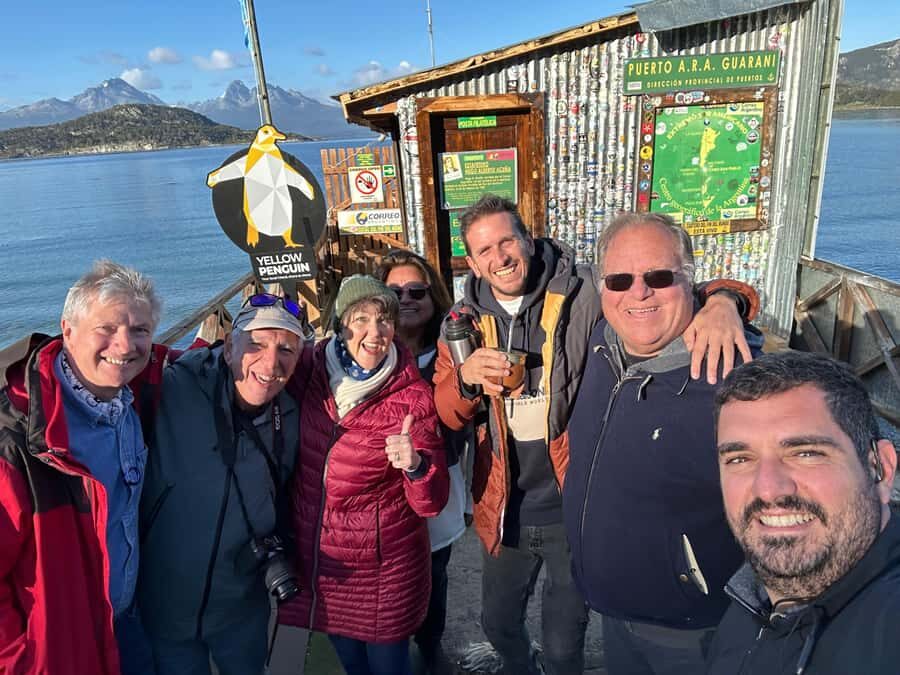
Ushuaia is built for cruise stops, and this tour leans into that. You meet at the port with the Yellow Penguin sign, then you’re out of town quickly—before the day gets loud and before you’ve had time to talk yourself out of going far.
What makes it work well for limited time is the pacing. You’re not just riding to one viewpoint and calling it a day. You get a train experience, then a full park outing with multiple stops—Lapataia Bay, Laguna Verde, Lake Roca, and Zaratiegui Cove—all in one 5-hour block.
The other big reason I’d pick this is the mix of topics: history (prison labor and early settlement stories), Indigenous context (the Yámana), and real subantarctic nature. If your day in Ushuaia feels too short to do the famous things in the right order, this gives you that order.
You can also read our reviews of more tours and experiences in Ushuaia.
The End of the World Train: what you’re really paying for
The headline is the End of the World Train, and there’s a reason it gets attention. This 60-minute ride covers the last 7 kilometers of a historic route—built around the prisoners’ journey from Ushuaia’s prison to the slopes of Mount Susana, where they extracted materials used for construction.
Even before you get off the platform, you’re getting context. Along the line, you pass through lush forests, alongside crystal-clear rivers, and you’ll hear about the first inhabitants—especially the Yámana—whose ruins are still visible in areas along the route.
Here’s how to think about it as a visitor: the train isn’t just a scenic ride. It’s a living museum moment—small scale, but loaded with meaning. You’re moving through place-based storytelling, not just time-filling transportation.
A note on “no tickets”
The tour includes transportation and a guide, but it does not include End of the World Train tickets. That can change how smooth your day feels. If you’re on a cruise schedule, I’d plan for at least some added step before you board the train (and give yourself a bit of buffer if you need to pay on-site).
If you’re sensitive to delays, this is the part to watch. One negative experience tied stress to ticket handling and timing. So: keep your head calm, arrive early at the meeting point, and treat the day like an adventure with a timetable.
Train to minibus: a practical flow for a busy cruise day
Once the train ride ends, you don’t just “wait around.” You’re picked up and continued by minibus. That matters more than it sounds. A cruise day often punishes indecision—if you wander, you lose daylight and you might miss reboarding windows.
On the way into the national park area, there’s also time for short photo and stretch stops, including Macarena Falls. It’s a classic Patagonia-style add-on: brief, scenic, and quick enough not to steal your main time in the park.
I like this structure because it keeps momentum. You’re not stuck in long transit with nothing to do. You’re transitioning through geography—town to rails to waterfalls to forest to bays.
Entering Tierra del Fuego National Park without feeling rushed
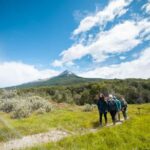
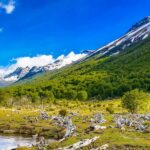
Tierra del Fuego National Park is the core of the experience, and your guide’s job is to make the place feel legible. You’ll move through Fuegian (subantarctic) forests across 63,000 hectares, and you should expect to hear what you’re looking at—not just that it’s beautiful.
The tour highlights specific vegetation types, including beech trees, ñires, lenga trees, barba de indio, and farolitos chinos, along with shrubs. Having names matters here. Without them, a forest can turn into a green blur. With them, you start spotting patterns—how the ecosystem changes with light, slope, and dampness.
What you should know about walking
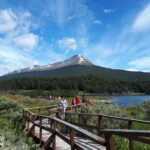
The park stops include trails and viewpoints. The Lapataia Bay part specifically mentions trails accessible to all ages, but you should still plan on wearing comfortable shoes and walking at your own pace. In the far south, weather can turn a “short walk” into a wet, slippery one.
Also, the provided info has a contradiction about mobility. It lists “wheelchair accessible” but also says it is not suitable for wheelchair users and people with mobility impairments. If that applies to you, I’d treat this as a must-verify situation with the operator before you lock anything in.
Lapataia Bay and the Route 3 End of the World sign
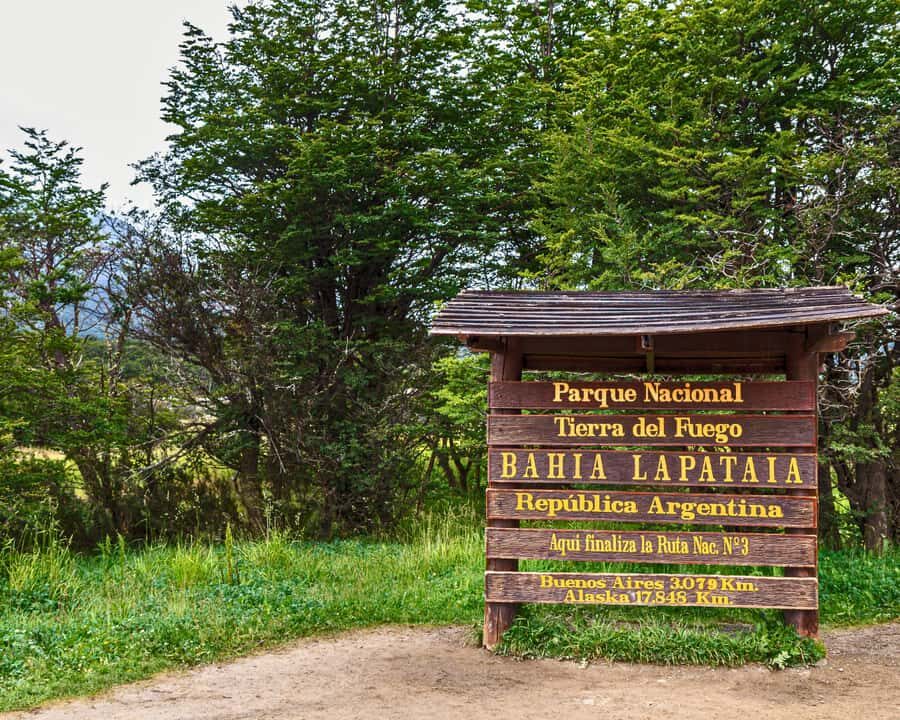
Lapataia Bay is the stop most people point to afterward. You arrive at the location where Route 3—the legendary Pan-American Highway route—ends, running in concept from Alaska all the way to Tierra del Fuego.
The iconic End of the World sign is right there. Yes, it’s a photo moment. But it’s also a mental reset. You go from cruise-port reality into a kind of geographic story: the far edge, the last stretch, the point where maps stop pretending the world continues the same way.
You’ll also find accessible walking areas and trails where you can take in Patagonian fjord-style views. If you like photography, this is one of your best bets of the day because the light and water perspective can be dramatic, even when the sky is cloudy.
Laguna Verde and Condor Hill: views with a border in mind
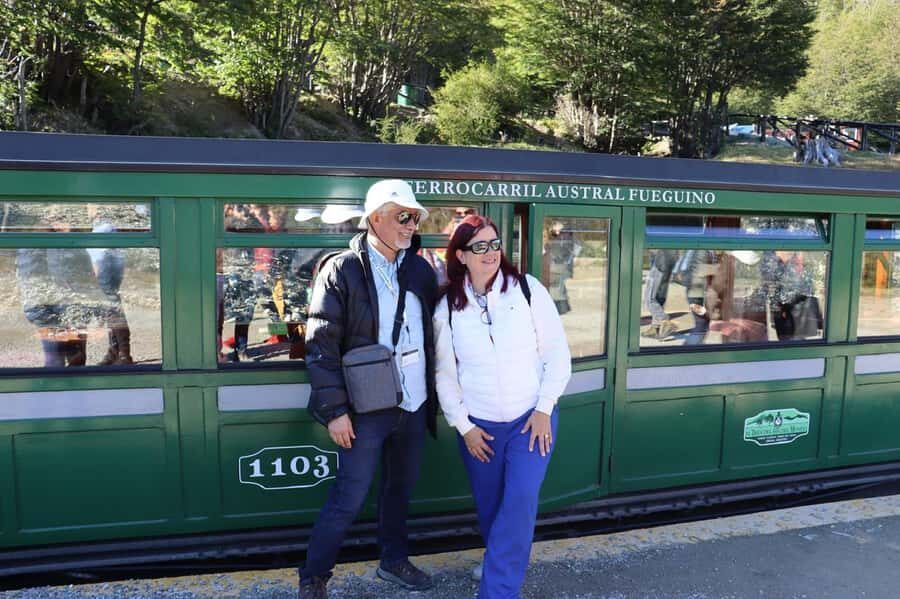
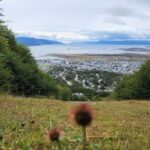
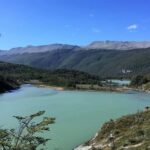
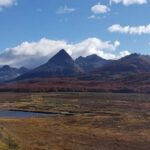
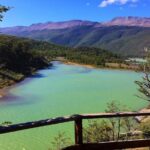
Next comes Laguna Verde, with panoramic views toward Condor Hill, which marks the border with Chile. This is one of those places where the landscape scale helps you understand why people talk about Patagonia like it’s different.
What I like about this stop is that it gives you a “big picture” framing. You’re not just looking at a single lake. You’re looking at a border landscape—an area where geography and politics overlap in a very physical way.
If you’re the type who enjoys learning how places are arranged, this stop lands well. If you just want photos, you’ll still get them—wide views usually photograph better than tight corners.
Lake Roca: the postcard stop that still feels real
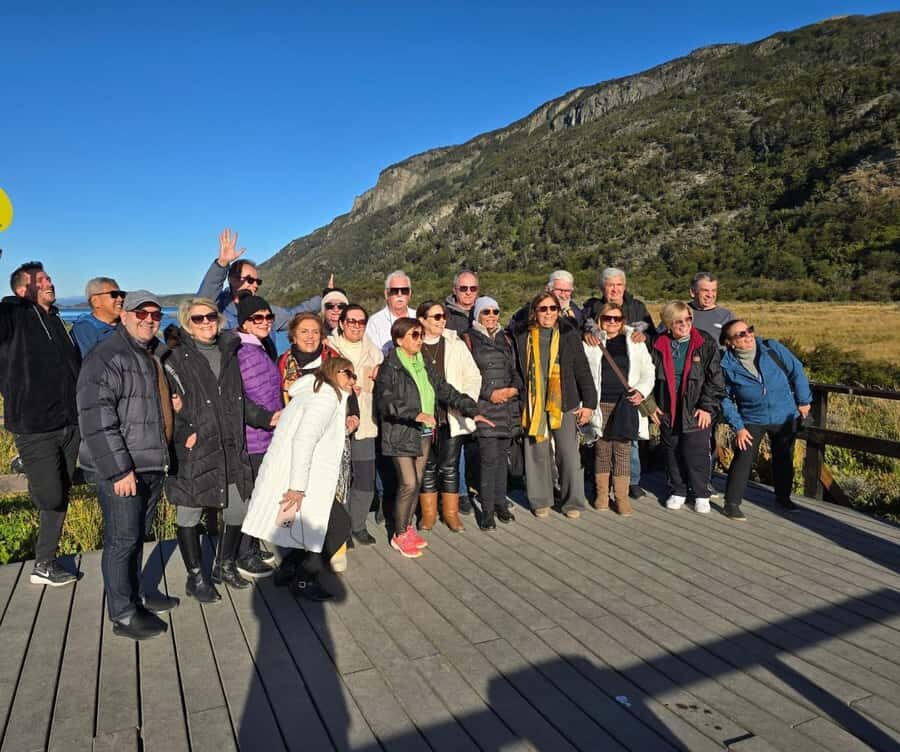
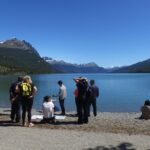
Then you reach Lake Roca, another viewpoint framed with a classic Patagonia composition: lakes, mountains, and forest. This stop is about that familiar “postcard” arrangement, but in this region it tends to feel earned. You’ve already been traveling through ecosystems and bays, so the lake view doesn’t feel like a random checkbox.
From a practical standpoint, this is also a good time to slow down. If you’ve been snapping photos non-stop since the train, Lake Roca is where you can stand, breathe, and pick one or two shots that actually represent what you saw.
Zaratiegui Cove: Round Island and the calm at the end
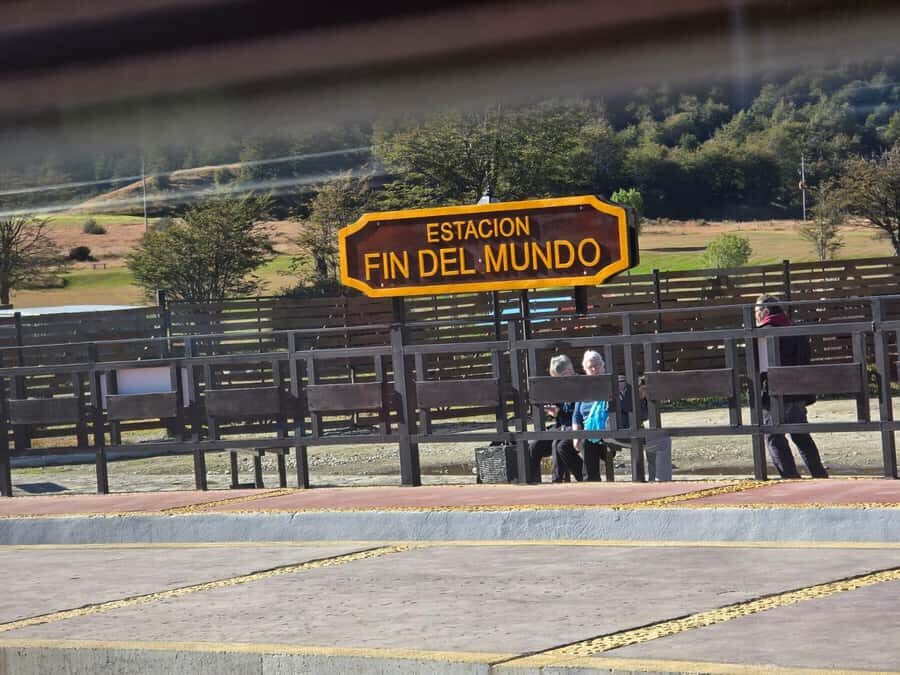
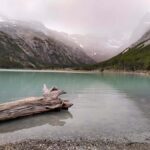
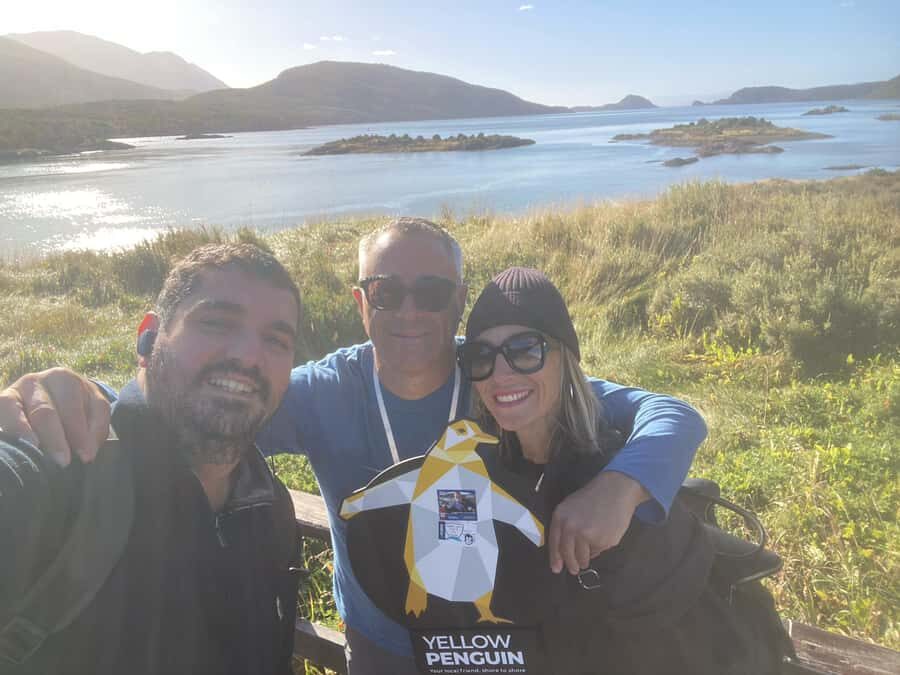
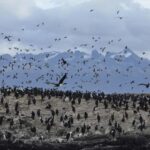
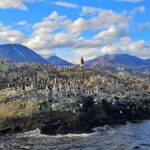
Your final park stop is Zaratiegui Cove, often considered the highlight. You get views of Round Island, and you can see the End of the World Post Office from the outside. The post office is noted as temporarily closed, so don’t expect a visit—but looking at the building from the cove is still a strong “place marker” moment.
This is where the day often clicks into place. After train history and forest context, the cove gives you quiet. You’re looking at mountains, water, and stillness—exactly what you came for if you picked Tierra del Fuego for scenery over shopping.
If you want practical advice: linger a bit here, because it’s the easiest time to get your best photos without rushing to the next stop. Just keep in mind you’ll be heading back to Ushuaia city center afterward.
Price and logistics: where the real value sits
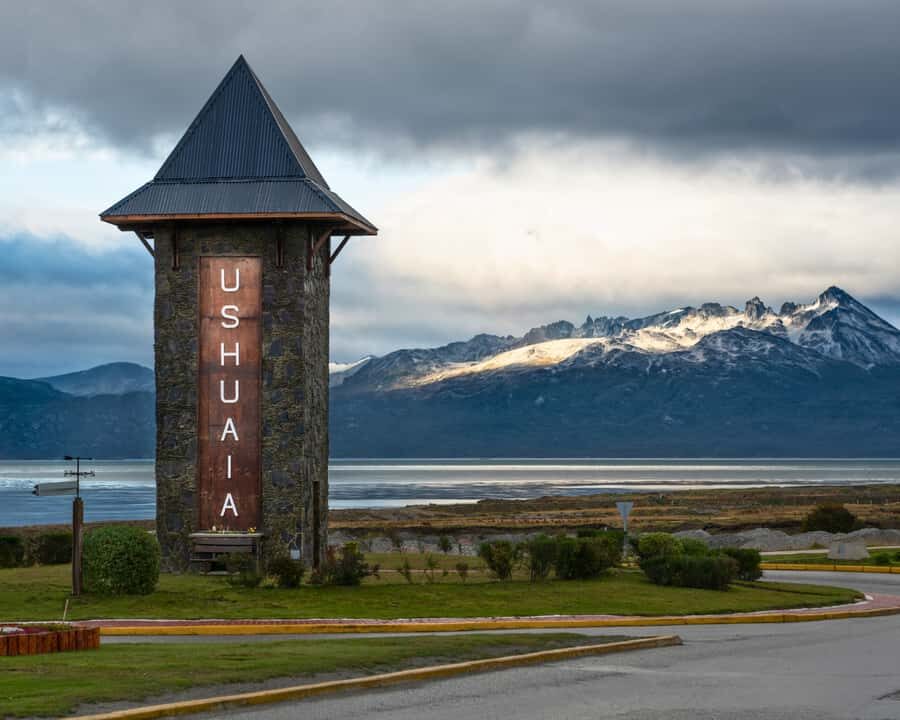
At $120 per person for 5 hours, the pricing can feel straightforward—until you remember it’s a no-ticket setup. The tour includes round-trip transportation from Ushuaia, a local tour guide, and a water bottle.
What’s not included:
- Entrance to Tierra del Fuego National Park
- End of the World Train tickets
So, the value question is really this: do you want a guided, timed package that handles the transport and interpretation, but you’re okay paying extra for specific admissions?
I think the answer is yes if:
- You’re on a cruise and want a single organized plan.
- You care about history and nature mixed together (not just one big viewpoint).
- You’d rather pay for convenience than spend your energy arranging transport.
I think the answer is no (or “maybe later”) if:
- You dislike added steps or separate payment moments.
- You get stressed by timing shifts.
- You mainly want scenery and can manage independent transport and self-guided stops.
There’s also a timing theme in the negative feedback: when schedules shift or when tickets are handled at the wrong moment for the cruise, the day can feel chaotic. My practical fix is simple—arrive early at the port, confirm meeting details clearly in advance, and don’t treat this like a casual late-morning walk.
Guides, language, and how to get the best experience
The tour runs with a live guide in Spanish, English, or Portuguese (depending on the departure). That language pairing affects how much you catch, especially when you’re hearing specific names of plants and place stories.
One positive experience called out guides Laura and Julianna as friendly, informative, and on-point. I can’t promise which guide you’ll get, but I’d treat language matching as a real value tool: pick the language you’ll actually understand during the train story and the forest explanation.
A tip that helps in any language: ask your guide a question at one of the early stops, like the train station portion. If you’re the kind of person who likes to connect details to your photos, this is the moment to do it.
What to bring for Patagonia weather and a photo-filled day
Bring:
- Comfortable shoes (you’ll walk at multiple stops)
- Camera (you’ll want it at Lapataia Bay and Zaratiegui Cove)
- Water
- Passport or ID card (a copy is accepted)
Plan for varying weather. You’ll be outside during port-to-park movement, and Ushuaia can go from bright to damp fast. A jacket or raincoat is a smart call.
Also, no pets and no smoking as per the tour rules.
Who this tour is best for (and who should rethink it)
This experience is a strong fit if you want:
- A history + nature day rather than a single viewpoint
- A guided route that covers multiple iconic places around Ushuaia
- A cruise-friendly plan where transportation is organized
It’s a weaker fit if:
- You need wheelchair access for the whole day. The provided info conflicts, so you must check directly.
- You have mobility limits that make forest and cove walking difficult.
- You strongly prefer fully independent travel with no added ticket steps.
Should you book this Tierra del Fuego Park & Train Tour?
If you’re visiting Ushuaia from a cruise and you want the “big hits” in 5 hours—End of the World Train, Lapataia Bay, and Zaratiegui Cove—I’d book it with confidence. The combination is hard to beat for a first-time visit, and the guide-led history + nature angle makes the scenery feel grounded.
Just go in with two expectations managed:
- It’s not truly all-in-one ticket-wise, because park entrance and train tickets are separate.
- Patagonia weather and cruise timing mean you should arrive early and stay flexible.
If that sounds like your style—curious, comfortable walking, and happy to pay for guidance—I think you’ll enjoy this far-southern day for more than just the photos.