REVIEW · USHUAIA
Exploring Ushuaia: Double Decker Bus Tour
Book on Viator →Operated by Tangol · Bookable on Viator
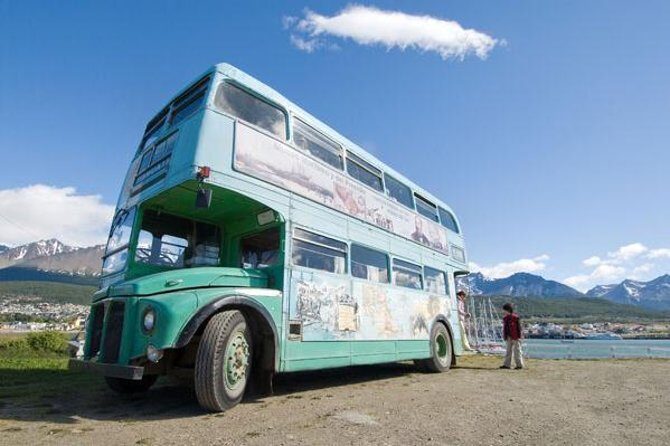
Ushuaia in one tight loop. I like how the double-decker bus ties together the city’s big landmarks in a little over an hour, and I also like the English/Spanish narration that puts names and meaning to what you’re seeing. The trade-off is short stop time, so you’ll want to travel with a good attitude toward quick photo ops and weather that cooperates.
This is the kind of tour that works especially well on a first day, or when your schedule is tight but you still want to understand what Ushuaia is about. I also like that the group stays small (max 20), and you get multiple photo stops—up high for views, then down by water and memorials. If you’re prone to motion sickness, note that the upper deck can feel a bit bumpy on Ushuaia’s steep roads.
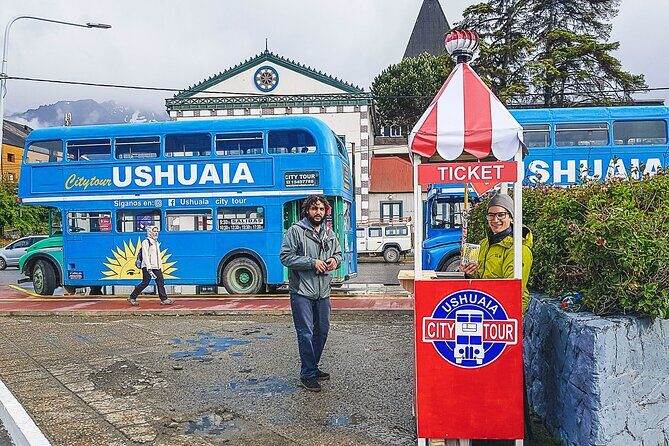
In summer (October to April) you’ll be on the double-decker bus; in winter it switches to a Bondi 4×4 and the guide is Spanish only. There’s no hotel pickup, but the meeting point is in the heart of town, near public transport.
In This Review
- Key things to know before you ride
- Why this short Ushuaia tour is so useful
- Price and value: is $32 actually fair?
- Getting on board: meeting point, seats, and how audio works
- The route in real life: what each stop means and why it’s there
- Antigua Casa de Gobierno and the First Chapel
- Lucinda Otero house: local architecture and spirituality
- Malvinas Memorial: the emotional anchor
- Cementerio Antiguo de Ushuaia: a moment for memory
- Universidad Nacional de Tierra del Fuego and the science side
- Rio Pipo and Nuevos Barrios: the city’s edges and connections
- Camino de los Presos: understanding how the city grew
- Laguna del Diablo: the best get-off-and-shoot moment
- Barrio de los Italianos and a quick hospital pass
- Museo del Fin del Mundo: shipwreck and the end-of-the-world idea
- Final stretch: waterfront, Naval Pier, and the Fournier Monument
- Comfort, timing, and keeping your sanity on a windy upper deck
- Who this tour suits best (and who might want a different plan)
- Practical tips to get the most out of 70 minutes
- Should you book this Ushuaia double-decker bus tour?
- FAQ
- FAQ
- How long is the Ushuaia double-decker bus tour?
- How much does the tour cost?
- Where do we meet for the tour?
- Is hotel pickup included?
- What languages are available?
- Do we get off the bus to take photos?
- How big is the group?
- What happens if the tour is canceled due to poor weather?
- Can the booking be changed or refunded if I cancel?
Key things to know before you ride

- Max 20 people makes it feel more like a real small tour than a big bus line.
- Multiple departure times help you pick a slot that fits your ship or port day.
- Top-deck views come with a climb: the stairs to the upper level can feel narrow and steep.
- Photo-friendly stops include viewpoints and Laguna del Diablo, where you get time to get off the bus.
- Headset audio options let you listen in multiple languages at your seat (via jack).
- Weather matters: this one depends on decent conditions, and if it’s canceled for poor weather you’ll be offered a different date or a full refund.
Why this short Ushuaia tour is so useful

Ushuaia can feel like it’s all uphill, all wind, and all “wait, what am I looking at?” This bus tour helps you solve that fast. In about 1 hour 10 minutes (approx.), you get an organized sweep across government buildings, memorials, science institutions, neighborhoods, and the waterfront.
I especially like it for first-timers. You don’t need to be an expert to enjoy it; you just need 70 minutes and curiosity. And because the route includes places many visitors pass by only once, you come away with a clearer mental map of where things are.
The other big reason it works: it’s a good weather plan when you don’t want to gamble on long walks. Ushuaia weather can flip quickly, and this tour still gives you views and perspective even when you’re stuck in coats and layers.
You can also read our reviews of more tours and experiences in Ushuaia.


Price and value: is $32 actually fair?
At $32.00 per person for a guided, multi-stop city circuit, this is priced for people who want value per hour. You’re not paying for a long excursion or a deep dive into one theme; you’re paying for efficient orientation plus narration that tells you what you’re seeing.
The value gets even better because you’re not just watching out the window. There are multiple designated stops where you can step out for photos and quick sights, including a longer photo moment at Laguna del Diablo. Plus, the tour includes a professional guide (English and Spanish in summer, Spanish in winter), which helps you connect the dots instead of guessing.
Is it expensive compared to DIY walking? Sure, you can always do Ushuaia cheaper on your own. But if you want a structured route with viewpoint stops built in, this is one of the simplest ways to spend a short block of time well.
Getting on board: meeting point, seats, and how audio works

Meet at Civic Plaza Ushuaia (Av. Maipú 420-498). It’s in a central area, and the tour notes it’s near public transportation, which makes it easy to reach whether you’re on foot or transferring from another plan.
You should know there’s no hotel pickup. That’s not a deal-breaker, but it does mean you’ll want to build in extra time to get to the plaza and be ready for the scheduled departure you choose.
Onboard, the experience is designed for multiple languages. In addition to the guide language (English/Spanish in summer; Spanish in winter), other languages are available via equipment at each seat using your own headphones jack. If you forgot headphones, you might find it handy to have a backup plan, since the tour notes you can buy new ones if needed.
One practical reality: a double-decker means you’ll often be choosing between comfort and the best view. The upper deck typically gives you the best sightlines, but it also involves going up stairs and dealing with the bus’s movement on steep streets. If you’re sensitive to motion, take that into account before you climb.
The route in real life: what each stop means and why it’s there

This tour is built like a highlight reel. Each stop is short, so the goal is to give you recognizable landmarks plus context—not to turn it into a museum day.
Antigua Casa de Gobierno and the First Chapel
The tour starts with a drive featuring the Antigua Gobernación area, then moves past an early school site and on to the First Chapel. This section matters because it gives you the “official Ushuaia” story early on—government and education—and it helps you understand how the region developed its institutions.
You’re there for around 15 minutes at the first big stop cluster. It’s enough time to see what it is, take a few photos, and listen for the key facts, but not enough time to linger the way you would at a major indoor museum.

Lucinda Otero house: local architecture and spirituality
Next comes the Lucinda Otero stop, focused on architecture and spirituality. Even if you’re not an architecture nerd, this is a good change of pace from memorials and official buildings because it puts you in contact with how everyday culture and belief show up in the city’s historic structures.
Time here is brief—about 5 minutes—so treat it as a quick look and photo opportunity, not a deep exploration.
Malvinas Memorial: the emotional anchor
Then you reach the Malvinas Memorial, a key monument honoring the combatants of the Malvinas War. This is one of those stops where Ushuaia’s remote identity meets a national story, and the narration tends to give you something to hold onto while you look.
Expect around 10 minutes here. It’s long enough to take in the meaning and snap a respectful photo, even if your schedule is tight.
Cementerio Antiguo de Ushuaia: a moment for memory
After the memorial comes the First Cemetery. This stop is short (about 5 minutes), but it gives you a quiet pause inside a tour that’s otherwise very “driving and photos.”
If you like grounding a trip with places connected to memory—rather than just scenic overlooks—this is a valuable stop. If you prefer fast and upbeat only, you might find the mood a little heavy, but it’s also part of understanding Ushuaia.
Universidad Nacional de Tierra del Fuego and the science side
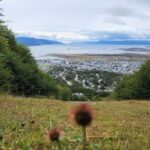
The tour continues through the CADIC area and Universidad Nacional de Tierra del Fuego. Then, at Monte Gallinero and Monte Vigía, you get panoramic views of the city from high ground.
This portion is more than just “pretty hills.” It’s a reminder that Ushuaia isn’t only a frontier for ships and storms; it’s also a hub for research and learning tied to the extreme environment around it. You’ll likely come away thinking differently about what this place is doing beyond tourism.
This stop section is short (about 5 minutes), so bring a quick mindset: look up, aim your photos, and listen while the bus moves you into position.
Rio Pipo and Nuevos Barrios: the city’s edges and connections
You pass the Pipo River and the Nuevos Barrios, then the tour heads toward the historic Camino de los Presos (Prisoners’ Road). This part helps you picture Ushuaia not as one neat postcard, but as a settlement that spread and connected through roads.
It’s brief—around 5 minutes—but the payoff is the historical route setup for what comes next.
Camino de los Presos: understanding how the city grew
Camino de los Presos is one of the tour’s most important learning stops. Prisoners’ Road is tied to how Ushuaia’s past shaped its streets and landscape connections, even if you never walk it yourself.
Time is about 5 minutes. You won’t become an expert here, but you will get enough context to make sense of why the city’s layout and old routes matter.
Laguna del Diablo: the best get-off-and-shoot moment
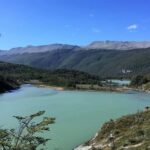
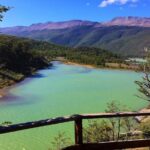
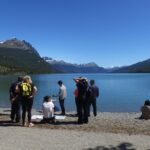
At Laguna del Diablo, you actually get off the bus for more time—about 10 minutes—to take photos and take a quick break before continuing. This is often the moment people remember because you’re not just looking from a moving vehicle.
If the weather is decent, this stop can be genuinely atmospheric: wind, water, and wide views tend to make it feel more real than a quick roadside photo.
A practical tip: bring a rain layer even if forecasts look fine. Ushuaia can rain without asking, and on windy decks and at lakeside stops, you’ll appreciate a hood or waterproof outer layer.
Barrio de los Italianos and a quick hospital pass
Then you pass Barrio de los Italianos and the local hospital. This is a short “what’s in the city besides the highlights” look. It’s not meant to be a sightseeing deep cut, but it helps round out the picture of where people live and how services fit into the urban fabric.
Time is about 5 minutes. Think “glance and recognize later” rather than “tour and learn.”
Museo del Fin del Mundo: shipwreck and the end-of-the-world idea
Near the end of the tour, you stop at the Museo del Fin del Mundo, tied to the Saint Christopher shipwreck and the idea of Ushuaia as a real-life edge-of-the-map destination.
Time here is about 5 minutes. You’ll get oriented to the museum theme, but you won’t finish it. If museums are your thing, plan for a separate longer visit after this tour.
Final stretch: waterfront, Naval Pier, and the Fournier Monument
The tour finishes at the Naval Pier and the Fournier Monument, which connect to Ushuaia’s maritime history and pioneers. This is a fitting end because it brings you back to the water stories that are always in the background here.
Time is about 5 minutes, then you head back to the meeting point as the tour ends.
Comfort, timing, and keeping your sanity on a windy upper deck
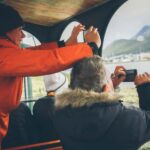
The double-decker format sounds fun for the views, and it is—just know what you’re signing up for. Some people find the ride on top can feel a little bumpy, and the stairs can be tight enough that you’ll want to move carefully, especially if it’s crowded.
If rain is in the air, I’d pack a real raincoat, not just an umbrella. One of the most useful tips from people who’ve done this in variable weather is to be ready for rain at any moment, especially during outdoor photo stops.
Also, because the narration is part guide-led and part audio delivered, keep your ears clear. On bus tours like this, it only takes a few loud conversations to make it harder to hear. If you’re listening for details, try to seat yourself where you can focus and ask people politely to keep voices down.
Who this tour suits best (and who might want a different plan)
This one is ideal if you:
- want a first-day overview and a clean mental map
- have limited time due to cruise schedules or tight itineraries
- like photo stops and short, focused learning moments
- want a guided route without committing to a long walk
It’s less ideal if you:
- expect long time at each stop or deep museum time
- need lots of on-site explanation at each location
- are hoping for a specific add-on that isn’t part of this compact circuit
A couple of people also felt that some viewpoint stops could be stronger or that a few stops felt less necessary. That’s the nature of a highlight reel: you’re seeing many places, but you’re also accepting the short-stop format.
Practical tips to get the most out of 70 minutes
Here’s how I’d maximize your experience without stressing out:
- Pick your deck and seat based on your goal: views usually mean upper deck, but motion and stair access matter.
- Bring headphones even if you think you might borrow or buy later. Having your own avoids delays.
- Plan to photograph quickly: the best spots are timed, so aim first, then shoot.
- Do this early: it makes the rest of Ushuaia make more sense when you return for independent exploring.
- If it’s raining, don’t fight it: focus on narration and quick shots rather than lingering.
Should you book this Ushuaia double-decker bus tour?
If you want a fast, friendly orientation to Ushuaia with guide context and viewpoint photo stops, I think this is a strong buy for the price. It’s designed for people who want to check off the essentials without building a complicated day.
If your priority is slow travel, long museum time, or a specific excursion you already have in mind, you might feel better choosing a longer, more focused activity instead. This bus tour is a short connector piece, not the whole meal.
My rule of thumb: if you have a day (or half day) and you want to understand the city quickly, book it. If you already know Ushuaia well or you want one standout attraction deeply, you can probably skip it and put your time elsewhere.
FAQ
FAQ
How long is the Ushuaia double-decker bus tour?
It runs for about 1 hour 10 minutes.
How much does the tour cost?
The price is $32.00 per person.
Where do we meet for the tour?
The meeting point is Civic Plaza Ushuaia on Av. Maipú 420-498.
Is hotel pickup included?
No. Hotel pickup and drop-off are not included.
What languages are available?
In summer you’ll have a professional guide in English and Spanish. In winter the guide is Spanish only. Other languages can be available through equipment at each seat via jack.
Do we get off the bus to take photos?
Yes. There are several stops, including a longer photo break at Laguna del Diablo where you can get off the bus.
How big is the group?
The tour has a maximum of 20 travelers.
What happens if the tour is canceled due to poor weather?
The experience requires good weather. If it’s canceled due to poor weather, you’ll be offered a different date or a full refund.
Can the booking be changed or refunded if I cancel?
The experience is non-refundable and cannot be changed for any reason.