REVIEW · BUENOS AIRES
Caminito, La Boca: vibrant neighborhood
Book on GetYourGuide →Operated by Swell Experiences · Bookable on GetYourGuide
Color lines the port alleyways of La Boca. This 2-hour guided walk with Swell links Fundación PROA to Caminito along the Riachuelo, with context on tango roots, Genoese immigration, and the neighborhood’s soccer heartbeat. You’ll cover major corners tied to Quinquela Martín’s art and iconic Boca landmarks.
I love the two locals guiding the pace and focus, and I like how the walk centers real neighborhood life instead of treating La Boca like a photo backdrop. The vibe stays people-first: what you’re seeing has meaning because you’re learning who shaped it and why they still care.
One possible catch: the tour guide works in Spanish only, and it’s a walking tour—so wear comfy shoes and plan for steady movement through busy streets.
In This Review
- Key Points Worth Prioritizing on This La Boca Walk
- Why La Boca’s Port Side Feels Different Than the Rest of Buenos Aires
- Finding Your Guide at Fundación PROA (Blue Shirt, Black Umbrella)
- Stop 1: Fundación PROA and Getting Oriented in One Short Stretch
- Caminito Along the Riachuelo: How Street Art Became an Icon
- Benito Quinquela Martín Museum: The Why Behind the Colors
- Vuelta de Rocha: Where the Neighborhood Stories Feel Close Up
- Boca Landmarks: Bombonera Area and the Volunteer Fire Brigade HQ
- Price and Value: What $13 Buys You in Real Terms
- Who This Tour Suits Best (And Who Might Want Something Else)
- Should You Book This Caminito and La Boca Walking Tour?
- FAQ
- Where is the meeting point?
- How long does the tour last?
- What language is the tour guide?
- What is included in the tour price?
- Is this a private group tour?
- Is the Boca Juniors stadium ticket included?
- Is cancellation free, and how far in advance can I cancel?
Key Points Worth Prioritizing on This La Boca Walk
- Start at Fundación PROA and get oriented fast with the right meeting point cues (blue shirts, black umbrellas, Swell).
- Caminito is more than a colorful lane—it’s tied to Quinquela Martín’s transformation of the Riachuelo area.
- You get guided stops at all the big hits in a tight 2-hour window (five points).
- Boca landmarks come with context around Bombonera and the volunteer fire brigade headquarters.
- Private group format makes it easier to ask questions and adjust the pace.
- Budget for a tip even if it says free; a minimum tip of $10 is recommended.
Why La Boca’s Port Side Feels Different Than the Rest of Buenos Aires
La Boca isn’t just a stop on a Buenos Aires checklist. It’s a working-feeling neighborhood shaped by immigration, waterfront life, and community pride. If you want a version of the city where art, soccer, and street identity all share the same blocks, this is a strong fit.
The tour is built around that idea: you won’t just look at colorful streets; you’ll hear why they matter. The neighborhood’s social fabric ties back to Genoese immigration, and the area’s port roots explain the hard-to-fake mix of grit and flair. That’s also why tango history gets woven in here, not as a lecture topic, but as background to the culture you’re walking through.
Then there’s the soccer factor. Boca Juniors (and the broader rivalry story in Buenos Aires) is part of the daily rhythm, and the tour includes big Boca references along the way—so you can connect the dots between what you see and what locals feel.
The practical benefit is that the pacing matches your time. At two hours, you can cover key spots without burning your whole day. And because this is a private group, you’re not stuck waiting while a large crowd funnels through narrow lanes.
You can also read our reviews of more tours and experiences in Buenos Aires.


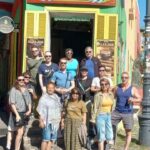
Finding Your Guide at Fundación PROA (Blue Shirt, Black Umbrella)
Meeting point details matter in La Boca, because the streets can feel like a maze and signs aren’t always obvious. This tour keeps it simple: you meet at the entrance of Fundación PROA. You’ll know the guide setup by the blue shirts and black umbrellas and the Swell branding.
That matters for two reasons. First, you waste less time hunting. Second, you start with momentum—right at a recognized cultural anchor—so the neighborhood makes sense faster.
From there, the walk is designed to bring you to five guided points. The tour description also flags skip the ticket line. Since the only explicitly excluded tickets are for Boca Juniors stadium, it’s reasonable to think the line-skip applies to whatever ticketed entry is relevant during the walk. Just keep in mind you’re not meant to arrive without expectations: if any stop requires ticketing you’ll likely be responsible for that portion if it’s not listed as included.
Also note the language. The live guide is Spanish, and the tour runs with a focused group structure. If you speak Spanish or even understand enough for basic conversation, you’ll get more out of every corner.
Stop 1: Fundación PROA and Getting Oriented in One Short Stretch
Your starting point isn’t random. Fundación PROA gives you an immediate cultural reference point before you head into the street-level icons. That’s useful because La Boca can look like one long set of attractions, but it’s really a patchwork of places—cultural centers, viewpoints, historic landmarks, and neighborhood streets.
Starting with a foundation like PROA also helps you understand the role of art in this area. When you later reach Caminito and Quinquela Martín-linked stops, you’ll recognize the theme: art isn’t just something to look at here; it’s part of how the neighborhood tells its story.
If you like walking tours that respect your time, you’ll appreciate the setup. You’re not spending the first part of your tour asking where you’re going. You start, you learn, and the walk becomes a guided path through meaningful locations.
Caminito Along the Riachuelo: How Street Art Became an Icon
Caminito is the centerpiece for a reason. It’s a color-lined passage connected to the Riachuelo area, and it gained its fame through the work of artist Quinquela Martín, who helped transform the space into what it is today. The tour approach is practical here: you’re guided through what you’re seeing so the visuals don’t stay superficial.
Here’s what you should watch for as you walk:
- The way the lane functions like a living display of local identity, not just a mural wall
- The location context by the water-side (the Riachuelo angle is key)
- The contrast between what’s photographed most and what’s actually part of daily neighborhood life
Caminito also carries a global reputation. It ranks among the world’s most photographed destinations. That can mean crowds at certain times, but the guide helps you keep perspective: you’re learning to look with context rather than only hunting for the perfect shot.
If you’re wondering whether Caminito is worth it beyond the hype, the answer depends on what you want from a visit. If your goal is quick photos, you might feel you see the main thing fast. If your goal is to understand how art and place got connected, you’ll likely find the guided approach makes the experience click.
Benito Quinquela Martín Museum: The Why Behind the Colors
The tour includes a guided visit to the Benito Quinquela Martín Museum. That’s a smart pairing with Caminito. Without the museum context, Caminito can feel like pure spectacle. With it, you’re learning the logic behind the look—why the art took the shape it did and what the artist represented for this area.
Even if you’re not a museum super-fan, this stop helps you translate the street scene. You’ll start to see the museum not as a separate attraction, but as the reference point for the alleyway experience.
What I like about this structure is that it gives you a pattern to recognize:
1) You see the art in motion on the street (Caminito)
2) Then you meet the source in a more structured setting (museum)
3) Then you return to neighborhood landmarks with better context
It’s also a nice tempo change. After walking through outdoor streets, museum time gives your feet and your brain a breather while keeping the theme consistent.



Vuelta de Rocha: Where the Neighborhood Stories Feel Close Up
Next comes Vuelta de Rocha, another important piece of the La Boca puzzle. This is the kind of place where you can feel the neighborhood rhythm—how people move, how the streets open and close, and how the setting shapes the mood.
The value here is context. Many visitors focus on the most famous lane, but Vuelta de Rocha helps connect the dots between the big icon moments and the surrounding neighborhood reality. You’re not just checking boxes; you’re seeing how La Boca’s identity works across different corners.
If you prefer walking tours that give you bearings—where to look, what to notice, and how to interpret the vibe—this stop is a good fit. It’s where the “what you see” starts turning into “what you understand.”
You’ll also get a clearer sense of how La Boca’s port roots and immigration influences shaped the physical layout and cultural tone. That makes later Boca-related landmarks more meaningful, not just famous.
Boca Landmarks: Bombonera Area and the Volunteer Fire Brigade HQ
No La Boca walk feels complete without touching the Boca Junions gravity. This tour includes Boca Juniors landmarks such as Bombonera and the volunteer fire brigade headquarters. Even if you’re not a die-hard soccer fan, these stops explain why the neighborhood carries so much emotion.
Bombonera is one of those places where the name alone triggers recognition, but the guided context helps you avoid treating it like a random stadium photo spot. You learn to connect it to local identity and the way soccer threads through community life here.
The volunteer fire brigade headquarters adds a different angle. It’s a reminder that neighborhoods aren’t only shaped by sports and art. Social institutions like this are part of the fabric too—part of why locals feel ownership over the place.
Practical tip: bring your attention, not just your camera. In this part of the walk, it helps to listen for how the guide links landmarks to stories. That’s what turns “I saw Bombonera” into “I get why it matters.”
Price and Value: What $13 Buys You in Real Terms
The price is listed as $13 per person, and the tour is described as a free walking tour with a recommended minimum tip of $10. That setup can feel confusing at first, but here’s how I’d look at the value.
You’re paying for:
- A guided walk with locals
- Guided visits to the five points
- A live Spanish guide
- A format that stays organized and stops-focused in a short window
Then you’re also paying the street-level respect part by tipping the guide. Since the recommended minimum tip is included in the tour info, plan for it rather than treating it like an optional afterthought.
So, is it worth it? For me, it’s a yes if you want guided context in a compact time block. Without the guidance, Caminito and the surrounding sights can blur together fast. With guidance, you get a narrative: port roots, immigration influences, tango context, Quinquela Martín’s role, and Boca identity. That’s the value you’re buying with the $13.
One more note: bus and food are not included. Tickets for the Boca Juniors stadium are not included either. If your plan includes eating nearby, just budget for it separately and you’ll avoid surprise costs.
Who This Tour Suits Best (And Who Might Want Something Else)
This walk is ideal if you want an organized introduction to La Boca’s top landmarks with a guide who keeps things grounded. It works especially well for:
- First-time visitors to Buenos Aires who want the neighborhood context, not just photo stops
- People who care about street art meaning and want the Quinquela Martín connection explained
- Visitors who like smaller-group experiences, since it’s set up as a private group
- Spanish speakers (or those comfortable enough to follow a Spanish tour)
It might be less ideal if:
- You need an English-language guide (the tour guide language listed is Spanish)
- You want a low-walking, sit-down style day (this is a walk, and it’s about moving between five points in 2 hours)
- You’re only interested in the stadium itself and plan to do stadium-specific ticket time (stadium tickets are not included)
Should You Book This Caminito and La Boca Walking Tour?
I’d book it if your goal is to understand La Boca, not just pass through it. Starting at Fundación PROA, then shifting to Caminito, Quinquela Martín’s museum, Vuelta de Rocha, and Boca landmarks is a clean storyline. In two hours, you can leave with a stronger sense of what shaped the neighborhood—art, immigration, the port, and local pride.
Skip booking only if Spanish-only tours are a deal-breaker for you, or if you want a more flexible half-day with optional add-ons (meals, extra museums, or stadium ticket time). In those cases, you might feel the fixed two-hour structure is too tight.
If you’re on the fence, a simple rule helps: if you like your street photography paired with meaning and explanations, this is a solid use of time.
FAQ
Where is the meeting point?
You meet at the entrance of Fundación PROA. The guide will be wearing blue shirts and carrying black umbrellas.
How long does the tour last?
The duration is 2 hours.
What language is the tour guide?
The live tour guide language is Spanish.
What is included in the tour price?
The tour includes a guided walk with two locals and guided visits to each of the 5 points.
Is this a private group tour?
Yes, the group type is private group.
Is the Boca Juniors stadium ticket included?
No. Tickets to the Boca Juniors stadium are not included.
Is cancellation free, and how far in advance can I cancel?
Yes. You can cancel up to 24 hours in advance for a full refund.