REVIEW · BUENOS AIRES
La Boca, a collective creation: Port, immigrants, arts and football
Book on Viator →Operated by La Otra Buenos Aires Tours · Bookable on Viator
La Boca is more than a colorful photo stop. This small-group tour uses social history to explain why the neighborhood looks the way it does, from immigrant roots to the art on the walls, and yes, why football matters so much here. I like that it starts in the famous Caminito area and then pushes into less-touristy streets instead of only repeating the usual talking points.
Two things I especially like: you get a clear story about immigrants, arts, and football (not just landmarks), and you also stop at a local bakery to try pastries with your guide. The main drawback to think about: La Bombonera’s stadium time is short, and the stadium admission isn’t included—so plan for that if you were hoping for more than a quick look from the outside.
In This Review
- Key things to know before you go
- Why La Boca feels different when you start with people
- Caminito at the start: famous, but used the right way
- Leaving the postcard zone: immigrant origins and non-tourist streets
- Plazoleta Bomberos Voluntarios de La Boca: street art you can actually interpret
- La Bombonera without the fantasy: football as lived culture
- The bakery stop: why the snack matters in a neighborhood tour
- Time, price, and value: is $65 worth it?
- Getting there and what to expect from the flow
- Who should book this La Boca b-side tour
- Should you book La Boca: Port, immigrants, arts and football?
- FAQ
- How much does the tour cost?
- How long is the tour?
- Do I need a ticket for La Bombonera?
- Where does the tour start and end?
- What ticket will I receive?
- What if the weather is bad?
Key things to know before you go
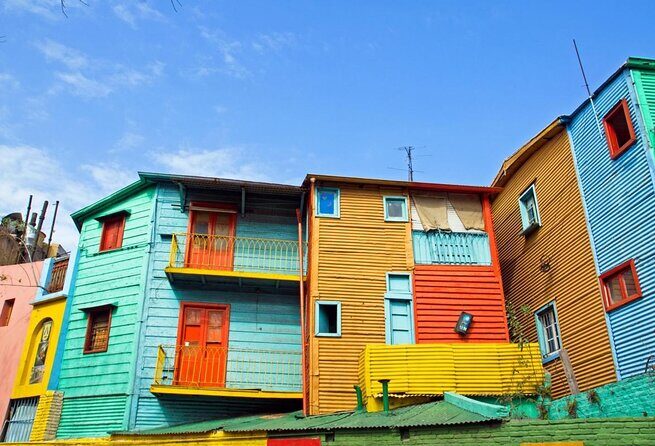
- Caminito first, then a real neighborhood walk: You start with the recognizable street, then shift to everyday La Boca.
- Street art is treated like evidence, not decoration: You’ll learn what the murals and painted styles are telling you.
- Football is part of the neighborhood’s language: The tour ties the sport to community identity and local life.
- A bakery stop breaks up the walking: You’ll have a chance to snack on local favorites.
- Small group (max 12): You’ll move at a human pace and hear the guide’s explanations.
Why La Boca feels different when you start with people
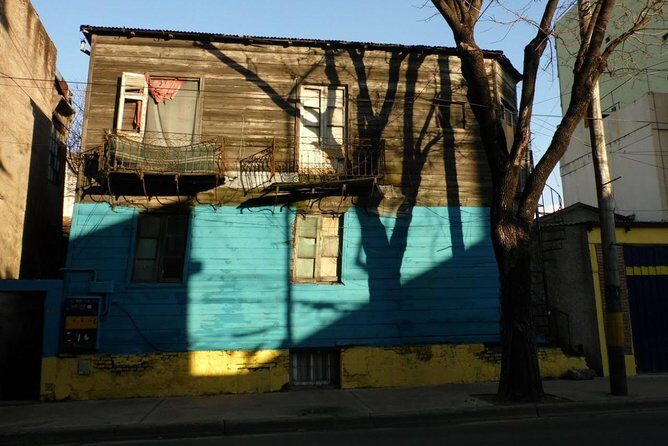
La Boca can look like one big Instagram wall—painted façades, bold colors, and a skyline that seems to exist only for postcards. But the best way to understand it is to talk about the people who built it, and the pressures that shaped daily life. That’s the core idea here: you’re not just touring a neighborhood, you’re following a chain of causes—immigration, labor, artistic expression, and football culture—all woven together in a way that makes the place click.
I like how the guide frames La Boca as a collective creation: immigrants brought skills and traditions, port work connected people to the wider world, and the arts turned rough urban reality into something you can read with your eyes. Then football shows up as more than fandom. It becomes a shared identity that organizes the way locals see themselves and their neighborhood.
One practical note: you’ll be walking. The tour is only about two hours, so it moves at a steady pace. If you love slow, long breaks for photos, you may feel slightly rushed—but the tradeoff is you get more story per minute.
You can also read our reviews of more tours and experiences in Buenos Aires.

Caminito at the start: famous, but used the right way
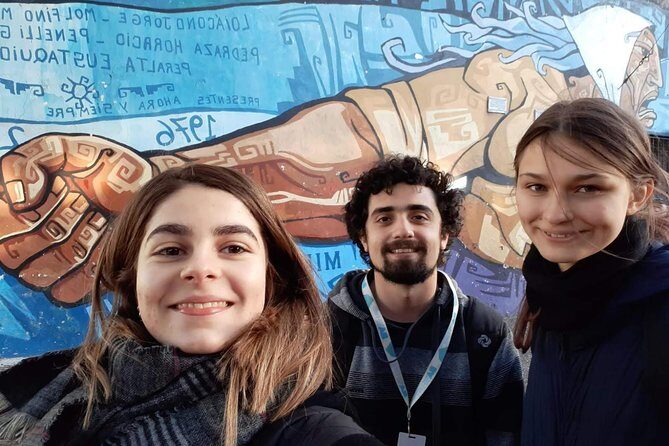
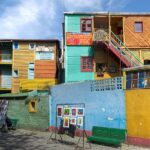
You begin at Caminito, the most famous street in Argentina. It’s famous for a reason: the colorful façades and the overall “storybook” feel make it easy to understand why people come. But the trick is how you use it. Instead of treating it like the whole tour, Caminito works as your baseline.
This is where you can quickly get oriented: you’ll see the visual style La Boca is known for, and you’ll get your first sense of the neighborhood’s artistic approach. In the first segment, you also get a short time window—about 15 minutes—which helps keep the tour from turning into a stand-still crowd scene.
What to consider: Caminito is the kind of place where you’ll naturally see more tourists than locals. That’s not the tour’s fault—it’s the nature of the spot. If you prefer quieter streets from the start, you’ll have to wait a bit, because the tour deliberately begins here to set context.
Leaving the postcard zone: immigrant origins and non-tourist streets
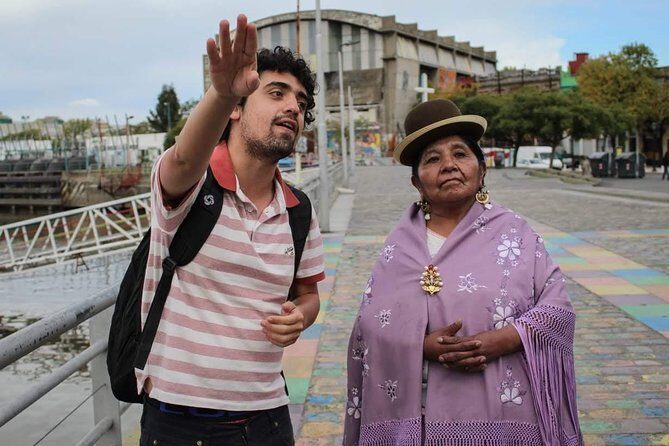
After Caminito, the tour turns into the part you’ll remember later. You move through non-tourist streets where the neighborhood feels more lived-in. This is where the “b-side” approach matters: you’re not just looking at painted walls—you’re learning why certain styles and community choices became common.
The guide’s emphasis is on the immigrant origins of La Boca. You’ll connect that to the port world—how people arrived, what work looked like, and how communities formed under everyday pressures. Even if you already know Buenos Aires has waves of migration, this tour helps you see what that means at street level: the neighborhood didn’t just happen because of aesthetics. It happened because people needed a place to belong and a way to express themselves.
Expect the walk to include explanations about:
- the peculiarities of La Boca’s artistic style
- the social logic behind how neighborhoods like this develop
- the importance of football as a shared cultural glue
This section is valuable because it teaches you to read the area. After you learn what you’re seeing, the walls, alleys, and corners start making sense instead of looking random or purely decorative.
Plazoleta Bomberos Voluntarios de La Boca: street art you can actually interpret
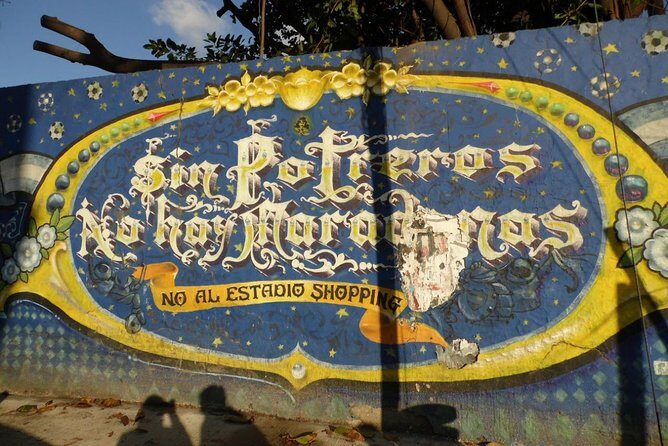
Next you head to Plazoleta Bomberos Voluntarios de La Boca, with about 15 minutes there. This stop is about understanding La Boca’s street art as communication. You’re not only seeing murals—you’re learning what the style suggests about identity, community pride, and history.
Street art in places like La Boca often carries multiple layers at once: local storytelling, visual signatures of pride, and references that make sense to people who grew up there. With a guide, that turns into more than “pretty paint.” It becomes a quick course in how the neighborhood uses art to talk about itself.
The downside is simple: it’s a short stop. You won’t be there long enough to fully “soak it in” like an art museum visit. But the benefit is that you’re moving on with new context—so when you see more afterward, your brain is already doing the translation.
La Bombonera without the fantasy: football as lived culture
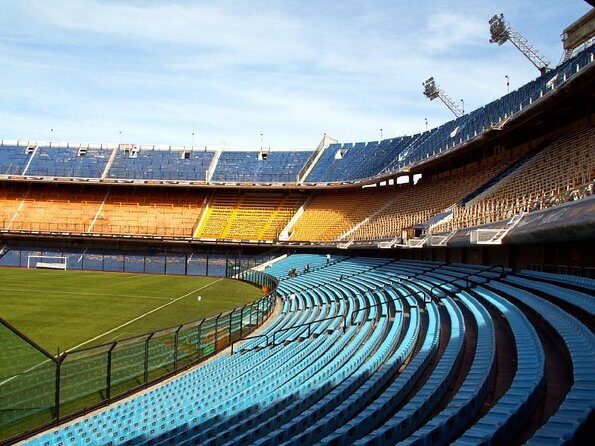
You’ll also spend time at Estadio Alberto J. Armando, better known as La Bombonera, one of the most famous stadiums in the world. In the tour schedule, this is a 10-minute segment, and crucially, stadium admission is not included.
So set your expectations accordingly. This is a stop to get you close to the stadium experience and understand why it matters, not a long, inside-the-gates visit. You’ll finish the tour near the Bombonera, so you get that final payoff of arriving at the place that dominates the neighborhood’s football mood.
Even for people who aren’t die-hard football fans, this stop can still work because the guide connects the stadium to local identity and community life. It’s not just about a building. It’s about what football does socially: it brings people together, gives a framework for pride, and creates a shared narrative.
Practical consideration: because the stadium entry isn’t included, you may want to check what you can do at your own pace afterward if you want more than a quick look. If your heart is set on tours inside the stadium, plan for extra time and separate tickets.
The bakery stop: why the snack matters in a neighborhood tour
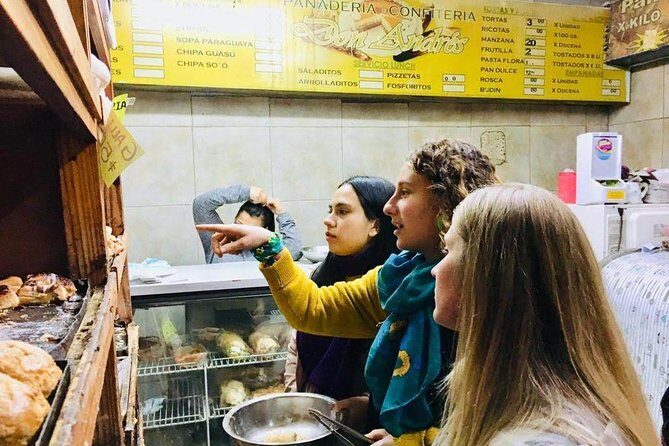
One of the nicest parts here is the food break. The tour includes a visit to one of La Boca’s famous bakeries, where you can try local pastries. This isn’t just “because food is fun.” It’s a smart way to slow down for a moment and experience daily life in the neighborhood.
From the reviews, this is one of the stops people clearly remember. The pastry sampling gives you a taste of the area that isn’t tied to souvenir shops. Plus, it’s a chance to ask questions without trying to talk through fast walking or street noise.
What to keep in mind: the tour is only around two hours. So treat the bakery stop as a quick taste, not a full meal plan. If you have dietary restrictions, you’ll want to be ready to ask on the spot, since the specific pastry selection isn’t listed here.
Time, price, and value: is $65 worth it?
At $65 for about 2 hours, you’re paying for more than a route. You’re paying for interpretation—someone to connect La Boca’s look to its causes: immigration, port life, artistic style, and football identity, plus a bakery stop and a short view time by La Bombonera.
Here’s how the value stacks up:
- The social history angle is the main value driver. You’re not just ticking off sights.
- The small group size (max 12) keeps the experience conversational rather than a rush-and-point-and-go production.
- You also get Caminito context at the start and Bombonera payoff at the end, without spending the full day there.
- The pastry stop adds a tangible, local taste that most “photo-only” tours don’t include.
Potential tradeoffs:
- Bombonera time is short, and the stadium admission is not included.
- Because it’s a weather-dependent walking tour, you’ll want to pick a day when conditions are decent.
If you like understanding a place instead of just collecting photos, this price starts to feel reasonable fast.
Getting there and what to expect from the flow
The tour starts at La Vuelta de Rocha, Av. Don Pedro de Mendoza 1859, and it ends by La Bombonera near Dr. del Valle Iberlucea 437. It’s also listed as being near public transportation, which matters in Buenos Aires—getting around is easy when you’re not fighting long transfers.
The flow is simple:
- Caminito to set the visual and historical context
- Non-tourist streets with a story-focused walk
- Plazoleta Bomberos Voluntarios de La Boca for street art interpretation
- Bakery stop for pastries
- Finish near La Bombonera
The total time is about 2 hours, so keep your expectations aligned. You won’t see everything in La Boca. You’ll see the parts that explain what you’re seeing.
Who should book this La Boca b-side tour
This works best for you if:
- you want more than Wikipedia-level sight descriptions
- you care about how neighborhoods form culturally, not just architecturally
- you like street art and want help interpreting it
- you want a manageable time commitment that still feels substantial
You might skip it (or pair it with something else) if:
- you’re only interested in inside stadium access at length, since Bombonera admission isn’t included
- you need lots of free time for wandering without a structured narrative
- you dislike walking through city streets for a short tour length
Should you book La Boca: Port, immigrants, arts and football?
Yes—if your goal is to understand La Boca, not just photograph it. The biggest strength is the way the tour connects the neighborhood’s visual style to its social history: immigrants, the port and labor context, arts as identity, and football as a community backbone. The Caminito start gives you instant orientation, and the rest of the walk does the heavy lifting.
I’d book it if you enjoy guides who can turn a street corner into a story. And if you like a smart snack break, you’ll appreciate the bakery stop as more than an afterthought. Just remember the Bombonera segment is brief and admission isn’t included, so don’t plan on a full stadium experience without extra planning.
If you’re pairing this with other Buenos Aires plans, treat it as your “meaning tour” of La Boca, then let your own curiosity take over once you’re finished near the stadium.
FAQ
How much does the tour cost?
The tour costs $65.
How long is the tour?
The duration is about 2 hours.
Do I need a ticket for La Bombonera?
No. Admission to Estadio Alberto J. Armando (La Bombonera) is not included. The stop is listed as 10 minutes.
Where does the tour start and end?
It starts at La Vuelta de Rocha, Av. Don Pedro de Mendoza 1859, C1169AAC, and ends near La Bombonera at Dr. del Valle Iberlucea 437, C1160ABE.
What ticket will I receive?
You’ll receive a mobile ticket.
What if the weather is bad?
This tour requires good weather. If it’s canceled due to poor weather, you’ll be offered a different date or a full refund.